How Long Should a Dehumidifier Run per Day? Most units in humid climates need 8 to 12 hours daily to keep indoor moisture between 30% and 50% relative humidity. Running longer won’t hurt a properly sized unit with an automatic humidistat, it will simply cycle off once the target humidity is reached.
In our research, EPA and ASHRAE guidelines consistently flag anything above 60% RH as a risk zone for mould and dust mites. Conversely, dropping below 30% creates dry air that irritates skin and respiratory passages. The goal isn’t to run a machine on a timer; it’s to maintain a steady, comfortable humidity band while the unit saves energy by shutting itself off when its job is done.
Quick Answer
How Long Should a Dehumidifier Run per Day? A correctly sized dehumidifier typically runs 8, 12 hours per day in moderate to high humidity. It will cycle on and off automatically to maintain your set humidity target. Never run a unit continuously without a humidistat.
Always aim for 30%, 50% indoor relative humidity.
What Actually Determines How Long Your Dehumidifier Runs
Finding the right daily runtime isn’t about guessing; it’s about matching four variables to your specific home. Change any one of them and the number of hours your unit needs to stay healthy shifts noticeably.
The Four Factors That Control Runtime
Your dehumidifier’s daily clock depends on these conditions working together.
- Current indoor humidity level. This is the single biggest driver. If your hygrometer reads 70% relative humidity (RH) and you set the target to 45%, the unit must pull significantly more moisture from the air than if you started at 55%. The bigger the gap, the longer the runtime.
- Dehumidifier capacity (pint size). A 30-pint unit in a damp 500-square-foot basement will run for hours without ever reaching the set point. A 70-pint model in the same space will hit the target in a couple of hours and shut off. Undersized units run constantly. Oversized units short-cycle, which wastes energy and leaves pockets of damp air.
- Size and layout of the space. Open floor plans move air differently than enclosed rooms. Basements sit below grade and absorb ground moisture through walls and slab floors. A single portable unit struggles to service multiple zones without help from fans or ducting.
- Climate and season. Summer humidity spikes the moisture load everywhere. Coastal regions face year-round dampness. Desert climates rarely need a machine. During shoulder seasons, many homeowners switch their unit off entirely.
The Role of the Built-In Humidistat
A humidistat is the thermostat for moisture. You set a percentage, and the control board monitors the air passing over its sensor. When the reading drops below your set point, the compressor shuts down.
When humidity rises again, the unit kicks back on.
This auto mode is what keeps your daily runtime predictable. Without it, you would need to manually flip the switch every time the air feels damp, which most people forget to do.
A malfunctioning or poorly calibrated sensor can throw everything off. Some units read humidity too low and shut off before the room is truly dry. Others read too high and run non-stop, driving up electricity costs.
If you suspect sensor drift, test the unit with a standalone digital hygrometer placed a few feet away.
Continuous Drainage vs. Tank-Based Models and Their Impact on Runtime
Tank-based models collect water in an internal reservoir. Once the tank is full, a float switch cuts power to the compressor until you empty it. This creates a daily rhythm of run-and-empty cycles that interrupts moisture removal.
In a very wet basement, you might find yourself pouring out a gallon of water twice a day.
Continuous drainage uses a gravity-fed hose to send water straight to a floor drain or sump pump. The unit never pauses to wait for a tank fill-up. It can operate 24/7 in auto mode if outdoor conditions demand it, making it the obvious choice for high-moisture environments where constant monitoring isn’t practical.
Decision Scenarios: How Long Your Dehumidifier Should Run in Different Situations
Different rooms and climate zones impose different moisture loads. Matching the unit’s capacity and runtime habits to the scenario prevents wasted energy and lingering dampness.
Basement Dehumidification — The Most Common Use Case
Basements are moisture magnets. Below-grade walls wick ground water into the space, and temperature swings cause condensation on cold surfaces. The humidity here often sits 10, 20 points higher than the living areas above.
For a typical unfinished basement in a humid climate, expect a 50-pint or 70-pint unit to run 12, 18 hours per day during peak summer. A smaller 30-pint model will hum all day and never reach the target, leading to that familiar stale smell.
Finished basements with carpet and furniture still need aggressive dehumidification, but sealed walls and proper ventilation can shorten daily runtime to 8, 12 hours once the space is conditioned.
Bedroom or Living Room Units — Moderate Humidity Zones
Interior rooms on the main living floor generally track closer to outdoor humidity than basements do. A well-sized portable unit in a 300-square-foot bedroom will often reach its set point and cycle off within 6, 10 hours of evening use.
Running a large basement-rated machine in a small bedroom causes short-cycling. The unit strips moisture so fast that the humidistat trips repeatedly, stressing the compressor and offering no real comfort gain.
Whole-House Dehumidifiers (HVAC-Integrated)
Whole-house systems mount inside your air handler or furnace plenum. They draw return air through the existing ductwork, dehumidify it, and push dry air back through the vents. Because they work in concert with central air conditioning, they remove far more latent heat than portable units.
These systems don’t follow the same daily hour counts as portable models. Instead, they run on schedules tied to your home’s heating and cooling cycles. In summer, a whole-house unit may cycle on for 4, 8 hours total, often overlapping with the AC fan.
Proper sizing by an HVAC professional is essential here; an oversized whole-house system will short-cycle just like a misplaced portable unit.
Crawl Space Dehumidifiers
Crawl spaces present a unique challenge: they are cold, confined, and packed with soil that evaporates moisture into the air. Regular basement dehumidifiers struggle in temperatures below 15°C (59°F) because their coils frost over and shut down.
Specialised crawl space units use desiccant technology or heavy-duty refrigerant compressors with auto-defrost. They often run 24/7 on a continuous drain line because the soil behind foundation walls provides a nearly endless moisture source. Daily runtime here is less about comfort and more about structural protection.
Newly Built or Recently Renovated Homes
Construction introduces enormous amounts of trapped moisture into wall cavities, subfloors, and concrete slabs. New drywall, painted surfaces, and freshly poured foundations all release water vapour during the first year of occupancy.
Homeowners should plan for an extended “dry-out” phase. Expect your dehumidifier to run 12, 16 hours daily for the first 6, 12 weeks after moving in. Once the building materials stabilise and indoor humidity holds steady at your target, you can drop back to normal seasonal hours.
Skipping this step leaves wood framing vulnerable to mould long after the paint looks perfect.
Warning Signs Your Dehumidifier Is Running the Wrong Amount
The unit’s behaviour tells you more than the hour counter ever will. Certain patterns signal that your setup needs adjustment before damage or wasted money adds up.
It Runs 24/7 and Never Shuts Off
If your dehumidifier never hits the set point and the compressor runs nonstop, something is wrong. Start with the simplest explanation: the unit is undersized for the space. A 30-pint model asked to dry a 1,000-square-foot basement will labour forever.
Next, check for air leaks. Open windows, poorly sealed foundation cracks, and gaps around pipe penetrations let humid outdoor air pour in faster than the machine can remove it. Fixing those breaches often drops runtime by half.
Finally, inspect the humidistat. A faulty sensor may report a false low reading and never trigger shutoff. Swap in a fresh battery if the panel is battery-backed, or replace the unit if the sensor is embedded and uncalibratable.
It Rarely Reaches Your Set Target
A unit that struggles to pull humidity down usually faces airflow restrictions. A clogged filter is the usual culprit. Dust and lint build up quickly in basement air, choking the intake and starving the evaporator coil.
Clean the filter every two weeks during active season.
Poor placement also starves the machine. Tucking it into a corner behind a washer or pushing it flush against a wall blocks the intake and exhaust paths. Give the unit at least six inches of clearance on all sides.
If the tank fills rapidly but humidity stays high, the problem may be hidden moisture. A leaking supply line, seeping foundation wall, or compromised vapour barrier feeds the air faster than any consumer dehumidifier can handle. In those cases, the machine is treating a symptom, not the cause.
It Short-Cycles (Turns On and Off Every Few Minutes)
Short-cycling happens when the unit reaches its target humidity almost immediately, then shuts down, only to restart minutes later as humidity creeps back up. This can be normal in a small, well-sealed room that barely needed dehumidification. It becomes a problem when the on-off bursts happen every three to five minutes and the compressor sounds strained.
An oversized unit is the most common cause. A 70-pint machine deployed in a 200-square-foot bathroom will strip the air dry in ten minutes and then idle for hours. Downsize to a lower-capacity model or invest in a unit with an adjustable humidity range so you can set a wider deadband.
Misplaced hygrometers create phantom short-cycles too. If the built-in sensor sits near the cold exhaust stream, it reads artificially low humidity and shuts the compressor off prematurely. Relocating a standalone meter a few feet away often reveals the truth.
The Tank Fills Up Fast but Humidity Stays High
This symptom means the machine is doing its mechanical job, condensing water, but the environment keeps feeding it more moisture than expected. Common sources include unsealed laundry sinks, shower drains that dry out, or clothing lines hung indoors without exhaust fans.
Place a bucket under可疑 joints and watch for drips. Run a hair dryer along baseboard seams to feel for drafts that carry damp outdoor air inward. Fixing the source usually solves the problem faster than buying a larger dehumidifier.
Setting Up Your Dehumidifier for Optimal Daily Runtime
Getting the most out of your dehumidifier comes down to five quick setup steps. Do them right, and the unit will handle the rest on autopilot.
Step 1: Measure Your Current Humidity First
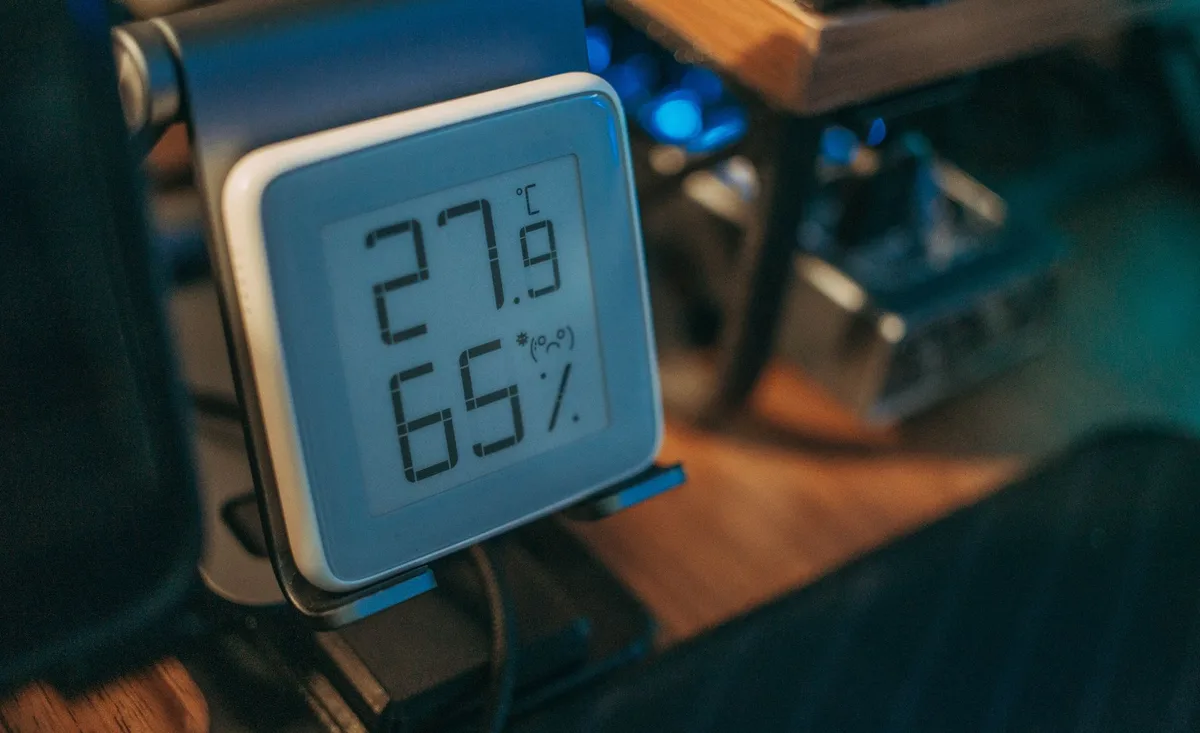
Before you even unbox the machine, grab a cheap digital hygrometer and place it in the room where the dehumidifier will live. Wait an hour for the reading to settle, then note the number.
If the gauge shows 70% RH or higher, you have a serious moisture problem that demands immediate attention. Below 60% is comfortable for most homes. Anything above 65% invites mould growth within days.
Place the hygrometer away from exterior walls, windows, and direct sunlight. Those sources skew readings and trick you into thinking the room is drier or wetter than it actually is.
Step 2: Choose the Right Pint Capacity for Your Space
Manufacturers rate dehumidifiers by how many pints of water they can extract in a 24-hour period under standard test conditions. Those numbers assume moderate humidity and average temperatures, so adjust downward if your space runs cool or damp.
Use this rough guide as a starting point:
| Space Size | Typical Moisture Level | Recommended Capacity |
|---|---|---|
| Up to 500 sq ft | Light dampness | 30 pints |
| 500–1,500 sq ft | Moderate humidity | 50 pints |
| Over 1,500 sq ft or severe dampness | Heavy moisture load | 70+ pints |
Basements always lean toward the higher end of each range. New construction and ground-floor apartments in humid climates should double the recommended pint size for the first season.
Step 3: Set the Humidistat to the Right Target
Most portable units let you dial in anywhere from 30% to 80% RH. For general comfort and health, set the target between 45% and 50%. This range balances mould prevention with skin and respiratory comfort.
Going below 40% offers no extra benefit and can dry out wooden furniture, musical instruments, and flooring. Above 55% gives dust mites and mould spores a comfortable breeding ground.
If your home has allergy sufferers, err on the lower side of that band. People with asthma or chronic sinus irritation often notice immediate relief when humidity drops from 60% to 45%.
Step 4: Position the Unit Correctly
Placement matters as much as capacity. Pick a central location where air can circulate freely around the machine. Avoid tucking it into a closet or behind bulky furniture.
Maintain at least 6 to 12 inches of clearance on all sides, especially near the intake and exhaust grilles. Block airflow and the unit will overheat, reduce its moisture extraction rate, and potentially trigger a safety shutoff.
If you are drying a large basement, run a standing fan nearby to push stagnant air across the dehumidifier’s intake. Moving air speeds up evaporation from wet surfaces and helps the machine reach its target faster.

Step 5: Decide Between Tank Emptying and Continuous Drain
Unless you live in an arid climate, a tank-only setup will become a chores you forget to do. When the reservoir fills, the unit stops working until you haul the bucket to the sink.
Connecting a standard garden hose to the drain port lets water flow straight to a floor drain, utility sink, or sump pump. Gravity does the work, and the compressor never pauses for a break. Install a vertical loop in the hose near the outlet to prevent siphoning back into the unit.
If you cannot run a drain line, consider a pedestal pump kit. These accessories pressurise the condensate and push it upward through a thin tube, giving you flexibility in where the water exits the basement.
Mistakes to Avoid When Sizing and Using Your Dehumidifier
Even well-meaning homeowners fall into a few recurring traps. Avoiding them keeps your energy bill down and your home comfortable.
Choosing the Wrong Unit Size
The most frequent error is buying a unit that is too small. You think a 30-pint model will handle a sprawling basement, but it runs continuously and never lowers humidity. The solution is always to upgrade capacity, not to run the machine longer.
Oversizing creates a different problem. A massive unit in a small room strips moisture so aggressively that the humidistat trips every few minutes. The compressor wears out faster, and you get no additional comfort benefit.
Match the pint rating to the square footage and moisture severity using the table in Step 2.
Placing the Hygrometer in the Wrong Spot
A cheap wall-mounted hygrometer placed next to the kitchen stove or above a radiator will read artificially dry. You will set the dehumidifier based on that false low number and leave the rest of the house uncomfortably damp.
Always take humidity readings in the same room where the dehumidifier lives, at breathing height and away from vents, windows, and heat sources. If your unit has a built-in sensor, trust it more than a misplaced external meter.
Ignoring the Air Filter
Dust and lint coat the reusable mesh filter within weeks of heavy summer use. A clogged filter restricts airflow, forcing the compressor to work harder while extracting less moisture. Electricity bills rise, and the unit may freeze up on the evaporator coil.
Remove the filter every two weeks, vacuum off loose dust, and rinse it with warm water. Let it air-dry completely before sliding it back in. Replace washable filters annually, and never run the machine without any filter at all.
Expecting a Dehumidifier to Fix a Water Leak
A dehumidifier manages ambient moisture. It cannot stop an active plumbing leak, rising damp through a cracked foundation, or a gutter that dumps water against the siding. If you see pooling water, dark stains spreading across a wall, or a persistent drip behind an appliance, the machine is treating a symptom while the real problem worsens.
Call a plumber or foundation specialist first. Once the water source is sealed, the dehumidifier can finish the drying process efficiently.
Running It All Night Without Monitoring
Leaving a dehumidifier on overnight is fine if it has an automatic humidistat and is correctly sized. The unit will cycle on and off as needed and shut off completely once the target humidity is reached.
Leaving a basic model on manual “continuous” mode all night wastes electricity and can over-dry the space. If your unit lacks auto mode, set a timer for 8 to 10 hours and check the hygrometer in the morning. Adjust the timer up or down based on the reading.
Not Using a Separate Humidity Monitor to Verify Readings
Manufacturers calibrate built-in sensors, but drift happens over time. A $15 standalone digital hygrometer gives you an independent check. Place it near the dehumidifier’s exhaust and compare readings after an hour of operation.
If the numbers differ by more than 5% RH, recalibrate both devices according to the manufacturer’s instructions, or replace the cheaper meter. Accurate readings keep your settings honest.
Dehumidifier vs. Alternatives: Is a Dehumidifier the Right Call for You?
Sometimes a dehumidifier isn’t the most efficient tool for the job. Understanding what else moves moisture helps you choose the right strategy for your home.
Dehumidifier vs. Air Conditioner
Central air conditioners remove some humidity as a natural byproduct of cooling. But their primary goal is temperature reduction, not moisture control. In mild weather when you don’t need cooling, an AC unit won’t run, and humidity climbs unchecked.
Portable dehumidifiers work independently of temperature settings. They pull moisture from the air without chilling the room, making them ideal for basements, laundry rooms, and spaces where AC doesn’t reach. Pairing a dehumidifier with an existing AC system can cut compressor cycles and improve overall efficiency.
Dehumidifier vs. Opening Windows for Ventilation
Cross-ventilation sounds like a free solution, but it backfires in humid climates. Opening windows on a 75% RH summer day pushes moist air into your home, raising indoor humidity and forcing your dehumidifier to work harder.
Ventilation works best in dry climates or during cool, low-humidity mornings and evenings. Check your hygrometer before cracking a window. If outdoor RH is higher than indoors, keep the sashes closed and let the machine do the work.
Refrigerant Compressor vs. Desiccant Dehumidifier
Most household units use a refrigerant compressor, the same tech found in air conditioners. They excel in warm, humid environments and deliver high moisture removal rates. Drawback: they lose efficiency below 15°C (59°F) because the coils frost over and trigger defrost cycles.
Desiccant dehumidifiers use a moisture-absorbing material like silica gel to pull water from the air. They operate effectively in cold spaces such as garages, unheated basements, and crawl spaces where compressor models struggle. Energy consumption is higher, but performance in low temperatures is unmatched.
Choose a compressor unit for conditioned living spaces. Choose a desiccant unit for unheated rooms below 60°F.
Portable Unit vs. Whole-House Dehumidifier
Portable dehumidifiers cost between $100 and $400, move easily from room to room, and require no installation. They suit single rooms, small apartments, and seasonal use. Limitation: you must monitor and empty the tank, and one unit cannot serve an entire floor.
Whole-house dehumidifiers integrate with your forced-air HVAC system. They treat every room fed by supply vents, eliminate the need for multiple tanks, and operate silently because the main fan circulates air. Installation runs $1,000 to $2,500 including parts and labour, making them a long-term investment for large homes or severe moisture problems.
If you own a two-story house with a perpetually damp basement, a whole-house unit pays for itself by replacing two or three portable machines and cutting duplicate maintenance.
Maintenance Tips to Keep Your Dehumidifier Running Efficiently
Regular upkeep preserves capacity, extends lifespan, and keeps electricity costs down. Follow this simple schedule and your unit will run reliably for years.
Cleaning the Filter Every 2–4 Weeks During Active Use
Remove the reusable mesh filter from the back or side panel. Tap it gently against a trash can to dislodge loose dust, then rinse it under warm running water. Add a drop of dish soap if the mesh feels greasy.
Let the filter air-dry completely before reinstalling. A damp filter promotes mould growth inside the unit and blocks airflow. Never skip this step during peak summer months.
Emptying and Cleaning the Condensate Tank
Even with a drain hose, occasional tank cleaning prevents sludge buildup. Pull the reservoir out, wipe the interior with a soft cloth, and scrub any white mineral deposits using a mixture of one part white vinegar to three parts water.
Rinse thoroughly and dry before sliding the tank back in. Leaving standing water in the bucket invites bacterial growth and unpleasant odours that blow back into your home.
Checking the Drain Hose (if using continuous drainage)
Inspect the hose connection at the outlet port weekly. Make sure it seats snugly and hasn’t slipped off during transport. Look for kinks or sharp bends that restrict flow.
Algae and slimy biofilm can form inside hoses left standing for months. Flush the line with a weak bleach solution (one tablespoon household bleach per quart of water), then run clean water through until the smell dissipates.
Seasonal Storage and Winter Preparation
When humidity levels drop in late autumn, turn the unit off, unplug it, and empty all water from the tank and drain lines. Store the machine in a dry, temperature-controlled area if possible. Cover it with a breathable cloth to keep dust out.
If you live in a freezing climate, never store a compressor-based dehumidifier in an uninsulated garage. Residual moisture inside the refrigerant lines can corrode components over winter. Bring the unit indoors or use a desiccant model designed for cold storage.
When to Call a Professional
Some problems exceed DIY troubleshooting. Contact a qualified technician if you notice any of the following:
- Frozen coils that refuse to defrost after two complete cycles
- Unusual rattling, grinding, or clicking noises from the compressor
- Error codes that persist after restarting the unit
- A burning smell or visible scorch marks on the power cord
- Persistent high humidity despite correct sizing, placement, and filter care
These symptoms often point to refrigerant leaks, failing capacitors, or sensor failures that require specialised tools and certification to repair safely.

Table of Contents