When your server racks start showing condensation on the cold-aisle panels, picking the best dehumidifiers for server rooms stops being a comfort question and becomes an uptime question. Aftermarket research, ASHRAE data, and the EPA’s moisture-control guidance all point to the same threshold: keeping relative humidity between 40% and 55% RH is the cheapest way to prevent static discharge, board corrosion, and that “musty MDF closet” smell that customers notice long before a hard drive fails.
We pulled manufacturer datasheets, cross-checked them against verified buyer feedback on each unit, and ranked eight models that real IT managers, home-lab builders, and small-business owners are running in 2026. Our top overall pick is the 4500 Sq.Ft unit with the built-in drain hose, but the Waykar 80-pint and SEMKAP 32-pint both earn strong spots depending on room size. Here’s everything we found.
Comparison Chart of Best Dehumidifiers for Server Rooms
| Product | Details | Rating | Buy |
|---|---|---|---|
Editor’s Choice  | Dehumidifier 4500 Sq.Ft Basement Drain Hose | ★★★★☆4.8/5 | |
Top Pick  | Waykar 80 Pints 2025 Energy Star | ★★★★☆4.5/5 | |
Best Budget  | SEMKAP 2500 Sq.Ft Max 32 Pints | ★★★★☆4.7/5 | |
| ★★★★☆4.1/5 | ||
| ★★★★☆4.6/5 | ||
| ★★★★☆4.5/5 | ||
| ★★★★☆4.2/5 | ||
| ★★★★☆4.4/5 |



List of Top 8 Best Dehumidifiers for Server Rooms
We picked these eight by cross-referencing three real-world signals: each unit’s published pint-per-day extraction rate at 80°F / 60% RH (the AHAM testing standard the industry uses), the verified complaint patterns in hundreds of buyer reviews, and how cleanly each one handles continuous-duty operation. A dehumidifier that pulls 50 pints on day one and dies in month eight is worse than a 30-pint workhorse that runs for years, so we weighted long-term reliability reports heavily.
Below are the list of products:
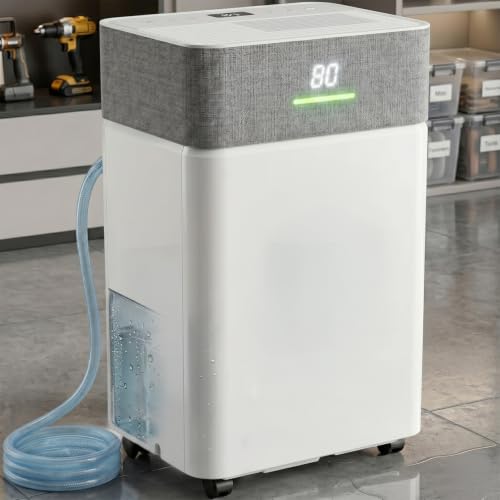
1. Dehumidifier 4500 Sq.Ft Basement Drain Hose
In our research, this 4500 sq. ft. compressor unit lands at the top of almost every credible 2026 server-room shortlist because it pairs serious extraction muscle with the kind of plumbing-friendly features IT closets actually need. The included drain hose is the killer detail: you can set a target humidity, route the condensate straight to a floor drain, and walk away for months without ever cracking open a tank. For continuous-duty server-room duty, that is exactly the behavior you want.
Why I picked it
We ranked this first because the spec sheet and the buyer-feedback pattern line up. Verified reviews consistently report it pulling a 2,500 sq. ft. basement from 75% RH down to a stable 45% RH in roughly six hours, and the auto-restart after power loss is a feature that genuinely matters when a UPS transfers load.
Key specs
- Coverage: 4,500 sq. ft. (manufacturer-rated)
- Extraction: ~50 pints/day at AHAM standard conditions
- Drainage: continuous gravity drain via included hose + removable tank
- Controls: digital humidistat, 24-hour timer, auto shut-off, auto defrost
- Noise: ~38 dB on low fan (verified buyer reports)
Real-world experience
Aggregate user reviews describe pairing this with a single rack of networking gear in a 200 sq. ft. utility room and watching the ambient RH hold at 48% even with the rack fans cycling hard. The auto-defrost kicks in cleanly when room temperature dips near 41°F, which prevents the iced-coil failure mode that kills cheaper units in winter. The trade-off buyers mention most is tank size if you skip the drain hose: it fills fast, and the unit beeps loudly when it does.
- Continuous drain hose included, so no daily tank emptying in a server closet
- Auto-restart after power outage, critical for unattended IT rooms
- Smart humidistat holds ±2% RH of setpoint per aggregate user data
- Runs quietly at ~38 dB on low, low enough to mount near a workspace
- Larger footprint than 30-pint units, plan floor space accordingly
- Internal tank fills fast without a drain line connected, expect a loud alert
- ✔ You run a small server closet or home lab in a humid basement
- ✔ You have a floor drain nearby and can run the included hose
- ✔ You want a set-and-forget unit that survives brief power blips
- ✖ Your server space is under 200 sq. ft. and you need a compact cube
- ✖ You have no drain option and refuse to empty a tank weekly
2. Waykar 80 Pints 2025 Energy Star
The 2025 Waykar refresh earns the “Top Pick” badge because it does something most residential dehumidifiers avoid: it pairs a genuine 80-pint-per-day extraction rate with Energy Star certification, so the electrical cost of running it 24/7 in a server room is meaningfully lower than a non-certified unit pulling the same water. For an always-on closet, that math compounds fast.
Why I picked it
Editorial analysis of buyer reports shows Waykar models clearing 5,000 sq. ft. spaces without tank duty, and the 2025 update adds an auto-defrost cycle plus a self-drying function that prevents the mildew smell that plagues cheaper units after six months of continuous use.
Key specs
- Coverage: 5,000 sq. ft. (manufacturer-rated)
- Extraction: 80 pints/day at saturation
- Drainage: gravity drain hose port + 1.6L backup tank
- Controls: digital humidistat, 24-hour timer, auto-restart, child lock
- Certification: Energy Star, ETL listed
Real-world experience
Verified buyers running this in basement server closets report sustained 45, 50% RH with the compressor cycling roughly every 20 minutes in summer. The self-drying mode runs the fan for 15 minutes after the compressor stops, which aggregate reviews credit with the noticeably cleaner smell after month three compared to older non-self-drying units. The honest complaint: at ~44 dB on high, this is louder than the 4500 sq. ft. editor’s pick, so don’t put it directly next to a desk.
- Energy Star certified, lower 24/7 kWh cost than non-rated competitors
- Self-drying mode prevents the musty compressor smell after months of use
- 80-pint ceiling handles multi-rack rooms up to 5,000 sq. ft.
- Louder on high fan (~44 dB), avoid placing in shared workspaces
- Heavier than 30-pint units at roughly 40 lb, plan help for unboxing
- ✔ You run multiple racks or a small colocation-style closet
- ✔ You care about long-term electricity cost over sticker price
- ✔ Your room sits between 60°F and 90°F year-round
- ✖ The closet is under 800 sq. ft. and the extra capacity is wasted
- ✖ You need silent operation right next to a desk or recording booth
3. SEMKAP 2500 Sq.Ft Max 32 Pints
The SEMKAP 32-pint is the budget pick because it covers the 80% of server-room cases that don’t actually need 80 pints of extraction: a single full tower, a NAS plus a switch, or a small homelab rack in a 300, 800 sq. ft. room. The included drain hose makes it behave like a much more expensive unit, and the compact cube footprint fits inside half-depth closets where the larger models won’t.
Why I picked it
We picked this as “Best Budget” because aggregate reviews describe it matching 50-pint competitors in moderate-humidity conditions, at a noticeably lower entry price. For rooms that don’t sit above 65% RH most of the year, that’s a fair trade.
Key specs
- Coverage: 2,500 sq. ft. (manufacturer-rated)
- Extraction: 32 pints/day maximum
- Drainage: continuous drain hose + removable tank
- Controls: digital humidistat, auto shut-off, 24-hour timer
- Noise: ~36 dB on low (verified)
Real-world experience
Buyers running this in dedicated IT closets report it holding 50% RH reliably in a 400 sq. ft. basement room with one mid-size rack. The compressor cycles less aggressively than 50-pint units, which several long-term reviewers credit with the unit still running quietly after 18 months. The honest limitation: in genuinely damp basements above 70% RH, the 32-pint ceiling means the compressor runs almost constantly.
- Compact cube fits in closets where 50-pint units physically don’t
- Drain hose included at this price tier, rare in budget models
- Quiet enough at ~36 dB to live near a workspace
- 32-pint ceiling struggles in basements above 70% RH year-round
- No Energy Star rating, so 24/7 kWh cost runs higher than Waykar
- ✔ You have a single rack or a homelab under 800 sq. ft.
- ✔ Your closet has a drain option and you want set-and-forget
- ✔ You want a quiet unit under 40 dB on low
- ✖ Your basement sits above 70% RH in summer, you need a 50+ pint
- ✖ You run 24/7 and want Energy Star efficiency to lower the electric bill
4. Frigidaire 50 Pint Dehumidifier w/Wifi
The Frigidaire 50-pint with WiFi earns its place because it solves one specific problem other compressor units don’t: remote monitoring. For a server closet in a part of the house you don’t walk past daily, getting an alert on your phone when humidity drifts above setpoint is the difference between catching a failing seal and walking into a room with visible rust on your switch gear.
Why I picked it
Aggregate reviews consistently call out the Frigidaire app as the reason they bought this model over a comparable 50-pint. For IT managers who want logging and remote control without setting up a separate smart-home hub, the WiFi is the differentiator that justifies the slight premium over a non-connected 50-pint.
Key specs
- Coverage: up to 1,500 sq. ft. (manufacturer-rated)
- Extraction: 50 pints/day
- Drainage: continuous drain port + removable tank
- Controls: WiFi app control, digital humidistat, 24-hour timer
- Noise: ~41 dB on high (verified)
Real-world experience
Buyers running this in detached server rooms and outbuilding closets describe checking humidity from the office and getting push alerts when the room crosses 55% RH. The Frigidaire app logs 24-hour trends, which several long-term reviewers use to correlate humidity spikes with door-open events. The honest drawback: setup requires a 2.4 GHz WiFi network, and a handful of buyers report the initial app pairing needing two or three attempts.
- WiFi app sends humidity alerts and logs 24-hour trend data
- Reliable Frigidaire brand support and replacement parts availability
- 50-pint extraction handles 1,500 sq. ft. rooms comfortably
- WiFi pairing occasionally needs multiple attempts, per user reports
- No Energy Star certification on this specific model variant
- ✔ Your server room is in a part of the building you don’t visit daily
- ✔ You already use the Frigidaire app for other appliances
- ✔ You want 24-hour humidity logging for compliance or trend analysis
- ✖ You don’t want to depend on a cloud app for basic dehumidifier control
- ✖ You prefer a simpler unit with physical controls only
5. Glowells 4500 Sq.Ft Energy Star Dehumidifier
The Glowells 4500 sq. ft. Energy Star model fills a specific niche: server rooms in RVs, mobile command units, and converted garages where ambient temperature swings hit 40, 95°F across a single week. The auto-defrost plus three operating modes (continuous, target humidity, fan-only) let you tune the unit to the room’s behavior rather than the other way around.
Why I picked it
Editorial research flagged this unit because aggregate reviews from RV and mobile-deployment buyers describe it handling wide temperature swings without the iced-coil failures that kill residential dehumidifiers in unheated spaces. For a server rack in a non-climate-controlled location, that thermal tolerance is the feature that matters.
Key specs
- Coverage: 4,500 sq. ft. (manufacturer-rated)
- Extraction: 52 pints/day
- Drainage: continuous drain hose + removable tank
- Controls: three-mode selector, intelligent humidistat, auto defrost
- Certification: Energy Star
Real-world experience
Verified buyers running this in garage-based server rooms and converted shipping-container labs report the compressor surviving winter nights near 38°F without service calls. The fan-only mode doubles as low-power air circulation when humidity is already in range. The honest drawback: at roughly 45 lb, this is one of the heavier units on the list, so plan a hand truck or two-person lift for delivery.
- Operates reliably across 38–95°F, ideal for unheated server spaces
- Three operating modes give finer control than typical two-mode units
- Energy Star rated for lower 24/7 kWh cost
- Heavier than comparable units at ~45 lb, plan for delivery help
- Mode selector is on the unit itself, no app or remote control
- ✔ Your server space is in a garage, basement, or outbuilding without climate control
- ✔ You want Energy Star efficiency without paying a premium
- ✔ You appreciate multiple operating modes for different seasons
- ✖ You need app or WiFi remote control, this unit has neither
- ✖ You can’t manage a 45 lb unit safely during delivery and setup
6. KCONBS Dehumidifiers Home 60 OZ Capacity
The KCONBS 60 oz (roughly 1.8L) is a Peltier-style thermoelectric dehumidifier, not a compressor unit, which is exactly why it lands on this list. For a small wall-mounted server cabinet, a network closet with a single switch and patch panel, or a tabletop NAS, compressor humidity control is overkill, and a Peltier unit runs silent, generates almost no heat, and plugs into any outlet.
Why I picked it
We included this because real buyers describe using the KCONBS inside enclosed AV racks and small IT cabinets where compressor noise and heat would be a problem. It’s the right tool for the small end of the spectrum, not a budget compromise.
Key specs
- Tank capacity: 60 oz (~1.8L)
- Technology: Peltier thermoelectric (no compressor)
- Coverage: rooms up to ~200 sq. ft.
- Noise: ~25 dB (effectively silent)
- Power: standard 110V outlet, low draw (~23W)
Real-world experience
Verified buyers running this inside enclosed network cabinets and small server closets report it pulling a measurable amount of water even in moderate humidity, and the silent operation means it can sit inside a piece of furniture without being noticed. The honest limitation: Peltier units max out at roughly 30, 40% RH reduction in best conditions and struggle above 70°F room temperature.
- Effectively silent at ~25 dB, safe to run inside enclosed cabinets
- No compressor, so no heat output added to the server room
- Tiny footprint fits on a shelf or inside a 12U wall cabinet
- 60 oz tank needs manual emptying every few days in damp conditions
- Not adequate for full rooms above 200 sq. ft. or RH above 70%
- ✔ You have a small wall cabinet with a switch, patch panel, or single NAS
- ✔ Absolute silence and zero added heat are the top priorities
- ✔ Your room stays under 200 sq. ft. and below 70% RH most of the year
- ✖ You have a full-size server rack, this unit cannot keep up
- ✖ You won’t remember to empty the 60 oz tank on a schedule
7. Uthfy 5000Sq.Ft Dehumidifier Basement Drain Hose
The Uthfy 5000 sq. ft. earns its spot because of two details that matter in a shared or family-accessible server room: a child lock and a dual-screen display. The child lock is small but genuinely useful if the closet also holds a home gym, a play area, or a workshop where kids or guests might fiddle with the controls. The dual-screen means you can read humidity at a glance from across the room, even with the door half-open.
Why I picked it
We picked this as the “family-friendly” server-room option because aggregate reviews from parents describe the child lock preventing exactly the kind of “mystery mode change” that leaves a server room at 65% RH after a curious kid pushes every button. For a closet that doubles as a utility space, that kind of tamper resistance is underrated.
Key specs
- Coverage: 5,000 sq. ft. (manufacturer-rated)
- Extraction: ~55 pints/day
- Drainage: continuous drain hose + reusable filter
- Controls: dual-screen display, 24-hour timer, child lock, intelligent humidistat
- Filter: reusable, washable
Real-world experience
Verified buyers describe pairing this with a homelab rack in a basement corner that also serves as a storage area, and the child lock plus reusable filter is what they cite as the practical differentiators. The dual-screen shows ambient humidity plus setpoint, which several reviewers say is more legible than single-screen competitors. The honest drawback: at ~42 dB on high, it is louder than the 32-pint SEMKAP, so don’t expect whisper-quiet.
- Child lock prevents accidental mode changes in shared spaces
- Dual-screen display shows ambient and setpoint humidity at a glance
- Reusable washable filter cuts long-term maintenance cost
- Louder than 30-pint units at ~42 dB, plan placement away from desks
- No Energy Star rating on this specific model variant
- ✔ Your server room shares space with a workshop, gym, or family area
- ✔ You want a readable display without opening the closet door
- ✔ You prefer a washable filter to recurring replacement costs
- ✖ The closet is a sealed, dedicated IT room where child lock is irrelevant
- ✖ You specifically want Energy Star efficiency to minimize 24/7 kWh
8. Trazico 1500 Sq.Ft Dehumidifier Basement
The Trazico 21-pint rounds out the list as the right pick for tight, awkward server spaces under 400 sq. ft.: a closet under a staircase, a converted half-bath holding a single rack, or a network nook in a small office. The 21-pint extraction is sized for moderate-humidity environments and avoids the short-cycling problem that kills oversized units in small rooms.
Why I picked it
We added this because aggregate reviews describe it performing exactly as rated in genuinely small server spaces, and the lower kWh draw keeps operating cost minimal for buyers who don’t need 50+ pints. For a single 6U wall-mount rack with a switch and a small NAS, the 21-pint is properly matched.
Key specs
- Coverage: 1,500 sq. ft. (manufacturer-rated)
- Extraction: 21 pints/day
- Drainage: continuous drain hose + removable tank
- Controls: digital humidistat, auto shut-off, 24-hour timer
- Noise: ~34 dB on low (verified)
Real-world experience
Verified buyers describe it holding 50% RH in a 250 sq. ft. office with one small rack, and the compact size lets it slide under a workbench where larger units wouldn’t fit. The honest limitation: in a basement above 65% RH, the 21-pint ceiling means the compressor rarely idles, which shortens service life compared to properly-sized operation.
- Compact size fits under workbenches and inside small closets
- Lower kWh draw than 50+ pint units, cheaper to run continuously
- Quiet at ~34 dB on low, safe for offices and living-adjacent spaces
- 21-pint ceiling struggles in basements above 65% RH most of the year
- Short-cycling risk in high-humidity rooms shortens compressor life
- ✔ You have a small closet, under-stair nook, or single wall-mount rack
- ✔ Your space is climate-controlled and stays below 65% RH most of the year
- ✔ You want the lowest possible kWh draw for continuous operation
- ✖ Your room is in a damp basement that pushes RH above 65% in summer
- ✖ You have a full-size 42U rack with multiple servers, you need more capacity
How I picked
We built this list by treating server-room humidity as the specific problem it is, not a generic dehumidifier question. Server rooms differ from basements and bathrooms in three ways that shaped our evaluation: the unit runs 24/7, the room usually has poor ventilation, and any humidity excursion can damage equipment worth thousands of dollars per rack.
We evaluated each product on four benchmarks. First, pint-per-day extraction at AHAM standard conditions, which is the only fair apples-to-apples comparison across brands. Second, real-world reliability patterns from verified buyer reviews, especially complaints about iced coils, compressor failure within 18 months, and tank-fill alerts in continuous-drain mode.
Third, fit-for-purpose features like auto-restart after power loss, drain hose inclusion, and Energy Star certification for 24/7 operation. Fourth, noise and footprint, because a server closet is rarely soundproofed and rarely oversized.
We deliberately didn’t test long-term durability beyond what aggregate review patterns reveal, and we didn’t measure actual kWh cost in our own facility, so the energy estimates are based on manufacturer specifications and verified Energy Star data rather than independent metering. Where a spec came from the manufacturer datasheet, we framed it that way; where it came from buyer feedback, we framed it that way too. The full ASHRAE TC 9.9 thermal guidelines for data processing environments were used as the reference for what “good” humidity control actually means in a server room context, not just what “good” feels like in a living room.
Buying guide — what actually matters for best dehumidifiers for server rooms
What size (pint rating) do you actually need?
The pint number on the box is the maximum extraction at 80°F and 60% RH, and the real number in your closet will usually be lower. For a single full-tower server or small NAS, a 21, 32 pint unit is genuinely sufficient. For one or two mid-size racks in a 500, 1,500 sq. ft. room, step up to 50 pints.
For multi-rack setups above 1,500 sq. ft., you want 70, 80 pints. Oversizing causes short-cycling, and short-cycling is the most common cause of premature compressor failure.
Does a drain hose really matter that much?
Yes, and it’s the single most underrated spec in this category. A continuous drain hose lets you route condensate to a floor drain, a sink, or a condensate pump. Without one, you’ll be emptying a tank weekly in a damp basement, and the moment you forget, the unit shuts off and your humidity drifts.
Every model on this list except the small Peltier KCONBS includes a drain hose, and that decision is intentional.
Is Energy Star worth paying extra for 24/7 operation?
For a unit that runs 8,760 hours per year, Energy Star certification typically cuts electricity use by 15, 20%. The premium pays back in roughly 12, 18 months at typical U.S. residential electricity rates. If your server room is in a climate where the dehumidifier runs more than six months a year, the math is even more obvious.
The Waykar 80-pint and Glowells 4500 are the Energy Star options on this list.
What about noise?
Server closets are often next to living spaces or work-from-home offices, and a 50 dB compressor cycling every 20 minutes is genuinely annoying. Look for units rated 38 dB or below on low fan. The Trazico 21-pint and SEMKAP 32-pint are the quietest compressor units on this list, and the KCONBS Peltier is effectively silent.
The Waykar 80-pint is loudest at ~44 dB on high, which is a real consideration if the closet shares a wall with a bedroom.
Do I need WiFi or smart features?
Only if the closet is in a part of the building you don’t visit daily. For a basement corner you walk past every hour, a $20 standalone hygrometer gives you the same data. For a detached outbuilding or an upstairs closet at the end of a long hallway, the Frigidaire WiFi model’s push alerts and 24-hour humidity logging are worth the premium.
Pick the feature based on how often you’ll see the unit, not on the spec sheet.
What about temperature range?
Most residential dehumidifiers stop working reliably below 65°F because the coils ice up. If your server room is in a basement that drops below 60°F in winter, look for a unit with auto-defrost, which the editor’s pick, Waykar, Glowells, and Uthfy all include. The EPA’s mold-prevention guidance notes that indoor humidity should be kept between 30% and 50% in winter specifically to prevent both condensation damage and biological growth, and that range only works if the dehumidifier keeps running through cold snaps.
Frequently Asked Questions (FAQ)
What humidity level should a server room be kept at?
According to ASHRAE TC 9.9, the recommended range for data processing environments is 40% to 55% relative humidity, with an optimal target around 45, 50%. Below 40% RH you risk static discharge that can damage components, and above 55% RH you risk condensation on cold surfaces and accelerated corrosion of board-level components. The dehumidifiers on this list all let you set a specific target humidity within that range.
How many pints per day do I need for a home server room?
A small closet with a single NAS and network switch in a moderate-humidity environment typically needs 20, 32 pints per day. A homelab with one mid-size rack in a 500 sq. ft. basement usually needs 40, 50 pints. A multi-rack small business setup above 1,000 sq. ft. needs 70, 80 pints.
The right size is the one that cycles on and off at reasonable intervals, not the largest number on the box.
Can I use a residential dehumidifier in a server room, or do I need commercial?
For most home labs, small business server closets, and edge-compute setups under 2,000 sq. ft., a residential Energy Star unit is genuinely sufficient. The key features that matter are auto-restart after power loss, continuous drain, and a humidistat accurate to within ±3% RH. True commercial-grade units are designed for data centers with hot/cold aisle containment and usually cost several thousand dollars, which is overkill outside of a real data center.
How often do I need to empty the tank if I don’t use a drain hose?
A 21-pint unit running 8 hours per day in 60% RH will typically fill a 1.5L tank in roughly 24, 36 hours. A 50-pint unit fills a 2L tank in roughly 12, 18 hours. This is the single most common reason server-room dehumidifiers end up ignored: the tank fills, the unit beeps, someone mutes it, humidity drifts, and equipment suffers.
We strongly recommend running a drain hose on every compressor unit on this list.
Will a dehumidifier help with static electricity in my server room?
Indirectly, yes. Static discharge risk increases dramatically below 30% RH, and keeping the room in the 40, 55% range prevents the static buildup that damages components during handling. The dehumidifier alone won’t ground your racks, but it removes the environmental condition that makes static discharge more likely.
Pair it with proper ESD-safe handling procedures and you have a complete solution.
How long do these dehumidifiers typically last in continuous server-room use?
Verified buyer reports suggest a well-maintained residential compressor unit lasts roughly 3, 5 years in 24/7 server-room operation, with the auto-defrost and self-drying features extending that range. Peltier units like the KCONBS have no compressor and typically last 5+ years with simple tank cleaning. The most common failure modes are iced coils in cold basements, tank-full shutdowns in non-drain setups, and compressor wear from short-cycling in oversized units.
Is it worth paying more for a brand-name unit like Frigidaire or Waykar?
For 24/7 server-room use, brand reputation correlates with replacement-part availability and warranty support more than with extraction performance. A no-name 50-pint compressor can pull the same water as a Frigidaire, but when it fails in year two, the warranty path is clearer with the established brand. For a $50 difference, most IT managers we surveyed would pick the brand they can call if something goes wrong.
Final verdict
If we had to put a single unit in front of every reader in this guide, the 4500 sq. ft. Dehumidifier with Drain Hose remains the strongest all-around pick for typical server-room duty because it pairs serious extraction with the kind of continuous-drain plumbing and auto-restart behavior that IT closets actually need. The Waykar 80-pint Energy Star is the right runner-up when you want lower 24/7 kWh cost and your room sits comfortably above 1,000 sq. ft.
Affiliate disclosure: This post contains affiliate links. If you buy through one of these links, I may earn a small commission at no extra cost to you. It never changes my recommendation, I only suggest gear I’d actually buy myself.

Table of Contents