Image source: Pexels / FOX ^.ᆽ.^= ∫ (Pexels License)
You wake up sneezing. Your eyes feel scratchy. You’ve been dealing with this every morning for weeks, and you can’t figure out why.
If you’ve ever blamed your pillows or sheets for an allergy flare-up, you’re not alone. One of the most common indoor allergens hiding in plain sight is the dust mite, and it thrives where you least expect it.
The good news? A dehumidifier is one of the most effective, straightforward tools you have for bringing these tiny pests down to size. It’s not about killing them all outright.
It’s about making your home a place where they simply can’t survive.
Let’s walk through exactly how this works, why humidity matters more than you might think, and what settings actually get results without overdoing it.
Understanding Dust Mite Habitat and Survival
Dust mites aren’t the dirty kind of creatures people picture when they hear “dust.” They don’t bite. They don’t spread disease. But they are masters of survival, and their favorite environment happens to be inside your bedroom.
These microscopic arachnids measure between 0.2 and 0.3 millimeters long. You need a microscope to see them clearly, but their waste particles, dried feces loaded with proteins like Der p 1 and Der f 1, are the real allergenic problem. When those particles become airborne through normal activity like making a bed or walking on carpet, they enter your lungs and trigger symptoms.

Image source: Pexels / cottonbro studio (Pexels License)
Dust mites feed on dead skin cells shed by humans and pets. A single person sheds roughly 1.5 grams of skin per day. That’s a full buffet sitting in your bedding, your carpet fibers, and your upholstered furniture.
The mites don’t just find food everywhere, they also need moisture to live.
Here’s what research shows about their environmental limits. Dust mites absorb water directly through their exoskeleton from the surrounding air. They don’t drink.
Their survival depends entirely on ambient relative humidity. When humidity drops below 50%, they lose water faster than they can replace it. At below 45%, populations begin declining rapidly.
By 30% or lower, most species cannot reproduce or survive past a few days.
The Cornell University College of Agriculture and Life Sciences documents these thresholds extensively in their indoor allergen research, noting that controlling humidity remains the most practical long-term strategy for households with allergy sufferers Cornell Cooperative Extension, Dust Mites. This isn’t theoretical, it’s been measured, tested, and confirmed across decades of environmental health studies.
The worst places in any home for dust mites follow a clear pattern. Bedrooms top the list because beds are warm, humid microclimates packed with organic material. Mattresses trap body heat and moisture from sweat overnight.
Pillows do the same. Throw blankets and heavy comforters add surface area. Carpets in sleeping areas collect skin flakes daily and rarely get deep-cleaned enough to remove them.
Bathrooms rank high too, though more due to mold competition than mite preference. Kitchens tend to run drier unless ventilation is poor. Living rooms with fabric furniture and carpets can harbor mites if humidity isn’t managed.
The key insight here is that dust mites and dehumidifiers speak the same language: moisture. Remove the moisture, and you change the entire equation.
How Dehumidifiers Lower Humidity to Control Dust Mites
A dehumidifier doesn’t spray chemicals or blast UV light at your furniture. It does something far simpler, it pulls excess water vapor out of the air and holds it in an internal tank or drains it away continuously. The result is drier air throughout the space the unit serves.
Refrigerant-based models, which make up the vast majority of consumer units, work by drawing warm, moist air over cold evaporator coils. The moisture condenses into liquid water, drips into a collection bucket, and the now-drier air passes over warm condenser coils before exiting the back of the unit. Desiccant dehumidifiers use a moisture-absorbing material that cycles through regeneration phases.
Both approaches accomplish the same goal for dust mite control.
What matters most is the speed and consistency with which humidity drops below the 50% threshold. Most modern units come with built-in hygrometers, small sensors that read current humidity and cycle the compressor on and off automatically to maintain your target level. Some of the best dehumidifiers offer precision settings in 1% increments, letting you dial in exactly 45% rather than settling for whatever the default setting chooses.
When you set a dehumidifier to 45% relative humidity in a bedroom, you’re essentially declaring war on the mite habitat. Within hours, the air around your mattress becomes inhospitable. Within days, the population begins collapsing.
Within weeks, allergen levels in dust samples from treated rooms show measurable declines.
This process works room by room. Running a dehumidifier in your bedroom during sleep hours addresses the area where exposure is highest. Bedroom-only strategies tend to produce the most noticeable relief for allergy sufferers because the biggest exposure event happens at night over eight to ten hours of continuous contact with infested bedding.
Capacity matters too. A unit rated for 30 pints per day handles a standard bedroom well. A whole-house system might be necessary if mites are present in multiple living spaces.
Oversizing slightly helps, a unit that can pull more moisture than needed reaches the target humidity faster and maintains it with less cycling stress on the compressor.
It’s worth noting that dehumidifiers also help with secondary problems that often compound dust mite issues. Mold spores love the same damp conditions mites do. By lowering humidity across the board, you’re reducing mold growth alongside mite populations.
This dual benefit makes dehumidification one of the strongest single interventions available for indoor air quality in moisture-prone homes.
Which Dehumidifier Works Best for Dust Mite Control?
Not every unit pulls the same weight. When your goal is specifically dust mite reduction, several features separate adequate choices from genuinely effective ones.
Capacity and coverage area should match your space without cutting corners. Check the manufacturer’s square-footage rating and the pints-per-day removal capability. For a typical master bedroom around 300 to 400 square feet, a 30-pint unit running continuously in summer months is a solid starting point.
Larger bedrooms or open-concept sleeping areas may need 50 pints or more.
Built-in humidistat accuracy is critical. Cheap units sometimes read humidity loosely, bouncing between 48% and 53% when you asked for 45%. This swing keeps mites in a gray zone where they slowly adapt rather than suffocate.
Units with ±2% accuracy hold steady and deliver consistent results.
Continuous drainage eliminates the chore of emptying buckets and prevents the unit from shutting off mid-cycle when the tank fills. A simple garden hose routed to a floor drain or outside keeps the dehumidifier running autonomously. This matters for dust mite control because even a few hours without active moisture removal lets humidity creep back up.
Auto-defrost protects winter performance. Refrigerant units can freeze up in cold, damp basements or unheated bedrooms. Without defrost cycles, the coils ice over and the fan blows dry air while the compressor sits idle.
If you live in a climate where bedroom temperatures drop below 65°F during allergy season, this feature isn’t optional.
Energy efficiency affects whether you’ll actually run the machine consistently. A unit that costs $40 a month to operate will sit turned off. One running for $8 a month stays on, and staying on is what drives mite populations down.
Look for Energy Star certification and check independent power draw reviews rather than trusting the rating label alone.
Here’s a quick comparison of the two main types you’ll encounter:
| Feature | Refrigerant Dehumidifier | Desiccant Dehumidifier |
|---|---|---|
| Best for | Warm, humid climates | Cool or variable temperatures |
| Moisture removal rate | Higher capacity | Moderate capacity |
| Noise level | Moderate | Generally quieter |
| Energy consumption | Moderate | Higher wattage |
| Dust mite effectiveness | Excellent | Excellent when sized properly |
| Cost range | $100–$400 | $150–$350 |
For most American homes dealing with dust mites, a refrigerant model with a solid humidistat and continuous drain option hits the sweet spot. The technology has matured significantly over the last decade, and mid-range units from established brands now deliver performance that rivals much more expensive systems.
Airflow design also plays a role worth considering. Forward-facing exhaust pushes dry air across the room surface rather than upward toward the ceiling. Since dust mites concentrate in bedding and carpet fiber depth rather than floating freely in the upper air, directing output horizontally helps drive dry air where it does the most good.
Practical Tips for Using a Dehumidifier Against Dust Mites
Owning a dehumidifier is one thing. Using it correctly is another. The difference between a unit that gathers dust and one that transforms your allergy landscape comes down to placement, settings, and supporting habits.
Place the unit in the room where you spend the most time indoors, usually the bedroom. Keep it at least six inches away from walls and furniture so air can circulate freely around the intake and exhaust. Never tuck it behind a headboard or crowd it into a closet corner.
Restricted airflow forces the compressor to work harder while reducing the area the dry air actually reaches.
Close windows and doors when the unit is running. An open window lets in outdoor humidity that the dehumidifier will fight endlessly. In spring and early summer, morning dew can push outdoor humidity above 70% even on mild days.
Keeping the space sealed lets the unit reach target levels instead of chasing a moving goalpost.
Set the humidistat to 45% and leave it there. Don’t go lower than 30%, that level feels uncomfortable for human skin and respiratory passages, and it offers diminishing returns for mite control. The 40% to 50% range is the proven zone where dust mites struggle and people breathe easier.
Let the unit cycle automatically. Constant monitoring and manual adjustment creates inconsistency that helps no one.
Complement the dehumidifier with encasements on your mattress and pillows. These zippered covers create a physical barrier between you and the mites living inside your bedding. When humidity from the dehumidifier weakens the population outside the cover, the few survivors trapped inside eventually die off as their own moisture reserves deplete.
Combining both strategies accelerates results compared to either one alone.
Wash bedding weekly in hot water at 130°F or higher. Heat kills mites on contact. Cold or warm washes clean visible soil but leave the allergens intact.
The dehumidifier reduces the living population in your room; hot water laundering removes the allergen load from what you’re already touching nightly.
Vacuum regularly with a HEPA-filtered machine. Standard vacuums blow fine allergen particles back into the air through their exhaust. HEPA filtration captures particles down to 0.3 microns, which includes dust mite fragments and fecal matter.
Vacuuming after the dehumidifier has run for a few hours gives you the best timing, dead mites and dried allergen clumps settle differently and can be captured more effectively.
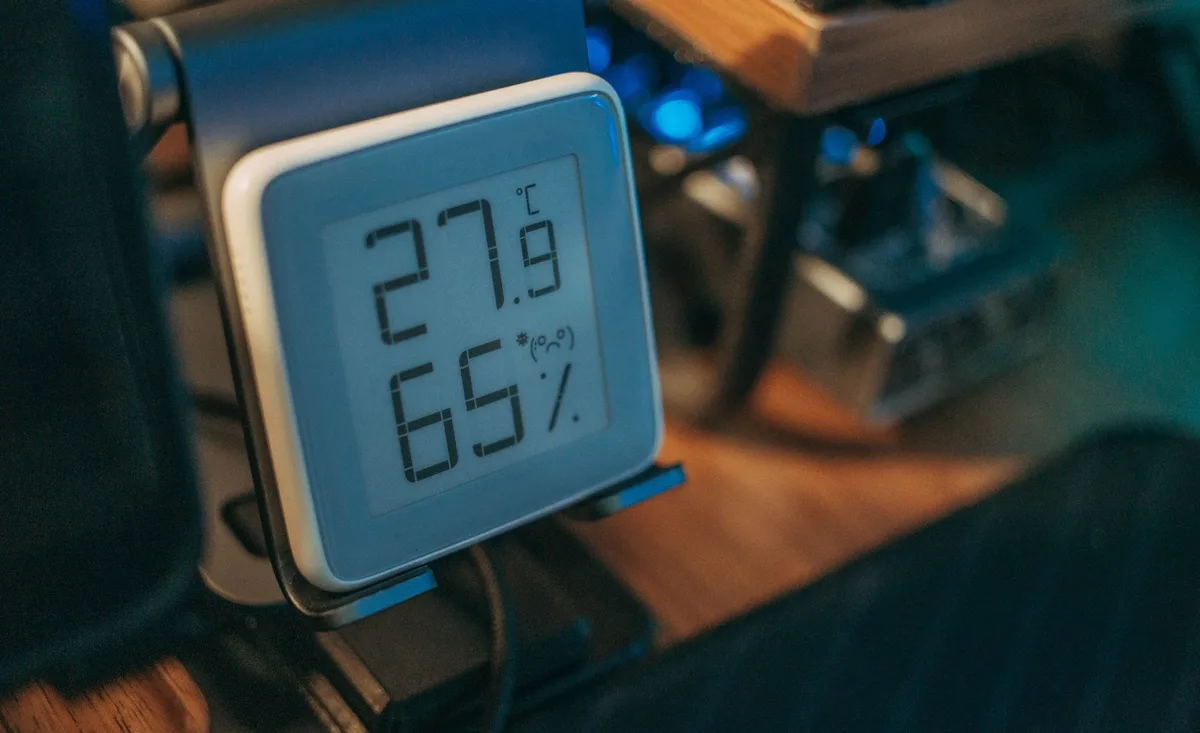
Monitor progress with a standalone hygrometer if your unit’s built-in sensor seems unreliable. Cheap hygrometers cost under twenty dollars and confirm whether your dehumidifier is actually holding the temperature you think it is. Many people discover their unit reads 45% while the room actually sits at 55%, meaning they’ve been underestimating the problem.
Be patient with timelines. Setting the right humidity in May won’t eliminate a severe infestation by June. Realistic expectations matter.
Expect visible improvement in allergy symptoms within two to four weeks of consistent operation. Expect meaningful dust sample allergen reductions within eight to twelve weeks. Complete suppression in a heavily infested bedroom may take three to four months of sustained effort combined with encasements and laundering.
Common Mistakes People Make
Even well-intentioned homeowners make errors that undermine their dehumidifier’s effectiveness against dust mites. Knowing what to avoid saves money, time, and frustration.
Under-sizing the unit is the most frequent mistake. A 20-pint dehumidifier in a 500-square-foot bedroom with average summer humidity will run at full capacity constantly yet never reach 45%. The unit will hum along happily, the humidistat will never trigger shutdown, and humidity will plateau somewhere between 55% and 60%.
You’ll assume the dehumidifier doesn’t work and stop using it. The fix is straightforward: buy a unit rated for at least 30% more capacity than the room’s square footage suggests.
Ignoring basement and ground-floor dynamics. If your bedroom sits above a damp crawl space or unfinished basement, humidity migrates upward through floor joists and wall cavities. Running a dehumidifier only in the bedroom fights an uphill battle. Addressing the source, sealing access points, running a dehumidifier in the basement below, or both, dramatically improves bedroom results.
The bedroom unit then maintains rather than discovers target humidity.
Setting the humidity too low in the name of maximum protection. Dropping to 25% or 30% doesn’t meaningfully outperform 45% for mite control. It does damage wooden flooring, crack plaster, irritate your nasal passages, and increase your electricity bill.
Dust mites stop reproducing effectively below 50%. Pushing much further below that threshold buys you nothing useful.
Placing the unit near heat sources such as radiators, sunlit windows, or kitchen appliances. Warm air rises and creates false readings on the internal hygrometer. The unit thinks the room is already dry and shuts off prematurely while actual humidity remains elevated.
Place the dehumidifier in a neutral location away from direct heat and cooling drafts.
Skipping maintenance on filters and coils. Dust accumulates on intake screens and evaporator coils over time, restricting airflow and reducing moisture extraction capacity. Clean the filter every two weeks during peak allergy season.
Wipe down visible coil surfaces monthly with a soft brush or compressed air. Neglected units lose 20% to 30% of their rated capacity within a single season.
Using the unit intermittently. Turning the dehumidifier on only when allergies feel bad creates humidity swings that dust mites exploit. They adapt to brief dry periods and rebound quickly when moisture returns. Consistent daily operation keeps pressure constant.
If your schedule prevents nightly use, program the unit on a timer that covers your entire sleep period at minimum, preferably 24/7 during high-humidity months.
Expecting elimination rather than suppression. No dehumidifier kills every mite instantly. The goal is population reduction to allergen-insignificant levels. Accept that some mites will persist in cracks and deep fibers.
Combine humidity control with the other practices listed above for results that compound over time.
Do Dehumidifiers Completely Eliminate Dust Mites?
Let’s be honest about what dehumidifiers can and cannot do. They are powerful allies, but they are not chemical warfare.
A dehumidifier operating at sustained 45% relative humidity creates conditions where dust mite populations collapse. Adult mites desiccate. Eggs fail to hatch.
New generations simply don’t appear in meaningful numbers. Over several months, the living population in your bedroom can drop by 90% or more depending on initial infestation severity and how consistently humidity is maintained.
But “collapse” doesn’t mean “eradication.” Dead mites and their waste particles remain in your bedding, carpet, and upholstery. Those residual allergens are still biologically active and can trigger reactions even after the mites themselves are gone. This is why pairing dehumidification with regular hot-water laundering and HEPA vacuuming matters, the dehumidifier handles the living population while mechanical cleaning removes the allergen residue.
Whole-house humidity control improves outcomes further. Treating just the bedroom reduces nighttime exposure, which is significant. But treating the entire living space means less overall allergen load migrating through HVAC ducts and air currents between rooms.
If multiple household members suffer from dust mite allergies, whole-house management delivers broader relief.
Some people ask whether investing in a dehumidifier is worth it compared to other approaches like specialized cleaners, anti-mite sprays, or frequent mattress replacement. The answer depends on your situation. Dehumidifiers address the root environmental cause rather than treating surface symptoms.
They work passively and continuously without additional consumables beyond electricity and occasional filter replacements. The ongoing cost is modest, typically two to five dollars per month in energy, and the health benefits accumulate over years of reduced exposure.
For households with children, elderly residents, or anyone with diagnosed dust mite allergy or asthma, the evidence strongly supports humidity control as a first-line environmental intervention. Major allergy and pulmonary organizations, including the Asthma and Allergy Foundation of America, recommend maintaining indoor humidity below 50% as part of comprehensive allergy management plans.
Wrapping It Up
Dust mites are tiny, widespread, and remarkably well-adapted to indoor life, especially in the warm, skin-flake-rich microclimate of your bed. They cause real problems through their waste products, not through bites or direct harm. But their dependence on ambient moisture is their Achilles’ heel.
A dehumidifier turns your home into hostile territory for them by keeping relative humidity below 50%. Set your unit to 45%, run it consistently, place it strategically, and pair it with encasements and regular cleaning. Within weeks, you’ll likely notice fewer morning sneezes, clearer sinuses, and better sleep.
Within months, the living mite population in your home drops to manageable levels.
The technology is proven. The science is clear. And the investment pays for itself through improved comfort and reduced reliance on medication alone.

Table of Contents