Image source: Pexels / Magda Ehlers (Pexels License)
Your basement stays dry. Your air feels crisper. But every few days, you’re stuck wrestling that heavy tank out from under the unit.
Sound familiar? You’re not alone.
Most homeowners dread the emptying ritual. It involves bending, balancing, and sometimes a splash or two on your way to the sink. There has to be a better way, and there is.
This guide walks you through everything you need to know about emptying your dehumidifier without ever lifting it. We’ll cover gravity drains, hose setups, pump kits, and smart habits that cut down on how often you need to empty anything at all.
By the time you finish reading, you’ll have options that actually work. No more awkward lifts. No more water spills.
Just clean, effortless moisture control.
Why You Should Avoid Lifting Your Dehumidifier
Let’s get real for a second. Those tanks aren’t light. A full reservoir can weigh anywhere from five to fifteen pounds, depending on the model and how long it’s been running.
Add in the bulkiness of the unit itself, and you’ve got a recipe for back strain or a slipped tank.
Worse yet, tilting or jostling the unit while carrying it can cause water to slosh into places it shouldn’t go. That ruins floors. It damages cabinets.
And in rare cases, it can even trigger electrical issues inside the machine.
You also risk forgetting the tank was loose. One wrong move and you’re mopping up a puddle instead of enjoying a dry basement.
Avoiding the lift isn’t just about convenience. It’s about protecting your equipment and your space. Once you learn the right methods, emptying becomes a background task, something that happens on its own while you focus on the things that actually matter.
Method 1: Use the Gravity Drain Feature
Many modern dehumidifiers come with a built-in gravity drain port. This is the simplest upgrade you can make, and honestly, it should be your first stop if yours has one.
Look at the bottom or side of your unit. You’ll typically find a small threaded opening with a rubber cap. That’s your gravity drain port.
Remove the cap, and you’re ready to connect a hose.
Grab a standard garden hose or a dehumidifier-specific drainage tube. Slide one end onto the port and route the other end downward toward a floor drain, bucket, or outside. The key here is slope.
Water flows downhill, so the hose needs a consistent downward angle from the unit to the exit point.
Once everything’s connected, flip the switch on your dehumidifier to “drain” mode if your model has one. Some units do this automatically when they detect a hose attached. The compressor will keep pulling moisture from the air, and the water will flow straight out through the hose instead of collecting in the tank.
That means zero lifting. Ever.
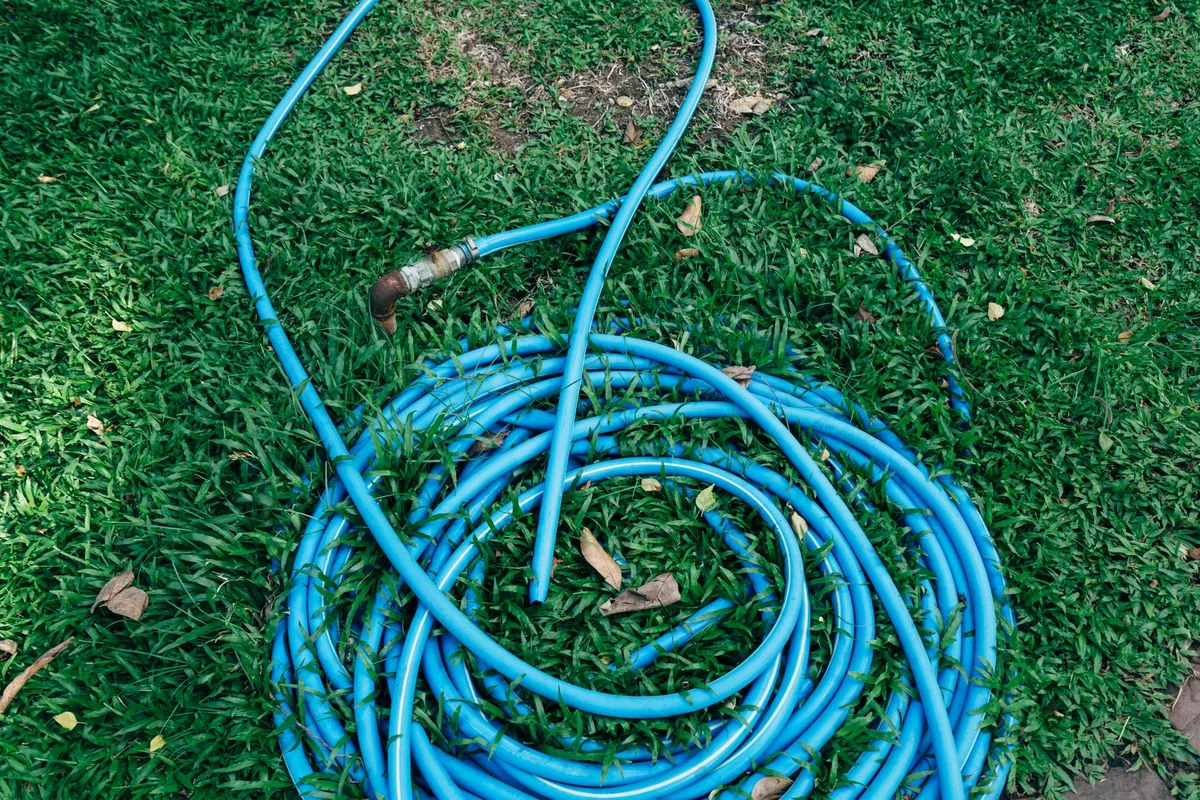
Image source: Pexels / Markus Winkler (Pexels License)
A few things to keep in mind:
- Hose length matters. Most gravity drains work best within twenty to thirty feet. Beyond that, the water struggles to maintain flow, and you may get backups.
- Watch for kinks. A bent or pinched hose stops drainage faster than anything else. Run your eye along the full length before plugging the unit in.
- Secure the connections. Wrap the hose around the port with a hose clamp or electrical tape if it feels loose. Drips at the connection point are annoying and defeat the whole purpose.
If your unit already has this feature, you’re one afternoon project away from never lifting a tank again. Check your manufacturer’s manual for the exact port location and recommended hose size.
Method 2: Install a Continuous Drain Hose
Not all dehumidifiers have a convenient gravity drain port near the bottom. Some models only offer a top-mounted outlet or rely entirely on the internal tank. That doesn’t mean you’re stuck lifting.
A continuous drain hose kit solves this problem by intercepting the water at its source and routing it away. Think of it as giving your dehumidifier its own private plumbing line.
Here’s how it works:
You detach the collection tank and attach a manifold or diverter valve to the unit’s internal drainage path. The diverter sends water through a flexible vinyl or rubber hose instead of letting it pool in the reservoir. You then run that hose to wherever you want the water to go, a utility sink, a floor drain, a bathtub, or even outside through a window seal.
This method requires a bit more setup than the gravity drain, but the payoff is significant. You get truly hands-free operation. Set it up once, and the dehumidifier manages itself indefinitely.
When choosing a hose kit, look for these features:
- Flexible, kink-resistant material. Stiff tubing kinks easily around corners. Go with something like reinforced vinyl that bends smoothly.
- Proper diameter. Most kits use a half-inch inner diameter. That handles typical condensate flow without bottlenecking.
- Secure fittings. Barbed connectors with hose clamps beat friction-fit tubes any day. You don’t want the hose popping off mid-cycle.
Installation usually takes twenty to forty minutes. You’ll need basic tools, a screwdriver, maybe a pair of pliers for the clamps, and your dehumidifier’s manual for reference. Some units require removing a panel or two.
Others snap together with minimal disassembly.
If you run multiple dehumidifiers throughout your home, consider whether a central drainage line makes sense. You could route all the hoses into a single overflow bucket or tie into your home’s existing drain system. That’s a bigger project, but it eliminates tank-emptying duties across the board.
Method 3: Use a Submersible Pump Kit
Gravity drains and hose kits rely on one fundamental rule: water must flow downhill. What happens when your drain point is above the dehumidifier? Or what if the hose path needs to go uphill to reach a proper exit?
Enter the submersible pump kit.
This is the heavy artillery of condensate management. Instead of relying on gravity, a small pump actively pushes the water where it needs to go. You drop the pump into the dehumidifier’s tank (or into a separate collection basin), and it takes over the job of moving water.
These kits typically include:
- A submersible pump rated for condensate
- A floating switch or sensor that triggers the pump when water reaches a certain level
- A discharge hose that runs from the pump to your desired exit point
- A power cord for the pump (some plug into a nearby outlet, others draw power from the dehumidifier itself)
The beauty of a pump system is flexibility. You can push water upward, run it horizontally across a room, or send it through walls and floors to reach a proper drain. Distance isn’t as much of a concern either.
Most condensate pumps can handle fifty to one hundred feet of horizontal run, plus ten to twenty feet of vertical lift.
This makes pump kits ideal for:
- Finished basements where running a hose to an exterior wall isn’t practical
- Multi-story homes where gravity drainage would require going through walls
- Rental properties where permanent modifications aren’t allowed
- Any situation where your dehumidifier sits far from a drain
The trade-off is cost and complexity. Pump kits run anywhere from forty to one hundred fifty dollars, depending on capacity and features. Installation is more involved than a simple hose hookup.
And unlike a passive gravity drain, a pump adds a mechanical component that could potentially fail.
That said, these pumps are built for low-maintenance operation. They’re essentially set-and-forget devices. Just make sure you check the pump chamber occasionally for debris.
Dust and mineral buildup can clog the impeller over time.
If your layout demands it, a pump kit is absolutely worth the investment. It’s the closest thing to true wireless dehumidifier drainage available.
Method 4: Know the Water Level
Even with the best drainage systems in place, you still need to understand how full your dehumidifier’s tank is getting. This awareness prevents overflow, alarms, and unnecessary service calls.
Most units today come with a water level indicator. This might be a clear window on the front, a floating gauge inside the tank, or a digital readout on the control panel. Either way, it’s there for a reason.

Image source: Pexels / MART PRODUCTION (Pexels License)
Check the indicator regularly. If your unit runs continuously in a very humid space, that tank can fill up fast. In peak summer months, some dehumidifiers pull three to five pints per hour.
That’s a full tank in under an hour for smaller models.
Here’s a practical routine:
- Morning check. Glance at the level indicator when you start your day. Note where the water sits.
- Midday spot-check. If the unit is working hard, check again around lunchtime.
- Evening wrap-up. Before you wind down, make sure nothing’s about to overflow.
Some newer dehumidifiers include auto-shutoff when the tank is full. That’s a solid safety net, but don’t rely on it exclusively. Sensors can malfunction.
Floats can stick. It’s always smarter to verify visually.
If your unit doesn’t have a clear indicator, you can estimate fill level by listening. Many dehumidifiers emit a soft gurgling sound as the tank approaches capacity. Others have LED indicators that flash amber or red.
Consult your manual for model-specific signals.
For units you’ve left running unattended, say, while you’re at work, consider setting a timer or using a smart plug with scheduling. This way the unit only runs during hours you can monitor it, or you can program it to cycle on and off at intervals that match your drainage method.
Understanding your water level gives you control. It turns an unpredictable chore into a managed process. And when paired with a gravity drain or pump system, it becomes largely unnecessary, the tank simply never fills high enough to trigger concern.
Preventive Tips to Reduce Emptying Frequency
Emptying less often is the ultimate goal. Here’s how to make your dehumidifier work smarter, not harder.
Seal your space first. A dehumidifier fighting a leaky basement will run forever and fill tanks rapidly. Caulk cracks around windows and foundation walls. Insulate cold water pipes.
Close cellar doors when possible. Every sealed gap reduces the moisture load your unit has to handle.
Position the unit correctly. Place your dehumidifier in the center of the room you’re treating, not tucked into a corner. Airflow matters. The unit needs to pull moist air from all directions.
Blocked vents force the compressor to work harder and produce more condensate than necessary.
Use the right humidity setting. The sweet spot for most living spaces is between forty and fifty percent relative humidity. Going lower wastes energy and produces excess water. Going higher lets moisture problems fester.
Aim for that middle ground and let the unit maintain it efficiently.
Run it on a schedule. Continuous operation isn’t always the answer. If you know your basement gets damp mainly in the morning and evening, program the unit to run during those windows. Modern smart dehumidifiers can learn patterns and adjust automatically.
Clean the filter regularly. A clogged air filter restricts airflow. The compressor compensates by running longer, which means more condensation and more water in the tank. Pull out the filter every two weeks, vacuum it, and wash it monthly.
It takes three minutes and pays for itself immediately.
Consider a whole-house approach. If you’re dealing with persistent moisture across multiple rooms, a single portable unit might be overwhelmed. A integrated HVAC dehumidifier or a properly sized whole-house system handles the job silently and efficiently, with direct drainage built into the ductwork.
Small adjustments add up. Do a few of these, and you’ll notice your dehumidifier running cleaner, quieter, and producing less waste water overall.
Frequently Asked Questions
Can I use any hose for gravity drainage?
You can, but not all hoses are created equal. Standard garden hoses work fine for short runs, but they’re stiff and bulky. Specialty dehumidifier drain tubing is softer, narrower, and easier to route through tight spaces.
Look for clear vinyl tubing with a half-inch inner diameter at most hardware stores.
Will gravity drainage void my warranty?
Generally, no. Manufacturers design gravity drain ports specifically for this purpose. Using the port as intended is covered under warranty.
However, modifying the unit or using unauthorized adapters could void coverage. When in doubt, check your manual or call the manufacturer’s support line before making changes.
How do I prevent algae growth in my drainage system?
Algae thrives in dark, warm, stagnant water. Keep your drain hose elevated where sunlight can reach it. Clean the collection tank and drainage components every few months with a vinegar solution.
And if possible, route the hose so water flows through continuously rather than sitting idle.
What should I do if my dehumidifier doesn’t have a drain port?
Your options are a pump kit, a custom manifold installation, or simply accepting that periodic manual draining is part of owning that particular model. Some third-party accessories claim to retrofit drainage capability, but results vary. A pump kit remains the most reliable workaround for non-drain models.
Is it safe to leave my dehumidifier running with a drain hose attached overnight?
Absolutely, provided the hose is properly routed and secured. This is exactly what these systems are designed for. Just double-check that the hose hasn’t become disconnected or kinked before you head to bed.
A quick visual inspection takes five seconds and prevents surprise flooding.
Final Thoughts
Emptying a dehumidifier shouldn’t feel like a workout. The methods outlined here give you real alternatives to the old tank-lift routine, whether you’re dealing with a simple gravity drain or a more complex pump setup. Pick the approach that fits your space, your budget, and your willingness to tinker.
Once it’s in place, you’ll wonder why you ever struggled with that heavy tank in the first place.

Table of Contents