When your trusty vegetable peeler stops gliding through carrots and potatoes like it used to, it’s frustrating. That smooth, clean peel turns into a ripped, uneven mess. You wonder, “Why do vegetable peelers get dull?” It’s a common kitchen problem, and the answer isn’t a mystery.
It comes down to the materials, how you use it, and how you care for it.
This article dives deep into precisely that. We’ll explore the common culprits behind a dull peeler blade. Understanding these reasons can help you maintain your tools and keep them working efficiently for longer.
The Blade’s Best Friend: Understanding Peeler Materials
Most vegetable peelers have blades made of metal, usually stainless steel. But not all stainless steel is created equal. The specific alloy and how it’s treated play a massive role in its sharpness and how long it stays that way.
Stainless Steel: A Double-Edged Sword
Stainless steel is popular because it resists rust and corrosion. That’s a big plus in a kitchen where moisture is everywhere. However, some stainless steel alloys are softer than others.
Softer metals can dull more quickly. Think of it like a soft butter knife versus a hard steel chef’s knife; the harder steel holds an edge much better.
The manufacturing process also matters. A well-hardened and tempered blade will maintain its sharpness longer. Heat treatment during manufacturing is crucial.
If this step is rushed or done incorrectly, the steel won’t achieve its optimal hardness. This leads to a blade that deforms and dulls easily.
Ceramic Blades: A Different Ball Game
Some peelers use ceramic blades. These are incredibly hard. They can stay sharp for a very long time.
Ceramic is much harder than most steels. This means it resists wear and abrasion better. So, if you have a ceramic peeler, dullness is less of a common issue caused by the material itself.
However, ceramic is also brittle. A hard impact can chip or even shatter a ceramic blade, rendering it useless.
Daily Grind: How You Use Your Peeler
The way you handle your peeler day in and day out significantly impacts its sharpness. It’s not just about what it’s made of; it’s about what you do with it.
The Wrong Veggies, The Wrong Way
Using your peeler on incredibly hard vegetables or fruits can put excessive strain on the blade. While most peelers are designed for common produce like potatoes, carrots, and apples, trying to peel something much tougher, like a dense squash rind, might cause micro-fractures or dulling over time.
Applying too much pressure is another common mistake. You don’t need to force a sharp peeler. If you’re having to press down hard, it’s a sign the peeler is already struggling, or you’re using a technique that’s damaging the edge.
This is especially true for Y-peelers or swivel peelers where the blade angle can be compromised if you push too aggressively.
Hitting Other Surfaces
This is a big one. Accidentally scraping the peeler blade against hard surfaces like metal sinks, ceramic countertops, or even the rim of a metal bowl is like dragging fine sandpaper across it. Each scrape can nick the edge or wear away microscopic amounts of metal.
Over time, these small damages add up, making the blade feel dull even if it hasn’t been used extensively.
The Cleaning Conundrum: Dishwashers and Detergents
You might think tossing your peeler in the dishwasher is an easy way to clean it. But for many peelers, especially those with finer blades, this can be a fast track to dullness.
Dishwasher Trauma
The high heat and forceful water jets in a dishwasher can be harsh. More importantly, in a dishwasher, your peeler can jostle around. It might collide with other, harder dishes like plates or metal cutlery.
These unavoidable impacts can chip or bend the delicate blade edge.
The abrasive nature of some dishwasher detergents can also contribute to wear and tear on the blade over prolonged exposure. While stainless steel is resistant to rust, the constant chemical exposure and physical abrasion in a dishwasher cycle isn’t ideal for maintaining a razor-sharp edge.
Storage: Where Does Your Peeler Live?
Just like the washing process, how you store your peeler can lead to unexpected dullness. It’s about protecting that fine cutting edge.
The Utensil Drawer Danger Zone
The most common place for a peeler is the kitchen utensil drawer. This is often a chaotic environment. Knives, graters, whisks, and other sharp or hard metal tools share the space.
When you rummage for a utensil, your peeler’s blade can easily brush against these other items, causing nicks and dulling. It’s a constant, low-level abrasion that wears down the edge over time.
Proper Storage Solutions
To avoid this, consider dedicated storage. Many peelers come with a protective sheath. Always use it when storing the peeler.
If yours didn’t, you can easily find universal sheaths online or even use a small piece of thick cardboard folded over the blade. Another great option is a utensil organizer with individual slots. This keeps your peeler from banging against other items.
Wear and Tear: The Inevitable March of Time
Even with the best care, all tools have a lifespan. Vegetable peelers, particularly their blades, are subject to inevitable wear and tear from regular use.
Microscopic Grooves and Nicks
Every time you peel a vegetable, the blade interacts with the produce. This isn’t a perfectly smooth interaction. Microscopic particles of the vegetable can get trapped, and the blade itself experiences minor friction.
Over thousands of peels, these small interactions create tiny grooves or wear patterns on the blade’s edge.
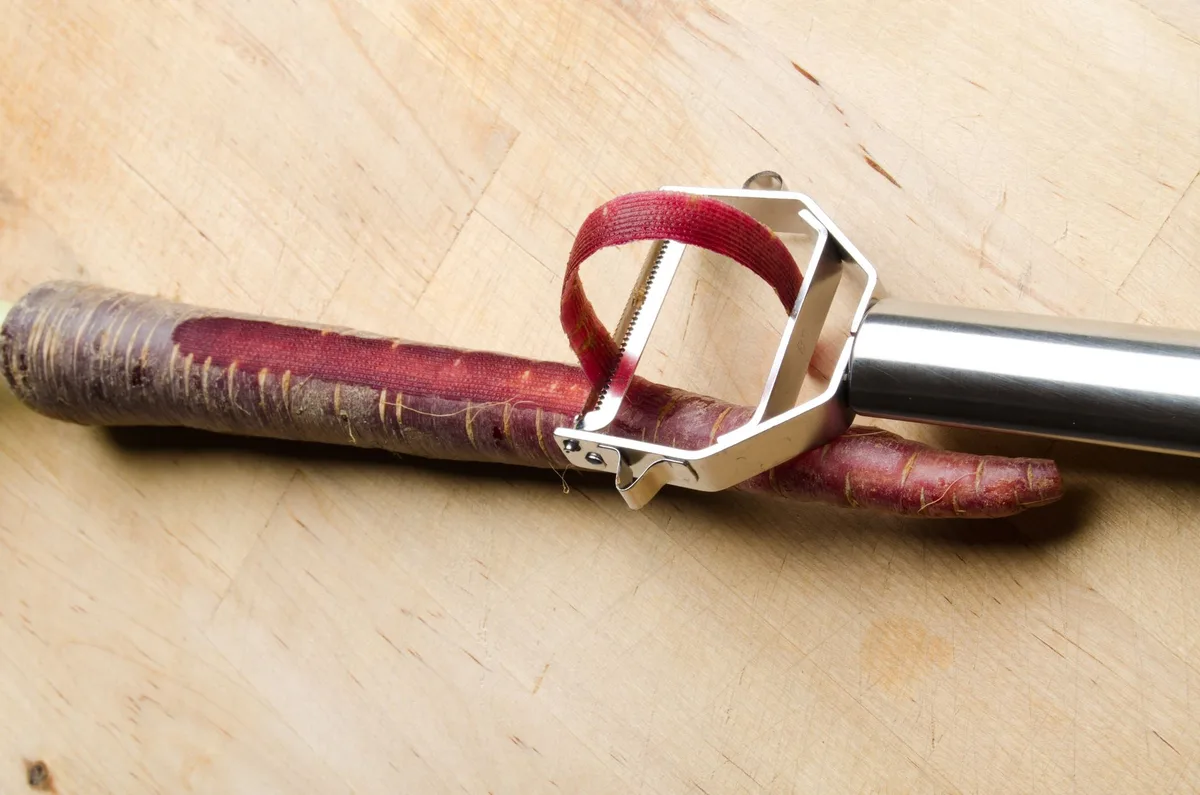
Image source: Pexels / Jason Deines (Pexels License)
These patterns disrupt the smooth, sharp edge. They catch and drag rather than slice cleanly. That’s why even a peeler that looks fine might feel dull.
Losing Its Edge Flexibility
Some peeler designs, especially swivel peelers, have blades that can flex slightly. This flexibility is great for conforming to the shape of different vegetables. However, over time and with repeated use, this flexibility can decrease.
The blade might become slightly stiffer or, conversely, lose its ability to maintain optimal contact with the vegetable surface, leading to less efficient peeling.
Rescuing Your Peeler: Sharpening and Maintenance
The good news is, you don’t always need a new peeler when yours starts to feel dull. Many of them can be brought back to life.
Can You Sharpen a Peeler?
The short answer is yes, but it depends on the peeler type and your tools. For most stainless steel peelers, sharpening is possible. You’ll need a fine-grit sharpening stone, a whetstone, or a specific knife sharpener for Shun knives (though a general quality stone is often sufficient).
The process is similar to sharpening a kitchen knife, but on a much smaller scale. You’re trying to realign or recreate that fine cutting edge. It requires a steady hand and patience.
The goal is to remove material evenly from both sides of the blade to create a sharp apex.
Sharpening Stones and What to Use
A good sharpening stone for kitchen knives is your best bet. You’ll want a fine grit to get a truly sharp edge. Some people use a small ceramic rod sharpener, similar to those used for pocket knives, especially for touch-ups.
For Y-peelers, you’ll need to sharpen each side of the blade individually. Swivel peelers are a bit trickier, as you need to angle the blade correctly against the stone to achieve a uniform edge.
It’s important to note that ceramic peelers generally cannot be sharpened. Their hardness makes them resistant to sharpening methods typically used for metal. If a ceramic blade dulls, it’s usually time for replacement.
Regular Maintenance Tips
Beyond sharpening, simple habits make a difference. Always rinse your peeler immediately after use. This prevents food residue from drying and becoming harder to remove, which can dull the blade.
Dry it thoroughly before storing. As mentioned, storing it in a protective sheath or a separated compartment is key to preventing accidental damage from other utensils.
When It’s Time for a New Peeler
While maintenance is great, there are times when a peeler has simply reached the end of its useful life.
Irreparable Damage
If your peeler blade is bent, chipped, or significantly nicked, sharpening might not be able to fix it. Attempting to grind away enough metal to repair severe damage can compromise the peeler’s structural integrity.
Age and Material Degradation
Over many years, even the best stainless steel can degrade subtly. The metal might become fatigued, losing its ability to hold a sharp edge. For ceramic peelers, brittleness can increase with age and exposure to temperature fluctuations.
If you find yourself sharpening your peeler constantly, and it still doesn’t hold an edge for long, it might just be worn out.
Cost vs. Value
Vegetable peelers are relatively inexpensive kitchen tools. High-quality ones, of course, cost a bit more, but even those are usually much cheaper than a good chef’s knife. If you find yourself spending a lot of time trying to sharpen a peeler that just won’t perform, it might be more economical and certainly more practical to invest in a new one.
A sharp peeler makes food prep faster, safer, and much more enjoyable. Consider exploring what makes for a reliable machine in kitchen gadgets when you’re ready for a replacement.
Conclusion: Keeping Your Kitchen Sharp
So, why do vegetable peelers get dull? It’s a combination of factors. The quality of the blade material, how you use it, how you clean and store it, and simply the wear and tear of time all play a part.
By understanding these elements, we can take better care of our peelers. A little attention to detail can go a long way. Keeping your tools sharp isn’t just about efficiency; it’s about safety too.
A dull peeler is more likely to slip, leading to cuts. A sharp peeler glides smoothly, making meal prep a breeze.

Table of Contents