Image source: Pexels / Đỗ Huy Hoàng (Pexels License)
Dehumidifiers pull moisture from the air, but they also pull money from your electric bill. That’s why knowing exactly how much a unit costs to run matters before you buy one or leave it on all season. The math is simple once you know the variables.
And once you understand the numbers, you can make smarter choices about which unit to buy, where to place it, and when to run it.
This guide walks you through the full calculation process. You’ll learn how to read wattage ratings, convert them into energy use, factor in local electricity rates, and compare real running costs across different dehumidifier sizes and models. We’ll also look at how efficiency ratings like Energy Star change the picture, and what you can do to keep costs down without sacrificing performance.
The Formula: From Watts to Monthly Cost
At its core, calculating dehumidifier running cost comes down to one straightforward equation:
Watts × Hours Used per Day ÷ 1,000 = Kilowatt-Hours (kWh) per Day
Daily kWh × Electricity Rate (per kWh) = Daily Cost
From there, it’s just multiplication to get weekly and monthly totals.
That’s it. No complex physics required. The three pieces of information you need are:
- Wattage, usually listed on the unit’s label or in the manual
- Hours of operation per day, how long the compressor actually runs
- Your local electricity rate, found on your utility bill
Let me break each piece down so you’re not guessing.
Finding the Wattage
Check the label on the back or side of the dehumidifier. Most units display both a “running watts” figure and a higher “starting watts” figure. Starting watts only apply for a fraction of a second when the compressor kicks on, so you don’t need that number for cost calculations.
Running watts are what matter.
If the label doesn’t list wattage directly, look for the amp draw and multiply by your home’s voltage (typically 120V in North America). For example, a unit drawing 5 amps at 120 volts uses 600 watts.
You can also measure actual consumption with a plug-in watt meter, those inexpensive devices give you real-time data and account for efficiency variations between units of the same model. If you want a reference point for typical wattage ranges, Energy.gov provides useful benchmarks for household appliance usage patterns.
Estimating Hours of Operation
This is the trickiest part because dehumidifiers don’t run at a constant rate. The compressor cycles on and off based on humidity levels, temperature, and the size of the space.
Here’s a practical way to estimate:
- Continuous mode (unit runs non-stop): 24 hours per day. This applies if you’ve set the humidity target very low or if the space stays constantly damp.
- Auto mode with a humidistat: typically 8 to 16 hours per day, depending on conditions. A properly sized unit in a moderately damp basement might cycle 10, 12 hours daily in summer.
- Intermittent use: maybe 4 to 6 hours per day if you’re drying laundry or using it seasonally.
Watch your unit for a day. Note how often the compressor kicks on and off. That gives you a real-world duty cycle you can plug into the formula instead of guessing.
Your Electricity Rate
Look at your latest electric bill. Find the “rate” or “price per kWh.” In the U.S., the average residential rate hovers around $0.16 per kWh, but it varies widely by state and provider. Hawaii runs significantly higher, while parts of the Pacific Northwest sit well below the national average.
Write that number down. It’s the multiplier that turns raw energy use into dollars.
How to Calculate Dehumidifier Running Costs
Image source: Pexels / RDNE Stock project (Pexels License)
Now let’s put it all together with concrete examples so the math feels real rather than abstract.
Example 1: Mid-Size Unit in a Damp Basement
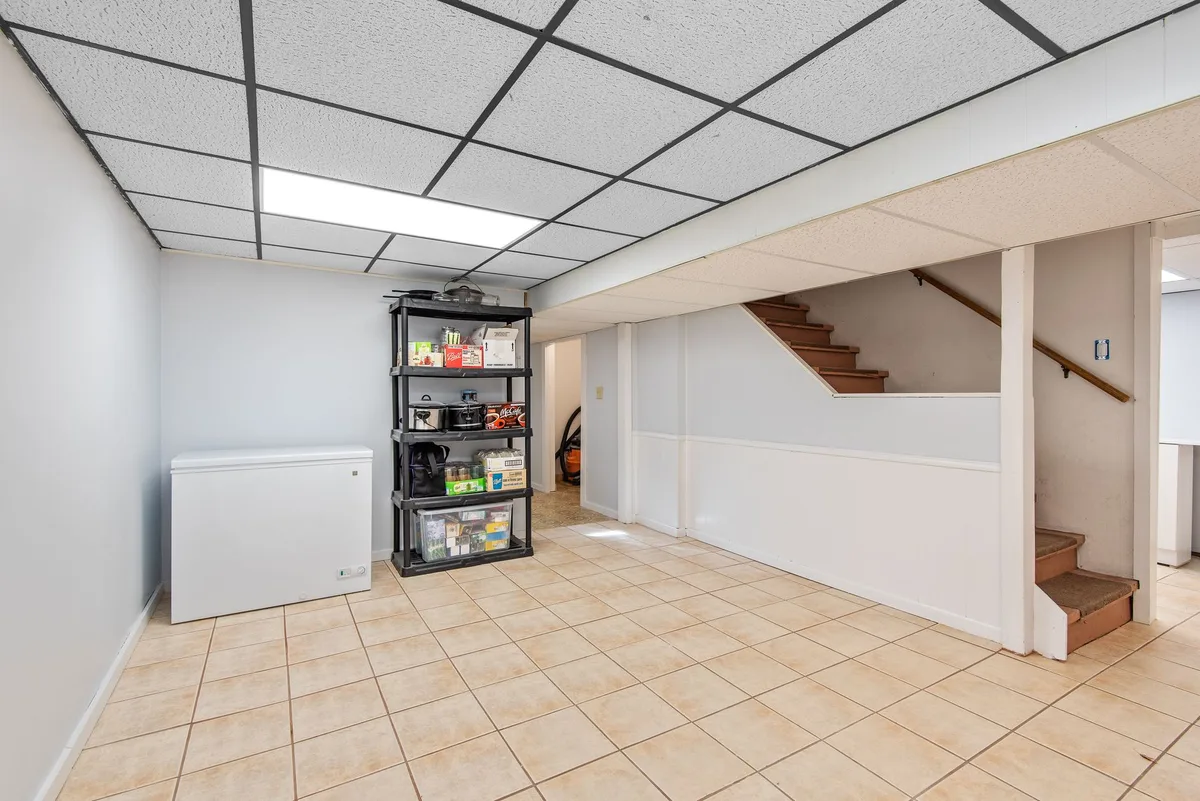
Say you have a 50-pint dehumidifier rated at 550 watts. You set the humidistat to 50% and the compressor runs about 12 hours per day during humid summer months. Your electricity rate is $0.16 per kWh.
Step 1, Daily energy use:
550 watts × 12 hours ÷ 1,000 = 6.6 kWh per day
Step 2, Daily cost:
6.6 kWh × $0.16 = $1.06 per day
Step 3, Monthly cost:
$1.06 × 30 days = $31.74 per month
That’s a meaningful chunk. Over a full summer (June through September), you’re looking at roughly $120 to $130 in electricity costs.
Example 2: Small Unit in a Finished Laundry Room
A 22-pint energy-efficient model draws about 300 watts. The room stays moderately dry, so the compressor runs roughly 6 hours per day. Same electricity rate of $0.16 per kWh.
Daily energy use:
300 × 6 ÷ 1,000 = 1.8 kWh per day
Monthly cost:
1.8 × 24 × $0.16 = $6.91 per month
Big difference, right? Almost five times cheaper to run, and that’s mainly because of lower wattage and fewer operating hours.
Example 3: Large Industrial-Style Unit
A 70-pint unit in a new construction basement pulls about 850 watts. The space is chronically damp, so the compressor runs 18 hours per day. Electricity rate jumps to $0.20 per kWh because you live in a higher-cost area.
Daily energy use:
850 × 18 ÷ 1,000 = 15.3 kWh per day
Monthly cost:
15.3 × 30 × $0.20 = $91.80 per month
That’s a serious operating cost. It underscores why sizing matters, buying a unit that’s too large for your space means the compressor either overshoots the humidity target (short cycling wastes energy) or runs so frequently that your bill spirals.
Quick Reference Table
| Unit Size | Wattage | Hours/Day | Daily kWh | Monthly Cost (@$0.16/kWh) |
|---|---|---|---|---|
| 22-pint (small) | 300W | 6 hrs | 1.8 kWh | $8.64 |
| 30-pint (medium) | 400W | 10 hrs | 9.6 kWh | $15.36 |
| 50-pint (large) | 550W | 12 hrs | 13.2 kWh | $19.87 |
| 70-pint (commercial) | 850W | 18 hrs | 15.3 kWh | $23.04 |
These are illustrative figures. Your actual costs will vary based on the specific unit, your climate, and how tightly you set the humidistat. But the table gives you a sense of scale fast.
Comparing Dehumidifier Efficiency Ratings

Image source: Pexels / Artem Podrez (Pexels License)
Not all dehumidifiers are created equal when it comes to energy use. Two units pulling the same number of pints from the air can have very different wattage draws depending on their compressor technology, coil design, and overall efficiency engineering.
What Is EER and Why It Matters
EER stands for Energy Efficiency Ratio. It measures how many pints of moisture a dehumidifier removes per watt of electricity consumed. A higher EER means more water removal for less power.
The formula is:
EER = Pints Removed per Hour ÷ Watts Consumed
So a unit that removes 2.0 pints per hour while drawing 500 watts has an EER of 4.0. A better unit removing the same 2.0 pints while drawing only 350 watts scores an EER of 5.7, nearly 43% more efficient.
Energy Star Certified Models
Energy Star sets minimum efficiency standards for dehumidifiers. To earn the label, a unit must remove a certain volume of moisture per kilowatt-hour of electricity used. Current standards require Energy Star models to be roughly 20, 25% more efficient than non-certified units of comparable capacity.
That efficiency gap shows up directly in your bill. Consider two 50-pint units:
- Non-certified model: 550 watts, EER around 3.0
- Energy Star model: 400 watts, EER around 4.2
Running both 12 hours a day at $0.16 per kWh:
- Non-certified: 550 × 12 ÷ 1,000 × 24 × $0.16 = $25.34/month
- Energy Star: 400 × 12 ÷ 1,000 × 24 × $0.16 = $18.43/month
That’s a savings of about $70 over a four-month summer season. Over five years of ownership, the efficiency difference could total $350 or more, often enough to cover the price premium of the Energy Star unit itself.
Defrost vs. Non-Defrost Designs
Another efficiency factor is whether the unit has an automatic defrost cycle. In cold environments (below 65°F), moisture on the evaporator coils can freeze, reducing airflow and forcing the compressor to work harder. Defrost cycles periodically warm the coils to melt ice, which uses extra energy.
If you’re placing a dehumidifier in a cold basement or unheated space, look for a unit rated for low-temperature operation. Some models use a heat pump system specifically designed for cold, damp environments and maintain better efficiency than standard units forced to defrost frequently.
Reading the Yellow EnergyGuide Label
Federal law requires appliances to carry an EnergyGuide label showing estimated yearly operating cost. Compare that number across models you’re considering. A $200 difference in purchase price can easily be wiped out by a label showing $50 less in annual energy costs.
Tips to Keep Running Costs Down
Calculating your expected cost is one thing. Actually keeping it low is another. Here are the moves that make the biggest difference.
Size the Unit Correctly
Oversized units short-cycle, they reach the humidity target quickly, shut off, then kick back on before the air re-equilibrates. That on-off churn wastes energy. Undersized units run continuously and still can’t keep up.
Both scenarios cost you more than a properly sized unit would.
A general rule: 10, 15 pints of removal capacity per 500 square feet of floor space, adjusted upward for severe dampness or ground-level locations. When in doubt, go slightly larger rather than significantly smaller, a unit that can hit the target and rest is more efficient than one that never stops running.
Set the Humidistat Wisely
Most people dial their dehumidifier to 45% relative humidity or lower. But health organizations like the EPA recommend indoor humidity between 30% and 50%. Running your unit to 40% or 45% rather than 30% can cut compressor runtime significantly with no comfort penalty.
Every 5-point drop in your humidity setting can add noticeable cost.
Maintain the Unit Regularly
A dirty filter or clogged coils force the compressor to work harder to move the same amount of air. Clean the filter every two weeks during heavy use season. Vacuum the condenser coils annually.
Make sure there’s at least six inches of clearance around the unit for proper airflow. These are five-minute tasks that meaningfully affect efficiency.
Close Doors and Seal Gaps
A dehumidifier fighting an open doorway or cracked window seal will run far longer than one in a closed, contained space. Weatherstrip basement doors. Seal foundation cracks.
Close interior doors when running the unit in a single room. Preventing moisture intrusion at the source reduces how much work the machine has to do.
Use a Built-In Pump or Hose Drain
Some newer models include a pump that lets you drain moisture directly outside through a hose. While the pump adds a small electrical load, eliminating the need to manually empty a tank means the unit can run more continuously without human intervention, and you’re less likely to let a full-tank shutoff cause humidity spikes that require catch-up running later.
Consider a Whole-Home Solution
If you’re dealing with persistent whole-house dampness, a standalone dehumidifier might be the wrong tool. An integrated HVAC dehumidification system or a dedicated outdoor air system (DOAS) can manage moisture more efficiently across the entire home. The upfront investment is higher, but the per-unit efficiency and reduced complexity often pay off over time.
Frequently Asked Questions
How much does a dehumidifier cost to run per day?
A typical household dehumidifier runs between $0.50 and $2.50 per day depending on unit size, efficiency, operating hours, and your local electricity rate. Small efficient units in moderate climates lean toward the bottom; large units in damp spaces with high energy rates sit at the top.
Does leaving a dehumidifier on 24/7 waste electricity?
It depends on the humidity level in the space. Modern dehumidifiers with digital humidistats shut the compressor off once the target humidity is reached. They won’t run 24/7 continuously, they cycle on only when needed.
The real waste comes from setting the humidity target too low or using a unit that’s undersized for the job.
Are expensive dehumidifiers worth it?
Higher-priced models often feature more efficient compressors, better coil designs, and Energy Star certification. Those efficiency gains translate directly into lower monthly running costs. If you plan to run the unit daily for multiple seasons, the energy savings typically offset the higher purchase price within two to three years.
Can a dehumidifier really raise my electric bill noticeably?
Yes. A mid-range unit running 10, 12 hours daily can add $20 to $40 per month to your bill. That’s not dramatic on a $150 monthly electricity bill, but it’s enough to notice over a full heating and cooling season.
Budget for it when comparing models.
Should I run my dehumidifier in winter?
Generally no, unless you have a specific problem like frozen pipe risk or moisture from drying clothes indoors. Cold air holds less moisture, so dehumidifiers work less efficiently in winter and can actually make indoor air feel drier and more uncomfortable. Run it only when you have a measurable humidity problem.
What’s the most energy-efficient type of dehumidifier?
Desiccant dehumidifiers are generally more efficient at lower temperatures but consume more electricity overall in warm conditions. Compressor-based (refrigerant) models with inverter technology and Energy Star certification tend to be the most efficient for typical home use in normal temperature ranges. Always check the EnergyGuide label for yearly cost estimates.
Wrapping It Up
Calculating dehumidifier running cost doesn’t require an engineering degree. You need three numbers, wattage, daily operating hours, and your electricity rate, and a willingness to do basic arithmetic. Once you have those, you can compare any two units on a dollar-per-month basis instead of guessing from features and marketing claims.
The biggest lever you have is efficiency. An Energy Star certified unit sized correctly for your space can cut your running cost by a third or more compared to a cheap, oversized, non-rated model. Pair that with smart humidistat settings, regular maintenance, and good sealing, and you’ll keep moisture under control without paying a fortune to do it.
Know your numbers before you buy. Your future self, and your electric bill, will thank you.

Table of Contents