If you’ve just bought an air purifier, or you’ve had one sitting in the corner collecting dust instead of removing it, you’ve probably asked yourself this exact question: how long should I run an air purifier? Is it safe to leave it on all night? Will it burn out if I run it 24/7?
Am I just wasting electricity and throwing money out the window?
Let’s clear the air on this one. You don’t run an air purifier like a microwave. You don’t turn it on just until the food is hot, or the smell is gone.
You run it like a refrigerator, constantly. The moment you switch it off, the pollution levels in your room start climbing back up. Dust settles, pollen drifts in, VOCs off-gas from your sofa, and the particles you just filtered out start accumulating again.
Image source: Pexels / Max Vakhtbovych (Pexels License)
I know running a machine non-stop feels excessive. But the science is clear: for maximum benefit, your unit needs to run continuously. The real questions aren’t if you should run it, but how you should run it to balance air quality, noise, and energy use.
That is exactly what we are digging into here.
The Short Answer: Continuous Operation Wins Every Time
Air purifiers are most effective when they run 24 hours a day, 7 days a week. This isn’t speculation. It is the direct conclusion of how they physically clean the air.
They work by circulating the air in a room through a HEPA and carbon filter. The industry calls this Air Changes per Hour (ACH).
Let’s say your unit is rated for a 300 sq ft room and claims 4 ACH. This means it can theoretically filter all the air in the room every 15 minutes. That sounds great, right?
So why not just run it for 15 minutes, four times a day?
Because the air doesn’t stay clean. The second you turn it off, your home becomes a source of particles. Cooking nearby, opening a door, your own skin shedding, dust coming through the vents, it all adds up.
Running constantly keeps the particle count permanently low.
Think of it like a fish tank. You don’t turn the filter on for an hour and then turn it off. The fish would die.
Your air isn’t that different. Your lungs are the fish in this analogy.
Running a purifier intermittently is like taking two steps forward and three steps back. You spend energy cleaning the air, then you let it get dirty again, then you clean it again. Continuous operation maintains a steady state of cleanliness.
That is the goal.
Factors That Affect How Long You Should Run an Air Purifier
While “24/7” is my standard advice for the health-conscious, the necessity and intensity of that runtime depend on a few key variables.
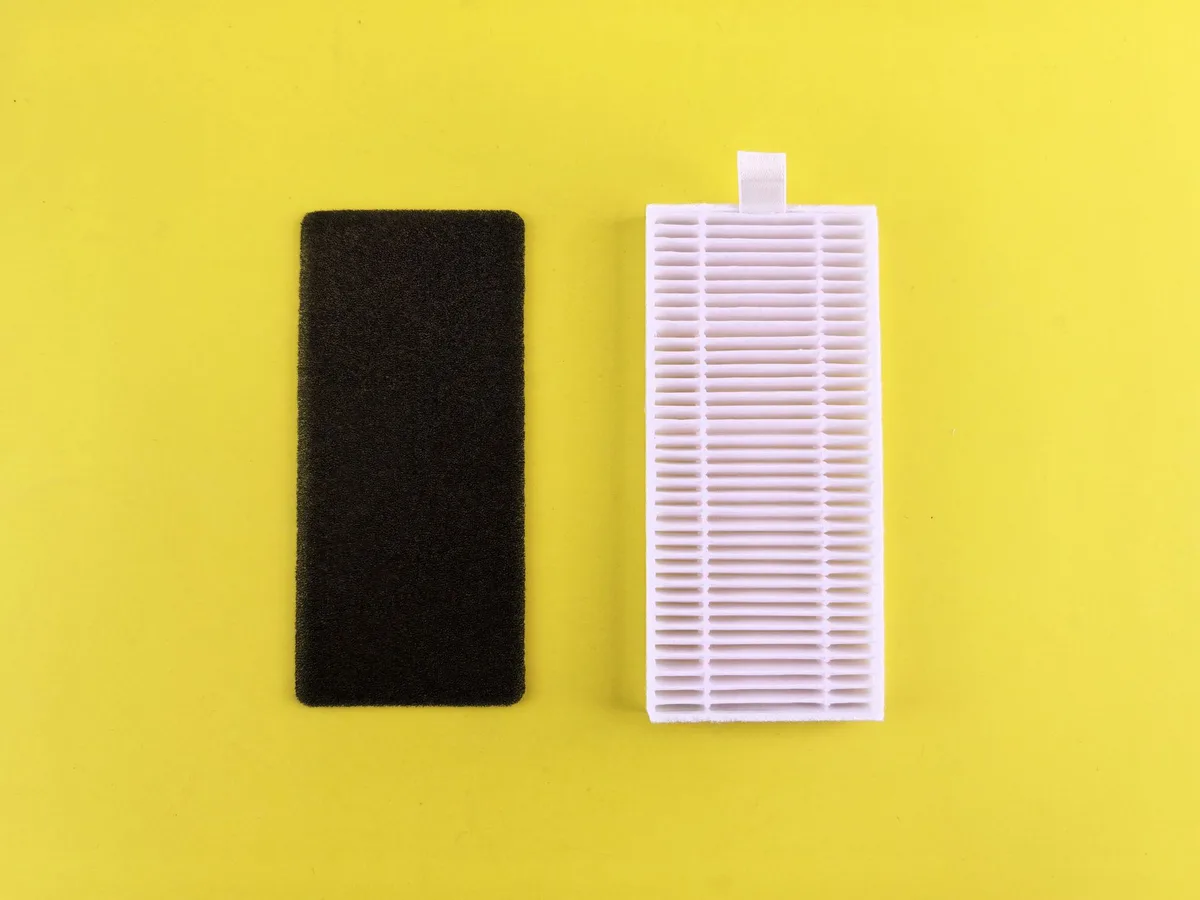
Image source: Pexels / Andrey Matveev (Pexels License)
Room Size and CADR Rating
Match your machine to your room. A tiny desktop purifier in a large open-plan living room is useless unless it runs on full blast 24/7. Even then, it will struggle to keep up.
CADR stands for Clean Air Delivery Rate. It tells you how many cubic feet of air the machine can clean per minute. You need a CADR that is at least two-thirds of the square footage of your room.
If you meet or exceed this ratio, running constantly on a low setting keeps things pristine. If you are below it, you have to run it on high constantly, which is noisy and less efficient.
The Association of Home Appliance Manufacturers (AHAM) maintains a great database for checking CADR ratings on certified purifiers. It is worth looking up your model to see if it is truly sized for your space.
Your Environment and Air Quality
Where you live changes everything.
- Urban / High Traffic: Constant operation is a must. PM2.5 levels from exhaust are always elevated outside, and they leak in through every crack.
- Rural / Clean Air: You might get away with running it on a lower fan speed or relying on an Auto mode.
- Wildfire / Smoke Season: You must run it 24/7 on the highest setting you can tolerate. This is non-negotiable. Fine particulate matter from wildfires is acutely dangerous.
Auto mode is a brilliant feature for this. It uses a particle sensor to monitor the air and adjusts the fan speed automatically. It saves energy when the air is clean and cranks up when it detects a spike.
If your purifier has it, use it.
Your Health Profile
If you have asthma, allergies, or a compromised immune system, you do not get a choice. You must run the purifier continuously in the room you spend the most time in. Even a short drop in filtration efficiency can allow enough allergens to build up and trigger a reaction.
For everyone else, the benefits are about long-term lung health, reducing the dust you have to clean, and sleeping better. The health cost of dirty air is real, even if you don’t feel it acutely every day.
General Guidelines for Running an Air Purifier
Here is how you apply the “run it 24/7” rule to your specific situation.
Image source: Pexels / tommy picone (Pexels License)
For Allergies and Asthma
This is a no-brainer. Pollen, dust mites, and pet dander are airborne around the clock. Your purifier needs to run in the room you occupy most.
That is usually the bedroom at night and the living room during the day.
Close the windows. An open window fights directly against the purifier. The EPA strongly recommends continuous filtration for people with allergies to maintain a low particle count.
Do not turn it off just because you are leaving the house. Let it scrub the air so it is clean when you return.
In the Bedroom — The Sleep Factor
Should you turn off the air purifier at night? Absolutely not. You spend roughly a third of your life in your bedroom sleeping.
Your body repairs itself during this time. Breathing clean air with low particulate matter directly improves your sleep quality and respiratory health.
If the noise is an issue, you bought the wrong purifier. Invest in one with a Sleep Mode that runs the fan at a nearly silent speed. It won’t scrub the air as fast on low, but over eight hours, it maintains a very high level of cleanliness.
If you have a large room, run the purifier on high during the day and switch to sleep mode an hour before bed.
For Pet Owners
Dog and cat dander is one of the most common indoor pollutants. It floats in the air for hours. If you have a pet, your air purifier needs to be a permanent fixture in your home.
Don’t just run it when the pet smells. Run it 24/7. The dander is invisible.
You will notice the difference in how much dust collects on surfaces and how much less your nose runs. The fur you see on the floor is just the start. The microscopic stuff floating in the air is what bothers your lungs.
After Cooking or Painting — VOCs
This is where a carbon filter truly shines. Cooking produces grease and fumes. Painting and renovations release volatile organic compounds (VOCs).
While your standard advice is to run the purifier 24/7, you should specifically run it on high for at least four to eight hours after these events to fully scrub the air. If you have an auto mode, it will handle this spike, but manually overriding it to high is faster and more effective.
Auto Mode vs. Manual Scheduling
If your purifier has an Auto mode, use it. This is the most intelligent way to run the machine 24/7 without wasting energy on high speed when it isn’t needed. The sensor detects particle spikes instantly and adjusts the fan.
If you don’t have auto mode, running it on low 24/7 is better than running it on high for four hours. Consistency beats intensity. Your goal is to maintain a baseline of clean air, not just nuke it once a day and let it get dirty again.
Energy Efficiency — What Does It Actually Cost?
Let’s address the elephant in the room: the electricity bill.
Modern brushless DC motors are incredibly efficient. A standard purifier on low draws about 15 to 50 watts. On high, maybe 60 to 100 watts.
Compare that to a space heater which draws 1500 watts. Your air purifier uses a fraction of the power.
Let’s calculate a worst-case scenario. 100 watts on high at $0.12 per kWh for 24 hours. That is 2.4 kWh. The cost is roughly $0.29 per day.
That is less than $9 a month. Most people run them on medium, which is half the cost.
If you are spending $9 a month to breathe cleaner air, sleep better, and avoid buying dusters and allergy meds, that is the best $9 you can spend. The health return on investment is enormous.
Will Running It All the Time Wear It Out?
A common worry is that running a motor 24/7 will kill it in a year. Actually, the opposite is true.
Modern air purifiers use brushless DC motors. They are built for continuous operation. Many controllers are rated for 30,000 to 50,000 hours.
That is over five years of running constantly. You will likely get bored of the shape and style of the machine before the motor dies.
What will wear out is the filter. Running a purifier 24/7 means you will replace the HEPA filter every six to twelve months. This is a normal maintenance cost.
Here is the critical advice: a clogged filter is worse for the motor than continuous operation. When the filter is clogged, the motor has to work harder to suck air through it. This creates heat and wear.
Change your filters on schedule as per the manual. Running it 24/7 with a clean filter is far healthier for the machine than running it intermittently with a dirty filter.
Most machines have a filter replacement indicator. Follow it religiously.
Frequently Asked Questions
Let’s tackle the remaining common questions people have about air purifier runtime.
Can I run my air purifier too long?
No. You cannot over-clean the air to a harmful level using a standard HEPA and carbon filter purifier. The air will simply get cleaner and cleaner until it reaches a natural equilibrium.
The only danger would be with ozone-generating air purifiers, which you should avoid buying altogether.
Is it safe to run an air purifier 24/7?
Absolutely. It is perfectly safe. Modern units have thermal sensors and safety features built in.
Just make sure you don’t cover the unit or block the intake and exhaust vents. It needs to breathe just like you do.
Should I run my air purifier when I’m not home?
Yes, absolutely. Set it to run while you are out. This is the best time to scrub the air of lingering VOCs and dust, so you come home to pristine air.
If you are worried about energy, use the timer or auto mode.
How often should I change the filter if I run it 24/7?
Check your owner’s manual. The general rule of thumb is every six to twelve months for a HEPA filter running 24/7. If you live in a very polluted area, it could be every three to four months.
If you notice the airflow is weak, the air smells dusty, or the filter looks dark grey or black, change it immediately.
Does running it 24/7 affect humidity?
A HEPA purifier does not remove moisture from the air. It only filters particles. If you have a dry home, the purifier won’t make it drier.
You need a humidifier for that. If your home is damp, the purifier won’t fix that either, you need a dehumidifier. The purifier only handles particles.
Can I use a timer to save electricity?
Timers are useful, but they work against your filtration goals. If you absolutely must use a timer because you can’t stand the noise in a specific room during the day, run it for the full eight to twelve hours you are in the room. Use the longest timer setting possible.
Remember, the air starts getting dirty the moment the machine turns off.
Final Verdict
So, how long should you run an air purifier?
Run it 24/7. No hesitation. No worrying about wearing it out.
No anxiety about the light bill.
The health benefits of consistently low particulate matter, reduced allergens, and better sleep vastly outweigh the tiny cost of electricity and the occasional filter change.
Set it to Auto if you want to be efficient. Use a Sleep Mode at night. But never shut it off completely for long periods, or you are just letting the dust settle, literally.
Stop second-guessing your machine. Let it work. Your lungs will thank you.

Table of Contents