Image source: Pexels / Max Vakhtbovych (Pexels License)
You’ve decided to buy an air purifier. Smart move. But then you look at the specs and suddenly you’re drowning in numbers, CADR, ACH, square footage, HEPA, activated carbon.
It’s enough to make your head spin.
Most people grab the cheapest unit they see. Or they pick the biggest one because “bigger is better.” Neither approach works. You need the right size for your specific room.
Not too small, it won’t clean the air. Not too big, you’ll waste money and energy.
I’ve spent years testing air purifiers and helping people match them to their spaces. Here’s the honest truth: the math is simple once you know what to look for. And I’ll walk you through every step.
Let’s start with the first thing you need to understand.
Understanding Room Size: Square Footage Isn’t Enough
Most air purifier boxes list a “recommended room size.” That number is useful, but it’s also misleading. Manufacturers often advertise the maximum square footage the unit can handle, not the size it handles well.
Here’s why that matters. An air purifier rated for 500 square feet will technically move air through a 500-square-foot room. But it’ll only do a full air change once every hour or two.
That’s not enough for most people who want clean air.
The real metric you need to care about is air changes per hour (ACH). More on that in a moment. First, let’s measure your room.
How to Measure Your Room for an Air Purifier
Grab a tape measure. You need the length, width, and ceiling height.
- Length × width = floor area in square feet.
- Multiply by ceiling height to get cubic feet.
Standard ceilings are 8 feet. If you have taller ceilings (common in older homes or modern lofts), you need more filtration power. A room that’s 12×12 with 8-foot ceilings is 1,152 cubic feet.
The same room with 10-foot ceilings is 1,440 cubic feet. That’s a 25% increase in air volume.
Most air purifier recommendations are based on floor area with an assumed 8-foot ceiling. If your ceilings are higher, adjust your calculations. When in doubt, size up.
Why Ceiling Height Changes Everything
Think about it this way. Pollutants don’t just stick to the floor. They float at all levels, dust, pollen, smoke, pet dander.
A taller room holds more air, which means more total particles. An air purifier sized for a standard 8-foot ceiling won’t cut it in a room with 12-foot ceilings.
So if you have high ceilings, you need a unit with a higher Clean Air Delivery Rate (CADR) . That brings us to the most important number you’ll ever see on an air purifier spec sheet.
CADR Ratings Explained: The Real Number You Need
Image source: Pexels / Jonathan Cooper (Pexels License)
CADR stands for Clean Air Delivery Rate. It’s a standard developed by the Association of Home Appliance Manufacturers (AHAM). It tells you how many cubic feet of air the purifier cleans per minute, for three specific pollutants: smoke, dust, and pollen.
Why three? Because different particle sizes behave differently. Smoke particles are tiny (0.1, 0.3 microns).
Dust is larger. Pollen is biggest. A good purifier handles all three well.
CADR Numbers: What They Mean for Your Room
Here’s the simple rule: Your CADR number should be at least two-thirds of your room’s square footage.
For example, a 300-square-foot room needs a CADR of at least 200. That’s for smoke, which is the hardest to filter. If you see a CADR of 200 for smoke, you’re in good shape.
But that’s a minimum. For better results, especially if you have allergies, asthma, or live in a smoky area, aim for a CADR that matches or exceeds your room’s square footage.
So for a 300-square-foot room, look for a CADR of 300 or higher.
Where to Find CADR Ratings
Not all manufacturers list CADR. Some do. Others don’t.
If you don’t see it, search for the model on AHAM’s verified list. That’s an independent certification. You can trust it.
The U.S. Environmental Protection Agency (EPA) also recommends using CADR to size air purifiers. You can check their official guidance on EPA’s indoor air quality page for more details.
What About No CADR Rating?
If a purifier doesn’t list CADR, be cautious. It might still work, but you’re guessing. Some brands use “CFM” (cubic feet per minute) instead.
CFM is the raw airflow. CADR accounts for filtration efficiency. A high CFM with a low-efficiency filter gives you a low CADR.
Always prefer CADR. It’s the industry standard for a reason.
Calculating Air Changes Per Hour (ACH) for Your Space
Here’s where the math gets practical. Air changes per hour (ACH) is exactly what it sounds like, how many times the purifier replaces all the air in the room in one hour.
For general air quality, you want 4 ACH. That means the purifier fully cycles the room’s air every 15 minutes.
For severe allergies, asthma, or wildfire smoke, aim for 6 ACH (every 10 minutes). That’s a significant difference.
How to Calculate ACH
You need two numbers:
- Room volume in cubic feet (length × width × height).
- CADR (for smoke, because smoke is hardest).
Formula: ACH = (CADR × 60) ÷ Room Volume
Let’s walk through an example.
Room: 12 ft × 14 ft × 8 ft = 1,344 cubic feet.
Purifier CADR: 200 (smoke).
ACH = (200 × 60) ÷ 1,344 = 12,000 ÷ 1,344 ≈ 8.9 ACH.
That’s excellent. You’re getting more than 8 air changes per hour. Plenty for even severe allergies.
Now try a different purifier with CADR 100 in the same room:
ACH = (100 × 60) ÷ 1,344 = 6,000 ÷ 1,344 ≈ 4.5 ACH.
Still good for general use. But if you have asthma or live near a highway, you’d want more.
Recommended ACH for Different Needs
| Situation | Recommended ACH | Equivalent CADR (per 100 sq ft) |
|---|---|---|
| General maintenance | 2–3 | 50–75 |
| Mild allergies | 4 | 100 |
| Moderate allergies, pets | 5 | 125 |
| Severe allergies, asthma, smoke | 6+ | 150+ |
Use this table as a guideline. Your actual CADR needs depend on room volume, not just floor area.
Filter Types: HEPA vs. Activated Carbon (and Why Size Matters)
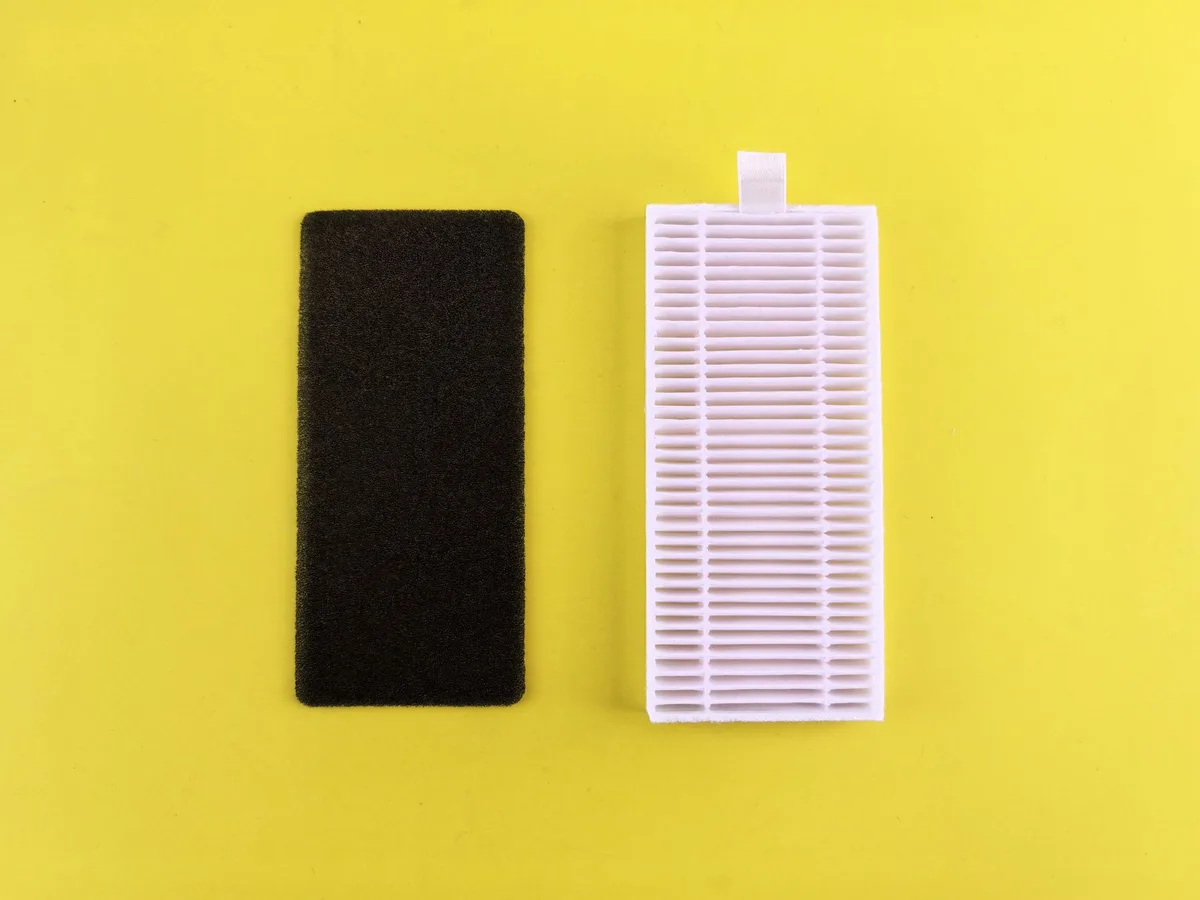
Image source: Pexels / Andrey Matveev (Pexels License)
You can size a purifier perfectly and still get poor results if the filter is wrong. Let’s break down the two main types.
True HEPA Filters
True HEPA captures 99.97% of particles as small as 0.3 microns. That includes dust, pollen, mold spores, pet dander, and most bacteria. It’s the gold standard for particle filtration.
Size matters here because HEPA filters have a finite surface area. A larger filter (or a pleated one) allows more airflow without clogging. A tiny HEPA filter in a big unit will choke quickly, reducing CADR over time.
When you’re choosing an air purifier size for a room, check the filter dimensions. Bigger is better. A unit with a high CADR and a small filter will need frequent replacements.
That’s expensive and annoying.
Activated Carbon Filters
Carbon filters handle gases and odors, VOCs, smoke, cooking smells, chemical off-gassing. HEPA doesn’t touch those.
Carbon is measured in pounds. Heavier carbon filters last longer and remove more odors. For a bedroom, 1, 2 pounds of carbon is fine.
For a kitchen or living room near a busy road, aim for 3+ pounds.
Most air purifiers combine HEPA and carbon in one unit. That’s the best setup. Make sure the carbon layer is thick enough.
Thin carbon pads (like foam) barely work.
What About Washable Filters?
Some purifiers use washable pre-filters or permanent filters. They’re cheaper long-term, but they often have lower CADR. They also don’t capture ultrafine particles as well.
For serious air quality, stick with True HEPA plus replaceable carbon.
Placement: Even the Right Size Fails If You Put It in the Wrong Spot
You’ve bought the right-sized purifier. Great. Now where do you put it?
Most people shove it in a corner behind a sofa. That’s a mistake. Air purifiers need airflow.
If you block the intake or the outlet, you choke the machine.
Best Placement Practices
- Place it near the pollutant source. If you smoke, put it in the smoking area. If you have pets, near the litter box or dog bed.
- Keep it away from walls. At least 1, 2 feet from any wall. Centered in the room is ideal, but not always practical.
- Elevate it if possible. Put it on a side table or shelf. Cold air sinks, but particles float at all levels. Raising the unit helps capture more.
- Avoid behind furniture. The intake needs open space. Don’t tuck it behind a curtain or couch.
- Run it continuously. Air purifiers work best when they run 24/7. They don’t “clean” a room in one pass. They do it over time.
What About Multiple Rooms?
If you have a large open floor plan, one purifier might not cut it. Open-concept spaces are essentially one big room. Calculate the total square footage and buy a unit sized for that entire area.
If it’s too big, consider two smaller units, one for each zone.
Common Mistakes When Choosing Air Purifier Size for a Room
I see these errors all the time. Avoid them.
Mistake 1: Buying Based on “Maximum Room Size”
Manufacturers list the maximum room size at 1 ACH. That’s the bare minimum. You need 4, 6 ACH for real results.
Divide the advertised room size by 4 to get the actual recommended size.
Example: A purifier says “covers 500 sq ft.” At 1 ACH, it’s fine for maintenance. But for allergy relief, it’s really only good for 125 sq ft.
Mistake 2: Ignoring Ceiling Height
I already covered this, but it’s worth repeating. Most people assume 8-foot ceilings. If yours are higher, your room is effectively larger.
Use cubic feet, not square feet.
Mistake 3: Forgetting Open Doors
A bedroom with an open door is connected to the hallway. That hallway leads to the living room. The purifier will try to clean all that air, not just the bedroom.
If you want to purify only the bedroom, close the door. If you keep it open, size up.
Mistake 4: Choosing a Unit That’s Too Big
Wait, can you oversize? Yes. A massive purifier in a small room will create a strong draft.
It’ll also cycle air so fast that the filter can’t capture particles efficiently. Plus, it’s loud and wasteful. Stick to the recommended range.
Mistake 5: Not Checking Noise Levels
A unit sized for a 500-square-foot room running at full speed might blow you out of the room. Check the noise rating (in decibels). For a bedroom, aim for under 30 dB on low speed.
For a living room, under 40 dB is fine.
How to Match Air Purifier Size to Room: A Quick Reference
Let’s put it all together.
- Measure your room. Length × width × height (feet). Get the cubic footage.
- Decide your target ACH. 4 for general use, 6 for allergies/smoke.
- Calculate required CADR. CADR = (Target ACH × Room Volume) ÷ 60.
- Find a purifier with that CADR or higher. Prefer smoke CADR as the reference.
- Check filter type. True HEPA + adequate carbon.
- Place it properly. Open space, away from walls, near the source.
Example Calculations
Small bedroom (10×12×8 ft = 960 cu ft):
Target ACH: 4.
Required CADR = (4 × 960) ÷ 60 = 64.
Look for a purifier with CADR ≥ 64 (smoke). That’s a small unit.
Living room (20×15×8 ft = 2,400 cu ft):
Target ACH: 4.
Required CADR = (4 × 2,400) ÷ 60 = 160.
Look for CADR ≥ 160. Many medium-sized units hit this.
Open-concept space (30×20×9 ft = 5,400 cu ft):
Target ACH: 4.
Required CADR = (4 × 5,400) ÷ 60 = 360.
You’ll need a large unit or two medium ones.
Frequently Asked Questions
Can I use a bigger air purifier in a small room?
Yes, but you probably shouldn’t. It will cycle air too fast, create noise, and waste energy. If you must, use the lowest fan speed.
That’s often quieter and still gives you good ACH.
What’s the minimum CADR I should look for?
For a 200-square-foot room with 8-foot ceilings, get at least 133 CADR (smoke). That gives you 4 ACH. For smaller rooms, adjust proportionally.
Do I need a different size for smoke vs. dust?
Smoke is the hardest to filter because particles are tiny. Size for smoke CADR. If you handle smoke, you’ll handle dust and pollen easily.
Can I use one purifier for multiple rooms?
Only if the rooms are open to each other. If there are doors, close them and use separate units. One purifier can’t pull air through a closed door.
How often should I replace the filter?
Check the manufacturer’s recommendation. Typically every 6, 12 months. If you run the purifier 24/7, change it more often.
A clogged filter reduces CADR dramatically.
Final Thoughts on Choosing the Right Air Purifier Size for Your Room
You don’t need to be an engineer to get this right. Measure your room. Know your target ACH.
Calculate the required CADR. Then pick a unit that matches.
Don’t fall for marketing hype. Don’t assume bigger is better. Don’t ignore filter type or placement.
The right-sized air purifier will make your air cleaner, your breathing easier, and your home more comfortable. It’s one of the best investments you can make for your health.
And if you’re still unsure, go a little higher on CADR. It’s safer to overshoot slightly than to undershoot. Just keep noise in mind.
Now go measure that room. Your lungs will thank you.

Table of Contents