You’ve got a bowl of egg whites, a whisk, and the faint smell of failure. Learning how to whisk isn’t about raw arm strength, it’s about matching your motion to what’s in front of you. Get that right and everything from meringues to hollandaise falls into place.
In our research across culinary school curriculums, manufacturer guides, and USDA food-safety resources, one pattern keeps showing up. Most whisking mistakes happen before the wrist even moves. The right bowl, the right whisk shape, and the right technique change the result far more than speed or force.
As of 2026, retailers stock whisks with 6 to 10 wires, but the best pick depends entirely on your task. Let’s work through the decisions that matter.
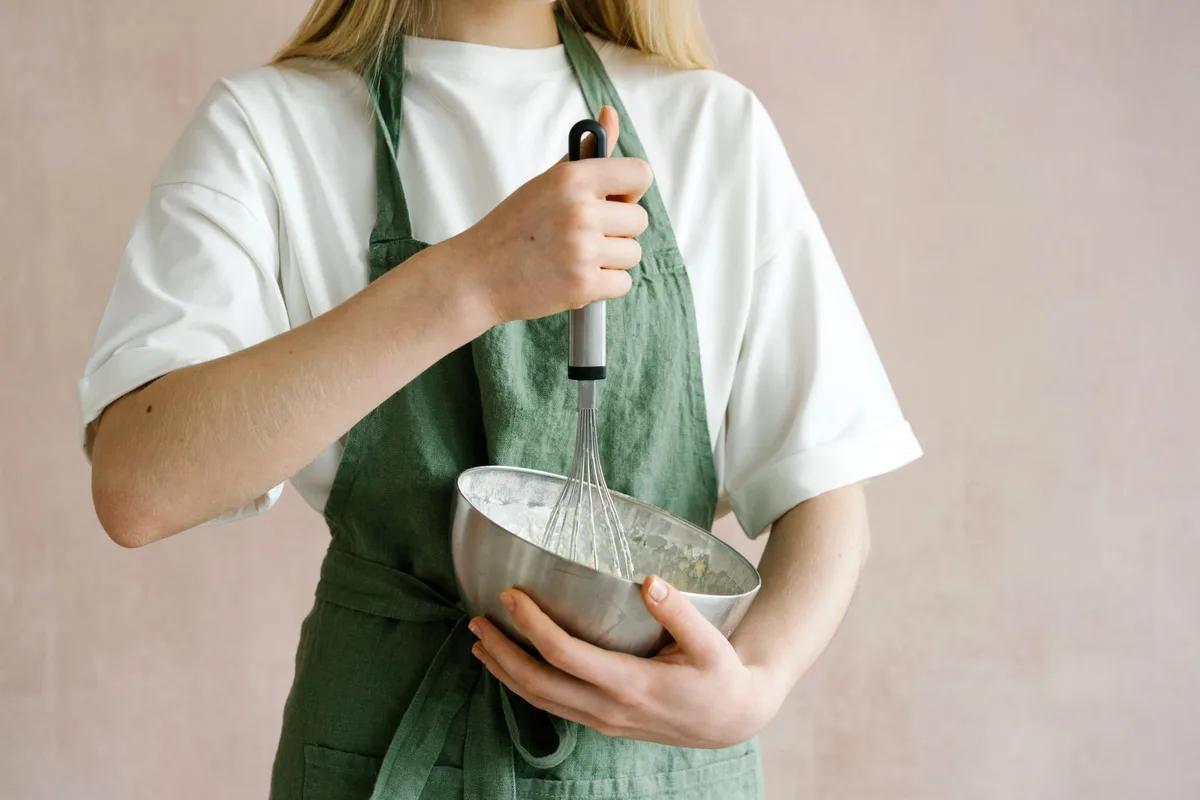
Whisking Isn’t One Technique: It’s a Set of Decisions
Here’s the problem with most whisking advice: it treats every bowl the same. It doesn’t work. Whisking is a decision tree, and the first branch is your end goal.
If you’re whipping egg whites or cream, you need to trap air. If you’re making a vinaigrette or hollandaise, you need to force oil and water to combine. If you’re stirring up pancake batter or a roux, you just need everything evenly mixed.
Three different goals, three different motions.
The good news? You already have most of the equipment you need. The rest is about learning which tool and which movement fit the task.
The Quick Answer: Which Whisk and Which Motion Do You Need?
To whisk properly, first name the goal. Egg whites need air, so use a balloon whisk with a fast circular motion. Cream whips the same way.
Emulsions like vinaigrette need a flat whisk and steady back-and-forth strokes. Batters blend best with a figure-eight motion.
Start Here: What Are You Actually Whisking?
Before you pick up a whisk, identify the physical change you want. It tells you everything else.
| Goal | Main Motion | Best Whisk Shape |
|---|---|---|
| Aerate (egg whites, cream) | Circular, lifting | Balloon |
| Emulsify (vinaigrette, mayo) | Back-and-forth, brisk | Flat or French |
| Blend (batters, gravies) | Figure-eight, stirring | French or balloon |
Do You Need Aeration, Emulsification, or Just Blending?
Aeration means forcing air into a liquid or semi-liquid. Egg whites, heavy cream, and whole eggs all benefit. The air bubbles create volume and lift.
That’s how meringues go from clear goo to glossy clouds.
Emulsification blends two liquids that don’t naturally mix, like oil and vinegar. You need an emulsifier, often egg yolks or mustard, to keep them together. Think mayonnaise, hollandaise, or a basic vinaigrette.
Blending simply makes everything uniform. You’re not adding air, you’re just combining wet and dry ingredients. Pancake batter, gravies, and custards fall into this group.
Match Your Goal to Your Whisk Shape
Each goal pairs best with a specific whisk shape. A balloon whisk’s wide, round wires catch the most air, so it’s the go-to for aeration. A flat whisk’s straight wires stay close to the pan, making it ideal for roux and pan sauces.
A French whisk sits between the two, narrow enough to reach corners and strong enough to emulsify.
If you only own one whisk, a French whisk is the most versatile reasonable choice. For frothing milk in a cup, a coil whisk works faster than a balloon. For small amounts like a single salad dressing, a mini whisk saves you from washing a big tool.
The USDA Food Safety and Inspection Service reminds cooks that raw eggs carry a small risk of foodborne illness. If you’re making recipes with raw or lightly cooked eggs, use pasteurized eggs. That’s the safe route.
Choosing the Right Whisk for the Job
A good whisk doesn’t need to be expensive, but it does need to match the job. Here’s what to look for.
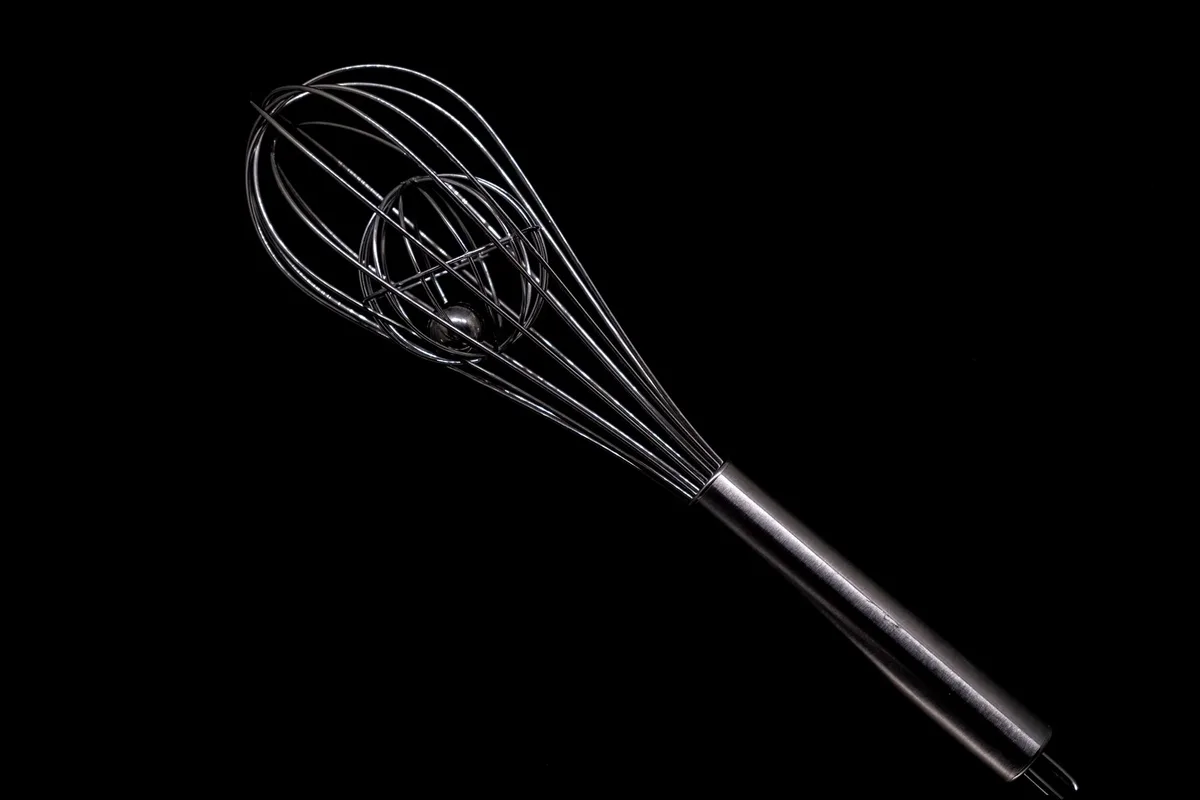
Balloon Whisk vs. French Whisk vs. Flat Whisk
| Whisk Type | Best For | Why It Works |
|---|---|---|
| Balloon | Egg whites, cream, meringue | Wide, rounded wires trap maximum air |
| French | Sauces, dressings, small bowls | Slimmer profile, good spring, reaches corners |
| Flat | Roux, gravy, pan sauces | Wires lie flat against the pan, scrape up fond |
You might also encounter a coil whisk for frothing milk, a ball whisk for lump-free dry mixes, and a mini whisk for tiny jobs. Each has a place, but these three cover most home kitchens.
Handle Materials, Wire Counts, and Sizes That Matter
Standard whisks have 6 to 10 wires. More wires mean more aeration but more drag. For egg whites, 8 to 10 wires work best.
For a thick sauce, 6 wires give you better control.
Stainless steel wires are the norm because they’re durable and dishwasher-safe. Silicone-coated wires protect nonstick pans but bend more easily. Avoid plastic whisk heads.
They flex too much for serious work.
Look for a handle that fits your grip. Stainless handles are easy to clean but can slip when wet. Rubber or silicone grips add comfort for longer whisking sessions.
A 10-inch whisk works for most home tasks. A 12-inch size gives more leverage.
The Right Bowl Changes Everything
Your bowl matters as much as the whisk. It determines how much air you trap and how fast the mixture thickens. A wide, round-bottomed bowl gives the whisk more surface area and better airflow.
Narrow, deep bowls restrict movement.
Copper, Stainless Steel, Glass, or Plastic: What Works Best
| Bowl Material | Best For | Watch Out For |
|---|---|---|
| Copper | Egg whites, meringue | Expensive, needs care |
| Stainless steel | Most tasks | None major |
| Glass | Heating over water | Can be slippery, heavy |
| Plastic | Quick mixing | Retains oils, bad for egg whites |
Copper is the traditional choice for whipping egg whites because it stabilizes the foam. Stainless steel is the best all-around option. It’s clean, responsive, and works for almost everything.
Glass is fine but can be slippery when wet. Plastic is the worst pick for egg whites, since it holds onto grease that kills foam.
According to the American Egg Board, even a trace of fat can prevent egg whites from reaching stiff peaks. So keep every bowl spotless.
Bowl Shape and Angle: Why Tipping Beats Swirling
Professional bakers tilt the bowl instead of moving the whisk in a wide circle. That’s because tilting increases the depth of the mixture and gives the whisk more to bite into.
Rest one hand on the bowl, tip it toward the elbow of your whisking arm, and keep the whisk moving in a tight circular path. This traps more air and gets you stiff peaks faster.
If you’re whisking a sauce in a pan, skip the tilt and use a flat whisk in a back-and-forth motion. If you’re blending a batter, stay with a figure-eight pattern across the whole bowl.
Core Whisking Techniques Everyone Should Know
Now we’re getting to the physical part. Your grip and motion decide how fast the mixture changes, so let’s break them down.
The Wrist Snap and Grip
Hold the whisk like you’d hold a screwdriver. Firm but relaxed. Your index finger can point along the handle for control.
Don’t death-grip it, your forearm will burn out in a minute.
The power comes from your wrist, not your shoulder. A quick wrist snap moves the wires faster than a big arm swing, and it keeps the whisk from sloshing everything out of the bowl.
Keep your elbow tucked close to your body. This reduces fatigue over long whisking sessions. Professional chefs call this “quiet whisking” because the motion stays compact and controlled.
Circular Motion vs. Figure-8 vs. Back-and-Forth
Each motion has a job.
- Circular motion: best for trapping air in egg whites and cream
- Figure-8: best for folding batters and keeping everything mixed
- Back-and-forth: best for emulsifying dressings and scraping pan sauces
For circular whisking, trace the bowl’s inner wall from bottom to top. Lift the whisk slightly as it comes up, then push it back down. This brings air into the mixture from below.
The figure-8 covers more area and prevents lumps. You’re constantly moving the whisk across the bottom and sides, blending wet and dry together.
Back-and-forth strokes work when you want minimal aeration. A vinaigrette should emulsify, not foam, so keep the motion flat and fast.
Branch 1: Whisking Egg Whites to Perfect Peaks
If you’re here for meringues, chiffon cakes, or mousses, this is your section. Egg whites are the most forgiving and the most dramatic.
Start with a spotless stainless steel bowl. Plastic holds grease that kills foam. Make sure no yolk sneaks in, even a tiny bit of fat stops the proteins from stretching.
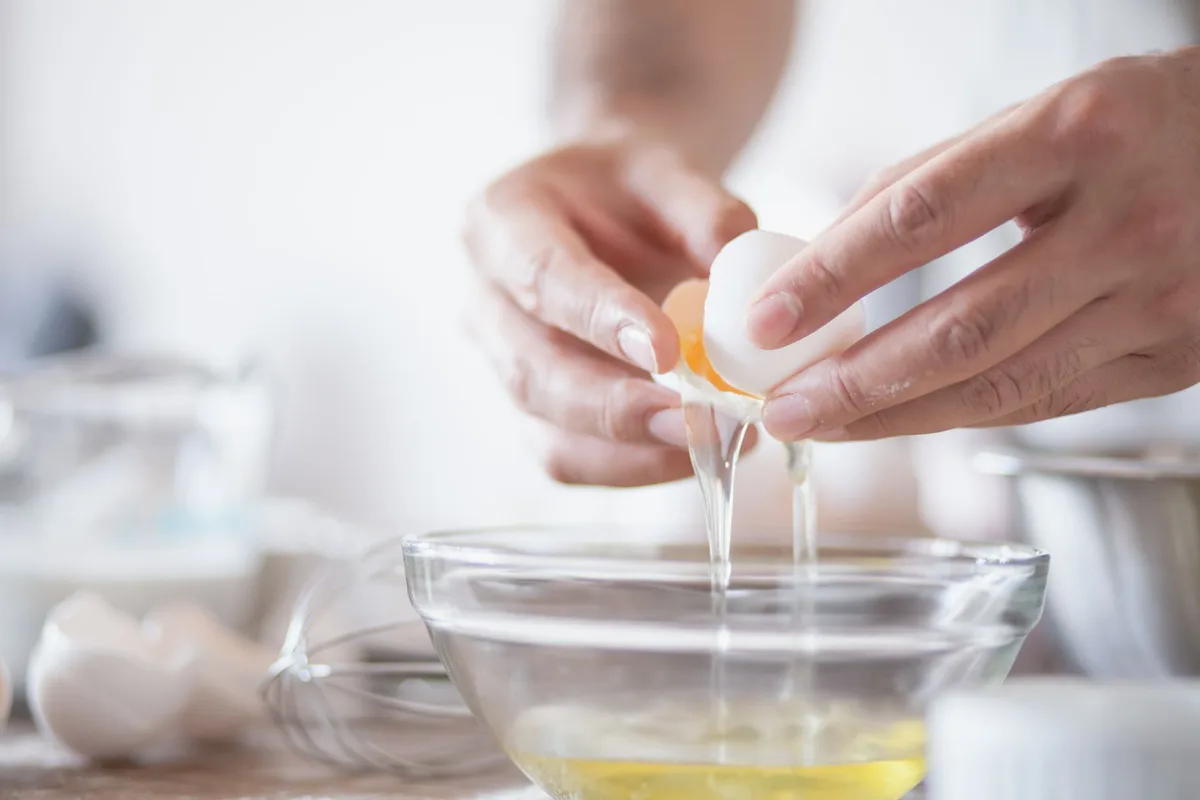
Soft Peaks vs. Stiff Peaks: Knowing When to Stop
Soft peaks droop when you lift the whisk. Stiff peaks stand straight up. Both are shown in the photo above.
For a meringue, you want stiff peaks. For a mousse, soft peaks fold better. Time it right and you’ll hit both.
How to Fix Over-Whisked or Under-Whisked Egg Whites
Under-whisked is easy to fix. Just keep whisking.
Over-whisked is harder. Once the foam turns grainy, you can’t repair it. The proteins have bonded too tightly and squeezed out water.
Starting over is the honest answer.
A small trick: if you’ve slightly over-whisked, add one fresh egg white and whisk briefly. It won’t fully fix it, but it can soften the texture enough for some recipes.
Branch 2: Whipping Heavy Cream Like a Pro
Heavy cream whips faster than egg whites. About 4 to 7 minutes with a hand whisk, depending on fat content and temperature.
Use cold cream, cold bowl, and a cold whisk. The cream should have at least 30 percent milk fat. Whipping cream from the store usually sits around 36 percent.
A circular motion works best. Watch for soft peaks that hold a gentle curl. If you push too far, cream turns grainy, then buttery.
That’s no good for topping a pie.
If you accidentally over-whip, add a splash of cold cream and whisk gently. It won’t rescue fully buttered cream, but it can save a borderline batch.
Branch 3: Emulsifying Sauces and Dressings
Emulsions need patience and force. The classic vinaigrette combines oil, vinegar, and mustard. Whisk the mustard into the vinegar first, then drizzle in the oil slowly.
The back-and-forth motion works best. It shreds the oil into tiny droplets that get trapped by the mustard. Add oil too fast and the sauce breaks.
A broken vinaigrette is easily fixed. Pour it into a new bowl and whisk in a teaspoon of mustard or a few drops of water. Then slowly add the broken sauce back.
Hollandaise needs more care. If it gets too hot, the eggs cook and the sauce separates. Keep the heat low.
If it breaks, remove it from heat and whisk in a tablespoon of cold water.
Branch 4: Blending Batters and Smooth Sauces
For batters, use a figure-eight motion. It covers the whole bowl and breaks up lumps without developing too much gluten.
A roux needs a flat whisk and heat. The flat wires scrape the pan bottom and keep the flour from burning. Keep moving until the flour absorbs into the fat completely.
For custards, whisk constantly but gently over medium-low heat. Fast whisking adds bubbles to an egg-based cream, which looks unappealing. Slow, steady strokes create a silky finish.
If lumps appear in gravy, strain it through a fine mesh sieve. It saves the dish without starting over.
Common Whisking Mistakes and How to Fix Them
Even experienced cooks slip up. Here are the fixes for the most frequent problems.
Using the wrong bowl ruins egg whites. Plastic holds grease that stops foam. Switch to stainless steel.
Whisking cream too long turns it into butter. Stop at soft peaks. If butter happens, save it and spread it on toast.
Adding oil too fast breaks a vinaigrette. Slow the drizzle. Whisk in a teaspoon of mustard and start again.
Holding the whisk like a hammer tires your wrist. Relax your grip and let the wires do the work.
Hand Whisk vs. Electric Mixer: When to Switch
A hand whisk gives control. An electric mixer saves time. Both have a place in the kitchen.
| Tool | Best For | Limit |
|---|---|---|
| Hand whisk | Small batches, sauces, control | Arm fatigue, big volumes |
| Hand mixer | Quick meringue, medium batches | Less feel for texture |
| Stand mixer | Large batches, stiff peaks | Takes up counter space |
| Immersion blender | Soups, hollandaise | Not for aeration |
Use a hand whisk when you need to feel the mixture change. You’ll know the exact moment cream peaks or an emulsion thickens.
Switch to a mixer for large batches or when your arm gives out. Aggregate reviews report that even 12 egg whites take about 8 minutes by hand. A mixer does it in 3.
Final Decision Guide: Your Whisking Cheat Sheet
Keep this table handy. It pulls the whole article into one quick reference.
| Task | Whisk | Motion | Bowl | Time |
|---|---|---|---|---|
| Egg whites | Balloon | Circular | Stainless steel | 5-8 min |
| Heavy cream | Balloon | Circular | Chilled steel | 4-7 min |
| Vinaigrette | Flat or French | Back-and-forth | Any wide | 2-3 min |
| Roux | Flat | Scraping | Pan | 2-4 min |
| Batter | French | Figure-8 | Medium wide | 1-2 min |
If the task is fragile, go slow. If it’s thick, use a shorter stroke. Let the mixture guide you.
Frequently Asked Questions
How long does it take to whisk egg whites by hand?
With a balloon whisk and steady circular motion, expect 5 to 8 minutes for soft peaks. Stiff peaks may take 8 to 10 minutes. Using a copper bowl can cut that time slightly.
Can you over-whisk cream?
Yes. Over-whisking heavy cream past stiff peaks makes it grainy, then it turns to butter quickly. Stop at soft or stiff peaks depending on your recipe.
What is the best whisk for a beginner?
A French whisk is the most versatile. It handles sauces, batters, and small bowls. A balloon whisk is better if you plan to make meringues often.
How do you whisk without a whisk?
Use a fork for small amounts like eggs or dressings. Two forks held together speed it up. A fork won’t aerate egg whites as well, but it works for blending.
Why did my hollandaise sauce break?
Broken hollandaise usually comes from heat that’s too high or oil added too fast. Start over, whisk in a teaspoon of cold water, then slowly add the broken sauce back.

Table of Contents