If you’ve ever been told never to let soap touch a cast iron skillet, you’re not alone. That myth has been passed down for generations, and it keeps a lot of people from cleaning their pans properly. The truth is, knowing how to wash a seasoned cast iron skillet comes down to understanding what seasoning actually is and how modern dish soap interacts with it.
Seasoning is a layer of polymerized oil, not a fragile coating that rinses off with a little detergent. As of 2026, manufacturer guidelines from Lodge and other major cast iron producers confirm that mild dish soap is perfectly safe for routine cleaning. The real concern isn’t soap.
It’s water, heat, and how you dry the pan. Let’s walk through what actually works.
Quick Answer
Wash a seasoned cast iron skillet with hot water and a small amount of mild dish soap. Scrub with a chainmail scrubber or nylon brush. Dry it completely on the stove over low heat.
Wipe a thin layer of oil over the surface. Never soak the pan. Never put it in the dishwasher.
Never let it air dry.
When You Can Use Soap and When You Shouldn’t
Soap anxiety is the most common hangup people have with cast iron. Let’s clear that up fast.
Modern dish soaps are nothing like the lye-based soaps your grandparents used. The old ones stripped seasoning because they contained harsh alkali compounds. Today’s detergents are mild surfactants.
They lift grease and food residue without attacking polymerized oil.
So when can you use soap? Almost always.
Use soap when:
- The skillet feels greasy or sticky after rinsing
- You cooked something aromatic like fish or onions
- You notice visible oil buildup on the surface
- You want to remove any lingering food smell
Skip soap when:
- There’s only light food residue that rinses off easily
- You’re maintaining a very fresh or thin seasoning layer
- You prefer the traditional salt-and-oil scrub method
Manufacturer specifications from Lodge indicate that a drop or two of mild soap is fine for everyday cleaning. The risk isn’t the soap. It’s failing to dry and oil the pan afterward.
The 3 Decision Branches for Cleaning Your Skillet
Here’s where the decision tree comes in. Your cleaning method depends entirely on what you’re dealing with. Pick the branch that matches your skillet’s condition.
Branch 1: Light Residue – The Routine Wash
You cooked eggs, sautéed vegetables, or pan-fried something simple. The pan looks mostly clean with a few bits stuck to the surface.
What to do: Scrape out loose food with a metal spatula while the pan is still warm but not hot. Rinse under hot tap water. Use a nylon brush or soft sponge with a drop of soap if needed.
Rinse again. Dry immediately. Apply a thin oil layer.
Done in under three minutes.
Branch 2: Stuck-On Food – The Deep Clean
You seared a steak, cooked bacon, or made cornbread that left a crusty layer behind. The residue doesn’t lift with a quick rinse.
What to do: Pour about half an inch of water into the warm skillet. Place it on the stove over medium heat. Let the water simmer for two to three minutes.
The steam and heat will loosen the stuck food. Scrape with a metal spatula. Pour out the water and rinse.
For stubborn bits, use a chainmail scrubber with coarse salt and a little water. Rinse, dry, oil, done.
Branch 3: Burnt or Gummy Oil – The Strip and Reseason
This happens when oil was applied too heavily and left to sit. The surface feels sticky or tacky, not smooth. Regular washing won’t fix it.
What to do: Wash with hot water and mild soap using a chainmail scrubber. If the stickiness persists, scrub with coarse salt and a small amount of oil to break down the gummy layer. Rinse thoroughly.
Dry on the stove. Apply a very thin layer of oil and heat the pan until it just smokes. Let it cool.
Wipe out any excess oil. If that doesn’t work, you may need to strip the seasoning and start fresh.
Step-by-Step: How to Wash Without Damaging Seasoning
This is the core process. Follow these five steps every time, and your seasoning will last for years.
Step 1: Scrape While Warm
Let the skillet cool for about five minutes after cooking. You want it warm, not hot enough to burn your hand. Use a metal spatula or a Lodge plastic scraper to lift any stuck-on food.
Work gently. You’re scraping food, not the seasoning. A properly seasoned pan can handle metal tools without damage.
Step 2: Rinse With Hot Water
Turn the tap to hot. Rinse the skillet under running water. Use your fingers or a soft brush to wipe away loose particles.
Holding the pan at an angle helps the water carry debris off the surface. If the residue is stubborn, move to boiling water on the stove instead of forcing cold water onto a hot pan.
Step 3: Scrub With the Right Tool
This step depends on what you’re cleaning. For routine washes, a stiff nylon brush works. For stuck-on food, use a chainmail scrubber.
Apply a drop of mild dish soap to the scrubber, not directly to the pan. Scrub in circular motions. Focus on the cooking surface and the upper side walls.
Rinse thoroughly. No soap should remain on the surface.
Step 4: Dry Immediately (This Is Not Optional)
Water is the enemy of cast iron. Moisture causes flash rust, which appears as orange spots within minutes. Never let your skillet air dry.
Dry it with a clean lint-free cloth or paper towel. Then place it on the stove over low heat for one to two minutes. This drives off any remaining moisture that the towel couldn’t reach.
Step 5: Apply a Thin Oil Layer
Pour about half a teaspoon of oil onto the warm skillet. Canola, vegetable, or grapeseed oil work well. Use a paper towel to spread the oil over the entire cooking surface and the side walls.
Then take a clean paper towel and wipe the oil off as if you made a mistake. You want a microscopic layer. The pan should look dry but have a subtle sheen.
Too much oil leaves a sticky surface.
Mistakes That Ruin Seasoning Fast
Most seasoning damage comes from a handful of preventable errors. Avoid these, and your skillet will stay in good shape.
The Cold Water Shock Error
Dropping a hot cast iron skillet under cold tap water is one of the fastest ways to warp or crack it. Even if the pan survives, the thermal shock can cause the seasoning to flake off in patches. Always let the pan cool for a few minutes before washing.
And if you need to use water while the pan is still warm, use hot water, never cold.
Scrubbing Too Aggressively
A stiff steel wool pad can strip seasoning in seconds. Reserve steel wool only for rust removal or full stripping. For everyday cleaning, chainmail, nylon brushes, and salt scrubs are aggressive enough to remove food but gentle enough to leave seasoning intact.
If you see gray or silver metal on your scrubber after washing, you’re scrubbing too hard.
Leaving Water to Air Dry
This is the single most common mistake. Water sits on the surface, oxygen hits the iron, and rust forms within minutes. Even a quick towel dry leaves microscopic moisture behind.
Always finish with a minute or two on the stove over low heat. The pan should feel dry to the touch before you oil it.
Oiling Too Heavily
A thick layer of oil does not season better. It turns into a sticky, gummy mess that attracts dust and collects food debris. The correct amount is so thin that the pan looks dry but feels slick.
If you can see visible oil pooling, you’ve used too much. Wipe it out with a paper towel until the surface is barely glossy.
How to Fix Common Problems After Washing
Even with the best intentions, things can go wrong. Here’s how to fix the three most common post-wash issues.
Rust Spots
Orange rust appears when moisture sits on the surface too long. If you catch it early, it’s easy to fix. Scrub the rusted area with fine steel wool or a chainmail scrubber and a little water.
Dry immediately. Apply a thin layer of oil and heat the pan on the stove until it smokes lightly. Let it cool.
The rust is gone, and the seasoning is restored.
Sticky Surface
Stickiness usually means you applied too much oil after washing. Fix it by heating the skillet on the stove over medium heat for a few minutes. The excess oil will burn off.
When the pan stops smoking, let it cool. Wipe the surface with a paper towel. If the stickiness remains, scrub with coarse salt and a little oil, then rinse and dry.
Flaking Seasoning
Flakes mean the existing seasoning layer wasn’t bonded properly or was compromised by thermal shock. Light flaking can be fixed by applying a thin oil layer and baking the pan in the oven at 375°F for one hour. If large patches are flaking off, you may need to strip the pan completely and start a new seasoning layer from scratch.
Choosing Your Cleaning Tools: What Works and What Doesn’t
Not every scrubber is safe for seasoned cast iron. Here’s a breakdown of what to use and what to avoid.

Chainmail Scrubber
This is the gold standard for deep cleaning. The stainless steel rings are aggressive enough to remove burnt food but gentle enough to leave seasoning intact. Chainmail works best with hot water and a drop of soap.
It’s especially useful for Branch 2 cleaning scenarios. Rinse the scrubber after use and let it air dry.
Nylon Brush
A stiff-bristled nylon brush is perfect for routine washing. It won’t scratch seasoning. It’s gentle on the surface but effective at loosening everyday residue.
Use it with hot water and mild soap for quick daily cleaning. Replace the brush when the bristles start to soften.
Salt Scrub
Coarse kosher salt is an excellent abrasive cleaner. It’s especially useful for removing stuck-on food without water or soap. Pour a few tablespoons of salt into the warm skillet.
Add a small amount of oil. Scrub with a paper towel or soft brush. The salt grains lift food without stripping seasoning.
Rinse and dry.
Metal Spatula
A flat metal spatula is your first line of defense against stuck-on food. Use it to scrape the pan while it’s still warm. The thin edge lifts food without damaging the seasoning.
Keep one dedicated to your cast iron. Plastic spatulas work too, but they wear down faster.
When You Need to Fully Reseason (Not Just Wash)
Sometimes washing isn’t enough. If your skillet shows any of these signs, it needs a full reseasoning, not just cleaning.
Signs you need to reseason:
- The cooking surface looks dull gray or silver instead of black
- Food sticks to the surface even after proper cleaning
- You see large patches of flaking seasoning
- The pan has developed a persistent metallic taste
- Rust covers more than a small spot
Full reseasoning takes about two hours. Wash the pan thoroughly with soap and steel wool to remove all existing seasoning. Dry it completely.
Apply a very thin layer of oil over the entire surface. Place it upside down in an oven at 400°F with a baking sheet on the lower rack to catch drips. Bake for one hour.
Let it cool in the oven. Repeat the oil and bake cycle two or three times for a strong seasoning layer.
Real Scenarios: What to Do With Different Foods
Different foods leave different residues. Here’s how to handle common cooking scenarios.
Scrambled Eggs or Cornbread
These leave light residue. Rinse with hot water, scrub gently with a nylon brush, dry on the stove, and apply a light oil layer. No soap needed unless the pan feels greasy.
Bacon or Fatty Meat
Bacon leaves grease and small burnt bits. Pour off the excess fat into a heat-safe container. Wipe the pan with a paper towel.
Rinse with hot water and a drop of soap. Scrub with a chainmail scrubber if residue remains. Dry thoroughly and oil lightly.
Tomato Sauce or Wine Braise
Acidic foods can react with bare iron and leave a metallic taste. Wash immediately after cooking. Use soap and hot water.
Scrub thoroughly to remove all acidic residue. Dry and oil as usual. If the pan tastes metallic after cooking acidic food, it needs reseasoning.
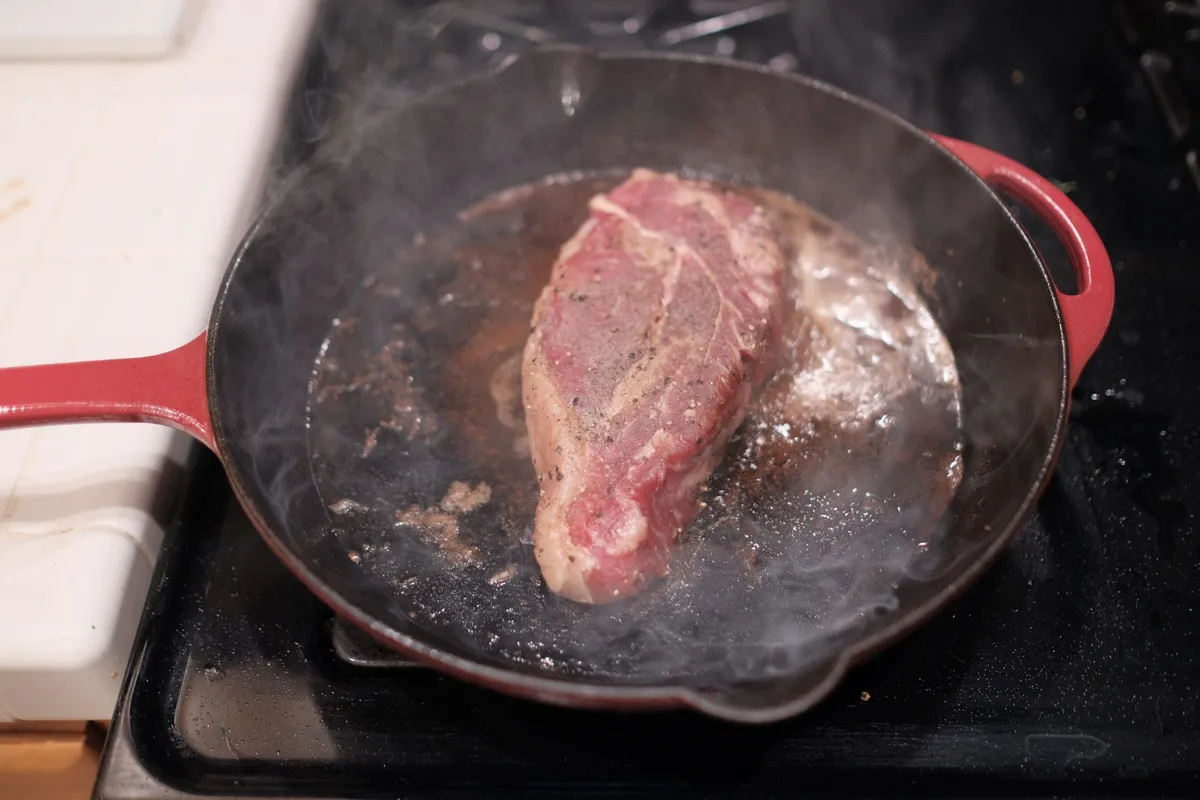
Burger or Steak Sear
High-heat searing leaves a fond layer on the bottom. This is flavor, not burnt food. Rinse with hot water and scrub gently with a chainmail scrubber.
Avoid soap unless the pan is greasy. The fond layer actually adds to your seasoning over time.
Frequently Asked Questions
Can I use dish soap on my cast iron skillet?
Yes. Modern mild dish soap is safe for seasoned cast iron. It won’t damage polymerized oil.
Use a drop or two for routine cleaning. Avoid heavy degreasing soaps for everyday use.
How do I remove stuck-on food without damaging seasoning?
Simmer a small amount of water in the pan for two to three minutes. Scrape with a metal spatula. Use a chainmail scrubber with hot water and coarse salt if needed.
Never soak the pan.
Why does my cast iron skillet look rusty after washing?
Flash rust happens when moisture sits on the surface. Always dry the pan immediately with a towel and heat it on the stove for a minute or two before oiling.
How often should I season my cast iron skillet?
Season only when needed. Most pans maintain seasoning through regular use and post-wash oiling. Full oven reseasoning is only necessary if the seasoning flakes or the pan becomes sticky.
Can I wash my cast iron skillet in the dishwasher?
Never. Dishwasher detergent is too harsh. The high heat and prolonged water exposure cause rust and strip seasoning completely.
What oil should I use after washing?
Use a high smoke point oil like canola, vegetable, or grapeseed. Flaxseed oil works well but can flake over time. Olive oil has a lower smoke point and can make the surface sticky.
Mistakes That Ruin Seasoning Fast
Most seasoning damage comes from a handful of preventable errors. Avoid these, and your skillet will stay in good shape.
The Cold Water Shock Error
Dropping a hot cast iron skillet under cold tap water is one of the fastest ways to warp or crack it. Even if the pan survives, the thermal shock can cause the seasoning to flake off in patches. Always let the pan cool for a few minutes before washing.
And if you need to use water while the pan is still warm, use hot water, never cold.
Scrubbing Too Aggressively
A stiff steel wool pad can strip seasoning in seconds. Reserve steel wool only for rust removal or full stripping. For everyday cleaning, chainmail, nylon brushes, and salt scrubs are aggressive enough to remove food but gentle enough to leave seasoning intact.
If you see gray or silver metal on your scrubber after washing, you’re scrubbing too hard.
Leaving Water to Air Dry
This is the single most common mistake. Water sits on the surface, oxygen hits the iron, and rust forms within minutes. Even a quick towel dry leaves microscopic moisture behind.
Always finish with a minute or two on the stove over low heat. The pan should feel dry to the touch before you oil it.
Oiling Too Heavily
A thick layer of oil does not season better. It turns into a sticky, gummy mess that attracts dust and collects food debris. The correct amount is so thin that the pan looks dry but feels slick.
If you can see visible oil pooling, you’ve used too much. Wipe it out with a paper towel until the surface is barely glossy.
How to Fix Common Problems After Washing
Even with the best intentions, things can go wrong. Here’s how to fix the three most common post-wash issues.
Rust Spots
Orange rust appears when moisture sits on the surface too long. If you catch it early, it’s easy to fix. Scrub the rusted area with fine steel wool or a chainmail scrubber and a little water.
Dry immediately. Apply a thin layer of oil and heat the pan on the stove until it smokes lightly. Let it cool.
The rust is gone, and the seasoning is restored.
Sticky Surface
Stickiness usually means you applied too much oil after washing. Fix it by heating the skillet on the stove over medium heat for a few minutes. The excess oil will burn off.
When the pan stops smoking, let it cool. Wipe the surface with a paper towel. If the stickiness remains, scrub with coarse salt and a little oil, then rinse and dry.
Flaking Seasoning
Flakes mean the existing seasoning layer wasn’t bonded properly or was compromised by thermal shock. Light flaking can be fixed by applying a thin oil layer and baking the pan in the oven at 375°F for one hour. If large patches are flaking off, you may need to strip the pan completely and start a new seasoning layer from scratch.
Choosing Your Cleaning Tools: What Works and What Doesn’t
Not every scrubber is safe for seasoned cast iron. Here’s a breakdown of what to use and what to avoid.
Chainmail Scrubber
This is the gold standard for deep cleaning. The stainless steel rings are aggressive enough to remove burnt food but gentle enough to leave seasoning intact. Chainmail works best with hot water and a drop of soap.
It’s especially useful for Branch 2 cleaning scenarios. Rinse the scrubber after use and let it air dry.
Nylon Brush
A stiff-bristled nylon brush is perfect for routine washing. It won’t scratch seasoning. It’s gentle on the surface but effective at loosening everyday residue.
Use it with hot water and mild soap for quick daily cleaning. Replace the brush when the bristles start to soften.
Salt Scrub
Coarse kosher salt is an excellent abrasive cleaner. It’s especially useful for removing stuck-on food without water or soap. Pour a few tablespoons of salt into the warm skillet.
Add a small amount of oil. Scrub with a paper towel or soft brush. The salt grains lift food without stripping seasoning.
Rinse and dry.
Metal Spatula
A flat metal spatula is your first line of defense against stuck-on food. Use it to scrape the pan while it’s still warm. The thin edge lifts food without damaging the seasoning.
Keep one dedicated to your cast iron. Plastic spatulas work too, but they wear down faster.
When You Need to Fully Reseason (Not Just Wash)
Sometimes washing isn’t enough. If your skillet shows any of these signs, it needs a full reseasoning, not just cleaning.
Signs you need to reseason:
- The cooking surface looks dull gray or silver instead of black
- Food sticks to the surface even after proper cleaning
- You see large patches of flaking seasoning
- The pan has developed a persistent metallic taste
- Rust covers more than a small spot
Full reseasoning takes about two hours. Wash the pan thoroughly with soap and steel wool to remove all existing seasoning. Dry it completely.
Apply a very thin layer of oil over the entire surface. Place it upside down in an oven at 400°F with a baking sheet on the lower rack to catch drips. Bake for one hour.
Let it cool in the oven. Repeat the oil and bake cycle two or three times for a strong seasoning layer.
Real Scenarios: What to Do With Different Foods
Different foods leave different residues. Here’s how to handle common cooking scenarios.
Scrambled Eggs or Cornbread
These leave light residue. Rinse with hot water, scrub gently with a nylon brush, dry on the stove, and apply a light oil layer. No soap needed unless the pan feels greasy.
Bacon or Fatty Meat
Bacon leaves grease and small burnt bits. Pour off the excess fat into a heat-safe container. Wipe the pan with a paper towel.
Rinse with hot water and a drop of soap. Scrub with a chainmail scrubber if residue remains. Dry thoroughly and oil lightly.
Tomato Sauce or Wine Braise
Acidic foods can react with bare iron and leave a metallic taste. Wash immediately after cooking. Use soap and hot water.
Scrub thoroughly to remove all acidic residue. Dry and oil as usual. If the pan tastes metallic after cooking acidic food, it needs reseasoning.
Burger or Steak Sear
High-heat searing leaves a fond layer on the bottom. This is flavor, not burnt food. Rinse with hot water and scrub gently with a chainmail scrubber.
Avoid soap unless the pan is greasy. The fond layer actually adds to your seasoning over time.
Frequently Asked Questions
Can I use dish soap on my cast iron skillet?
Yes. Modern mild dish soap is safe for seasoned cast iron. It won’t damage polymerized oil.
Use a drop or two for routine cleaning. Avoid heavy degreasing soaps for everyday use.
How do I remove stuck-on food without damaging seasoning?
Simmer a small amount of water in the pan for two to three minutes. Scrape with a metal spatula. Use a chainmail scrubber with hot water and coarse salt if needed.
Never soak the pan.
Why does my cast iron skillet look rusty after washing?
Flash rust happens when moisture sits on the surface. Always dry the pan immediately with a towel and heat it on the stove for a minute or two before oiling.
How often should I season my cast iron skillet?
Season only when needed. Most pans maintain seasoning through regular use and post-wash oiling. Full oven reseasoning is only necessary if the seasoning flakes or the pan becomes sticky.
Can I wash my cast iron skillet in the dishwasher?
Never. Dishwasher detergent is too harsh. The high heat and prolonged water exposure cause rust and strip seasoning completely.
What oil should I use after washing?
Use a high smoke point oil like canola, vegetable, or grapeseed. Flaxseed oil works well but can flake over time. Olive oil has a lower smoke point and can make the surface sticky.
The Final Decision Guide: Match Your Wash to Your Skillet
Here’s how to choose the right cleaning method based on your skillet’s condition. Use this quick reference instead of guessing.
| Skillet Condition | Cleaning Method | Tools Needed |
|---|---|---|
| Light residue (eggs, veggies) | Routine wash | Hot water, nylon brush, optional soap |
| Stuck-on food (steak, bacon) | Deep clean | Boiling water, chainmail scrubber, salt |
| Burnt or gummy oil | Strip and reseason | Soap, chainmail, coarse salt, oven |
| Rust spots | Spot fix | Fine steel wool, oil, stovetop heat |
| Flaking seasoning | Full reseason | Steel wool, soap, oven at 400°F |
One final rule: When in doubt, wash less. A quick scrape and hot rinse is often all you need. Reserve soap for greasy pans.
Reserve full reseasoning for visible damage. Your skillet’s seasoning will tell you what it needs. Listen to it, and your pan will last decades.

Table of Contents