You’ve got a thick filet mignon in your hands, and you want to cook it in a skillet without turning it into a dry, gray hockey puck. Learning how to cook a filet in a skillet is all about managing heat and timing, not luck. The lean cut makes it tricky.
You want a perfect crust and a rosy center, but there’s zero marbling to save you if you overcook it.
The USDA recommends cooking whole cuts of beef to a minimum internal temperature of 145°F. But for a tender, medium-rare filet, you’ll pull it off the heat closer to 130°F. That’s a small window, and it’s why most people miss.
Let’s break down exactly how to hit it every time.
Quick Answer
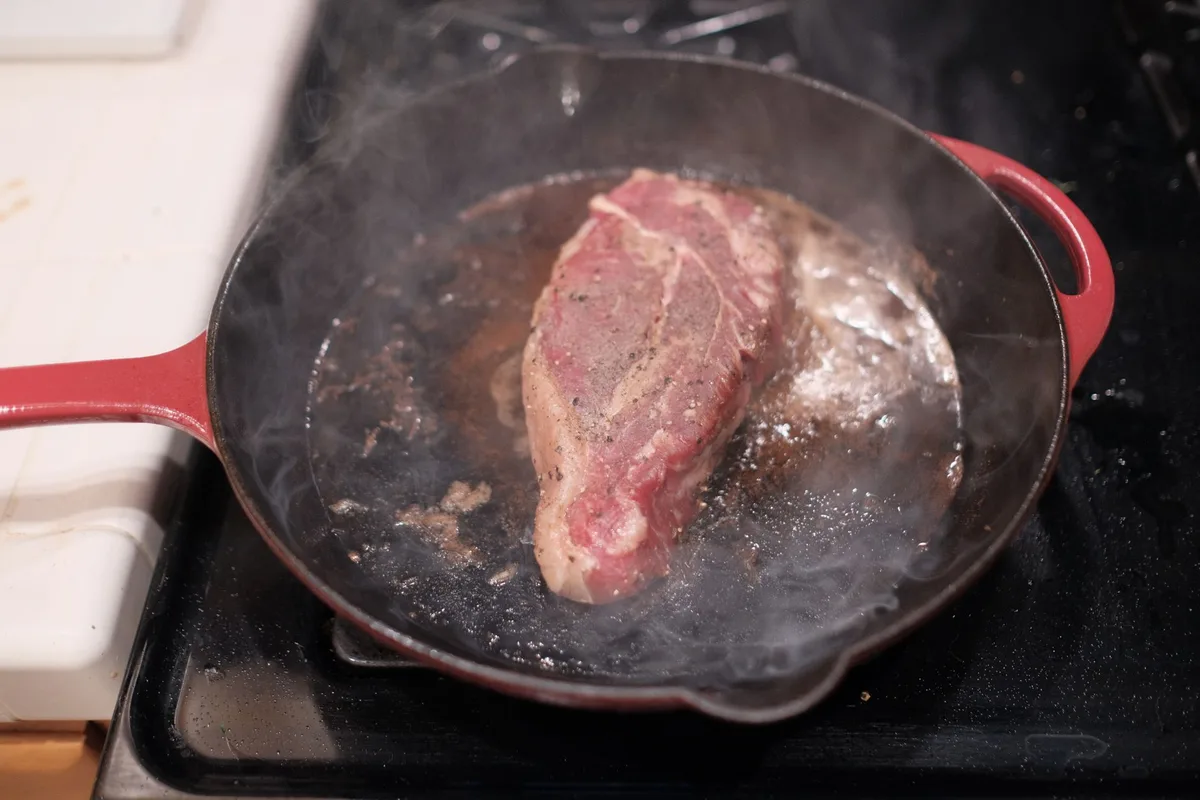
Pat the filet dry and season it with salt and pepper. Heat a cast iron skillet until smoking hot. Sear each side for 90 seconds until a deep brown crust forms.
Add butter, garlic, and thyme, then baste constantly. Cook until the internal temperature reaches 130°F for medium-rare. Rest the steak for five minutes before slicing against the grain.
Why Getting This Right Matters
Filet mignon comes from the tenderloin. It’s the most tender cut of beef, but it’s also the leanest. There’s almost no fat running through the meat.
That means you have zero forgiveness. Overcook it by even 10 degrees, and you’ve lost the buttery texture that makes filet worth the price.
In our research, the most common complaint from home cooks is a dry, tough filet. The second is a thick gray band of overcooked meat around the edges. Both problems come from the same source: too much heat for too long, or not enough attention to the internal temperature.
As of 2026, the standard advice you’ll find on most cooking platforms still skips the critical details. They tell you to sear hard and guess when it’s done. That’s a recipe for failure.
A filet needs a fast, hot sear to build a crust, then a gentler finish to bring the center up to temperature without overcooking the outer layers. That’s where butter basting shines. You get the heat control you need, plus the fat you’re missing.
The Core Facts: What You Need Before You Start
Before you touch the stove, get the tools and ingredients right. The wrong pan or oil can ruin the process.
Pan Choice
Cast iron is the gold standard for this job. It holds heat better than any other pan. When you drop a cold steak in, the temperature doesn’t crash.
Stainless steel works too, but you need to be more careful about sticking. Nonstick pans are a bad idea. They can’t take the high heat you need for a proper sear.
Oil Selection
You need an oil with a high smoke point. Avocado oil is best at 520°F. Canola or grapeseed also work.
Do not use olive oil or butter for the initial sear. They’ll burn and turn bitter before the crust forms.
Thickness
Look for a filet that’s 1.5 to 2 inches thick. Thinner steaks cook too fast to develop a good crust without overcooking the center. At 1.5 inches, you have about 4 to 5 minutes of total cooking time for medium-rare.
That’s enough to get a deep brown sear.
Seasoning
Keep it simple. Coarse kosher salt and freshly ground black pepper. That’s all you need.
The salt draws moisture to the surface, which helps form the crust. Apply it right before cooking. If you salt too far in advance, the surface can get watery.
If you salt too early and rest it, you’re dry brining, which is a different technique. For this method, season just before the steak hits the pan.
Here’s a quick reference table:
| Tool / Ingredient | Specification | Why It Matters |
|---|---|---|
| Skillet | Cast iron, 10 to 12 inches | Even heat, high temp capability |
| Oil | Avocado, canola, or grapeseed | Smoke point above 400°F |
| Steak | Filet mignon, 1.5 to 2 inches thick | Enough time for crust without overcooking |
| Seasoning | Coarse kosher salt, black pepper | Simple, effective, no fillers |
| Thermometer | Instant-read digital probe | Only way to know doneness precisely |
The Real Risk Factors: Overcooking, Burning, and Uneven Heat
Most people ruin a filet in one of three ways. Each one is preventable once you understand what’s happening.
The Gray Band Problem
The gray band is that ring of overcooked, dry meat between the crust and the pink center. It happens when the pan is too hot for too long, or when the steak is thin. The heat penetrates too far into the meat before the center can come up to temperature.
The solution is a hotter pan and a shorter sear. You want the crust to form fast, then drop the heat and finish gently.
Burned Butter
Butter burns at around 350°F. If you add it to a screaming hot pan, it will go brown and bitter in seconds. That’s why you sear the steak in oil first, then reduce the heat before adding the butter.
The butter is for basting, not for the initial sear.
Carryover Cooking
This is the biggest hidden trap. The steak continues to cook even after you pull it off the heat. The internal temperature will rise 5 to 10 degrees during the resting period.
If you pull the steak at 135°F thinking it’s medium-rare, you’ll end up with medium at 140°F or higher. You have to pull it early. For medium-rare, pull at 125°F to 130°F.
The carryover will do the rest.
Safe Practices: Food Temperatures and Handling
This is the Expert YMYL part. Mistakes here can cause foodborne illness or a ruined meal.
Minimum Safe Temperature
The USDA Food Safety and Inspection Service states that whole cuts of beef should be cooked to a minimum internal temperature of 145°F, followed by a three-minute rest. That’s the official safety guideline. However, many people prefer medium-rare at 130°F to 135°F.
The risk is lower with whole muscle cuts because harmful bacteria are typically on the surface, not inside the meat. As long as the surface reaches a high enough temperature during searing, the interior can be served at a lower temp. Use your own judgment and risk tolerance.
If you’re cooking for anyone with a compromised immune system, pregnant women, or elderly individuals, follow the USDA guideline of 145°F.
Cross-Contamination
Raw beef juices can carry bacteria. Keep the raw steak away from other foods. Wash your hands, utensils, and cutting board with hot soapy water after handling the raw meat.
Do not use the same tongs for the raw steak and the cooked steak without washing them first.
Resting
Resting is not optional. It allows the juices to redistribute throughout the meat. If you cut into the steak immediately, the juices will run out onto the cutting board, leaving you with a dry filet.
Rest the steak for five minutes, loosely tented with foil. Do not wrap it tightly or the crust will steam and soften.
Step-by-Step Process: How to Cook a Filet in a Skillet
Here’s the exact process, step by step. Follow it, and you’ll get a consistent result every time.
Step 1: Prep the Steak
Take the filet out of the refrigerator 20 to 30 minutes before cooking. Let it come closer to room temperature. This helps it cook more evenly.
Pat it dry with paper towels. Moisture is the enemy of a good crust. Season generously on all sides with coarse salt and black pepper.
Step 2: Heat the Pan
Place your cast iron skillet over medium-high heat. Let it heat for at least 5 minutes. You want it smoking hot.
The water test is reliable: flick a few drops of water onto the pan. If they sizzle and evaporate instantly, it’s ready. If they skitter across the surface like beads, you’re at the right temperature.
Step 3: Add Oil and Sear
Add a thin layer of oil to the pan. Swirl to coat. Place the steak in the pan away from you to avoid oil splatter.
Press down gently with a spatula to ensure full contact. Do not move it. Let it sear for 90 seconds without touching.
The crust forms when the meat stays in contact with the hot surface.
Step 4: Flip and Sear the Second Side
Use tongs to flip the steak. Sear for another 90 seconds. You should see a deep brown crust.
If the crust is not dark enough, give it another 30 seconds.
Step 5: Reduce Heat and Add Butter
Turn the heat down to medium. Add 1 to 2 tablespoons of butter to the pan. Add a couple of smashed garlic cloves and a few sprigs of fresh thyme or rosemary.
The butter will melt and start to foam.
Step 6: Baste
Tilt the pan slightly toward you so the butter pools at the bottom. Use a spoon to scoop the hot butter over the steak continuously. Do this for about 60 seconds.
The butter basting adds flavor and helps cook the interior gently.
Step 7: Check Temperature
Insert an instant-read thermometer into the side of the steak, aiming for the center. Pull the steak at 125°F to 130°F for medium-rare. Remember carryover cooking.
If you want medium, pull at 135°F.
Step 8: Rest
Transfer the steak to a cutting board. Tent loosely with foil. Let it rest for 5 minutes.
Do not skip this step.
Step 9: Slice and Serve
Slice against the grain. The grain on a filet is fine, but slicing against it still makes the meat more tender. Serve immediately.
Common Mistakes to Avoid
Even experienced cooks make these errors. Each one is fixable once you know what to look for.
Adding Butter at the Start
This is the most common mistake we see. People think butter adds flavor from the beginning. The problem is that butter burns at around 350°F.
Your pan needs to be well above 400°F for a proper sear. The butter will turn brown and bitter before the crust forms. Always sear in oil first.
Add butter only after you reduce the heat for basting.
Using a Cold Pan
A cold pan gives you a weak crust and a gray band. The steak releases its moisture and steams instead of searing. You need the pan to be smoking hot before the steak touches it.
Give your cast iron skillet at least 5 minutes to heat up over medium-high heat. The water test is your friend here.
Flipping Repeatedly
Some people flip their steak every 30 seconds, thinking it cooks more evenly. It doesn’t. Each flip drops the pan temperature and prevents the crust from forming.
Flip once and let it cook. Two flips total. One for the first side, one for the second.
That’s all you need.
Cutting Into the Steak Too Soon
We get it. You want to check if it’s done. But cutting into the steak releases all the juices.
You end up with a dry filet on a wet cutting board. Use a thermometer instead. Then rest the steak for five full minutes before slicing.
Salting Too Far in Advance
Salting an hour or more before cooking draws moisture out of the steak. The surface gets wet and sticky. You get a gray crust instead of a brown one.
Salt right before the steak hits the pan. If you want to salt in advance, that’s a different technique called dry brining, and it requires at least 40 minutes plus a pat dry before cooking.
Expert Tips for a Perfect Crust
Getting that deep brown crust is the difference between a good steak and a great one. Here are the details that matter.
Press Down With a Spatula
Yes, do this. When the steak hits the pan, press down gently with a spatula or your tongs. This ensures full contact between the meat and the hot surface.
The parts that don’t touch the pan won’t brown. One press at the start is enough. Don’t press repeatedly.
The Basting Technique
Tilt the pan toward you so the butter pools at the bottom edge. Use a large spoon to scoop the butter and pour it over the top of the steak. Do this continuously for about 60 seconds.
The butter should be foaming and bubbling. This adds flavor and helps cook the center evenly without overcooking the outside.
Clarified Butter Trick
If you want even more control, use clarified butter for basting. Clarified butter has a higher smoke point than regular butter because the milk solids are removed. It won’t burn as easily.
You can buy it in stores or make it by melting butter and skimming off the white solids. It’s worth the extra step if you cook steaks regularly.
Rest the Steak Properly
Resting is not just about waiting. The way you rest matters. Tent the steak loosely with foil.
Do not wrap it tightly. Tight wrapping traps steam and softens the crust. A loose tent lets the heat escape slowly while keeping the steak warm.
Five minutes is the minimum. For a thicker filet, go up to seven minutes.
When to Seek Help (or Try a Different Method)
The skillet method is reliable, but it’s not the only option. Here’s when you might want to switch things up.
If You Don’t Own a Thermometer
You cannot cook a filet reliably without a thermometer. The window between perfect medium-rare and overcooked is about 10 degrees. Guessing by touch or time will fail you eventually.
If you don’t have a thermometer, the reverse sear method is more forgiving. You cook the steak low and slow in the oven first, then sear it at the end. The oven gives you more time to hit the right temperature.
If Your Steak Is Thinner Than 1 Inch
Thin steaks cook too fast. By the time you get a good sear, the center is already well done. For thin filets, use the reverse sear method or cook them hot and fast, accepting a slightly more done result.
You can also butterfly the steak to make it thinner and cook it as two smaller pieces.
If You’re Cooking for Food Safety Sensitive Guests
The USDA guideline of 145°F exists for a reason. If you’re cooking for someone with a compromised immune system, a pregnant woman, or an elderly person, follow the guideline. Cook the filet to 145°F and rest it for three minutes.
The texture won’t be as tender, but it’s the safe choice. You can also use a sous vide method to hold the steak at a precise temperature before searing.
Verified Summary: The Short Version for Medium-Rare Perfection
Here’s the entire process in a checklist. Follow this and you’ll get a consistent result every time.
Prep
- Take the filet out of the fridge 20 to 30 minutes before cooking.
- Pat it completely dry with paper towels.
- Season generously with coarse salt and black pepper right before cooking.
Cook
- Heat a cast iron skillet over medium-high heat for 5 minutes until smoking hot.
- Add a thin layer of high-smoke-point oil.
- Sear the steak for 90 seconds per side. Do not move it.
- Reduce heat to medium. Add 1 to 2 tablespoons of butter, smashed garlic, and fresh thyme.
- Baste continuously for 60 seconds, tilting the pan to pool the butter.
- Pull the steak at 125°F to 130°F for medium-rare.
Rest
- Transfer to a cutting board. Tent loosely with foil.
- Rest for 5 full minutes. The temperature will rise to 130°F to 135°F.
Serve
- Slice against the grain. Serve immediately.
Temperature reference
| Doneness | Pull Temp | Rest Temp |
|---|---|---|
| Rare | 120°F | 125°F |
| Medium-rare | 125°F to 130°F | 130°F to 135°F |
| Medium | 135°F to 140°F | 140°F to 145°F |
| Medium-well | 145°F to 150°F | 150°F to 155°F |
Frequently Asked Questions
Can I cook a frozen filet mignon in a skillet?
You can, but it’s not ideal. The outside will overcook before the center thaws. If you must cook from frozen, use the reverse sear method.
Cook it low in the oven at 275°F until it reaches 125°F, then sear it in a hot skillet. The USDA recommends cooking frozen beef to a minimum of 145°F.
How do I keep the butter from burning?
Add the butter only after you reduce the heat. Sear the steak in oil first. Turn the heat down to medium.
Then add the butter and aromatics. If the butter still burns, use clarified butter or a mix of butter and oil for basting.
What’s the best oil for searing a filet?
Avocado oil is the best choice. It has a smoke point of 520°F. Canola and grapeseed oil also work well.
Avoid olive oil, butter, and coconut oil for the initial sear. They burn at lower temperatures.
Should I oil the steak or the pan?
Oil the pan, not the steak. Add a thin layer of oil to the hot skillet and swirl to coat. Oiling the steak can cause it to slide around and prevent a good crust.
The pan oil ensures even contact and heat transfer.
How do I know when the pan is hot enough?
Use the water test. Flick a few drops of water onto the pan. If they sizzle and evaporate instantly, the pan is hot enough.
If they skitter across the surface like beads, you’re at the perfect temperature for searing. If they just sit there, the pan is not ready.
Can I cook a filet in a stainless steel pan instead of cast iron?
Yes, stainless steel works. It doesn’t hold heat as well as cast iron, so you need to let it heat up longer. Use the same technique.
Make sure the pan is hot before adding oil. The steak may stick slightly more than with cast iron, but it will release once the crust forms.

Table of Contents