Remove faucet head, soak in vinegar, scrub, flush, and reassemble.
If you want a clear, steady stream and a spotless finish, you’re in the right place. I’ve cleaned dozens of faucet heads in homes with hard water and stubborn buildup. In this guide, I’ll show you how to clean sink faucet head like a pro, using safe methods, simple tools, and a few time-saving tricks that actually work. Read on to make your faucet run like new.

Source: apartmentlist.com
Why your faucet head clogs and loses pressure
Faucet heads collect minerals, grit, and biofilm over time. Hard water leaves calcium carbonate, also called limescale. Tiny sand or rust particles can also lodge inside the aerator screen and flow restrictor.
When buildup grows, water sprays sideways or slows to a trickle. Knowing why this happens helps you plan how to clean sink faucet head the right way. Weak acids like white vinegar or citric acid dissolve mineral scale without harsh fumes.
:strip_icc()/BHG-How-to-Clean-a-Faucet-Head-Aerator-9cd03cfd25644ef6a3edf8758696830d.jpg)
Source: bhg.com
Tools and materials you’ll need
Gather everything before you start. It makes the job fast and neat.
- White vinegar or citric acid powder with warm water
- Small bowl or zip bag
- Old toothbrush and a soft cloth
- Needle, toothpick, or interdental brush
- Adjustable wrench or strap wrench with a rag for protection
- Plumber’s tape and silicone faucet grease
- Rubber gloves and safety glasses
- Mild dish soap
- Optional descaler made for limescale
If you want a quick win on how to clean sink faucet head, have a strap wrench ready. It grips without scratching.
Source: bobvila.com
How to clean sink faucet head: a 10-minute method
This is my go-to for most kitchens and baths. It fixes low flow and messy spray.
- Turn off water or plug the drain. You don’t want to lose small parts.
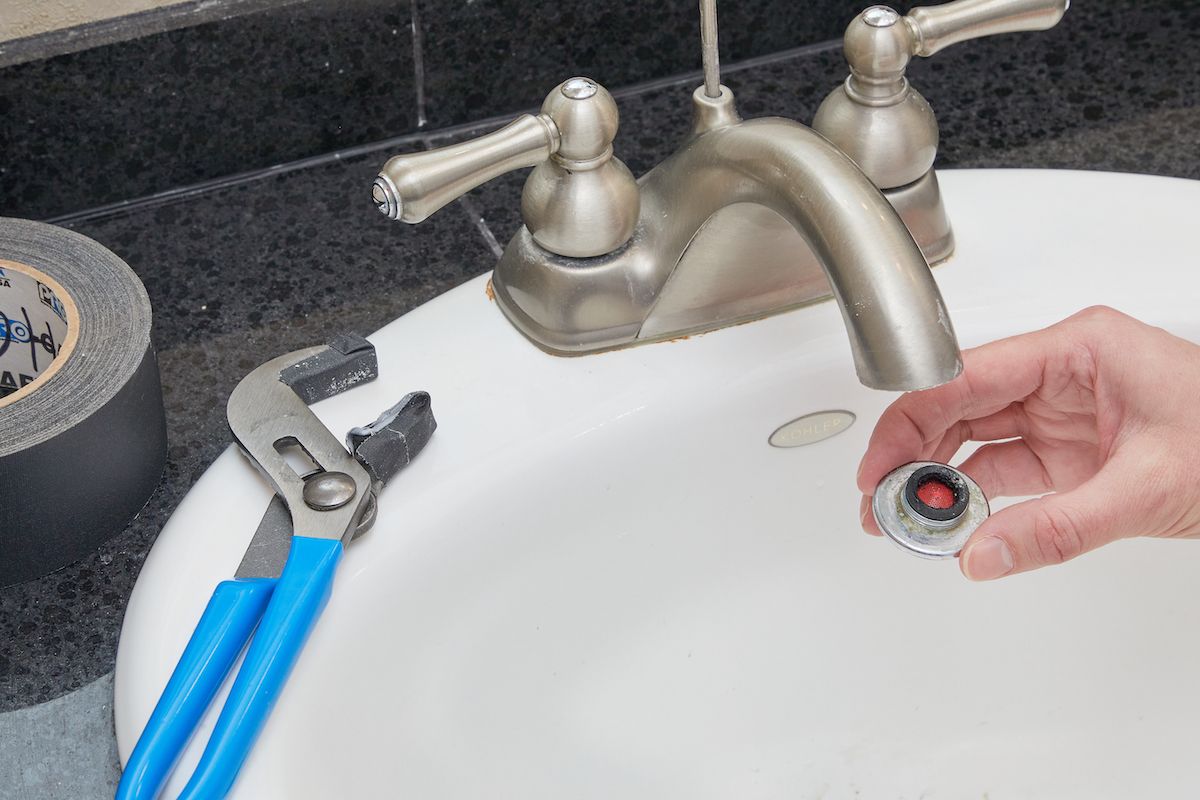
- Unscrew the aerator by hand. If it’s tight, wrap a rag around it and use a strap wrench. Turn counterclockwise.
- Note the order of parts. You may have a screen, mixer, restrictor, and gasket.
- Rinse parts under warm water. Tap out loose grit.
- Soak in vinegar for 10–30 minutes. This breaks down limescale.
- Scrub gently with a toothbrush. Use a toothpick for stubborn holes.
- Rinse well, then reassemble in the same order.
- Wrap threads with a little plumber’s tape if needed. Hand-tighten, then a slight snug with the wrench.
- Turn on water and flush for 10 seconds to clear debris.
This is the safest way for beginners learning how to clean sink faucet head. It keeps parts intact and avoids damage to the finish.

Source: lowes.com
Deep clean for heavy limescale and stubborn clogs
Some faucet heads need extra help, especially with very hard water.
- Use a stronger soak. Mix 1 tablespoon citric acid in 1 cup warm water, or use full-strength white vinegar.
- Increase soak time to 45–60 minutes. For very thick scale, repeat the soak.
- Scrub, rinse, and repeat. Work gently so you don’t deform the fine mesh screen.
- For spray heads with rubber nozzles, massage the nozzles to dislodge scale.
- Try a descaler labeled safe for chrome, nickel, and stainless. Rinse well after use.
Here is how to clean sink faucet head when scale looks like chalk: soak, agitate, and flush until every jet runs clear.
src=”https://i.ytimg.com/vi/5VZD-8vV4LI/maxresdefault.jpg”
alt=”How to clean sink faucet head without removing it”
style=”max-width: 100%; height: auto; border: 2px solid black; border-radius: 10px; display: block; margin: 0 auto;”
loading=”lazy”
/>
Source: youtube.com
How to clean sink faucet head without removing it
If the aerator is stuck or you want a fast fix, use the bag method.
- Fill a zip bag with enough vinegar to cover the faucet head.
- Slip it over the spout and secure with a rubber band.
- Soak 30–60 minutes. Keep metal finishes out of the liquid if possible.
- Remove the bag, run warm water, and brush the faceplate.
This trick is perfect when you need to know how to clean sink faucet head without tools or when threads are seized.
:strip_icc()/BHG-How-to-Clean-a-Faucet-Head-Primary-e60925c3b4a449f8873d050cd7331f3e.jpg)
Source: bhg.com
Finish and faucet type tips
Different finishes and faucet designs need small tweaks.
- Chrome and stainless: Vinegar or citric acid are safe. Dry with a microfiber cloth.
- Brushed nickel and bronze: Use diluted vinegar (1:1 with water). Test on a small spot first.
- Matte black: Avoid abrasives. Use mild soap and a soft cloth; use short vinegar soaks.
- Pull-down sprayers: Check the rubber hose and weight. Clean the spray face and the built-in screen.
- Touchless faucets: Kill power first. Avoid soaking the sensor. Clean the removable aerator only.
If you’re unsure how to clean sink faucet head on premium finishes, check the brand care guide and use the mildest method first.
Source: youtube.com
Disinfect and deodorize safely
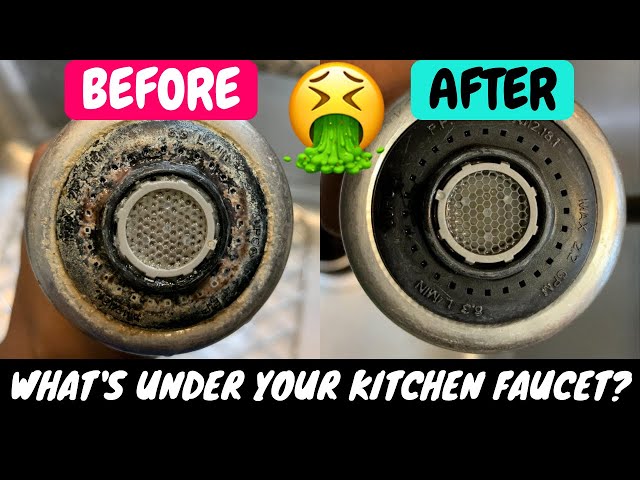
Mineral scale is not the only issue. Aerators can grow biofilm, which can smell stale.
- After descaling, disinfect with 3% hydrogen peroxide for 10 minutes. Rinse very well.
- Or use a mild bleach solution: 1 teaspoon unscented bleach per quart of water. Soak 2–5 minutes. Rinse until there is no odor.
- Never mix vinegar and bleach. Rinse between steps if you use both on the same part.
This is how to clean sink faucet head when odors linger: descale first, then disinfect, then flush.

Source: youtube.com
Troubleshooting after cleaning
Still not right? Check a few common snags.
- Flow still low: The shutoff valves may be partly closed. Open them fully. Flush lines by removing the aerator and running water for 30 seconds.
- Splashy spray: The parts may be out of order. Reassemble in the correct stack. Check the gasket sits flat.
- Leaks at threads: Add a little plumber’s tape. Snug, but do not over-tighten.
- Drip after shutoff: Clean or replace the cartridge or O-rings. Use silicone grease on seals.
If you tried all steps for how to clean sink faucet head and pressure is still weak, your supply lines or cartridge may be clogged. Consider a cartridge replacement.
Preventive care and easy maintenance schedule
A little routine goes a long way.
- Weekly: Wipe the faucet head dry after each day. Water spots feed scale.
- Monthly: Quick vinegar soak for 10 minutes, then rinse.
- Quarterly: Full disassembly clean. Grease O-rings lightly.
- If you have hard water: Install a softener or an under-sink filter.
Set a reminder on your phone. Practicing how to clean sink faucet head every month keeps water smooth and your finish spotless.
Eco-friendly and safety notes
You can keep this green and safe.
- Vinegar and citric acid are plant-based descalers. They dissolve calcium carbonate without harsh fumes.
- Wear gloves and eye protection, especially when using descalers or bleach.
- Protect counters and stone. Acid can etch marble and limestone. Rinse spills right away.
- Use a strap wrench and a rag to protect finishes. Metal jaws can scratch.
I’ve learned the hard way that rushing breaks screens and mars finishes. Slow and gentle wins when you’re figuring out how to clean sink faucet head the safe way.
Frequently Asked Questions of how to clean sink faucet head
How often should I clean my faucet head?
Clean it monthly if you have hard water, and every 2–3 months otherwise. Do a deeper clean if flow drops or spray turns uneven.
Can I use vinegar on all faucet finishes?
Vinegar is safe for most chrome and stainless finishes. For matte black, nickel, or bronze, dilute it and test a small spot first.
What if the aerator is stuck and won’t budge?
Wrap it with a rag and use a strap wrench for grip. A short vinegar soak from the outside can loosen mineral crust on the threads.
Why is my faucet still slow after cleaning the aerator?
Debris may be in the cartridge or supply lines. Remove the aerator, flush the faucet for 30 seconds, and check the shutoff valves.
Is baking soda good for faucet heads?
Baking soda is a mild abrasive that can help on the faceplate. Do not use it on delicate finishes or fine mesh screens, as it can scratch.
How long should I soak the aerator in vinegar?
Start with 10–30 minutes for light scale. For heavy buildup, go up to 60 minutes and repeat if needed.
Can I clean a touchless faucet head the same way?
Yes, but power off the sensor first and avoid soaking the sensor area. Only remove and soak the aerator or spray face.
Conclusion
A clean faucet head gives you a smooth stream, better taste, and less mess at the sink. With the steps above, you now know exactly how to clean sink faucet head for quick fixes and deep cleans, plus how to prevent the problem from coming back.
Set a reminder for a simple monthly soak, and your faucet will stay crystal clear. Want more home care tips like this? Subscribe for updates or drop your questions in the comments.

Table of Contents