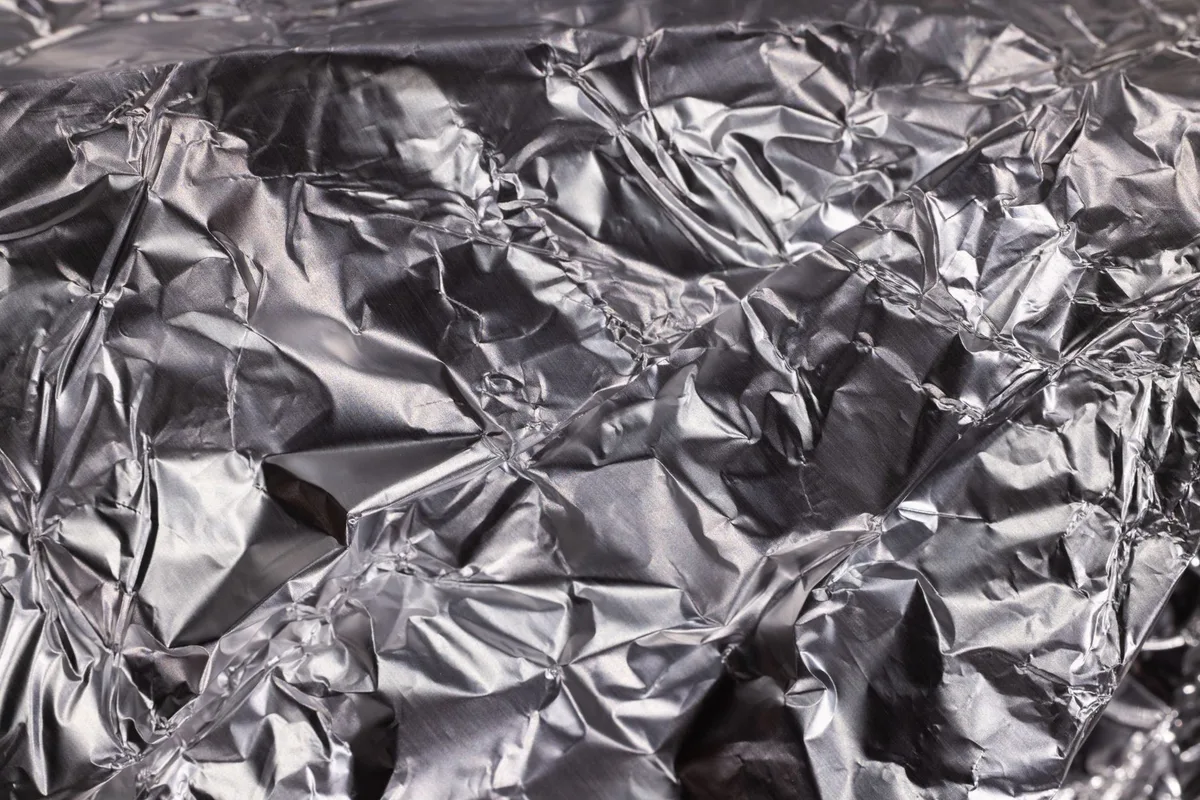
That crinkly, shiny aluminum foil is a kitchen staple. We use it for wrapping leftovers, lining baking sheets, and even creating makeshift cones for baked goods. But when it comes to the microwave, a common question pops up: can you put aluminum foil in a microwave?
The short answer is: generally, no. Doing so can cause sparks, damage your appliance, and pose a fire hazard. But understanding why it’s a no-go, and when there might be very specific exceptions, is key.
Let’s break down the science and the practicalities to keep your kitchen safe.
The Science Behind Microwaving and Metal
Microwaves work by using electromagnetic radiation to excite water molecules within your food, generating heat. This radiation bounces around the inside of the microwave cavity. Here’s where metal, like aluminum foil, comes into play.
Metal is an excellent conductor of electricity. When microwave radiation hits a piece of metal, it causes electrons within the metal to move rapidly. This movement of electrons creates electrical currents.
Arcing and Sparks
If the metal is thin, has sharp edges, or is close to the microwave walls, these induced electrical currents can become concentrated. This concentration can lead to a buildup of electrical charge. When the charge becomes high enough, it can jump across a gap, either to another piece of metal, the microwave wall, or even through the air itself.
This electrical discharge is what we see as sparks, commonly known as arcing.
Arcing isn’t just a flashy light show; it’s a sign of danger.
- Damage to the Microwave: The intense heat generated by sparks can damage the interior walls of your microwave, the magnetron (the component that generates microwaves), and other sensitive parts. In severe cases, it can render your microwave unusable.
- Fire Hazard: Arcing can ignite any flammable materials nearby, including food particles, paper products, or even the aluminum foil itself if it gets hot enough. This creates a significant fire risk.
Think of it like static electricity, but on a much more powerful and dangerous scale. The microwave’s designed environment is compromised when you introduce a reflective and conductive surface like aluminum foil.
Why the “No” Rule?
The fundamental design of a microwave relies on the radiation being contained and directed towards the food. Metal objects disrupt this process.
- Reflection of Microwaves: Aluminum foil is highly reflective. Instead of absorbing or allowing microwaves to pass through to heat your food, it bounces them back. This can lead to uneven cooking, as some areas of your food won’t get properly heated, while others might be overcooked or even burned due to concentrated reflected energy.
- Interference with Heating: The energy that should be heating your food is instead being absorbed and reradiated by the metal. This not only prevents effective cooking but also puts undue stress on the microwave’s components.
Are There Any Exceptions? (The Nuanced Answer)
While the general rule is a firm “no,” there are very specific, limited circumstances where small amounts of foil might be used. However, these are advanced techniques, and even then, they come with significant caveats and require extreme caution.
Smooth, Rounded Edges and Specific Placement
Some microwave manufacturers mention that small, smooth pieces of aluminum foil can be used to shield parts of food that might cook too quickly. For example, if you’re microwaving a chicken breast and the tips of the wings or the ends of the breastbone are browning too fast, a tiny, smooth piece of foil might be placed only over that specific area.
Crucial Considerations for These Rare Exceptions:
- Smoothness is Key: The foil must be smooth, with no crinkles or sharp edges. These edges are prime spots for electricity to concentrate and spark.
- Small Amount: We’re talking about pieces no larger than a postage stamp. Large sheets of foil are an absolute no.
- Away from Walls: The foil must be kept away from the metal walls of the microwave cavity. Ideally, it should be touching the food directly.
- Not Touching Other Metal: If you are using a microwave-safe dish that has any metal trim, foil absolutely cannot come into contact with it.
- Manufacturer’s Guidance: Always, always, always consult your microwave’s user manual. Manufacturers will explicitly state if and how any metal is permissible. If your manual says “no metal,” then it means no metal, period.
Even with these exceptions, the risk is still present. Many experts advise against using foil altogether to eliminate any potential for error. If you’re unsure, err on the side of caution and skip the foil.
There are often safer alternatives for shielding food.
The Dangers of Arcing Explained
Let’s delve a little deeper into what happens when arcing occurs.
Sparks and Flames
The sparks you see are miniature lightning bolts happening inside your microwave. They are a sign of intense electrical discharge. If these sparks come into contact with food, grease, or paper products that might be in the microwave (even in small amounts, like a napkin used to wipe down the inside), they can easily ignite a fire.
Damage to the Magnetron
The magnetron is the heart of your microwave. It’s the component that generates the microwaves. Arcing can create electrical surges that can damage the delicate internal components of the magnetron, leading to a costly repair or the need for a replacement appliance.
What About Microwave-Safe Dishes?
You might see some microwave-safe cookware or dishes that have metallic accents or painted-on metallic designs. These are generally designed and tested to be safe for microwave use. The key difference is that these metallic elements are either bonded in a way that prevents arcing, or they are designed to reflect microwaves away from themselves without creating a charge buildup.
However, even with these, it’s wise to check the manufacturer’s instructions for your specific dish and microwave. If there’s any doubt, it’s best to avoid using them.
Safer Alternatives for Microwave Cooking
If you’re looking to shield your food or enhance your microwave cooking experience, there are much safer alternatives to aluminum foil.
Microwave-Safe Lids and Covers
These are designed to trap steam and moisture, helping your food cook more evenly and preventing splatters. Many come with vents to release excess steam safely. You can find them made of glass, silicone, or BPA-free plastics.
- When reheating or cooking, a lid placed loosely over the dish allows steam to escape while keeping moisture in. This is a simple yet effective way to prevent dry food.
Paper Towels
A lightly dampened or dry paper towel can be used to cover food. This allows some steam to escape, preventing soggy food, while also stopping splatters. It’s a good option for many items, especially baked goods or vegetables.
- For things like pastries or bread, a paper towel can help keep them from getting tough and rubbery.
Wax Paper or Parchment Paper
These are generally safe to use in the microwave to cover food or line dishes. They create a barrier that prevents splatters and helps retain moisture. They are less likely to cause arcing than foil because they are not conductive.
- Think of parchment paper like a mini-oven liner. It’s excellent for keeping things clean and preventing sticking.
Microwave-Safe Glass or Ceramic Dishes
Using a microwave-safe glass or ceramic dish with a lid is one of the best ways to ensure safe and effective heating. These materials don’t react with microwaves and are durable.
- For dishes that require longer cooking times or reheating, a good quality casserole dish is ideal.
Never Wrap Food in Plastic Wrap Unless Labeled “Microwave Safe”
It’s important to mention plastic wrap, as it’s another common kitchen material. If a plastic wrap is not specifically labeled as “microwave safe,” it should not be used to cover food during microwaving. Heating certain plastics can cause chemicals to leach into the food.
Even “microwave safe” plastic wrap should be kept from directly touching the food; leave a small gap.
Special Considerations for Specific Appliances
While the core microwave is our focus, it’s worth acknowledging that other appliances often use similar heating principles or have components that interact with microwaves.
Combination Microwave Ovens
Some ovens are built with both microwave and convection/grill functions. In these hybrid appliances, the rules can be more complex. The convection or grill elements often involve exposed heating elements that operate at very high temperatures.
- Convection/Grill Mode: When using these modes, metal is often allowed and even necessary for certain types of cooking, much like a conventional oven. However, this is not the microwave mode. You must be absolutely sure which mode you are using.
- Microwave Mode: When the appliance is operating solely as a microwave, the strict rules about metal still apply. Always refer to your appliance’s specific manual to understand how to safely use different cooking modes.
Air Fryers and Microwaves
You might be wondering about the distinction between air fryers and microwaves. Air fryers use hot, circulating air to cook food, mimicking the results of deep frying but with less oil. They do not use microwave radiation.
Therefore, metal racks or baskets designed for air fryers are safe within their designated use. This is different from putting a metal item into a microwave oven.
If you’re looking for efficient cooking and crisping, you might explore the best air fryer for fries or find an air fryer basket for GE oven if that’s your setup. But remember, these are distinct from microwave operations.
What to Do If You Accidentally Arc
Mistakes happen. If you accidentally put aluminum foil in the microwave and it sparks:
- Immediately Stop the Microwave: Hit the stop button. Don’t try to open the door while it’s arcing.
- Unplug the Appliance: Once the arcing stops and the microwave door is opened, the safest course of action is to unplug the appliance immediately.
- Inspect for Damage: Carefully inspect the interior of the microwave for any signs of burning, melted plastic, or damage to the walls or the magnetron.
- Do Not Use if Damaged: If you see any signs of damage, do not use the microwave again. It could be unsafe or could cause further problems. It’s best to have it professionally inspected or consider replacing it.
User Experiences and Common Myths
Over the years, many people have experimented with microwaves and metal. Some may have had luck with very small, controlled uses, leading to the myth that some foil use is okay. Others have unfortunately learned the hard way about the dangers.
- The “Shielding” Myth: The idea of using foil to shield parts of food is the most common rationale for using it. While this can be done with extreme precision and manufacturer approval, for most home cooks, the risk outweighs the benefit. There are better ways to achieve even cooking.
- “My Grandma Did It”: Older microwaves might have had different constructions or power levels that were less susceptible to arcing with minor metal contact. However, modern microwaves are powerful and finely tuned, making them more sensitive to metal intrusion. Relying on old anecdotes isn’t a safe bet.
Conclusion: When in Doubt, Leave it Out
The question of whether you can put aluminum foil in a microwave has a clear, safety-focused answer: no, you should not. The risks of arcing, damage to your appliance, and potential fires are far too significant to justify its use.
While there are highly specific, expert-level exceptions for shielding, these are rarely applicable in a standard home kitchen and should only be attempted if your microwave manual explicitly permits them and you understand the exact technique.
For everyday microwave cooking and reheating, stick to tried-and-true safe methods. Use microwave-safe lids, paper towels, or wax paper. Prioritize safety, protect your appliance, and ensure your food is heated effectively without unnecessary risks.
Always consult your appliance’s user manual for specific guidelines. Your kitchen safety, and the longevity of your microwave, depend on it.

Table of Contents