Most homeowners never think about the detergent dispenser until a cycle ends with soap still stuck inside. If you want to understand how does a dishwasher dispense detergent, the answer starts with a small plastic cup mounted on the inner door. This compartment stays sealed through the fill and pre-wash stages, then opens at a precise moment during the main wash.
It releases detergent when the water temperature and spray pressure are right to dissolve it.
Manufacturer specifications indicate the dispenser cup typically holds between 25 and 50 milliliters of automatic dishwasher detergent. The release mechanism usually trips during the main wash cycle, after the tub has filled and heated to roughly 120 to 140 degrees Fahrenheit. Next, we look at what the dispenser actually does during each stage of the cycle.
How Does a Dishwasher Dispense Detergent
A dishwasher dispenses detergent through a timed release mechanism inside the door.
The dispenser cup stays closed during the fill and pre-wash stages.
It opens during the main wash cycle when water reaches the right temperature.
Spray arm pressure rinses detergent from the cup into the tub.
This prevents soap from hitting dishes too early in the cycle.
What the Detergent Dispenser Actually Does During a Cycle
The dispenser holds detergent in reserve until the dishwasher reaches the main wash stage. It stays shut while the tub fills and while the pre-wash sprays loose food off plates. Once the control board signals the main wash, the release mechanism trips and the cup door opens.
Water pressure then carries the detergent into the tub.
Here is what happens to the dispenser during each stage of a standard cycle.
| Cycle Stage | Dispenser State | What Happens |
|---|---|---|
| Fill | Closed | Tub fills with water. No detergent is released |
| Pre-wash | Closed | Light spray cleans dishes. Detergent stays sealed |
| Main wash | Opens | Release mechanism trips. Detergent enters the wash |
| Rinse | Empty | Fresh water rinses dishes. Dispenser stays open |
| Dry | Empty | Heat dries dishes. No detergent is involved |
Timing matters because detergent that enters too early gets washed away before it can clean. Detergent that releases too late leaves spots and film on glassware. The control board coordinates the release with water temperature and spray arm position so the soap works when it should.
Where the Dispenser Sits Inside the Dishwasher Door
The detergent dispenser cup mounts on the inner door panel, usually near the top center. It sits just below the door latch assembly so the latch can trip the release when the cycle reaches the main wash. Most models place it beside or above a smaller rinse aid dispenser compartment.
You can see the cup the moment you open the dishwasher door.
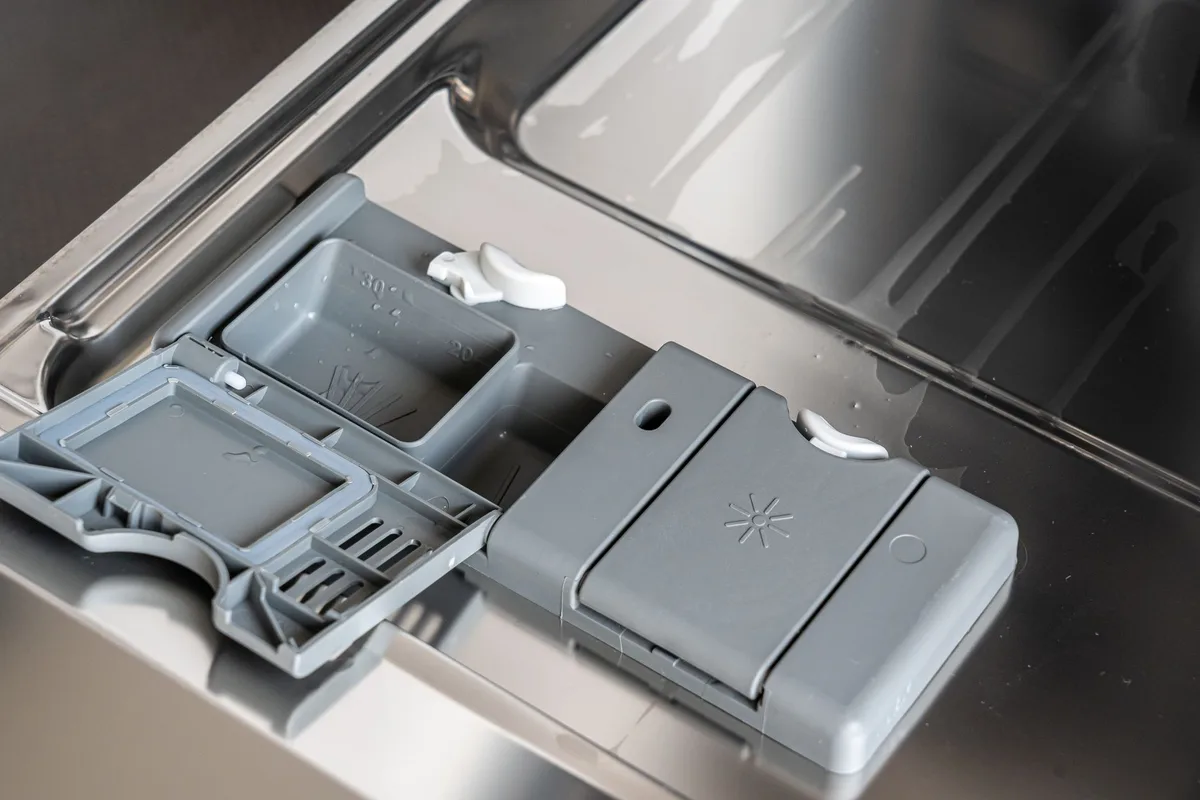
Manufacturer specifications indicate the cup is front-mounted for easy access. You fill it from the front without pulling out racks or bending down. Its position also keeps detergent away from the bottom rack until the door opens during the cycle.
As of 2026, most built-in and portable dishwashers use this same front-door layout.
The Parts Inside the Dispenser Cup and Door
The dispenser assembly includes a few simple parts that work together. A plastic cup holds the powder, gel, pods, or tablets. A spring-loaded door or lid covers the cup and keeps moisture out.
A rubber gasket seals the edges so the detergent does not clump before the cycle starts.
Some models split the cup into a pre-wash section and a main wash section. Others use a single chamber for all detergent types. The door attaches to a hinge and a release lever that connects to the wax motor or bi-metal strip.
- Detergent cup
- Spring-loaded door or lid
- Rubber gasket
- Release lever
- Hinge pins
How the Dispenser Door Releases at the Right Time
The release mechanism depends on the age and model of your dishwasher. Older machines often use a bi-metal strip that bends when heated by an electrical current. Newer models typically use a wax motor that expands when heated and pushes a plunger.
The control board sends power to this mechanism at the start of the main wash.
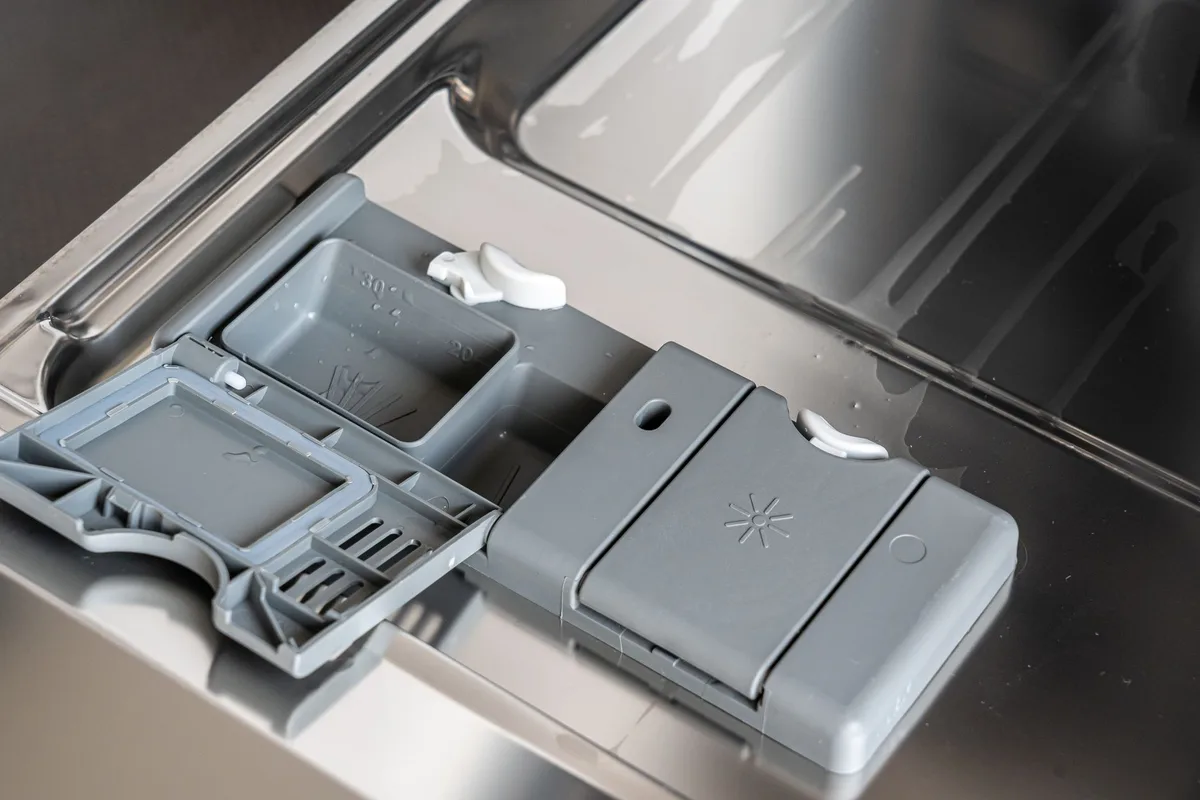
As the wax heats, it expands and drives a pin that trips the spring-loaded door. This whole process takes seconds and is timed to match water temperature and spray pressure. Manufacturer specifications indicate wax motors usually activate around 120 degrees Fahrenheit.
If the bi-metal strip or wax motor fails, the door stays shut and detergent remains in the cup.
The Association of Home Appliance Manufacturers publishes performance standards for major home appliances. You can learn more at AHAM.
What Happens When the Spray Arm Hits the Cup
Once the door opens, the lower spray arm directs a jet of water at the dispenser cup. This water pressure helps wash the remaining detergent out of the cup and into the wash tub. The spray arm rotates continuously during the main wash, so it hits the cup from different angles.
Hot water dissolves powder, gel, and tablet detergents quickly. If the water temperature is too low, soap may not fully activate and can leave residue behind. The dispenser door usually stays open for the rest of the cycle so nothing gets trapped inside.
Powder, Gel, Pods, and Tablets: Which Works Best in the Dispenser
All four detergent types work in the automatic dishwasher dispenser cup. Powder needs dry hands or it clumps before the cycle starts. Gel pours easily but can leak past a worn gasket.
Pods and tablets are pre-measured, though short cycles may not dissolve them fully.
Aggregate reviews indicate powder and tablets remain the most common choices in North America. Gel works well in hard water regions when paired with rinse aid. Manufacturer specifications confirm nearly all modern dispensers accept all four formats.
Your water temperature and cycle length matter more than the detergent format itself.
| Detergent Type | Best For | Weakness |
|---|---|---|
| Powder | Standard cycles, budget loads | Clumps if damp |
| Gel | Quick pours, hard water | Can leak from cup |
| Pods | Pre-measured convenience | May not dissolve in short cycles |
| Tablets | Heavy soil, all-in-one cleaning | Cost per load is higher |
Pods and tablets often include rinse aid or grease cutters inside the same puck. That can help if you skip the separate rinse aid dispenser. Powder lets you adjust the amount for light loads.
Gel is easiest to measure but runs the risk of dripping down the door if the cup seal is old.
Loading the Bottom Rack So Nothing Blocks the Dispenser Lid
Tall items in the bottom rack can block the dispenser lid from opening. Cookie sheets, cutting boards, and large pitchers placed directly under the cup prevent the door from swinging free. If the lid cannot open, detergent stays trapped inside the cup.
Place tall items along the sides or corners of the rack. Keep the center zone directly below the dispenser clear. Manufacturer specifications indicate the dispenser door needs at least two inches of clearance to open fully.
Verify nothing overhangs before you start the cycle.
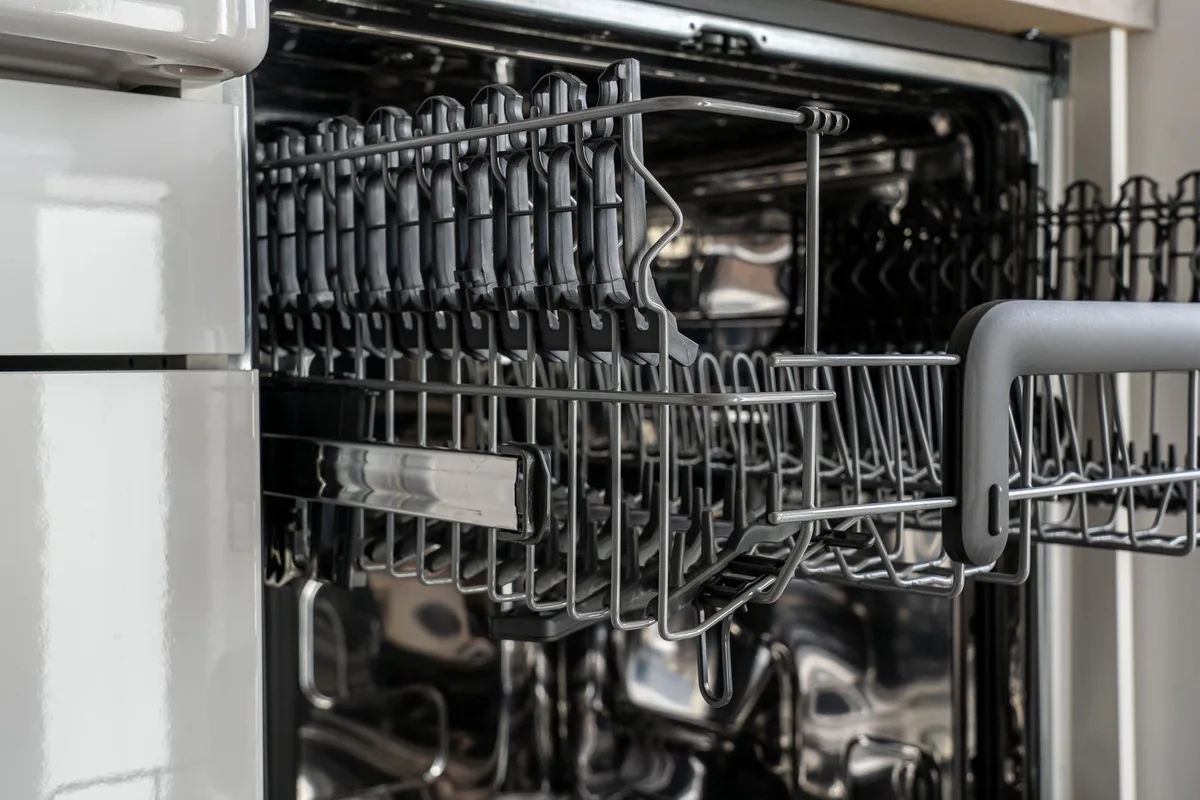
A common visual mistake is leaning a casserole dish against the door. That dish presses against the dispenser lid even if it sits in the rack correctly. Pull the bottom rack out and inspect the cup area before closing the door.
This one check prevents most dispenser failures.
Filling the Dispenser Cup Without Clumps or Overflow
Fill the detergent cup to the fill line and stop. Overfilling prevents the lid from sealing and causes detergent to leak during the fill cycle. Wet hands or damp powder create clumps that block the release mechanism.
Use a dry spoon for powder and wipe the cup rim before closing. Press the lid shut until you hear it click. The rinse aid compartment sits beside the cup and uses a separate dial.
Never fill that compartment with detergent.
Aggregate user reviews show most residue issues start with overfilled cups or damp detergent. Keep the cup dry between loads. If you use pods, place one pod in the cup rather than tossing it loose in the tub.
Loose pods can dissolve before the main wash begins.
Warning Signs the Dispenser Isn’t Opening or Emptying
Detergent left inside the cup after a cycle is the clearest warning sign. Dishes that feel gritty or smell like soap indicate the dispenser never opened. A missing click at the start of the main wash often means the release mechanism failed.
Check for a cracked dispenser door or broken spring. Verify the bi-metal strip or wax motor receives power from the control board. Hard water buildup around the gasket can also glue the lid shut.
Clean the rim and test the door by hand before assuming a major repair.
Dispenser Door Stuck Shut: What to Check Before Calling a Repair
Start by checking for tall items blocking the dispenser lid. Remove anything leaning against the inner door panel and run a short cycle. If the door still stays shut, inspect the cup seal for dried detergent residue.
Scrub the gasket with warm water and a soft brush. Test the spring tension by pressing the lid open and closed. If the door moves freely but never opens during a cycle, the wax motor or bi-metal strip likely needs replacement.
Unplug the dishwasher before removing the inner door panel.
GE Appliances provides service manuals and troubleshooting guides for their dispenser assemblies at GE Appliances. Other manufacturers publish similar documentation for specific models. If you are not comfortable testing electrical components, contact a certified technician.
Detergent Left Behind After the Wash: Common Causes
Soap stuck in the cup after a cycle usually means the dispenser door never opened. Low water temperature prevents tablets from dissolving fully. Short cycles may not run long enough for gel or pod casings to break down.
Hard water minerals can also bind with soap and leave a film.
Check the dispenser lid for blockage from tall items in the bottom rack. Verify the water heater setting reaches at least 120 degrees Fahrenheit. Manufacturer specifications confirm most detergents need that minimum temperature to activate.
If the spray arm is clogged, water pressure drops and soap stays in the cup.
Replacing the Dispenser Assembly, Wax Motor, or Release Mechanism
Unplug the dishwasher or shut off the breaker before starting any repair. Remove the screws holding the inner door panel and set them aside. Disconnect the wiring harness from the wax motor or bi-metal release.
Swap out the faulty part and reconnect the harness.
Reinstall the inner panel and restore power. Run a short cycle to confirm the dispenser door opens. Aggregate reviews indicate dispenser assemblies cost between 40 and 120 dollars depending on the brand.
If you are not comfortable testing electrical components, contact a certified technician.
GE Appliances provides service documentation for dispenser assemblies at GE Appliances. Other manufacturers publish similar guides for specific models. Always match the replacement part to your model number.
Cleaning and Maintaining the Dispenser Over Time
Wipe the dispenser cup with a damp cloth after heavy-use weeks. Remove dried detergent from the gasket with warm water and a soft brush. Hard water buildup around the seal can prevent the lid from closing tightly.
Check that the spring still snaps the door shut.
Monthly cleaning keeps the mechanism moving freely. Verify no powder residue clogs the release lever. Rinse aid compartments also benefit from occasional wiping to prevent crusty buildup.
These small steps extend dispenser life beyond the average seven to ten year window.
Safety Notes: Automatic Detergent, Pods, and Suds Control
Automatic dishwasher detergent is caustic and can irritate eyes and skin. Store pods and tablets in their original container, out of reach of children and pets. Never use hand dish soap in the dispenser because it creates excess suds that can overflow the tub.
If suds appear during a cycle, stop the machine and run a rinse cycle without detergent. The child safety lock on many dishwashers prevents accidental door opening during operation. Manufacturer specifications indicate dispenser compartments should stay dry between loads to avoid premature clumping.
Frequently Asked Questions
How do I know if my dispenser door is opening during a cycle?
Open the dishwasher immediately after the main wash begins. An empty cup with wet residue means the door opened and released detergent. If the cup is still full and dry, the release mechanism likely failed.
Run a short cycle and watch through the door gap if your model allows.
Can I put detergent directly in the tub instead of the cup?
You can, but the detergent may dissolve too early during the pre-wash. The dispenser is designed to hold soap until the main wash cycle. Loose detergent poured into the tub gets rinsed away before it cleans the dishes.
Use the cup for best results unless your manual states otherwise.
Why does my dishwasher tablet not dissolve?
Cold water is the most common reason. Most tablets need water at or above 120 degrees Fahrenheit to break down. Short or eco cycles may not run long enough either.
Check that the dispenser door is not blocked by a tall item in the bottom rack.
Is rinse aid required if my detergent has it built in?
Not necessarily. Many tablets and pods include rinse aid in the formula. However, hard water regions often benefit from filling the separate rinse aid dispenser as well.
The adjustable dial lets you increase or decrease dosage based on spotting and streaking.
How often should I clean the dispenser cup?
Monthly cleaning works for most households. Wipe away dried detergent and inspect the gasket for cracks. If you notice residue after cycles, clean it more frequently.
Hard water areas may need attention every two weeks to prevent mineral buildup around the seal.
Can a dispenser be repaired without replacing the whole door?
Yes. Individual parts like the wax motor, bi-metal strip, spring, or door latch can often be replaced separately. You will need to remove the inner door panel to access them.
Match the replacement part to your model number before ordering.

Table of Contents