A bamboo matcha whisk called a chasen lasts only a few months if you treat it like a metal spoon. Learning how to clean matcha whisk properly changes that timeline completely. The fine tines trap matcha residue and moisture creates mold in hours.
A daily rinse takes sixty seconds and prevents ninety percent of damage.
Manufacturer data from the Takayama Chasen Kyodo Kumiai shows a well cared for whisk survives three to six months of daily use. Occasional users report twelve to eighteen months. The difference comes down to three habits: rinse immediately, dry handle down, store in open air.
We cover each one below.
Quick Answer
Rinse the chasen under cold running water right after use. Do not use soap. Shake off excess water.
Reshape the tines gently with your fingers. Place the whisk handle down on a kusenaoshi or prop it at a forty five degree angle. Let it air dry completely before storing upright in open air.
Why Proper Cleaning Keeps Your Chasen Alive
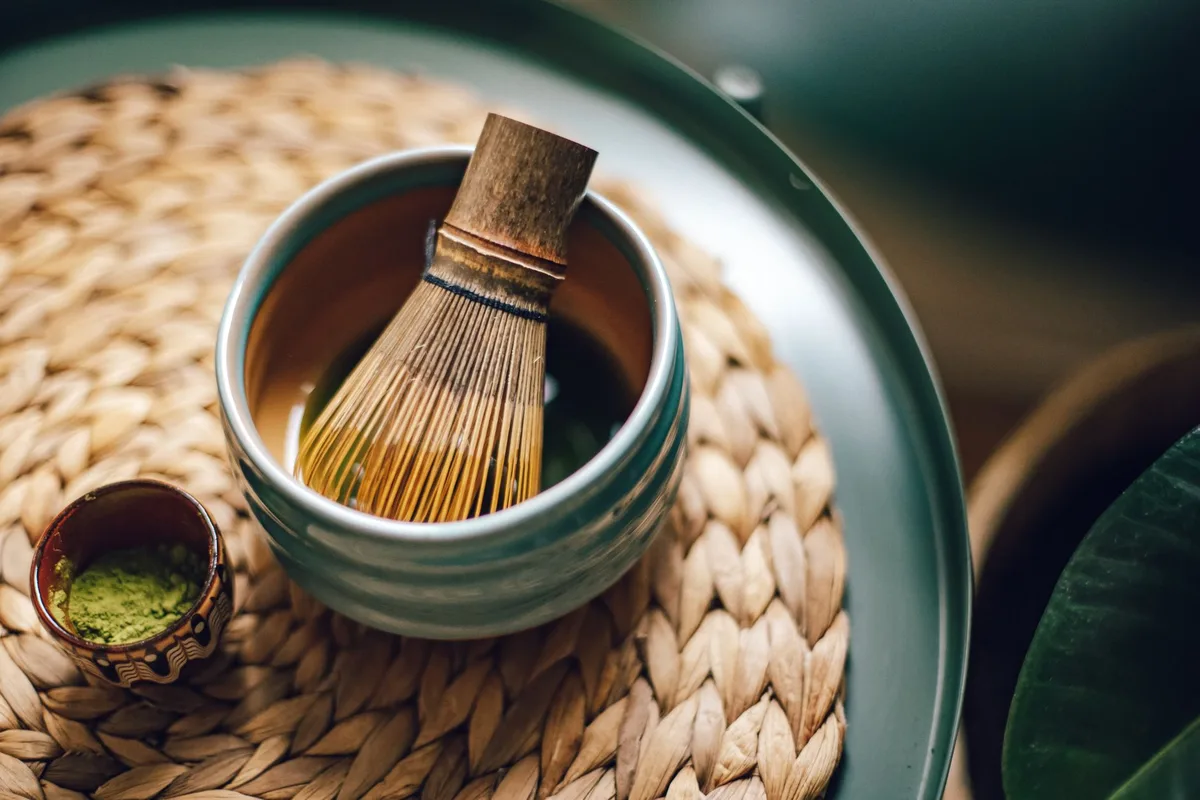
The chasen is made from a single piece of mature bamboo split into eighty to one hundred twenty fine tines. The string binding at the base holds everything together. Bamboo is porous.
It absorbs water and matcha oils. Leftover residue turns rancid and feeds mold. Hot water or soap strips the natural oils that keep bamboo flexible.
The tines become brittle and snap. The string binding rots when water pools in the handle joint. A whisk with broken tines cannot create the fine microfoam that defines good usucha.
Replacement costs twelve to twenty five dollars for standard grade. Master crafted whisks run forty to eighty dollars. Proper care protects that investment.
The 60-Second Daily Rinse Routine
Hold the whisk by the handle under cold running water. Rotate it so water hits every tine. Use your fingers to gently separate any clumped tines.
Do not scrub. Do not use a brush. The water pressure alone removes fresh matcha.
Shake the whisk firmly two or three times to eject water from the center. Inspect the tines. They should be clean and evenly spaced.
If you see green residue repeat the rinse. This takes forty five to sixty seconds. Do it immediately after whisking.
Dried matcha hardens like cement and requires soaking.
| Step | Action | Time |
|---|---|---|
| 1 | Rinse under cold water | 20 sec |
| 2 | Separate tines with fingers | 10 sec |
| 3 | Shake out water | 5 sec |
| 4 | Visual inspection | 10 sec |
| 5 | Reshape tines | 15 sec |
Deep Clean: When Water Alone Isn’t Enough
Sometimes a daily rinse misses residue deep between tines. Once a week or after making koicha soak the whisk in lukewarm water. Use a bowl large enough to submerge the tines only.
Keep the handle and string binding above water. Water temperature should not exceed fifty degrees celsius. Soak for thirty to sixty seconds.
This softens bamboo and loosens trapped powder. After soaking rinse again under cold water. Gently flex the tines outward then inward to release debris.
Never use vinegar bleach or dish soap. Porous bamboo retains chemical residue that transfers to your next bowl. Aggregate user reports confirm soap residue alters matcha flavor for multiple uses.
Reading Your Whisk: Visual Signs of Wear, Mold, and Damage
Check your chasen every time you rinse. Look for black or green fuzz between the tightest tines. That is mold.
It spreads fast in humid air. Early spots wipe away with a clean damp cloth. Advanced penetration means the whisk is done.
Broken tines reduce frothing efficiency. More than ten percent loss signals replacement. Splayed tines that do not return to center after reshaping indicate bamboo fatigue.
Loose string binding lets water wick into the handle joint. That causes splitting. A whisk that smells musty even when dry has internal mold.
The Takayama cooperative recommends immediate retirement at that stage.
Drying Right: Kusenaoshi, Angles, and Airflow
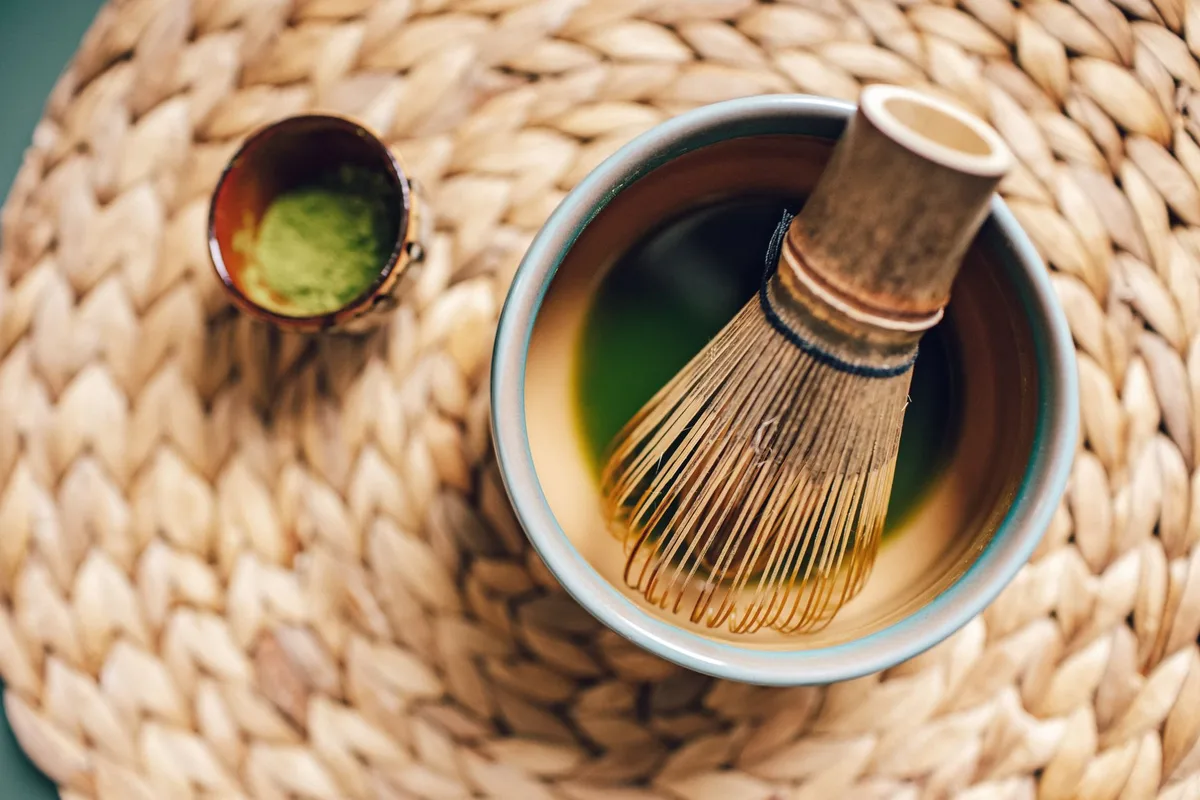
Drying handle down is the single most important step. Water must drain away from the string binding. A kusenaoshi ceramic holder shapes the tines while drying.
Place the whisk in the holder immediately after shaking. No kusenaoshi? Prop the handle on the rim of a bowl at a forty five degree angle.
Tines must not touch any surface. Air must circulate around all sides. Drying takes two hours in dry climate.
Six hours or more in humidity. Never use a towel. Never use a hair dryer.
Heat cracks bamboo. Never store until bone dry. A damp whisk in a drawer grows mold overnight.
Storage Habits That Prevent Mold and Splitting
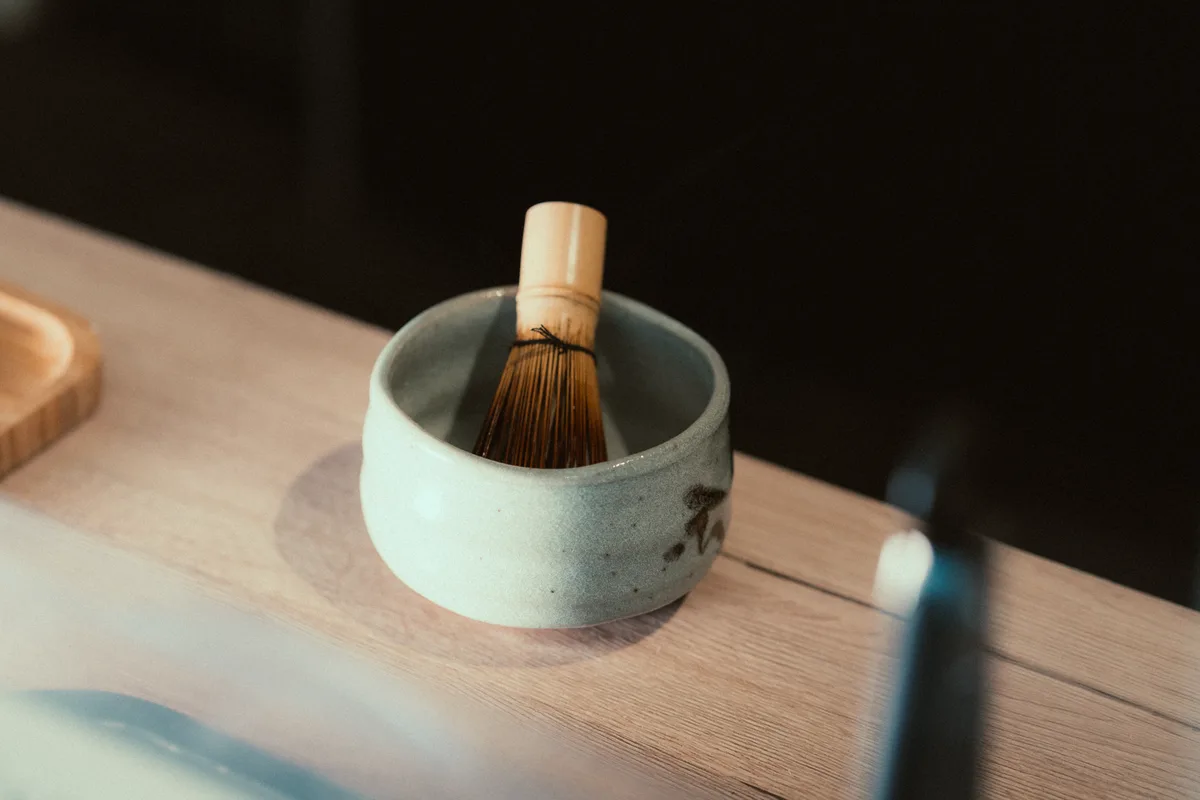
Store the whisk upright in open air after it is completely dry. A ceramic cup or dedicated chasen stand works well. Never seal a chasen in a plastic bag or airtight container.
Trapped humidity creates mold in twelve hours. Avoid drawers near the stove or dishwasher. Steam raises local humidity fast.
In humid climates run a small desiccant packet in the storage cupboard. Silica gel beads recharge in a low oven. Replace them monthly.
If you travel with a whisk use a ventilated case. Hard shell cases with no airflow trap moisture. A bamboo tube with drilled holes works better.
Japanese tea shops often sell these as chasen-ire.
Common Mistakes That Kill a Whisk Fast
Putting a chasen in the dishwasher destroys it in one cycle. Heat and pressure split bamboo and dissolve the string binding. Using hot water for the daily rinse has the same effect over time.
Soap leaves residue that ruins matcha flavor. Scrubbing with a brush snaps fine tines. Drying handle up pools water in the joint.
That rots the binding and cracks the handle base. Storing wet guarantees mold. Leaving matcha residue overnight hardens it like cement.
Soaking the handle and binding loosens the string. Using a metal whisk in the same bowl scratches the chawan and damages tines. Each mistake cuts lifespan by weeks.
| Mistake | Damage | Time to Failure |
|---|---|---|
| Dishwasher | Split bamboo, dissolved binding | 1 cycle |
| Hot water rinse | Brittle tines, cracked handle | 2–4 weeks |
| Soap residue | Flavor contamination, mold trap | Ongoing |
| Handle-up dry | Joint rot, handle split | 1–2 months |
| Sealed wet storage | Full mold colonization | 12–24 hours |
When to Retire Your Chasen (And How to Pick the Next One)
Retire the whisk when more than ten percent of tines are broken. Count them. A standard hundred tine whisk allows ten broken.
Mold that returns after cleaning means spores penetrate the bamboo. Discard it. Loose string binding that cannot be tightened means water will wick into the handle.
A musty smell that persists after drying signals internal colonization. When shopping check tine alignment. They should fan evenly with no gaps.
Run a finger along the tines. They feel smooth not rough. The string binding should be tight and neat.
Japanese made whisks from Takayama use three to five year old bamboo. Chinese imports often use younger culms that split faster. Expect twelve to twenty five dollars for daily grade.
Forty to eighty dollars for ceremony grade. As of 2026 Takayama produces ninety percent of Japan’s chasen supply.
Quick Reference: Clean, Dry, Store at a Glance
| Phase | Action | Key Rule |
|---|---|---|
| After use | Rinse cold, no soap | Immediate |
| Weekly | Soak tines only, 30–60 sec | Lukewarm water |
| Inspect | Check tines, binding, smell | Every rinse |
| Dry | Handle down on kusenaoshi | 2–6 hours |
| Store | Upright, open air | Bone dry only |
| Travel | Ventilated case | No sealed bags |
| Replace | >10% broken, mold returns, loose binding | Don’t wait |
Frequently Asked Questions
Can I use soap on my matcha whisk?
No. Soap residue absorbs into porous bamboo and transfers to matcha. It also strips natural oils that keep tines flexible.
Cold water only.
Is it safe to put a chasen in the dishwasher?
Never. Heat and pressure split bamboo and dissolve the string binding in one cycle. Hand rinse only.
How do I remove mold from a chasen?
Early surface mold wipes away with a clean damp cloth. Mold between tight tines that returns after cleaning means internal penetration. Discard the whisk.
Do I need a kusenaoshi to dry my whisk?
A kusenaoshi shapes tines while drying but is not required. Prop the handle on a bowl rim at forty five degrees. Tines must not touch any surface.
How long does a bamboo matcha whisk last?
Daily use: three to six months. Occasional use: twelve to eighteen months. Proper care extends lifespan.
Replace when tines break or mold returns.
Can I use vinegar to clean my chasen?
No. Vinegar is acidic and damages bamboo fibers. It also leaves odor that ruins matcha.
Cold water soak is the only safe deep clean method.

Table of Contents