That sharp, unpleasant smell wafting from your nonstick pan when you turn on the heat can be alarming. You might be wondering if it’s harmful, what’s causing it, and how to stop it. I get it.
We rely on these pans to make our cooking easier, and a persistent odor can really put a damper on the experience.
The good news? In most cases, a smelly nonstick pan isn’t a sign of imminent doom. It usually points to a few common issues, most of which are easy to fix.
We’re going to dive deep into why your nonstick pan might be letting off fumes and what you can do to ensure it cooks without the strange smells.
The Usual Suspects: What’s Actually Causing That Nonstick Smell?
Let’s break down the most common reasons your nonstick pan is giving off an odor during heating. It’s rarely one single culprit, but rather a combination of factors related to the pan itself, how you’re using it, and its age.
1. Residual Manufacturing Residues
When a nonstick pan is manufactured, there might be a thin layer of residue from the manufacturing process. This can include oils or chemicals used to coat the pan initially. These are often harmless, but they can burn off during the first few uses, producing a smell.
- What to look for: This smell is usually most noticeable the first few times you use a brand-new pan. It tends to be a light, slightly chemical odor.
- The fix: The simplest solution here is a thorough pre-wash. Before you even think about putting that new pan on the stove, wash it with warm, soapy water. Use a soft sponge or cloth. Rinse it well and dry it completely. Then, give it a light wipe with a bit of cooking oil and heat it gently for a minute or two. This helps burn off any lingering manufacturing residues before you start cooking your actual food.
2. Cooking Oils and Fats Building Up
Over time, even with regular washing, a microscopic layer of cooking oils and fats can build up on the surface of your nonstick pan. These microscopic amounts aren’t easily removed by a quick rinse. When you heat the pan, these tiny oil deposits can overheat and break down, releasing that characteristic smoky or burnt smell.
- What to look for: This occurs more frequently with pans that have seen a lot of use. The smell might be stronger and more persistent than manufacturing residue. It often smells like burnt oil.
- The fix: This is where a deeper clean becomes essential. Baking soda is your best friend here. Make a paste with baking soda and water. Apply it to the pan’s surface and let it sit for about 10-15 minutes. Gently scrub with a non-abrasive sponge, then wash thoroughly with warm, soapy water. A good detergent can help break down these stubborn greasy residues.
3. Overheating Your Nonstick Pan
Nonstick pans, especially those with PTFE (polytetrafluoroethylene, commonly known as Teflon) coatings, have specific temperature limits. When these pans get too hot, and this can happen faster than you think, the coating can start to degrade. This degradation process releases fumes.
While modern nonstick coatings are designed to be safe at normal cooking temperatures, exceeding them can cause issues.
- What to look for: This smell is often more acrid and chemical-smelling than burnt oil. It can be quite pungent. You might also notice if your food starts sticking more than it used to, which is a sign the coating is damaged.
- The fix: This is all about mindful cooking. Always use low to medium heat for most nonstick cooking. High heat should be reserved for searing, and even then, it’s best to do so quickly and with food in the pan to act as a buffer. Never preheat an empty nonstick pan on high. If you accidentally overheat it, turn off the heat immediately and let the pan cool completely before washing it. For best results, consider a good spatula for omelettes because it handles the delicate surfaces well.
Important Note: For pans with PTFE coatings, the US Environmental Protection Agency (EPA) states that “for consumers, the primary concern is the potential for PTFE coatings to degrade and release fumes when overheated to very high temperatures (above 500°F or 260°C).” While these temperatures are higher than most everyday cooking, accidental overheating can occur. We’ll discuss this more in the safety section.
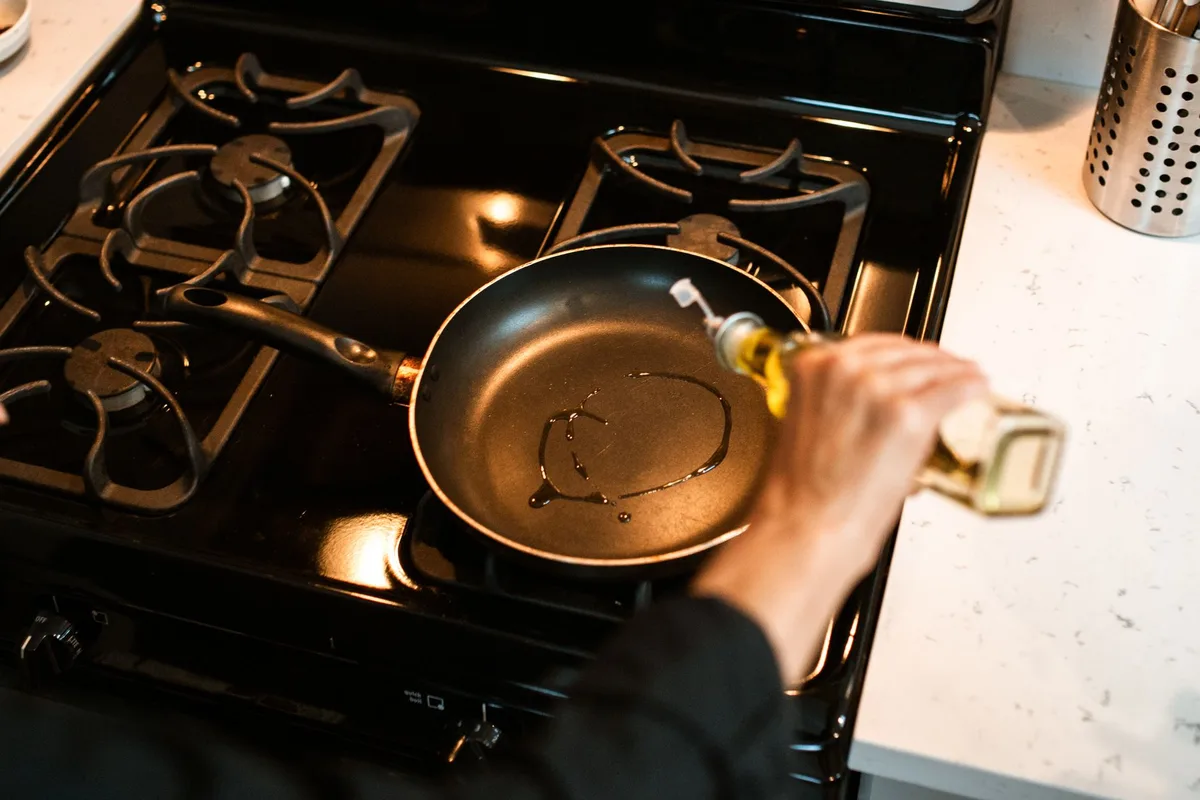
Image source: Pexels / RDNE Stock project (Pexels License)
4. Using the Wrong Utensils
Metal utensils, while sturdy, can scratch and damage the nonstick coating. Even tiny scratches can create areas where food particles and oils get trapped. When heated, these trapped residues can burn and cause odors.
- What to look for: This is often a combination of smell and a visible deterioration of the pan’s surface. You might notice fine scratches or areas where the coating looks dull or peeled.
- The fix: Switch to non-metal utensils. Wooden spoons, silicone spatulas, or nylon utensils are ideal for nonstick cookware. They are gentle on the surface and won’t cause damage. Learning to use the right tools can significantly extend the life of your nonstick pan.
5. The Pan is Simply Old and Worn Out
Every nonstick pan has a lifespan. Over time, the nonstick coating is bound to wear down. Even with the best care, microscopic abrasions and repeated heating cycles will eventually degrade its effectiveness.
An old, worn-out pan is more likely to develop hot spots, have its coating break down, and thus, produce odors.
- What to look for: If your pan is several years old, shows visible signs of wear (scratches, peeling, dullness), or food is starting to stick despite proper care, it’s likely time for a replacement. The smell will probably be a combination of burnt oil and a general “off” smell.
- The fix: It’s time to invest in a new nonstick pan. While it might seem like a chore, replacing worn-out cookware is important for both cooking performance and safety.
Beyond the Basics: Other Potential Causes
While the above cover the most common reasons, a couple of other less frequent issues could be at play.
1. Dishwasher Detergent Residue
If you occasionally put your nonstick pan in the dishwasher (which I generally don’t recommend for nonstick), strong dishwasher detergents can leave a residue. This residue, when heated, can emit peculiar smells.
- What to look for: This usually happens if you’ve recently run the pan through a dishwasher with a particularly potent detergent. The smell might be slightly soapy or chemical.
- The fix: Thorough handwashing with mild dish soap and warm water should clear this up. Again, handwashing is the preferred method for nonstick pans to preserve their coating.
2. External Contamination
Sometimes, the smell isn’t coming from the pan itself, but from something that got onto it. This could be anything from cooking spray residue to cleaning product traces that weren’t fully rinsed off.
- What to look for: An unusual, often very specific scent that doesn’t smell like typical burnt food or plastic.
- The fix: A good, thorough handwash with soap and water is usually enough to identify and remove external contaminants.
Is That Smell Dangerous? Understanding Nonstick Pan Fumes
This is the big question on everyone’s mind. Let’s be clear: When used correctly and not overheated, modern nonstick pans are safe. The fumes that can be produced when they overheat are the primary concern.
PTFE (Polytetrafluoroethylene) Fumes: At temperatures above 500°F (260°C), PTFE coatings can begin to decompose and release fumes. For humans, these fumes can cause temporary flu-like symptoms often referred to as “polymer fume fever.” Symptoms can include chills, fever, body aches, and headaches. These typically resolve within 12-48 hours after exposure has ended.
For pet birds, however, these fumes can be extremely toxic and even fatal because their respiratory systems are much more sensitive. This is why keeping nonstick pans away from birds is crucial.
PFOA (Perfluorooctanoic Acid): It’s worth noting that PFOA was a chemical used in the manufacturing process of PTFE. However, PFOA has been phased out of production by major manufacturers since 2013. So, if you have a newer nonstick pan, it’s highly unlikely to contain PFOA.
Older pans might, but PFOA itself doesn’t typically cause odors when heated; it’s the PTFE that does.
Ceramic Nonstick Coatings: Pans with ceramic nonstick coatings operate differently. They typically don’t use PTFE. While they are generally considered very safe, they can still degrade over time or if overheated, potentially leading to a less effective nonstick surface and sometimes a faint smell.
Their degradation profile is different from PTFE.
The takeaway: The smell is your warning sign. If you smell something unpleasant, it’s likely the pan is getting hotter than it should, or there’s residue burning off. Turn down the heat, ventilate the kitchen, and address the underlying cause.
How to Prevent Smells: Best Practices for Nonstick Pans
Prevention is always better than cure. By adopting good cooking habits, you can keep your nonstick pans performing well and smelling fresh (or at least, odor-free!).
1. Read the Manufacturer’s Instructions
This might sound obvious, but manufacturers provide specific guidelines for their products. These instructions often detail the recommended heat levels, cleaning methods, and utensil types. Always give them a glance.
2. Preheat Wisely
Never preheat an empty nonstick pan on high heat. If you need to preheat, do it on low to medium heat. Even then, only preheat for a minute or two, especially if you’re going to add oil immediately after.
The oil helps distribute heat and prevents the pan from getting too hot too quickly.
3. Master Your Heat Settings
Most nonstick cooking requires only low to medium heat. For stir-fries or searing, you might need slightly higher heat, but always watch for changes in smell or visible smoke. If your recipe calls for high heat, consider using a different type of pan, like cast iron or stainless steel, which can handle those temperatures more robustly.
4. Use the Right Utensils
As mentioned, stick to wood, silicone, or nylon. These are gentle and won’t compromise the integrity of your nonstick surface. Invest in a good set of spatulas to ensure you always have the right tool for the job.
5. Avoid Aerosol Cooking Sprays
Many aerosol cooking sprays contain propellants and emulsifiers that can build up on nonstick surfaces and become very difficult to remove. This buildup can burn and cause odors. Instead, opt for a light coating of cooking oil applied with a brush or a spray bottle filled with your favorite oil.
6. Gentle Cleaning is Key
Always handwash your nonstick pans. Use a soft sponge or cloth and mild dish soap. Avoid abrasive scrubbers, steel wool, or harsh chemicals.
For stubborn bits, soak the pan in warm, soapy water for a while before trying to gently scrape them off. A good dish rack for drying is also helpful.
7. Regular Deep Cleans
Don’t let residues build up. Once in a while (perhaps once a month, depending on usage), give your pans a deeper clean with a baking soda paste to remove any lingering oils.
When It’s Time to Say Goodbye
Your nonstick pan has served you well, but if it’s constantly smelling, sticking, or shows visible signs of damage, it’s probably time for a replacement. Think of it as an investment in your kitchen’s performance and your peace of mind. Browse for the best spatula for omelettes or explore options for durable cookware when you’re ready for a new addition.
In Summary: A Little Care Goes a Long Way
That smell from your nonstick pan is usually a clear indicator that something needs attention. It’s rarely a sign of a permanently defective pan but rather a prompt to adjust your cooking habits or give your cookware a more thorough cleaning. By understanding the causes and implementing simple preventative measures, you can continue to enjoy the convenience of nonstick cooking without the unwelcome smells.
Keep the heat in check, use the right tools, and clean with care, and your nonstick pans will thank you for it, meal after delicious meal.

Table of Contents