Prepare, dry, and level the slab, then install pad, tack strips, and stretch carpet.
If you want a cozy, durable basement floor, I’ll show you how to lay carpet in basement the right way. I’ve installed basement carpet for years and learned what works in damp, cold spaces. Follow this guide to avoid mistakes, save money, and get a pro finish that lasts.
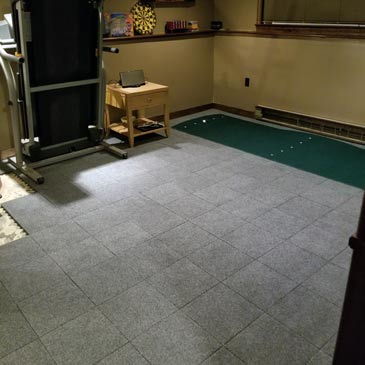
What makes basements tricky
Basements are cool, damp, and often uneven. Concrete can wick moisture up. That moisture causes odors, mold, or loose seams if you ignore it. Sound control also matters, since hard slabs echo.
This guide explains how to lay carpet in basement while managing moisture and comfort. You will see safe steps that protect your home and your budget.

Tools and materials you will need
Gather everything before you start. A smooth workflow makes the job easier and cleaner.
Tools
- Tape measure, chalk line, and straightedge Precise layout and cuts
- Utility knife with sharp blades Clean, safe trimming
- Knee kicker and power stretcher Tight fit without ripples
- Seaming iron and seam roller Strong, invisible seams
- Hammer drill or masonry bit For concrete tack strip pins
- Pry bar and pliers For tack strip and staple work
- Shop vacuum and mop For dust and debris
- 6-foot level or straight board For checking flatness
- Trowel and patch compound For low spots in the slab
Materials
- Carpet chosen for basements Low pile or solution-dyed types are best
- Carpet pad rated for concrete Moisture resistant or closed-cell pad
- Tack strips for concrete With hardened pins or use construction adhesive
- Seam tape for hot melt Strong bond for joints
- Concrete patch and self-leveler To smooth the slab
- Vapor barrier or subfloor panels As needed based on moisture
- Transition strips For doors and adjacent floors
- Double-faced carpet tape For tricky spots or stairs
Having the proper tools is part of how to lay carpet in basement without callbacks.
:max_bytes(150000):strip_icc()/Basementcarpet-GettyImages-929233838-69c52e974a7c482db243dbb6fbcca39a.jpg)
Choose the right carpet and pad for basements
Pick carpet that handles moisture and wear. Short, tight piles like loop or low twist perform well. Solution-dyed fibers resist stains and bleach. Avoid thick shag that traps damp air.
Choose pad that resists moisture. A closed-cell foam or rubber pad works better than thick rebond. If you use rebond, pick one with a built-in moisture barrier film. Keep pad thickness moderate so the stretch holds well.
Color and pattern can hide seams and wear. Think about traffic lines from stairs and doors. Choosing well is key to how to lay carpet in basement with long-term success.
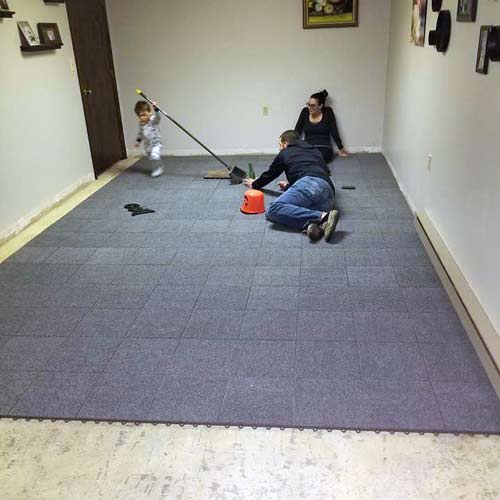
Prep the space and test for moisture
A clean, dry, flat slab is everything. Do not skip this step.
Check water sources
- Fix leaks, gutter issues, and grading Keep surface water out
- Seal wall cracks and floor joints As needed with proper products
- Consider a dehumidifier Keep humidity below 50 percent
Test moisture
- Tape a square of plastic to the slab for 24 to 48 hours If droplets form, address moisture
- Use a calcium chloride or RH test for better data Follow kit directions
- If readings are high, add a vapor barrier or a raised subfloor Make a plan before you install
Prep the concrete
- Scrape paint, glue, and bumps Vacuum well
- Patch low spots and cracks Level to within 3/16 inch over 10 feet
- Prime or seal if the product calls for it Follow labels
Good prep is the backbone of how to lay carpet in basement and avoid failures.
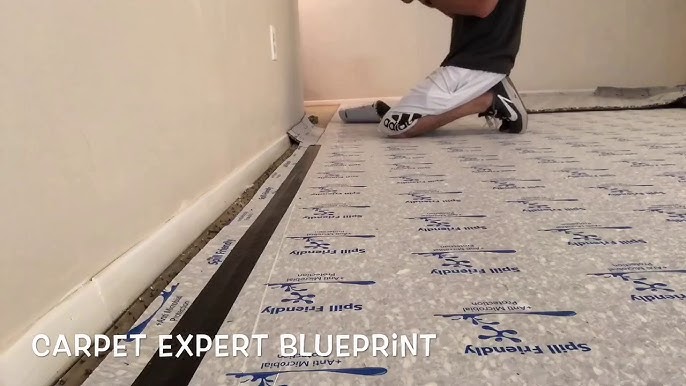
Subfloor options for comfort and moisture
You have three common paths. Choose based on your readings and ceiling height.
Direct pad and carpet on concrete
- Works if moisture is under control and the slab is flat
- Use moisture-resistant pad and seal seams with tape
- Fast and cost-effective
Floating subfloor panels
- Interlocking OSB over a plastic or foam bottom
- Adds warmth, air space, and a moisture break
- Great for cold slabs, with a small height gain
Foam plus plywood system
- XPS foam board on the slab, then plywood
- Secure with rated adhesive and fasteners per product
- Stable, warm, and strong
Pick the path that fits your space. This choice drives how to lay carpet in basement for comfort and durability.
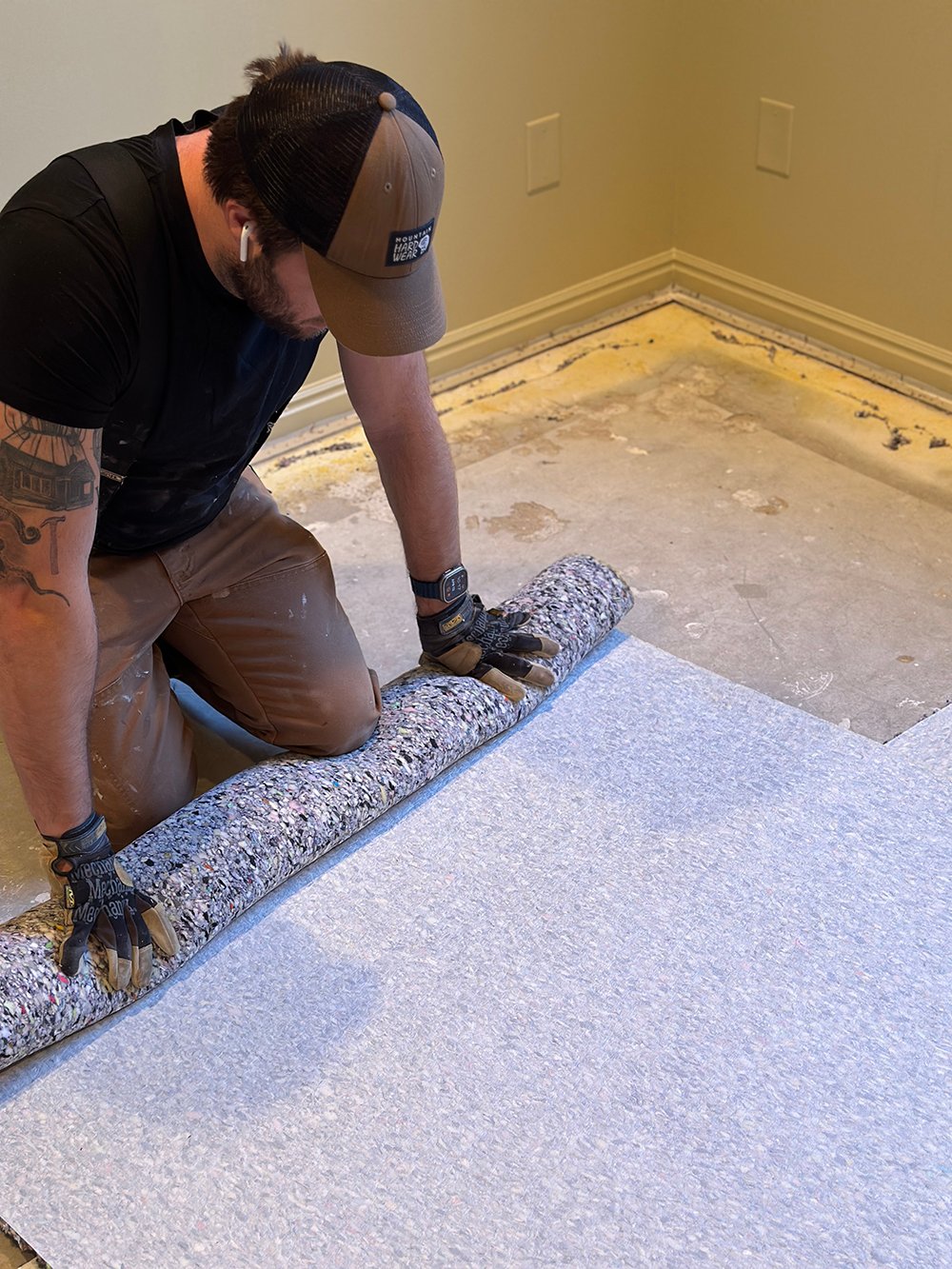
Step-by-step: how to lay carpet in basement
Follow these steps for a clean, pro result.
Plan the layout
- Sketch the room and note doors, stairs, and posts
- Plan seam locations away from focal lines and high traffic
- Run carpet pile toward the main entry for a clean look
Install tack strips
- Keep strips 3/8 inch from walls This is the gully for tucking
- On concrete, use hardened pins or a strong adhesive
- Do not put tack strips across doorways Use transitions instead
Lay the pad
- Roll pad inside the tack strip gap Cut it tight to the strip
- Tape pad seams flat and tight
- Do not overlap pad over the tack strip
Cut and dry-fit the carpet
- Roll out carpet in open space and rough cut oversize by 3 to 4 inches
- Bring it into the room and align with your layout
- Let it relax for a bit so it lies flat
Make seams
- Trim factory edges to get true seams Use a straightedge
- Butt edges snug without gaps
- Use seam tape and a hot iron under the seam Then roll to lock fibers
Stretch the carpet
- Use a power stretcher across the room Set teeth in the pile, not backing
- Hook carpet onto tack strips as you stretch each direction
- Use the knee kicker only for corners and small moves
Trim and tuck edges
- Use a sharp knife to trim excess at walls
- Tuck the edge into the gully with a stair tool
- Check that the pile stands up and no backing shows
This is the core of how to lay carpet in basement. Stay patient, and keep each step clean.

Seam, stretch, and finish like a pro
Good seams are flat, strong, and almost invisible. Keep pile direction the same on both sides. Warm the tape evenly and roll the seam while warm. Shield the surface with a board when you iron to avoid marks.
Stretching is not optional. Loose carpet ripples later. Set consistent tension with the power stretcher and follow a pattern. A pro finish shows that you know how to lay carpet in basement without shortcuts.

Edges, transitions, posts, and stairs
Edges and doors
- Use metal or vinyl transitions at doorways Protect the edge and match heights
- Under-cut door trim so carpet slides under for a neat line
Around posts and columns
- Cut an X to fit around the post Trim small, then sneak up on a tight fit
- Seal the cut with seam sealer to prevent fray
Stairs down to the basement
- Measure each tread and riser Tight cuts save time later
- Use tack strips on treads and risers and staple the pad
- Choose waterfall or cap-and-band style based on your look
Details like these lift your work and round out how to lay carpet in basement.

Common mistakes and how to avoid them
- Skipping moisture tests Leads to smells, puckers, and mold later
- No power stretcher Causes ripples and early wear
- Thick pad on concrete Weakens stretch and traps damp air
- Bad seam placement Makes flaws visible down long sight lines
- Poor floor prep Telegraphed bumps and weak adhesion
Avoid these traps if you want a lasting result and a simple plan for how to lay carpet in basement.
Cost, time, and when to call a pro
Cost varies by carpet, pad, and subfloor. Plan a budget per square foot that includes prep. Add more if you need a raised subfloor. Tools like a power stretcher can be rented for a day.
A weekend is enough for one large room if prep is light. Call a pro if moisture is high, the slab is very uneven, or seams are complex. Smart choices here can change how to lay carpet in basement for your exact space.
Care, maintenance, and moisture control after install
Keep a dehumidifier set to under 50 percent. Run the HVAC fan to move air. Use a mat at the bottom of stairs to catch grit.
Vacuum often with a beater bar set right for your pile. Spot-clean spills fast with safe cleaners. Ongoing care protects your work and proves you know how to lay carpet in basement for the long haul.
Frequently Asked Questions of how to lay carpet in basement
Is carpet safe for basements?
Yes, if moisture is under control and you choose the right materials. Use a moisture-resistant pad and test the slab first.
Do I need a vapor barrier under carpet in a basement?
Use one if tests show moisture risk. A raised subfloor or pad with a barrier film is often enough.
Can I install carpet directly on concrete?
Yes, if the slab is dry, level, and clean. Use tack strips rated for concrete and a suitable pad.
What type of carpet is best for basements?
Short, tight piles and solution-dyed fibers work well. They handle traffic, resist stains, and dry faster.
Do I need a power stretcher?
Yes. It prevents ripples and extends carpet life. A knee kicker alone is not enough.
How long should I wait after patching or leveling the floor?
Follow the product label, usually 24 to 48 hours. The surface must be dry and hard.
How do I hide seams in a big room?
Place seams away from direct light and main walk paths. Match pile direction and use proper seam tape and heat.
Conclusion
A warm, quiet basement starts with smart prep, the right materials, and careful steps. Test for moisture, plan seams, use a power stretcher, and finish edges clean. These habits turn a tricky slab into a simple, repeatable job.
Start small if this is your first time. Gather your tools, follow the steps, and enjoy the process. Want more guides like how to lay carpet in basement? Subscribe, ask a question, or share your project wins.

Table of Contents