You might think a pair of tongs is just a clamp. But how you use that tool can make the difference between a perfectly seared steak and a dry, overcooked mess. The truth is, learning how to grill using a pair of tongs is one of the most overlooked skills in outdoor cooking.
Most grillers grab whatever tongs are closest and call it a day, but that approach comes with real safety and food quality risks.
According to ASTM material standards, the heat rating of grill tong tips varies widely. Metal can handle over 1000°F, while silicone tops out at around 600°F. Mistaking one for the other can lead to melted handles or dropped food right over hot coals.
Those details matter, and that’s exactly where we’re going to start.
Quick Answer
Grill using tongs by holding them at the pivot point. Squeeze gently, don’t crush the food. Open the tongs wide before gripping to avoid pinching.
Use a light touch for delicate items like fish, and a firm hold for steaks. Flip once, adjust position, then plate without dropping.
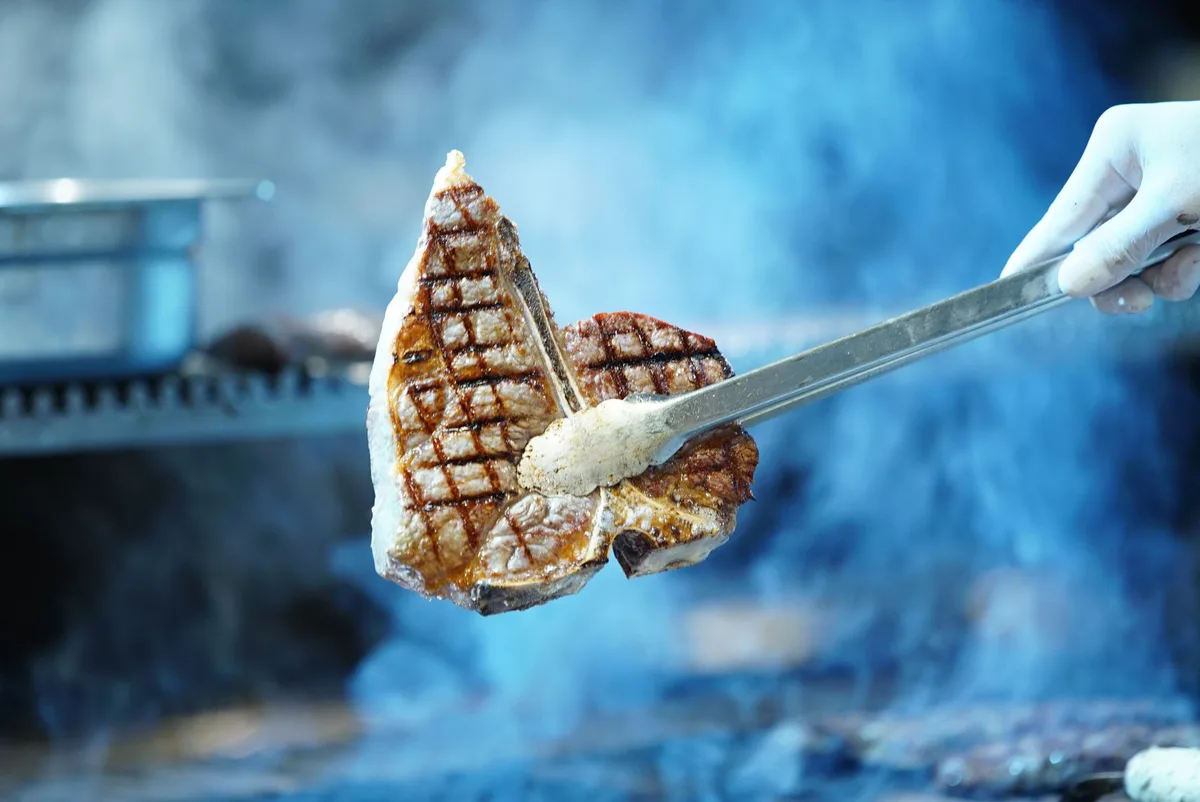
Why Your Tongs Matter More Than Your Grill
A great grill won’t fix bad tong technique. Your tongs are your direct connection to every piece of food on the grate. They control how you flip, where you place, and how much juice stays inside.
Control starts with the tool in your hand. If your grip is off, you’ll either crush the food or drop it through the grates. Dropped food causes flare-ups. Flare-ups burn your hands and ruin dinner.
That’s a chain reaction that starts with bad tong work.
Safety is the bigger reason. Short tongs put your arm inside the heat zone. A 12-inch pair forces you to reach over flames. Per the National Fire Protection Association, improper tool use contributes to grill fires each year.
A simple switch to 16-inch or longer tongs gives you a safer distance.
Food quality also depends on technique. Squeezing tongs too hard forces juices out of meat. That gives you dry, tough steak. A gentle, secure grip preserves moisture.
You can’t get that from a grill brand, you get it from how you use your tongs.
What Makes a Good Grilling Tong (Features That Actually Count)
Not all tongs are built the same. The features determine whether they’ll serve you safely and effectively. Here’s what to look for.
Length
Longer tongs keep your hands farther from the heat. A 16-inch length is the sweet spot for most home grills. It gives you enough distance without losing control.
Short tongs under 14 inches are best for the indoor kitchen, not the barbecue grate.
Material
Stainless steel handles hold up to high heat and are widely recommended. Silicone tips are great for non-stick grates but can degrade above 600°F. Plastic or nylon handles should never go near direct flame.
Many manufacturers mark maximum temperature ratings directly on the handle.
Tip Design
Scalloped or serrated tips grip better than flat blades. They help you grab slippery sausage or chicken skin without crushing it. Some tongs have a flat spoon-like end on one side, useful for flipping but weaker for lifting.
Locking Mechanism
A slide lock keeps tongs closed for storage. But some cheap locks snap after a season. Look for a metal slide lock with a positive click.
It should feel solid when engaged.
Comparison Table
| Feature | Best Option | Why It Matters |
|---|---|---|
| Length | 16 inches | Safe distance + good control |
| Handle material | Stainless steel | High heat tolerance, no melting |
| Tip material | Stainless steel or silicone | Steel for maximum heat, silicone for non-stick grates |
| Grip surface | Scalloped or serrated | Prevents food slips |
| Lock | Metal slide lock | Durability over plastic |
The Right Way to Hold and Grip Your Tongs
Most people grip tongs like a weapon. They squeeze with their whole hand, hold them near the tips, and end up with meat juice running down their arm. Here’s the fix.
Hold at the pivot point. Place your thumb and index finger around the hinge area. That gives you maximum leverage with minimum effort. Gripping near the tips makes the tongs heavy and hard to control.
Use your fingers, not your palm. Squeeze with your ring finger and pinky while your thumb guides. This is a relaxed motion, not a death grip. A hard squeeze fatigues your hand and damages the food.
Open the tongs wide before contact. Slide the tips around the food with space to spare. If you pinch the food as you grab, you’ll tear the surface. For items like chicken thighs or fish filets, this step is critical.
Lift, flip, then adjust. Don’t stab or poke. Position the tongs under the center of gravity for the food. Lift it cleanly, rotate, then place it down gently on a clean part of the grate.
This single motion preserves structure and prevents sticking.
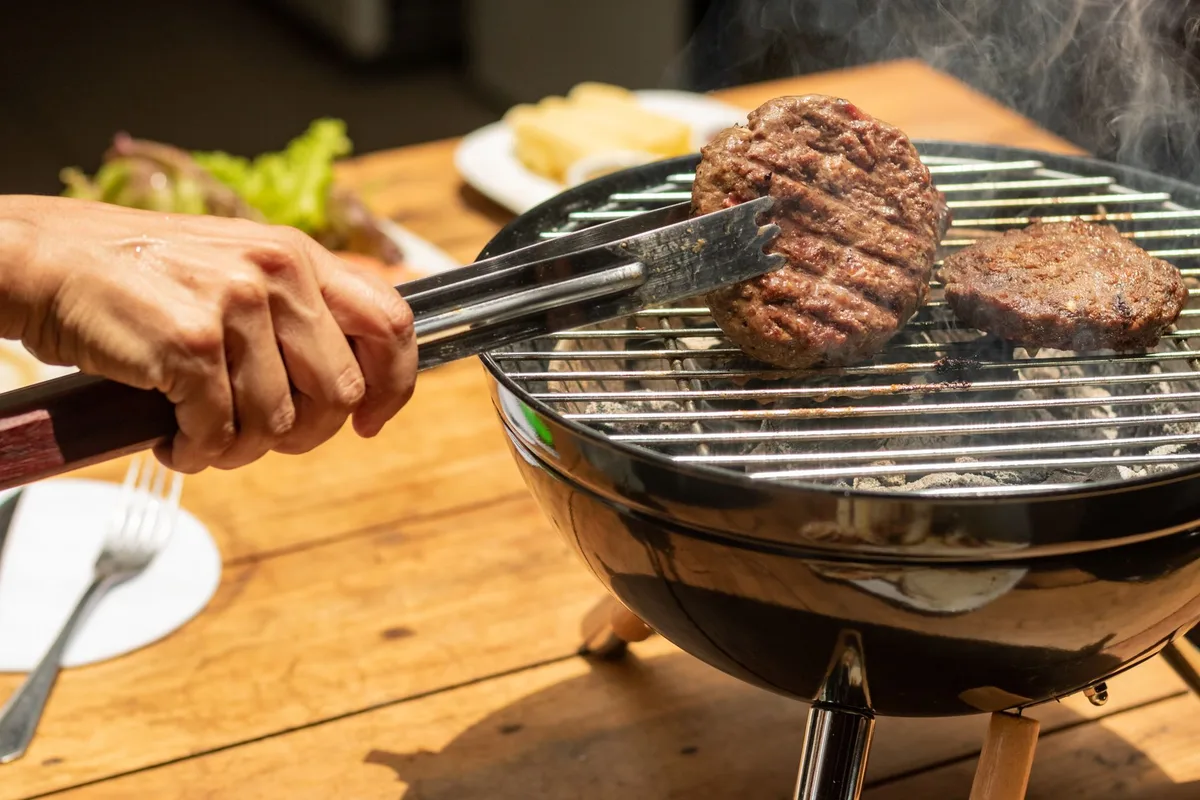
Common Mistakes in Grip
- Clenching the handles too hard. This causes hand fatigue and splits food apart.
- Holding near the tips. Less control, more reach into heat.
- Using two hands. You should be able to operate the tongs with one hand so the other is free for basting or adjusting heat.
Step-by-Step: How to Grill Using Tongs for Different Foods
Different foods require different tong techniques. One method does not fit all. Here’s how to handle the most common grill items.
Steaks and Burgers
For steaks, use a firm but gentle grip. Open the tongs wide and slide them under the steak near the center. Lift, flip in one motion, then place on a clean, hot part of the grate.
Flip only once to keep juices inside. Frequent flipping loses heat and creates uneven cook.
For burgers, the same rule applies. But burgers are softer. Squeeze too hard and they’ll crumble.
Use a lighter hold and support with a spatula if needed. Many grilling pros use a spatula for the initial flip, then tongs to move and plate.
Chicken and Pork
Chicken thighs and breasts are irregular shapes. The tong grip needs to follow the contour. Hold the chicken near the thickest part for stability.
Use the tongs to rotate pieces for even cooking, especially on bone-in cuts.
Pork chops and tenderloin should be handled gently. The meat is lean and can dry out quickly. Use tongs to move them from direct to indirect heat zones without piercing.
Piercing releases juices.
Fish and Delicate Vegetables
Fish fillets are the toughest test for any tong user. They’re fragile and fall apart easily. The trick is to use tongs as a holder, not a grabber.
Slide the tongs under the fillet and support it with a spatula underneath. Lift together and flip.
Delicate vegetables like asparagus or zucchini strips need a gentle pinch. Too much pressure and they snap. Use tongs with scalloped edges for a secure hold, then roll them on the grate for even char marks.
Sausages and Kebabs
Sausages can split if you squeeze them. Use tongs to roll the sausage across the grate, not to lift it from the top. For turning, grip the whole sausage lightly and rotate 90 degrees.
This gives you even browning without bursting the casing.
Kebabs have skewers that make flipping tricky. Use tongs to rotate the skewer rather than lift the food directly. Grip the skewer near the handle and turn.
You can also slide the food off the skewer onto the grate for direct heat exposure, then use tongs to reposition.
Tongs vs. Spatula vs. Fork: When to Use Each
These three tools all live near the grill. But they are not interchangeable. Here’s the breakdown.
Tongs
Best for: Irregular cuts, flipping, moving food between heat zones, rotating skewers.
Avoid for: Very delicate items like flaky fish unless supported by a spatula.
Why: Tongs give you fine positional control. You can drop food exactly where you want it without sliding across the grate.
Spatula
Best for: Burgers, pancakes, fish fillets, flat items.
Avoid for: Round or uneven foods like chicken legs or kebabs.
Why: The wide blade supports the entire base of the food. No pinching or piercing. Great for flipping delicate items without structural damage.
Fork
Best for: Nothing on the hot grate.
Avoid always: Piercing food releases juices and creates hotspots that lead to flare-ups.
Why: Forks tear meat. The only exception is when checking doneness by resistance, and even then, a thermometer is better.
Quick Decision Guide
| Condition | Use Tongs | Use Spatula |
|---|---|---|
| Flipping a steak | Yes | No (decent, but less control) |
| Turning a burger | Optional | Yes (more surface support) |
| Handling chicken thighs | Yes | No (unstable) |
| Flipping fish | No (unless supported) | Yes (better support) |
| Moving sausages | Yes (roll, don’t squeeze) | No (hard to balance) |
| Removing kebabs | Yes (grip skewer) | No |
The simple rule: if you need precision placement and the food can handle a gentle squeeze, use tongs. If the food is flat or fragile, use a spatula. Never use a fork.
Common Mistakes That Ruin Your Food (and Your Safety)
Even experienced grillers slip up with tongs. The mistakes are predictable. Once you know them, you can avoid them.
Squeezing too hard. This is the number one error. A death grip crushes meat fibers and forces juices onto the coals. That causes flare-ups and leaves you with dry meat.
Relax your hand. Let the tongs do the work.
Using short tongs on a big grill. A 12-inch pair forces your hand dangerously close to the flames. You’ll feel the heat on your knuckles. That discomfort makes you rush.
Rushing leads to dropped food and burned fingers. Switch to 16-inch tongs for any grill wider than 40 inches.
Grabbing food at the wrong angle. Approaching meat from the side instead of the top often causes it to slip. Slide the tongs directly under the center of the food. Lift straight up.
Tilting sideways on the way to the plate is a common cause of food ending up on the ground.
Leaving tongs on the grate. Metal handles get dangerously hot if left resting on the cooking surface. You’ll reach for them and get burned. Always rest tongs on the side shelf or hang them off the grill’s tool hooks.
Cross-contaminating with raw meat. Using the same tongs for raw chicken and cooked food is a food safety violation. The USDA recommends using separate tongs or washing thoroughly with soap and hot water between handling raw and cooked items. A second pair of tongs is the easiest solution.
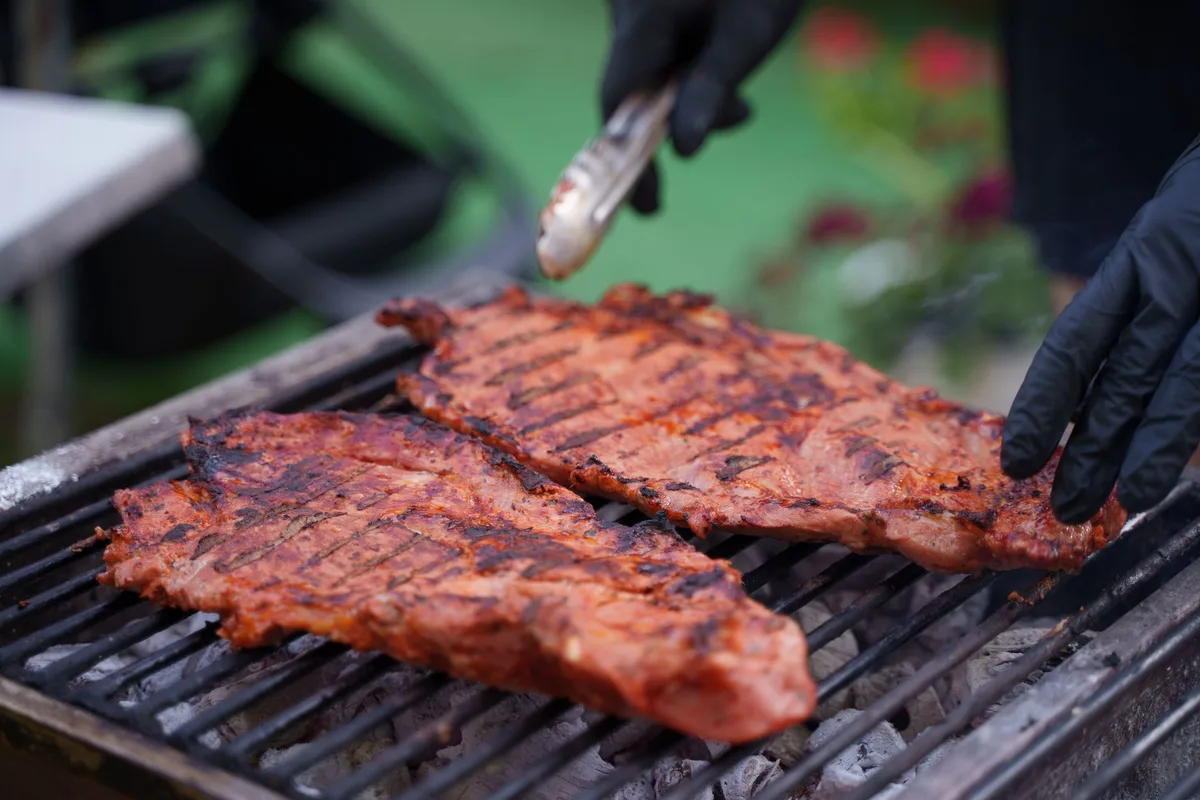
Flare-Up Risks
Dropped fat from crushed meat causes flare-ups. A grease fire can damage your grill and injure you. Keep a spray bottle of water nearby.
Better yet, keep your grip light so food stays intact. Flare-ups are much easier to prevent than to put out.
How to Avoid Cross-Contamination With Tongs
Cross-contamination is the most overlooked risk in backyard grilling. Raw poultry carries bacteria that can transfer to cooked food through shared tools. The fix is simple.
Use a color-coded system. Keep one pair of tongs reserved for raw meat. Use a separate pair for cooked food. Some grillers use red-handled tongs for raw and black-handled for cooked.
That visual cue prevents mistakes when you’re busy.
Wash between uses. If you only have one pair, wash it with hot soapy water after handling raw meat. This should happen before you touch any cooked food. A quick rinse under the garden hose is not enough.
Soap and heat kill bacteria.
Keep tongs off dirty surfaces. Never place tongs that touched raw meat on the same platter as cooked food. Use separate plates for raw and cooked items. The USDA states this is a leading cause of foodborne illness in outdoor cooking.
Sanitize high-touch areas. The tong handle collects bacteria from your hands, which touched raw meat. Wipe the handle with a sanitizing wipe between tasks. This step is small but important.
As of 2026, CDC data still lists undercooked poultry and cross-contamination as top causes of food poisoning.
Choosing the Right Tong Length for Your Grill Setup
Tong length is not one-size-fits-all. The size of your grill and the type of cooking you do determine what works best.
Small grills (under 36 inches). A 12-inch to 14-inch pair is fine. You don’t need extra reach. Shorter tongs give you more control for precise placement.
They also store easily.
Standard grills (36 to 48 inches). A 16-inch length is ideal. It keeps your hand far enough from the heat while maintaining control. Most manufacturers recommend this as the standard size for home grilling.
Large grills (48 inches and up). An 18-inch to 20-inch pair is safer. The extra distance protects your arms from radiant heat. The trade-off is slightly less precision.
Practice with longer tongs on simple items before tackling delicate fish.
Camping and portable grills. A 12-inch pair works well. These grills are lower to the ground and closer to you. Longer tongs actually become awkward in tight camping setups.
Length and Heat Safety
| Grill Size | Recommended Tong Length | Safety Benefit |
|---|---|---|
| Under 36 inches | 12-14 inches | Good control, minimal reach needed |
| 36-48 inches | 16 inches | Safe distance from flames |
| Over 48 inches | 18-20 inches | Maximum arm protection |
| Portable/camping | 12 inches | Easy storage, good for low grills |
The math is simple. The bigger the fire, the more distance you need. Don’t compromise on length to save a few dollars.
Tongs Maintenance: Cleaning, Storage, and When to Replace
Tongs last years if you take care of them. They fail quickly if you don’t.
Clean after every use. Wash tongs with hot soapy water. Pay attention to the hinge area where food particles get trapped. A scrub brush helps reach tight spots.
Dry them completely before storing. Moisture causes rust on steel springs.
Check the spring tension. A weak spring makes the tongs floppy. If the tongs don’t snap open on their own, the spring is wearing out. Replace them before your next cook.
A collapsed spring at the wrong moment means dropped food over the fire.
Inspect silicone tips. Silicone degrades at high heat. If the tips are cracked, melted, or peeling, replace the tongs. Burnt silicone can shed particles onto food.
No one wants that.
Lubricate the hinge. A drop of cooking oil on the hinge pin every few months keeps the action smooth. This prevents sticking and uneven wear. It also extends the life of the spring.
When to replace tongs. Replace them if the rivets are loose, the metal is warped, or the locking mechanism no longer holds. Also replace if the tips are damaged. A pair of tongs costs far less than a trip to the ER for a burn from a failed tool.
Safety Warnings Every Griller Should Know
This section is not optional. Tongs are simple tools, but they can cause injury when misused.
Never use tongs to move lit charcoal. The heat is too intense for most tongs. Use a dedicated chimney starter or heat-rated charcoal tongs. Standard cooking tongs will warp and fail.
Keep the locking mechanism disengaged during cooking. A locked pair of tongs is useless in an emergency. If a flare-up occurs, you want immediate access to your tool. Unlock them as soon as you pick them up.
Watch for heat transfer through the handles. Metal handles get hot after extended use. Many manufacturers include heat-resistant silicone grips. If yours don’t, use a grill glove on your tong hand.
Test the handle temperature before grabbing.
Store tongs out of children’s reach. The sharp tips and strong spring can cause injury. A tool hook at adult height is ideal. Never leave tongs on the grill surface unattended.
Use designated separate tongs for raw and cooked food. This prevents bacterial transfer. The USDA recommends keeping at least two pairs of tongs at the grill. Mark them clearly so there is no confusion in the heat of cooking.
Quick Reference: Best Tong Techniques by Food Type
Here is a fast reference table for the grill. Use it when you need a quick reminder on what technique works for each food type.
| Food Type | Grip Pressure | Best Approach | Avoid |
|---|---|---|---|
| Steak | Firm but gentle | Slide under center, flip once | Squeezing juices out |
| Burger | Light | Support with spatula if needed | Crushing the patty |
| Chicken thighs | Moderate | Grip thickest part, rotate for even cook | Piercing skin |
| Fish fillet | Very light | Support with spatula underneath | Lifting without support |
| Sausages | Gentle | Roll across grate, don’t squeeze | Bursting the casing |
| Vegetables | Gentle | Use scalloped tips for grip | Snapping with pressure |
| Kebabs | Light on skewer | Rotate skewer handle, not food | Pulling food off skewer |
Frequently Asked Questions
What length of tongs is best for grilling?
For most home grills between 36 and 48 inches, 16-inch tongs are ideal. They keep your hand at a safe distance while maintaining good control. Shorter tongs work for small grills.
Longer tongs are needed for large commercial grills.
Can I use tongs to move hot charcoal?
No. Standard cooking tongs are not designed for the intense heat of burning charcoal. They will warp, melt, or fail.
Use dedicated charcoal tongs or a chimney starter. Heat-rated fireplace tongs are a safer alternative.
How do I stop my tongs from slipping?
Look for tongs with scalloped or serrated tips. They provide much better grip than flat blades. For oily hands, choose tongs with rubberized or textured handles.
Dry your hands before grabbing the tongs.
Should I use the same tongs for raw and cooked meat?
No. Using the same pair for raw and cooked food causes cross-contamination. The USDA recommends separate tongs for each.
Use a color-coded system to avoid confusion under pressure.
How do I clean grilling tongs correctly?
Wash them with hot soapy water after every use. Pay attention to the hinge where food gets trapped. Dry them completely to prevent rust.
For silicone tips, check for cracks before storing.
When should I replace my tongs?
Replace them when the spring loses tension, the rivets become loose, or the tips show damage. Warped metal handles are also a sign of failure. A broken pair of tongs at the wrong moment can cause injury.

Table of Contents