Pick a dense, low-profile carpet with a firm pad and expert installation.
Choosing carpet for stairs is not a guess. It is a system. In this guide on how to choose the carpet for stairs, I share proven steps from real installs, lab-backed insights, and simple tips you can use today. You will learn what works, what fails, and how to avoid costly mistakes without losing style or comfort.

What matters most on stairs
Stairs are the highest-wear area in most homes. They need strength, grip, and a tight fit. Think safety first, then durability, then style. If you are asking how to choose the carpet for stairs, start with these core factors.
Key things to weigh:
- Durability Choose fibers and constructions that resist crushing and fraying.
- Safety Pick a surface with traction and a pad that is firm, not bouncy.
- Comfort Balance cushion with a stable step. Too soft can be unsafe.
- Style Use pattern and color to hide soil and scuffs.
- Budget Plan for pro install. It is as important as the carpet itself.
Independent wear tests show nylon and triexta hold shape better than polyester on stairs. That is why they are top picks for heavy use.

Choose the right fiber
Your fiber choice sets the tone for wear, cleanability, and feel. Here is how to choose the carpet for stairs by fiber.
- Nylon Best all-around for stairs. Great resilience, solid stain options, wide price range. It springs back after foot traffic.
- Triexta Very good stain resistance and bounce. Softer feel than nylon in many styles. Strong for busy homes.
- Wool Premium, natural, and durable. Good grip and soil resistance when dense. Costs more and needs smart care.
- Polyester Soft and budget friendly. Weaker crush resistance on stairs. Works only if very dense and low pile.
- Blends Wool-nylon or nylon-triexta blends can pair strength with feel. Check density and a clear stair rating.
My install tip Use dense nylon or triexta for families, pets, and rentals. Use wool for long-term value and classic style.

Pick the best pile and construction
Pile type affects safety, look, and wear. This choice is a big part of how to choose the carpet for stairs.
- Low cut pile Smooth and safe when dense. Easy to vacuum. Good for kids and pets.
- Frieze (twist) Twisted yarns hide soil and footprints. Choose a tight, not shaggy, version.
- Loop pile Durable and tailored. Short loops are best. Avoid big loops if you have pet claws.
- Cut and loop Subtle pattern that hides wear. Check that the loop height is low and tight.
- Plush or saxony Looks rich but can be slick and shows traffic. Use only if very dense and low.
Ask for face weight and density details. A tight, heavy construction resists matting. On nosings, a low profile reduces slip and keeps a clean wrap.

Get the padding right
Padding on stairs is not like padding in rooms. It must be firm and supportive. This is a key step in how to choose the carpet for stairs.
What works well:
- Thickness 3/8 inch or thinner on stairs. Often 1/4 to 3/8 inch is ideal.
- Density 8 to 10 pounds for rebond. Felt or rubber pads should be firm.
- Type High-density rebond, flat rubber, or firm felt. Avoid memory foam.
Do not pad the risers. Pad the tread only, flush to the edge, to reduce roll on the nosing. A firm pad stops bounce, keeps seams tight, and improves safety.
Runners vs wall-to-wall
You have two install paths. This choice shapes budget, cleaning, and style. Use it to refine how to choose the carpet for stairs for your home.
- Wall-to-wall Full coverage on each step. Maximum noise control and softness. Needs precise install to avoid wrinkles.
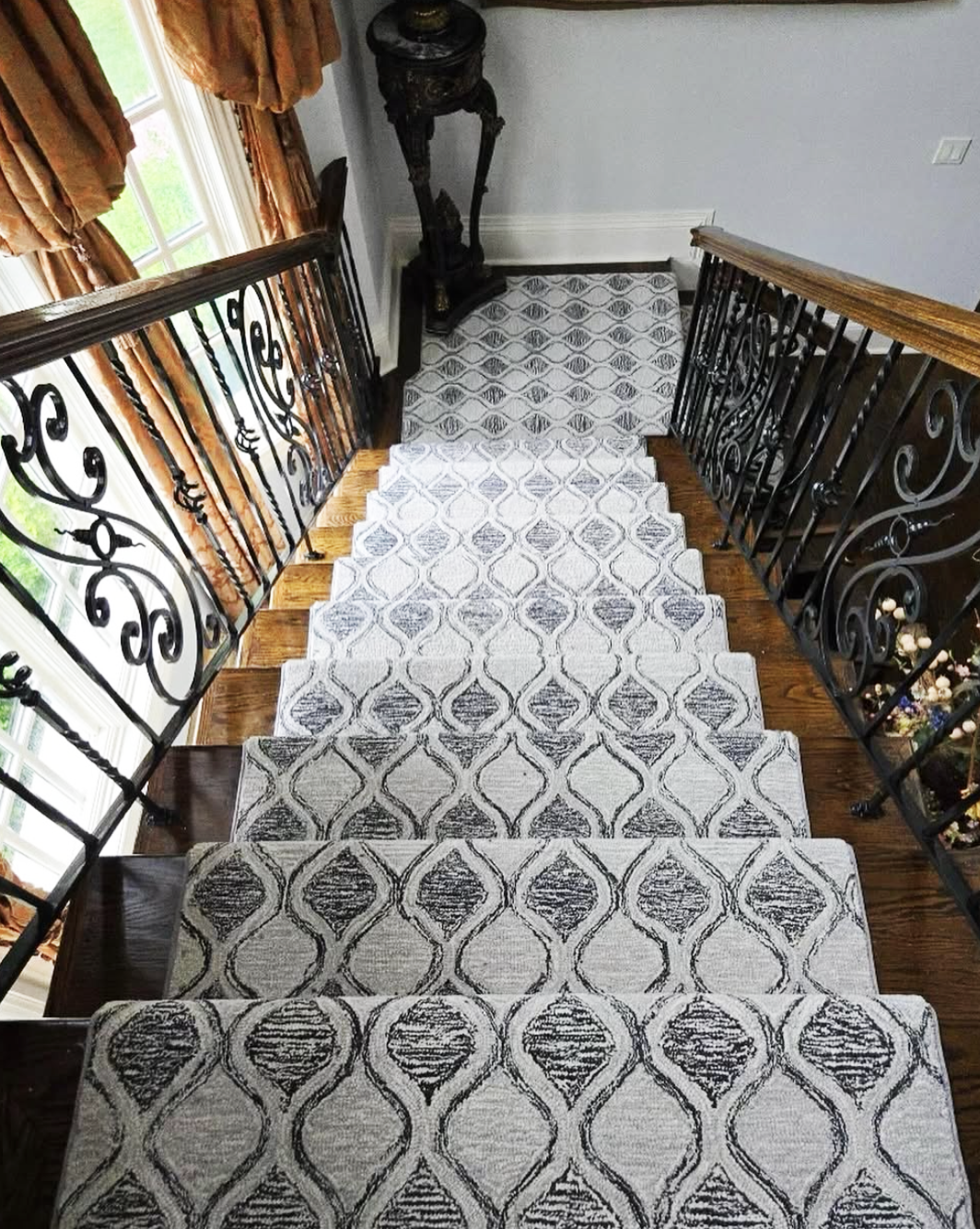
- Runner A strip down the center with painted or stained edges. Great for style and easy cleaning of edges. Add rods for a classic look.
Runners use less material and can cost less. But they require careful measuring and centered alignment.

Pattern, color, and soil hiding
Stairs get scuffs, dust, and spills. Smart design helps. This is a subtle but powerful part of how to choose the carpet for stairs.
Use these cues:
- Color Mid tones hide dirt better than very light or very dark shades.
- Pattern Small-scale patterns and heathers mask wear and vacuum marks.
- Stripes Run stripes along the stair length, not across. Check pattern placement at turns and landings.
- Texture Choose a tight texture to reduce snagging and keep edges crisp.
If you pick a pattern, confirm the repeat size. Larger repeats mean more waste and extra planning for landings.

Measuring, ordering, and budget planning
Good math saves money and headaches. It also ensures you buy enough for pattern matching. These steps clarify how to choose the carpet for stairs with confidence.
Simple method:
- Count steps and note each tread depth, riser height, and width.
- Multiply tread depth plus riser height to get one step’s run.
- Add for landings and turns. Add 10 to 20 percent extra for patterned goods.
For a typical 12 to 13-step flight, you may need 7 to 10 linear feet of 12-foot-wide carpet, more with patterns or winders. Confirm with your installer for exact yields.

Installation methods and what to ask your installer
A skilled install is half the battle. Poor technique ruins even the best carpet. Vet your pro with clear questions. This is essential in how to choose the carpet for stairs and get results that last.
Key methods:
- Waterfall The carpet flows over the nosing. Cleaner look, faster. Good for thick goods.
- Cap-and-band The carpet wraps each tread and riser separately. Tighter and crisp on patterns.
- Hollywood A very tight wrap and staple under the nose. Great for traction and neat lines.
Ask your installer:
- Will you use stair-specific pad thickness and density?
- How will you secure the nosing to prevent creep?
- Will seams avoid tread surfaces and sit on risers or landings?
- How will you align a pattern across winders and landings?
Look for tack strips set close to risers, proper adhesion at nosings, and clean trimming.

Care, maintenance, and longevity tips
Good care keeps stairs safer and better looking. This supports the full plan of how to choose the carpet for stairs and protect your spend.
Use these habits:
- Vacuum stairs twice a week in busy homes. Use a stair tool to reach edges.
- Spot clean fast. Blot, do not scrub.
- Schedule hot water extraction once a year, or twice with pets and kids.
- Use stair treads or a runner on top if you host often.
Rotate traffic if you can by switching your carry patterns. It sounds small, but it helps.
Common mistakes to avoid
I see the same issues again and again. Dodge these and you are ahead. This list closes the loop on how to choose the carpet for stairs the right way.
- Choosing a plush, tall pile that looks great but slips and mats.
- Using a soft, thick pad that feels nice but is unsafe on stairs.
- Skipping extra material for pattern match and landings.
- Trusting an installer who does not detail the method and pad.
- Ignoring fiber differences and buying only on price.
If you fix even one of these, your stairs will wear better for years.
Frequently Asked Questions of How to Choose the Carpet for Stairs ?
What is the safest carpet style for stairs?
A dense, low cut pile or a tight loop is safest. It gives traction, resists snagging, and wraps cleanly over nosings.
What carpet fiber lasts longest on stairs?
Nylon and triexta rank high for resilience under heavy foot traffic. Wool is also strong when dense and well cared for.
What padding should I use on stairs?
Use a firm pad, 1/4 to 3/8 inch thick, with high density. Avoid memory foam and very soft pads that can cause slip.
Are runners better than wall-to-wall on stairs?
Runners are stylish and easier to clean at edges. Wall-to-wall is quieter and softer underfoot; it comes down to your goals.
Can I install patterned carpet on stairs?
Yes, but plan for pattern repeats and extra material. Ask your installer how they will align the pattern across turns and landings.
How much carpet do I need for one flight?
For 12 to 13 steps, plan 7 to 10 linear feet of 12-foot-wide carpet. Add more for landings, winders, and pattern repeats.
Is wool worth the cost for stairs?
If you want a natural, long-life option and plan good care, yes. Wool is dense, grippy, and wears beautifully over time.
Conclusion
You now know how to choose the carpet for stairs with clarity. Focus on dense, low-profile styles, a firm pad, and a skilled install. Match fiber and pile to your home’s traffic and taste, and plan your measure and budget with care.
Take the next step today. Shortlist three carpets and touch them in person. Ask your installer the questions above, and book a measure with pattern planning. Ready for more tips? Subscribe for guides, or drop your stair questions in the comments.

Table of Contents