Brewing the perfect cup of coffee starts with more than just good beans and the right grind. A crucial, yet often overlooked, element is the water you use. For many of us, our coffee makers are equipped with a charcoal water filter.
But how often should you actually change that charcoal water filter in your coffee maker? It’s a question that directly impacts the taste of your coffee and the longevity of your machine. I’ve found that neglecting this simple maintenance task can lead to stale, off-tasting brews and even potential mineral buildup in your appliance.
Charcoal water filters work by adsorbing impurities from your tap water as it passes through. This includes chlorine, which can impart a chemical taste, as well as sediment and other dissolved solids that might affect flavor and aroma. Over time, the charcoal becomes saturated, meaning it can no longer effectively capture these unwanted elements.
Knowing the right replacement schedule ensures you’re always getting the cleanest, best-tasting water for your coffee.
Here, we’ll dive deep into everything you need to know about charcoal water filter replacement for your coffee maker, covering manufacturer recommendations, signs of a worn-out filter, and best practices for maintaining optimal flavor.
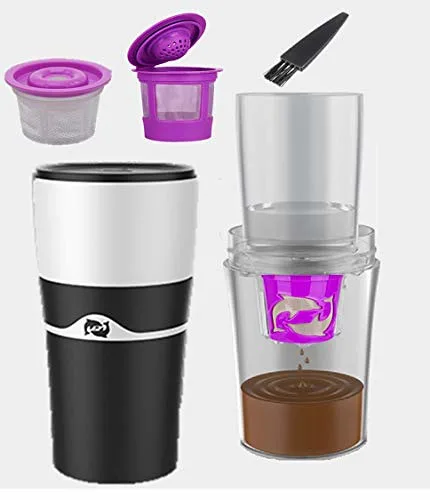
Image source: Openverse / shop8447
Understanding Your Coffee Maker’s Water Filter
Before we get into the nitty-gritty of replacement frequency, it’s important to understand what a charcoal water filter actually does for your coffee maker. These filters, often made from activated carbon, are designed to improve the quality of the water that eventually ends up in your mug. Think of them as a small but mighty purifier.
The activated carbon within the filter has an incredibly porous structure, giving it a massive surface area. This vast surface area is what allows it to attract and trap various contaminants through a process called adsorption. Chlorine, a common disinfectant in municipal water supplies, is a primary target.
Removing chlorine is essential because it can significantly interfere with the delicate flavor compounds of coffee, leading to a bitter or medicinal taste that masks the natural sweetness and complexity of your favorite beans.
Beyond chlorine, these filters can also reduce other unpleasant tastes and odors caused by organic compounds. They can also help to capture some sediment, preventing it from entering your coffee grounds or, worse, building up inside your coffee maker. This sediment removal is particularly beneficial if your local water supply has a high mineral content or if you’re using well water.
It’s worth noting that these filters are generally not designed to remove dissolved minerals that contribute to coffee’s flavor profile, like calcium and magnesium. In fact, some people find that the mineral content in their water, when filtered appropriately, enhances their coffee. They also typically won’t remove bacteria or viruses; for that, you’d need a different type of filtration or water treatment.
The effectiveness of the charcoal filter is finite. As it traps more and more impurities, its adsorptive capacity diminishes. It’s like a sponge getting full; eventually, it can’t hold any more water.
For your coffee maker, this means the filter stops doing its job and could even start releasing trapped contaminants back into the water, which is certainly not what we want for our morning brew. That’s why understanding the right replacement schedule is key to consistent, delicious coffee.
Manufacturer Recommendations: The Official Word
The most reliable guide for how often to change the charcoal water filter in your coffee maker typically comes directly from the manufacturer of your appliance. These companies design and test their machines, so they have specific insights into the optimal performance and lifespan of their integrated components.
Many coffee maker manufacturers will stipulate a replacement interval in the user manual. This is usually based on a combination of brewing cycles or a specific time frame. For example, you might see recommendations like “replace every 40-60 brews” or “replace every 2 months.” It’s crucial to consult your specific coffee maker’s manual for these guidelines.
If you’ve misplaced it, a quick search on the manufacturer’s website for your model number should bring up a digital version.
Why do manufacturers provide these guidelines? They’ve likely conducted extensive testing to determine when the filter’s effectiveness significantly declines. Over-filtering or under-filtering can both have negative consequences.
Replacing too soon can be wasteful, while replacing too late means you’re not getting the water quality your machine is capable of providing, potentially impacting taste and leading to issues like scale buildup if the filter is also meant to reduce some mineral content.
For instance, some high-end coffee maker brands might suggest replacing the filter every 60 days, regardless of usage. Other brands, often those with more basic models, might lean towards a brew count, say, every 50 or 60 pots. This is usually an average, as brewing a full carafe versus a half carafe might have slightly different impacts on the filter over time.
I’ve found that adherence to these official recommendations is a great starting point, especially when you’re new to a particular coffee maker or have just replaced the filter. It gives you a baseline to work from. However, several other factors can influence the actual lifespan of your filter, prompting you to potentially adjust this schedule.
Factors Influencing Filter Lifespan
While manufacturer recommendations are valuable, they’re often based on average use and typical water conditions. In reality, several factors can significantly alter how long your charcoal water filter remains effective. Understanding these can help you fine-tune your replacement schedule for the best results.
1. Water Quality: This is arguably the biggest influencer. If your tap water is already quite pure and free of strong chlorine odors or sediment, your filter may last longer.
Conversely, if your water has a noticeable smell or taste, or if you have hard water with a high mineral content, the filter will work harder and saturate more quickly. Using filtered water before it even hits the coffee maker’s reservoir (though this can sometimes strip beneficial minerals) might extend the filter life, but it’s not a common practice. Testing your water quality at home can give you a better idea of what your filter is up against.
2. Frequency of Use: Simply put, the more coffee you brew, the more water passes through the filter. A household that makes a pot or two of coffee every single day will exert more wear on the filter than a household that brews only on weekends.
Manufacturers’ brew-count recommendations are a good indicator here, but if you consistently brew more than the average implied by the time frame, you’ll need to swap it out sooner. For example, if the manual says “every 2 months or 60 brews” and you make two pots a day, 60 brews will be reached in about a month.
3. Water Temperature: While not as direct an impact as the sheer volume of water, the temperature at which water is filtered can play a small role. Filters are generally designed to work effectively at the temperatures typically used in coffee makers.
However, extreme variations (which are unlikely in normal coffee maker use) could theoretically alter the efficiency of adsorption. This is a minor factor for most users.
4. Filter Type and Quality: Not all charcoal filters are created equal. Generic replacement filters might not perform as well or last as long as the OEM (Original Equipment Manufacturer) filters.
Higher-quality activated carbon, more advanced filtration media, or even the physical size and density of the filter can affect its longevity. If you’ve switched to a third-party filter, its lifespan might differ from what the machine’s manual suggests for the original.
5. Coffee Maker Design: The internal design of your coffee maker can also subtly affect filter performance. For instance, how water is channeled through the reservoir and into the heating element, and then to the filtration system, might influence how evenly the water interacts with the charcoal.
This is usually a less significant factor than water quality and usage.
I’ve found that paying attention to these variables allows me to get the most out of each filter. If my water suddenly starts tasting a bit off, or if I know we’ve been brewing a lot more coffee than usual, I’ll often check the filter even if it hasn’t reached the manufacturer’s stated time limit.
Signs Your Charcoal Water Filter Needs Replacing
Beyond following a schedule, your senses can provide excellent clues that it’s time to change your coffee maker’s charcoal water filter. These indicators are often subtle at first but become more pronounced as the filter loses its efficacy. Paying attention to them can save you from brewing a less-than-satisfactory

Table of Contents