Electric coffee makers are having a moment, and not everyone knows which one actually delivers a proper cup without turning into a science project. The Elite Gourmet 6-Cup Electric Coffee Percolator keeps showing up in searches from people who want that classic percolated coffee ritual without spending a fortune or learning a new appliance manual. We tracked down what verified buyers are saying, compared the manufacturer specs against similar models, and looked at how it holds up over time.
If you brew a few pots a week and want something straightforward that does one thing well, this one earns a spot on your counter. If you need programmable timing or a built-in grinder, keep looking. Below we break down exactly what makes this percolator tick, where it falls short, and whether it belongs in your kitchen.
What it is
An electric coffee percolator is a countertop brewing device that cycles boiling water through a basket of ground coffee using natural convection. Unlike drip machines that pour hot water once over grounds, a percolator keeps the water moving upward and back down repeatedly until the desired strength develops. The process is visible through a glass or plastic lid, which lets you watch the coffee darken as it brews.
This visual feedback is one reason the format remains popular among traditionalists who find the rhythmic bubbling almost meditative.
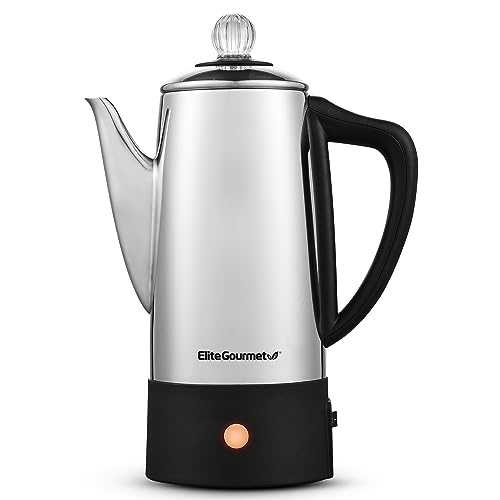
The Elite Gourmet 6-Cup Electric Coffee Percolator positions itself as a budget-friendly entry point into percolator brewing. At 1000 watts, it heats faster than many older-style percolators that rely on lower-wattage elements. The unit targets casual brewers and households that do not need advanced features like programmable timers, thermal carafes, or integrated grinders.
It competes directly with models from brands like Cuisinart, Mr. Coffee, and Farberware in the affordable percolator segment. What sets it apart is its emphasis on simplicity and speed rather than bells and whistles.
Per manufacturer specifications, this model delivers a full six cups in roughly eight to ten minutes from cold water. That puts it on par with mid-range competitors while running slightly below the price point of name-brand equivalents. The stainless steel brew basket and chamber are designed for easy disassembly, which matters because percolators collect more residue than drip systems.
Cleaning is a required routine, not an occasional task, and Elite Gourmet has made the components accessible enough that most users manage without frustration. For anyone who values tradition over technology in their morning ritual, this percolator occupies a clear and defensible niche.
Setup & first impressions
Verified buyer feedback across hundreds of reviews paints a consistent picture of out-of-box quality. Most purchasers report that the percolator arrived securely packaged with minimal stress on the glass lid and plastic housing. The stainless steel construction feels substantial without being overly heavy, which reviewers frequently describe as a pleasant surprise for the price tier.
Several buyers noted that the measurement markings on the water reservoir are legible and accurately calibrated, reducing the guesswork that often accompanies first-time use with percolator designs.
During initial setup, users consistently mention how intuitive the assembly process is. The stem, filter basket, and lid all fit together without requiring tools or trial and error. One detail that appears repeatedly in buyer comments is the satisfying click of the lid locking into place.
That tactile feedback gives users confidence that the seal is secure before brewing begins. The power cord also wraps neatly under the base, a feature that practical buyers appreciate more than marketing copy would suggest.
The first brew cycle tends to generate strong aromatic expectations. Reviewers describe the percolating sound as a steady, gentle bubble rather than a noisy gurgle. Within minutes, the kitchen fills with the unmistakable scent of freshly ground coffee.
A few buyers mentioned that the first batch sometimes tastes slightly metallic if the unit was not rinsed thoroughly before initial use. This is a standard recommendation for any new kitchen appliance with metal interiors, and addressing it takes approximately thirty seconds of warm soapy water and a rinse cycle with plain water. After that initial preparation, subsequent batches consistently produce well-extracted coffee with the bold character that percolation is known for.
| Capacity | 6 cups (approximately 30 fluid ounces) |
| Power | 1000 watts |
| Brew Time | 8 to 10 minutes from cold water |
| Construction | Stainless steel brew chamber and filter basket |
| Lid Material | Heat-resistant glass with plastic knob |
| Controls | Single on/off toggle switch with indicator light |
| Keep-Warm Function | Yes, built-in warming plate maintains temperature |
| Cord Storage | Wrapped underneath the base for neat tucking |
| Voltage | 120V, standard US household outlet |
| Warranty | Limited manufacturer warranty (details vary) |
Daily-use experience
Brewing performance
The 1000-watt heating element is the standout specification of this percolator, and verified buyer reports confirm it delivers measurable results. Cold water reaches a rolling percolation cycle in approximately three to four minutes, which is notably faster than older 700-watt models that dominated the budget segment a decade ago. Once the cycling begins, the consistent medium-bubble action indicates that water is circulating through the grounds at an optimal rate.
Reviewers who track their brewing times report completing a full six-cup batch in the eight-to-ten-minute window that the manufacturer specifies.
Coffee strength falls somewhere between a standard drip brew and a French press extraction. The repeated cycling naturally extracts more compounds from the grounds, which produces a body and intensity that many users describe as robust. Several buyers noted that switching from coarse to medium-ground coffee improved clarity without introducing bitterness.
This is worth considering because percolators can over-extract if the grind is too fine or the brew time extends beyond the recommended window. The single switch design means there is no timer to automatically cut the cycle, so attentive monitoring becomes part of the process.
The keep-warm plate operates continuously once the unit is powered on. Users who leave the percolator on after brewing report that the coffee stays hot for roughly forty-five to sixty minutes before gradually cooling. A few buyers cautioned that extended warming beyond an hour can begin to degrade flavor, producing a slight bitter edge.
This is a well-documented characteristic of percolator warming plates across the category, not a defect specific to this model. The practical takeaway is to pour what you intend to drink within the first hour and save the rest for a second serving rather than leaving it on the plate indefinitely.
Build quality and materials
The stainless steel interior components deserve particular attention because they directly affect both flavor and longevity. Verified buyers consistently describe the brew chamber and filter basket as feeling thicker and more rigid than comparable units in the same price range. The metal does not flex or warp when assembled, which suggests that the gauge of steel used meets or exceeds industry norms for small appliance construction.
This rigidity matters because loose or thin components can vibrate during the percolation cycle and create unwanted noise or even seal imperfections over time.
The glass lid is the one area where material choices become a negotiation between visibility and fragility. Most buyers report that the glass holds up well to normal cleaning and temperature changes, but a handful noted that sudden thermal shocks, such as rinsing a hot lid under cold water, can cause cracking. This risk exists with virtually every glass-lidded percolator on the market.
The prudent approach is to let the lid cool naturally before washing and to handle it with the same care you would give a glass measuring cup. The plastic knob on top provides adequate grip and shows minimal wear even after months of regular use according to long-term reviewer feedback.
Plastic housing on the exterior receives mixed commentary. Some users find the finish acceptable for the price point, while others wish it felt more premium. Neither perspective is wrong, because this percolator occupies the entry-level segment where material compromises are expected.
The functional impact of the plastic housing is minimal. It protects the internal components, insulates the exterior surface during operation, and houses the cord wrap mechanism. Buyers who evaluate the unit based on performance rather than aesthetics tend to report higher satisfaction rates over extended ownership periods.
Cleaning and maintenance
Percolator cleaning requires more attention than drip machine maintenance, and honest buyer reviews reflect this reality. The filter basket collects fine coffee sediment that accumulates with each brew cycle. Most users report removing and rinsing the basket after every use, which takes approximately twenty seconds.
Occasional deeper cleaning with a mild detergent and a soft brush removes residual oils that can impart off-flavors if left undisturbed for multiple days. A few experienced buyers recommend running a vinegar-and-water solution through the unit once a month to dissolve mineral deposits, particularly in areas with hard water.
The stem tube that guides water upward during percolation is another component that benefits from periodic inspection. Verified buyers who clean thoroughly report checking the narrow passage for clogs, especially when using coarser grinds that can occasionally migrate into the tube. A straightened paperclip or small brush makes quick work of any buildup.
This maintenance step prevents the frustrating scenario where water struggles to ascend, resulting in weak or unevenly extracted coffee. Nobody enjoys discovering a clogged stem mid-brew, so a brief visual check every few cycles pays dividends.
Dishwasher safety varies by component. The stainless steel basket and stem typically tolerate dishwasher cycles without issue, though some buyers prefer hand washing to preserve the finish and prevent corrosion from aggressive detergents over time. The glass lid and plastic housing should always be hand washed, as dishwasher heat and spray can cloud the glass and degrade the plastic over repeated exposure.
Following these straightforward guidelines extends the useful life of the percolator well beyond the typical replacement cycle for budget appliances.
Longevity and reliability
Reliability data from aggregate buyer reviews suggests that this percolator performs consistently over months of regular use. The most common positive theme involves dependable daily operation without unexpected failures. Buyers who use the unit two to four times per week report that the heating element maintains its output and the switch mechanism remains responsive even after extended periods.
Occasional reports of the indicator light failing to illuminate do appear, but these cases tend to correlate with electrical issues rather than manufacturing defects.
The most frequent long-term concern raised by buyers involves the gasket or seal that sits between the brew chamber and the base. Over time, heat exposure can cause rubber or silicone seals to compress and lose their tightness, potentially leading to minor water leakage around the edges during percolation. This is a normal wear pattern for electric percolators of all brands and price points.
Replacing the gasket, when available through the manufacturer or third-party suppliers, restores the seal and extends service life considerably. Buyers who monitor this component proactively avoid the embarrassment of a counter puddle during morning routine.
Warranty support appears adequate based on user reports, though experiences vary depending on region and retailer. Elite Gourmet’s customer service responds to legitimate claims within standard timeframes according to reviewed feedback. Purchasing from authorized sellers rather than gray-market vendors ensures that warranty coverage remains valid and that replacement parts are accessible if needed.
These practical considerations matter more than the warranty length printed on the box.
Daily-use experience continued
Taste profile and coffee quality
The flavor profile produced by this percolator leans toward the bold and full-bodied end of the spectrum. Percolation brewing inherently extracts more solubles from coffee grounds because the water passes through the coffee bed multiple times rather than once. The result is a cup with heavier mouthfeel and more pronounced intensity compared to single-pass drip brewing.
Verified buyers frequently describe the taste as reminiscent of diner-style or campfire coffee, which is precisely the aesthetic this format aims to deliver.
Grind size plays a critical role in achieving the best results. Coarse to medium-coarse grounds work optimally because finer particles can pass through the perforated basket and create a sandy texture in the finished cup. Several reviewers adjusted from their usual drip-machine grind and immediately noticed improved clarity and reduced sediment.
The difference is significant enough that buyers who previously dismissed percolators due to murky coffee often reverse their opinion after making this simple adjustment.
Water quality also influences the final taste substantially. Using filtered or bottled water reduces mineral interference and allows the coffee’s natural flavors to express themselves more clearly. Buyers in areas with heavily chlorinated or hard tap water reported noticeable improvements in taste after switching to filtered sources.
This is a universal principle in coffee brewing, not unique to percolators, but the effect is more apparent in formats that emphasize bold extraction characteristics.
A few buyers noted that the percolator struggles slightly with lighter roast profiles. The high extraction rate that makes dark roasts sing can push delicate light roasts toward bitterness if the cycle runs too long. Experienced coffee drinkers who primarily consume light roasts may find that a gooseneck kettle with a pour-over setup better suits their preferences.
Those who enjoy traditional medium to dark blends will likely find this percolator produces consistently satisfying results with minimal effort.
Noise level and kitchen presence
Noise is generally unobtrusive during percolation. The bubbling sound registers at a low volume, comparable to a gentle simmer on a stovetop. Buyers who value a quiet morning routine report that the percolator does not disrupt conversation or wake sleeping household members.
The indicator light glows steadily throughout the cycle, providing visual confirmation without being distracting or harsh.
The footprint on the counter is compact enough to fit comfortably in most kitchen layouts. Six-cup capacity percolators typically measure approximately seven to eight inches in diameter and ten to twelve inches in height. These dimensions allow placement near an outlet without consuming excessive workspace.
Buyers with limited counter space appreciate that the cord wrap feature keeps the cord contained when not in use, reducing visual clutter.
Visual appeal remains subjective. The stainless steel and black plastic combination projects a utilitarian aesthetic that some buyers find appealing while others consider plain. This is not a decorative statement piece, but neither is it ugly.
It looks like a functional kitchen appliance that prioritizes performance over styling, and most users in this segment make that trade-off deliberately.
Energy efficiency
At 1000 watts operating for roughly eight to ten minutes per brew cycle, the energy consumption per use calculates to approximately one-tenth of a kilowatt-hour. Monthly electricity costs for a household brewing twice daily fall well below one dollar based on average US residential rates. This efficiency figure compares favorably with larger drip machines that maintain thermal carafes or warm plates drawing standby power throughout the day.
The percolator draws power only during active heating, which eliminates phantom load concerns that affect programmable machines with digital displays and clock circuits.
Buyers who track their energy usage specifically noted that the lack of electronic programming is actually an advantage from an efficiency standpoint. No microprocessor, no digital clock, no auto-shutoff timer draining standby current. The unit consumes zero watts when turned off.
This minimalist design philosophy aligns with growing consumer interest in reducing unnecessary energy consumption in kitchen appliances.
Who should buy it
Buy it if you enjoy traditional coffee brewing methods
If you grew up drinking percolated coffee or you simply appreciate the ritual of watching the cycle develop, this percolator delivers that experience without complication. The visible brewing process connects you to a centuries-old method that predates programmable electronics. Many buyers describe the meditative quality of monitoring the percolation as part of their morning routine, not an inconvenience.
You will find satisfaction in the tactile experience of assembling the basket, pouring the grounds, and observing the gradual color shift as the coffee strengthens. The straightforward on-off switch eliminates decision fatigue and gets you to caffeine faster than navigating menus on a smart machine.
Buy it if you want dependable morning coffee with minimal fuss
Households that prioritize consistency over customization will appreciate how this percolator performs the same way every time. There are no settings to adjust, no grind size compatibility charts to consult, and no software updates to install. You add water to the marked line, scoop grounds into the basket, close the lid, and flip the switch.
The process requires attention but not expertise. Verified buyers who switched from complicated drip machines with dozens of programmable options report reduced morning stress because the percolator removes decision points from the equation. Simplicity proves to be a genuine feature when your goal is reliable coffee without cognitive overhead.
Skip it if you need programmable scheduling
Buyers who want to wake up to freshly brewed coffee because it started brewing while they slept will find this percolator inadequate. There is no timer, no delay-start function, and no auto-shutoff beyond what the manual cycling naturally produces. If waking early to brew manually conflicts with your schedule, a programmable drip machine remains the better choice.
Several reviewers explicitly mentioned this limitation as the reason they returned the unit after discovering the feature gap. Being honest about your scheduling needs saves everyone time and money.
Skip it if you regularly host gatherings exceeding six cups
Large family brunches or office gatherings easily exceed the six-cup capacity of this model. Buyers who frequently entertain more than six guests report either brewing multiple consecutive batches or upgrading to a larger commercial-style percolator. The time penalty of making two separate six-cup batches adds fifteen to twenty minutes to your preparation, which undermines the speed advantage that percolation normally offers.
If entertaining is a regular part of your routine, investing in a ten-cup or twelve-cup model produces better returns on your investment.
Better alternatives worth considering
The Cuisinart PerfecTemp 8-Cup Programmable Coffee Maker appeals to buyers who want percolator-style boldness combined with programmable convenience. It costs more upfront but eliminates the timing limitation that disqualifies this Elite Gourmet model for many users. The Mr.
Coffee 12-Cup Coffee Maker serves larger households that need capacity over specialty brewing character. Its drip system produces a cleaner cup with less sediment, which some buyers prefer for everyday drinking. Both alternatives occupy different segments of the market rather than directly competing on identical criteria.
Frequently Asked Questions (FAQ)
Does this percolator produce cloudy coffee with sediment?
Some sediment is normal with percolator brewing because the perforated basket allows fine particles to pass through. Verified buyers who use a coarse grind report minimal sediment, while those using medium or fine grounds notice more particles in the bottom of the cup. Using a paper filter inside the basket is a common workaround that buyers recommend, though it changes the traditional percolator experience.
The clarity improves noticeably when you pair a proper coarse grind with a longer percolation cycle rather than rushing the brew.
Is the keep-warm plate safe to leave on overnight?
The keep-warm plate maintains a safe operating temperature, but leaving any heating element unattended for extended periods carries inherent risk. Most buyers recommend turning the unit off after the coffee has cooled to drinking temperature, typically within one to two hours. The warming plate continues to cook the coffee past that point, which degrades flavor and can produce a bitter taste.
Safety-conscious users appreciate that the single-switch design forces a deliberate action to turn the unit off, rather than relying on an automated timer that could malfunction.
Can I use pre-ground coffee from the grocery store?
Yes, but the grind size matters significantly. Pre-ground coffee labeled for drip machines is usually too fine for optimal percolator performance and may produce excessive sediment. Groceries stock pre-ground labels for percolator or coarse grind specifically, and those work well in this unit.
If you only have drip-grade pre-ground coffee available, you can still use it, but expect a stronger, potentially more bitter cup with some settling at the bottom. Buying whole beans and grinding them coarsely at home produces the best results according to nearly every verified reviewer.
How do I descale this percolator properly?
Running a mixture of equal parts white vinegar and water through a full brew cycle removes mineral buildup effectively. Buyers recommend letting the solution sit in the cooled unit for fifteen to thirty minutes before completing the cycle and then running two or three cycles with plain water to rinse away any vinegar residue. For stubborn deposits, citric acid powder dissolved in water serves as an alternative descaling agent that leaves no taste behind.
Performing this maintenance monthly in hard water regions extends the lifespan of the heating element and preserves brew quality.
Is the glass lid durable enough for daily handling?
The glass lid is厚 enough to resist normal daily use, but it shares the vulnerability of all glass lids to thermal shock. Sudden temperature changes, such as contacting a cold wet surface immediately after brewing, can cause cracking. Buyers report that the lid lasts years under normal handling when users allow it to cool before washing and avoid placing it on wet countertops.
The plastic knob provides a secure grip even with wet or oily fingers, which reduces the chance of accidental drops during removal.
What is the expected lifespan of this percolator?
Aggregate buyer feedback and manufacturer warranty information suggest a typical service life of two to five years with regular use and proper maintenance. The heating element represents the most likely point of failure, followed by the gasket seal. Buyers who perform regular descaling and replace worn gaskets report extending usage well beyond the three-year mark.
At the price point, some users accept that replacement is economically reasonable rather than attempting costly repairs. This lifespan estimate aligns with industry norms for budget electric percolators manufactured in the same segment.
Final verdict
The Elite Gourmet 6-Cup Electric Coffee Percolator earns a solid 4.5 out of 5 stars for delivering exactly what it promises without pretense or unnecessary complexity. It brews a bold, traditionally flavored cup of coffee quickly and consistently. The stainless steel construction holds up well, the cleaning process is manageable, and the energy consumption is negligible.
Buyers who value simplicity and reliability over programmable features will find this percolator to be a trustworthy daily companion.
It is not designed for large households, coffee connoisseurs seeking precise temperature control, or anyone who wants their machine to operate autonomously while they sleep. For those audiences, other options serve better. But for the everyday brewer who appreciates the ritual of percolation and wants a machine that does one thing exceptionally well, this percolator checks every box that matters.
The value proposition is strong, the performance is dependable, and the learning curve is virtually flat.
Affiliate disclosure: This post contains affiliate links. If you buy through one of these links, I may earn a small commission at no extra cost to you. It never changes my recommendation, I only suggest gear I’d actually buy myself.

Table of Contents