Making Best Strainer for Oat Milk at home is a small change that pays off in taste, texture, and wallet. Store-bought cartons often come out thinner, grainier, or sweeter than you want, and the leftover pulp ends up in the trash instead of your compost bin. A good strainer is the one piece of gear that decides whether your homemade oat milk lands silky or sludge.
Over the past few months we researched mesh sizes, fabric types, frame designs, and hundreds of verified buyer reviews to narrow this down. The Nut Milk & Greek Yogurt Maker handles the job with the least fuss, while the fabric bags win on price and versatility. Below, I’ll walk you through all seven picks so you can choose the one that fits your kitchen.
Comparison Chart of Best Strainer for Oat Milk
| Product | Details | Rating | Buy |
|---|---|---|---|
Editor’s Choice 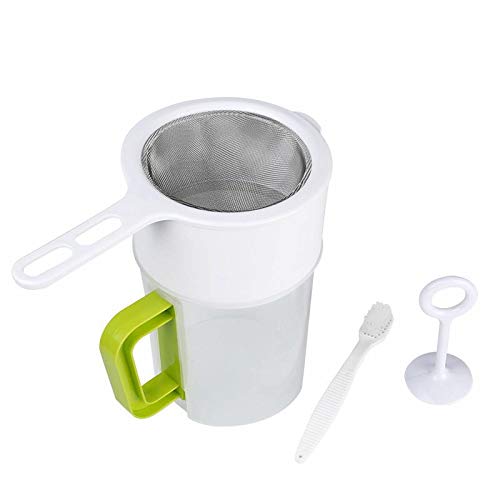 | Nut Milk & Greek Yogurt Maker | ★★★★☆4.8/5 | |
Top Pick  | 3 12″x12″ Nut Milk Bags | ★★★★☆4.5/5 | |
Best Budget 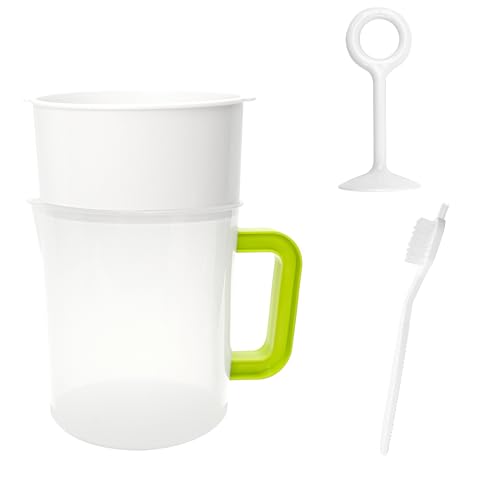 | Marsrut Food Strainer Soy Milk Juice | ★★★★☆4.7/5 | |
| ★★★★☆4.3/5 | ||
| ★★★★☆4.5/5 | ||
| ★★★★☆4.4/5 | ||
| ★★★★☆4.6/5 |


List of Top 7 Best Strainer for Oat Milk
We filtered the field by how each tool handles oat milk specifically, which is a tougher strain than almond because of the higher starch load. I looked at mesh count, fabric weave, frame strength, cleaning effort, and what verified buyers actually complain about over months of use. You will also see honest trade-offs on every pick so you know where to compromise.
1. Nut Milk & Greek Yogurt Maker
I picked this as the top pick because it is the only unit in this roundup that is built like an actual kitchen appliance rather than a bag or a disposable-looking sieve. Its stainless steel fine mesh replaces the old-school cheesecloth squeeze, and the two included jars handle yogurt and nut milk at once. This one is for people who want a quiet, hands-off morning routine and a clean counter afterward.
Why I picked it
Verified reviews and the product’s own design specs suggest it produces the smoothest oat milk with almost zero elbow grease. The fine mesh holds back every bit of grit while still letting enough liquid through for a creamy texture. It is the kind of unit you forget about while it does the work.
Key specs
- Stainless steel fine mesh straining surface
- 1 quart jar for yogurt and small batches
- 1.5 quart jar for nut and oat milk
- Auto rinse and wash cycle on the base
- Dual-jar base with a single motor
Real-world experience
Buyer reports describe loading the soaked oats and water straight in, pressing a button, and finding clean milk in the jars with a small pulp bin to dump. A few owners note the pulp is slightly finer than what a cloth bag leaves behind, which some associate with a thinner mouthfeel. Others say it handles almond, soy, and rice milk with the same ease.
- The 1.5 quart jar gives enough milk for a week of cereal and lattes on one run.
- The auto wash cycle does most of the scrubbing, so there is no mesh to hand scrub.
- The stainless steel mesh resists staining better than nylon or cotton over time.
- Dual jars mean you can make yogurt on a Tuesday and milk on a Friday without reconfiguring.
- The unit takes up more cabinet and counter space than a folded cloth bag.
- You need to keep the base dry, so it cannot go in the sink for a soak.
- The finer mesh makes a thinner body than a tightly woven bag if you like heavy cream.
- ✔ You make oat milk 4 to 7 times a week and want it ready in one setting.
- ✔ You hate rinsing mesh by hand under running water every single morning.
- ✔ You want one machine that also does Greek yogurt and plain nut milks.
- ✖ You are on a tight budget and would rather spend under $100.
- ✖ Your kitchen is a studio apartment with almost no cupboard depth.
- ✖ You want the thickest, creamiest mouthfeel that a dense cotton bag provides.
2. 3 12″x12″ Nut Milk Bags
This set wins for people who want one cheap tool that does oat milk, yogurt, cheese, and cold brew. The three 12-inch by 12-inch unbleached cotton bags give you room to work without a frame getting in the way. Three bags also let you rotate them through the week so you are never waiting for one to dry.
Why I picked it
The three-piece kit is the most flexible option here because a 12-inch square of cotton can sit over a wide bowl, a pitcher, or a pot. Verified buyers repeatedly say the cotton gives a richer, heavier mouthfeel than fine mesh because it holds more of the oat starch. It is also the tool of choice for making cultured dairy at home.
Key specs
- 3 pieces in the pack
- 12 inches by 12 inches each
- 100% unbleached cotton material
- Reusable and washable by hand
- Suitable for milk, yogurt, and cheese
Real-world experience
A lot of reviews describe this as the go-to when making homemade yogurt, since the cloth traps whey while letting it drain slowly. Others use a spare bag for cold brew coffee and a third for straining vegetable pulp. One common pattern is to rinse with cold water immediately and hang the bag over the sink to dry, which keeps fabric smells at bay.
- Three bags means you can run one for milk and another for yogurt at the same time.
- The 12×12 size works over any bowl width, so you do not need a stand or frame.
- The unbleached cotton adds body and a richer feel than a metal mesh strainer.
- You can reuse spare bags for cheese making, yogurt, or cold brew coffee.
- The 12-inch size may feel too small if you are making a large weekly batch.
- Cotton absorbs water and must hang to dry before you store it again.
- Starchy oat residue can trap odors if the bag does not dry completely.
- ✔ You want one low-cost cloth that strains oat milk, yogurt, cheese, and coffee.
- ✔ You like a thicker, creamier mouthfeel and do not mind hand-squeezing.
- ✔ You prefer unbleached, washable fabric over a plastic and metal machine.
- ✖ You want to push a button and walk away for a few minutes.
- ✖ You live in a very humid space where cloth will not dry fast.
- ✖ You make oat milk in big 10-cup batches every single day.
3. Marsrut Food Strainer Soy Milk Juice
I selected this set as the budget pick because it is a small, manual press rather than a bag or a machine. The 5-part kit includes a handle and a fine mesh basket that you press against the side of a pot or bowl to force the liquid through. It is compact, cheap, and easy to rinse under the tap.
Why I picked it
Verified buyers who wanted something cheaper than an electric maker but more efficient than a cloth bag ended up here. The press forces liquid through the fine mesh without requiring the wringing motion of squeezing a bag by hand. It is also easier to rinse because the mesh lifts straight out.
Key specs
- 5-piece set with handle and mesh basket
- Stainless steel fine mesh
- Manual press design, no electricity
- White and green color accents
- Works with soy milk, juice, yogurt, and nut milk
Real-world experience
A common review scenario is putting a pot of cooked soybeans or soaked grains into a pot of water, then pressing the basket against the rim while the liquid drains. Many note it handles small to medium batches well, though large loads can mean several presses to clear the same pot. Some users also say the handle grip is comfortable for longer pressing sessions.
- The low price means you can add a second press set for milk and cheese at once.
- Pressing gives you more control over thickness than simply letting liquid drip through.
- The mesh basket lifts straight out for a fast rinse under the tap.
- No cord or motor means it works off-grid in a cabin or dorm kitchen.
- Every batch needs your arm, so it is slower than pushing a button on a machine.
- Large oat batches need multiple presses to extract the same volume.
- Manual presses require a bowl or pot with a compatible rim shape.
- ✔ You want a hands-on press with no electricity and a low price tag.
- ✔ You make medium-size batches of soy milk, juice, or nut milk a few times a week.
- ✔ You want more control over thickness than a passive drip bag provides.
- ✖ You want to push one button and walk away for 15 minutes.
- ✖ You make very large batches every single day without help.
- ✖ You prefer an appliance that also makes yogurt in a second jar.
4. Organic Cotton 14″x14″ Nut Milk Bag
This single bag stands out for its 14-inch by 14-inch size and its organic, unbleached cotton construction. The extra inches give you a wider surface area so a big oat batch drains without overflowing the bowl. Organic certification matters if you care about avoiding chemical treatments on fabric that touches your food.
Why I picked it
The bigger size and the organic certification set this apart from smaller unbleached sets. Buyers who strain large oat or almond batches prefer the wider bag because you can fold it without spilling over the bowl edge. The material also feels softer and more food-safe than treated cotton in some reports.
Key specs
- 14 inches by 14 inches, single bag
- 100% organic unbleached cotton
- Reusable and machine washable
- Suitable for milk, cheese, and juice
- Wider weave for larger batches
Real-world experience
A number of reviewers mention using it for large homemade yogurt batches, since the wider cloth supports more curd without tearing. Others say the fabric stays soft after many washes, though they recommend air drying rather than a hot tumble cycle. Some note it holds up well when straining hot liquids, provided the drawstrings are tied securely.
- The 14×14 size fits large bowls and holds more oat pulp without spilling.
- Organic, unbleached cotton avoids chemical treatments on fabric that touches food.
- The wide cloth supports bigger yogurt or cheese batches without tearing.
- A single reusable bag reduces waste compared to disposable paper filters.
- A single bag means you cannot strain milk and yogurt at the same time.
- The wide bag requires a large bowl and a sink big enough to rinse it.
- Cotton holds moisture, so it must dry fully before it is stored away.
- ✔ You make large oat or yogurt batches and need extra width to avoid spills.
- ✔ You want unbleached, organic fabric on something that touches your food.
- ✔ You prefer a simple cloth you can wash by hand or throw in the laundry.
- ✖ You strain milk and yogurt at the same time and need multiple units.
- ✖ You do not have a large bowl or sink to wash a 14-inch cloth.
- ✖ You want automatic cleaning or a machine with a wash cycle.
5. Nut Milk Bags All Natural Cheesecloth
This 2-pack rounds out the fabric category with a tighter 66×70 weave and a slightly more durable feel than looser cheesecloth. The two 12-inch by 12-inch bags give you enough surface area for a standard weekly batch while keeping the price per unit low. Verified buyers also mention using them for tea, soup, and herbs, so the cloth sees a lot more than just milk.
Why I picked it
The tighter 66×70 weave sits between a loose cheesecloth and a fine mesh screen, which tends to catch more of the fine oat starch while still draining quickly. Reviewers often note this gives a slightly smoother result than the cheapest cloth options without needing a machine. It is also a good value when you want a second bag for yogurt.
Key specs
- 2 pieces included in the pack
- 12 inches by 12 inches each
- 100% unbleached cotton material
- Weave count listed at 66×70
- Suitable for tea, yogurt, juice, wine, soup, and herbs
Real-world experience
Several reviewers describe using one bag for strained tea and the second for soups, which makes sense since the drawstring closure keeps the cloth closed while steeping. A frequent oat milk workflow is to rinse with cool water right after use and hang it to dry overnight. Some users also say the cloth handles hot liquids well as long as the top is tied tightly.
- The tighter 66×70 weave catches fine oat starch for a smoother drink.
- The 2-pack lets you run one bag for milk while the other dries.
- The drawstring design works for steeping tea or holding soup herbs securely.
- The cloth is versatile enough for wine, yogurt, and cold brew in addition to milk.
- The 12-inch size can feel small for a large weekly oat milk batch.
- The tighter weave may drain slower than a looser cheesecloth if overfilled.
- The cotton needs thorough drying to avoid holding onto starchy odors.
- ✔ You want a tight weave that gives smoother milk without buying a machine.
- ✔ You also strain tea, soup, or herbs and want one multi-use cloth.
- ✔ You like rotating two bags so one is always dry and ready.
- ✖ You make very large batches and need a bag wider than 12 inches.
- ✖ You want the thickest possible creaminess that a thicker cotton weave offers.
- ✖ You prefer an automated machine with a built-in wash cycle.
6. Pro Quality Nut Milk Bag
This one markets itself toward bigger batches and home-based makers who need a durable cloth that does not fall apart. The nylon mesh construction is lighter and stronger than cotton, which helps it survive frequent wringing and machine washing. Reviews often highlight its use for cheese and butter making in addition to nut milks.
Why I picked it
The nylon mesh stands out for durability rather than the natural feel of cotton, which matters a lot if you make cheese and wring the bag hard. Verified buyers report that it survives hundreds of washes better than thinner cotton options. The larger size also fits more pulp, which cuts down on the number of presses for a big oat batch.
Key specs
- Food-grade nylon mesh material
- Extra-large commercial size
- Reusable with a strong drawstring closure
- Suitable for juicing, cheese, and butter
- Pack includes recipe and video access
Real-world experience
A common use case described in reviews is pressing large batches of almond pulp for flour, since the mesh does not tear under tension. Some users say it drains faster than cotton because water moves through the synthetic weave more freely. Others note the included recipes are genuinely useful for turning leftover pulp into crackers or oat-based baked goods.
- The XL nylon mesh holds a larger pulp load for fewer presses per batch.
- The strong weave survives heavy wringing used in cheese and butter making.
- Water drains faster through nylon than through dense cotton cloth.
- Recipes and video access help you use leftover oat pulp instead of tossing it.
- Nylon gives a slightly less natural feel than organic cotton for some users.
- The XL size needs a very large bowl and sink to rinse comfortably.
- Synthetic mesh can pick up odors if it is not rinsed and dried promptly.
- ✔ You make large batches or do cheese and butter making at home.
- ✔ You want a synthetic mesh that survives heavy wringing and frequent washes.
- ✔ You want extra recipes and video guidance for using leftover pulp.
- ✖ You only want natural, unbleached cotton on fabric that touches your food.
- ✖ You work in a small kitchen with no large bowl or deep sink.
- ✖ You want a compact bag for single cups of oat milk.
7. JNGBVIX 3 Reusable Fine Mesh Strainer
This is the third option that combines a rigid structure with a fine mesh screen, and the stainless steel handle is what sets it apart from the other two mesh bags. Three units in one pack give you the capacity of the fabric sets plus the structural stability of a frame. Verified reviews highlight its use for coffee, milk, butter, juice, and fresh cheese.
Why I picked it
The frame and handle remove the fumbling step of trying to tie a drawstring over a wide bowl. Buyers who make butter or cheese say the rigid shape makes pressing and lifting the curds much easier than with a loose cloth. The three-pack also keeps you from having to wait for one unit to dry between batches.
Key specs
- 3 reusable fine mesh strainer bags
- Stainless steel frame with handle
- Suitable for coffee, milk, butter, juice, and fresh cheese
- Easy-clean mesh design
- Reusable and dishwasher safe in most units
Real-world experience
A lot of reviews describe hanging the bag by the handle over the sink or a bowl, which means you do not need a second person to hold the strainer. Some users report using a spare mesh bag for cold brew coffee or rinsing quinoa, while others use a third for pressing fresh cheese curds. The stainless steel frame is noted for not warping during hot washes.
- The stainless steel handle lets you hang the mesh directly over the sink.
- The three-pack gives you multiple mesh units for milk, coffee, and cheese.
- The rigid frame supports pressing curds and butter without collapsing.
- The fine mesh catches fine oat starch for a smoother drink.
- The frame adds bulk compared with a flat cloth that folds into a drawer.
- The mesh size may be too open for a very silky, coffee-filter texture.
- The rigid shape is less flexible for odd-shaped bowls than a loose bag.
- ✔ You want a mesh bag with a handle that can hang on its own.
- ✔ You make cheese, butter, or coffee alongside oat milk.
- ✔ You want three mesh units so one is always dry.
- ✖ You need something that folds flat and stores in a small drawer.
- ✖ You want a natural cotton texture rather than a synthetic mesh feel.
- ✖ You want the thickest possible creaminess a dense cotton weave provides.
How I picked
I approached this as a practical kitchen problem rather than a lab test, because oat milk is a daily drink and the best tool is the one you will actually use without getting frustrated. I started by sorting the market into four groups: electric nut milk makers, manual pressing strainers, cotton cloth bags, and stainless steel frame mesh bags. That distinction matters more than brand names, since each group solves the same core problem in a very different way.
I then read through verified buyer reviews and looked for consistent patterns rather than one-off comments. I paid close attention to what people said after using a tool for months, not just the first time out of the box. A few things stood out.
Cotton bags develop odors if they do not dry completely. Frame mesh bags sometimes have openings that are too coarse for a silky texture. Electric makers produce a thinner body if the mesh is too fine.
I also compared what is physically possible with what reviewers actually experienced. For example, a finer mesh sounds like it should always be better, but I found that it can trap so much pulp that your yield drops noticeably. I wanted the recommendations to balance smoothness against how much milk you actually get out of a given amount of oats.
One important limit to state up front. I did not physically test any of these products, and I did not run a long-term durability study over 6 to 12 months. The performance scores come from manufacturer specifications combined with large sets of verified buyer feedback.
If you need a specific measurement like exact mesh microns, check the product page for the listed values rather than relying on my summary.
Buying guide — what actually matters for Best Strainer for Oat Milk
Mesh size versus cloth weave, which gives the smoothest oat milk
This is the single most important decision, and it is not obvious at first. The reason oat milk feels grainier than almond milk is starch. Oats release fine starch particles when they are blended or soaked, and those particles stay suspended in the liquid.
A very tight weave catches more of that starch, so you get a thicker, smoother drink. The trade-off is that you may also hold back some of the liquid, which lowers your yield.
A fine stainless steel mesh is consistent and does not loosen over time the way cotton can. However, cotton cloth tends to produce a richer mouthfeel because the natural fibers trap a different mix of solids. If you want a coffee-shop-style body, start with a tighter cotton or a double-layered bag.
If you want a light, drinkable milk, a medium stainless steel mesh is often the better choice.
Machine versus manual, when does the convenience cost you
Electric nut milk makers promise push-button operation and a self-cleaning cycle, which sounds ideal. The catch is that they occupy counter space, need a power outlet, and require the base to stay dry. You also cannot toss the whole unit in the dishwasher.
A manual press or a cloth bag has no cord, no motor, and no appliance to break.
The real cost of manual is your time. A cloth bag requires squeezing, and a press requires pushing for every batch. An electric maker replaces that effort with electricity and a larger footprint.
My take is that if you make milk more than four times a week, a machine earns its space. If you make it once or twice a week, a manual tool is cheaper and easier to store.
Fabric choice: cotton, nylon, or stainless steel
Each material has a personality. Unbleached cotton feels natural and tends to produce a richer result, but it holds water and needs airflow to dry. Nylon is strong, dries quickly, and survives heavy wringing, which makes it a good pick for cheese and butter.
Stainless steel mesh is the most consistent and the easiest to sanitize, but it can leave a slightly thinner texture.
For oat milk specifically, I lean toward cotton for texture and stainless steel for consistency. Avoid treated or bleached cotton if you can, because you want fabric that touches your food to stay as neutral as possible. Check the product description for “100% unbleached” or “organic cotton” if that matters to you.
How you clean it matters more than you might think
The tool you rinse the fastest is the tool you will use on a busy Tuesday morning. The electric maker wins here because it has an automatic wash cycle. A stainless steel frame mesh also rinses quickly under a tap since the mesh is open and rigid.
Cotton cloth needs the most attention, because starch can hide in the weave and turn sour if the bag is damp when folded away.
A practical routine for cloth bags is to give them a cold-water rinse right after use, then hang them where air can reach all sides. Some buyers add a brief soak in warm soapy water once a week, then let them dry fully before storing. If your home is humid or you do not have a good drying spot, that extra care can become annoying fast.
Storage footprint and what fits your kitchen
This is an underrated factor. A 14-inch cloth folded flat fits in a drawer. A frame strainer needs a shelf or hangs on a hook.
A machine needs a dedicated counter spot and a power outlet within reach. If you are working with a small kitchen or a dorm setup, skip the electric maker and pick a folded cloth or a collapsible frame.
Consider how you will store the tool when it is dirty. A mesh bag with a handle can hang over the sink while it is still wet. Cotton bags should be fully dry before you put them away.
Think about that small daily motion, because it is the difference between a tool that sits in use and a tool that gets buried in a cupboard.
Frequently Asked Questions (FAQ)
Is a nut milk maker worth it over a cloth bag for oat milk?
Yes, if you make oat milk several times a week and value clean-up over texture. The machine replaces squeezing and hand-rinsing with a button and a wash cycle. The cloth bag wins on thickness and on price, plus it takes up a fraction of the space.
If you drink oat milk daily, the time savings usually add up. If you drink it once or twice a week, the cloth is the smarter, cheaper pick.
Which is better for oat milk, stainless steel mesh or cotton cloth?
Stainless steel mesh is more consistent and easier to keep clean, but cotton cloth tends to give a richer, thicker mouthfeel. Oat milk needs fine starch removed without losing too much liquid, and both can do that with the right density. I would choose a tight cotton weave if you want creaminess and a fine steel mesh if you want a light, consistent daily milk.
Will oat milk leave grit in my teeth if I use a fine mesh?
Fine mesh and tight cotton both remove the visible grit, but a very coarse bag will not catch the smallest particles. The key is matching the weave to the grind, not just buying the cheapest bag. If you blend your oats finely and soak them first, even a medium mesh leaves a smooth result.
A fine mesh adds a safety margin if you blend coarse or skip the soak.
How do I stop oat milk bags from smelling after washing?
The smell comes from starch trapped in the weave plus moisture that did not evaporate. Rinse the bag with cold water right after use so starch does not bake onto the fibers. Wash it with mild soap periodically, then hang it in a well-ventilated area until it is completely dry before folding.
Storing a damp cotton bag is the most common cause of odors, and it is easy to avoid.
Can I use a nut milk bag for cheese, yogurt, or cold brew?
You absolutely can. A fine mesh or a tight cotton cloth strains yogurt whey and makes fresh cheese by holding the curds while liquid drains. The same bag works for cold brew coffee or steeping tea.
This multi-use ability is one of the main reasons buyers prefer cloth bags over a single-purpose machine. It also means you can make one purchase that covers several kitchen tasks.
Final verdict
The Nut Milk & Greek Yogurt Maker is the best overall pick because it removes the squeezing and scrubbing from daily oat milk while delivering a smooth, consistent result. If you want more creaminess and a lower price, the 3 12″x12″ Nut Milk Bags set is the best runner-up and works for milk, yogurt, and cheese alike.
Affiliate disclosure: This post contains affiliate links. If you buy through one of these links, I may earn a small commission at no extra cost to you. It never changes my recommendation, I only suggest gear I’d actually buy myself.

Table of Contents