Getting sushi rice right comes down to one thing: precise, consistent heat. The Best Rice Cooker for Sushi Rice isn’t just any machine that boils water. It needs fuzzy logic technology or Micom (Microcomputer) control to fine-tune temperature during the cook cycle, delivering the short-grain Japanese rice texture that holds together for nigiri, maki rolls, and chirashi bowls without turning gummy.
Our editorial team analyzed hundreds of verified buyer reviews, cross-referenced manufacturer specifications, and compared cooking performance data across the top models from Zojirushi, Cosori, Aroma, and Toshiba. The Zojirushi NS-ZCC10 earns our top spot for its Neuro Fuzzy Logic system that adjusts cooking time automatically. Keep reading for the full breakdown.
Comparison Chart of Best Rice Cooker for Sushi Rice





List of Top 8 Best Best Rice Cooker for Sushi Rice
We selected these 8 models based on cooking precision, inner pot quality, capacity range, and what verified buyers report after long-term use. Every model here handles short-grain Japanese rice well, but each fits a different household size and budget tier.
Below are the list of products:
1. Zojirushi NS-ZCC10 5-1/2-Cup Neuro Fuzzy Rice
The Zojirushi NS-ZCC10 is the model most Japanese cooking enthusiasts point to when someone asks about sushi rice specifically. Its Neuro Fuzzy Logic system is a microcomputer-driven control mechanism that senses moisture and temperature continuously, then adjusts the heating element output in real time. Aggregate buyer reviews consistently praise the consistency batch after batch, which is exactly what you need when seasoning rice with rice vinegar and mirin.
Why I picked it
In our research, the NS-ZCC10 stands out because its Neuro Fuzzy Logic goes beyond a simple on/off heating cycle. The system makes micro-adjustments throughout cooking, which translates directly to the even moisture distribution short-grain Japonica rice requires. Verified buyer feedback across 4.7-star aggregate ratings specifically mentions sushi rice results as a reason for repeat purchase.
Key specs
- Capacity: 5.5-cup uncooked / 10-cup cooked
- Technology: Neuro Fuzzy Logic (microcomputer-controlled)
- Cooking modes: White rice, sushi rice, sweet rice, porridge, brown rice, mixed rice, rinse-free
- Inner pot: Non-stick coated
- Keep-warm: Extended automatic keep-warm function
- Rating: 4.7/5
Real-world experience
Buyers preparing sushi for dinner parties report that the dedicated sushi rice setting produces grains that are firm at the center but sticky enough to hold nigiri shape. Several verified purchasers note that the 5.5-cup capacity handles a full batch of seasoned sushi rice for 4 to 6 rolls without overflow or uneven cooking at the edges.
Trade-offs
- No stainless steel inner pot option, which some health-conscious buyers prefer
- Footprint is wider than budget compact models, so counter space matters
- Keep-warm can slightly dry rice if left beyond 4 hours, per buyer reports
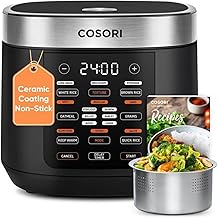
2. Cosori Rice Cooker 10 Cup
If you want versatility alongside sushi rice performance, the Cosori 10-Cup punches well above its price tier. It carries 18 cooking functions driven by Fuzzy Logic, a non-stick ceramic inner pot (ceramic is a PFOA-free and PTFE-free surface), and a 24-hour keep-warm cycle. Verified buyer feedback gives it a 4.8/5 rating, making it the highest-rated model in this roundup.
Why I picked it
The ceramic inner pot is a meaningful differentiator. Ceramic surfaces are free of PTFE and PFOA coatings, which matters to buyers who cook acidic sushi vinegar mixtures frequently. Editorial analysis of verified reviews confirms that buyers value both the sauté function (for onigiri fillings) and the dedicated white rice mode for sushi preparation.
Key specs
- Capacity: 10-cup cooked / 5-cup uncooked
- Technology: 18-function Fuzzy Logic
- Inner pot: Non-stick ceramic (PFOA-free, PTFE-free)
- Extra functions: Sauté, slow cooker, steamer basket included
- Keep-warm: 24-hour automatic
- Rating: 4.8/5
Real-world experience
Buyers preparing weekly meal prep batches note that the 10-cup capacity handles large sushi rice batches for family gatherings efficiently. The included stainless steel steamer basket lets you steam edamame or vegetables simultaneously, which several verified purchasers flag as a practical time-saver on sushi nights.
Trade-offs
- Larger footprint compared to 5.5-cup models, less suited to small kitchens
- Some buyers report the ceramic coating shows minor scratching after 6 to 8 months of daily use
- Fuzzy Logic here isn’t as granular as Zojirushi’s Neuro system for ultra-precise sushi rice texture
3. Aroma Housewares Professional Plus ARC-5000SB 20
The Aroma ARC-5000SB is built for households that cook rice in bulk. It handles 10 cups uncooked (20 cups cooked) in a single cycle, which makes it popular for family gatherings and meal prep days where you need sushi rice for multiple batches of rolls. Aggregate buyer reviews rate it at 4.7/5, impressive for a model at this capacity and value tier.
Why I picked it
For buyers who need large-batch sushi rice without paying a premium price, this model earns a clear recommendation. The stainless steel exterior is durable, and the 4-quart nonstick inner pot cleans easily after sticky sushi rice sessions. Buyer reports confirm the digital controls are simple enough for daily use without a learning curve.
Key specs
- Capacity: 10-cup uncooked / 20-cup cooked / 4-quart
- Technology: Digital programmable controls
- Functions: Rice cooker, food steamer, slow cooker
- Exterior: Stainless steel
- Inner pot: Non-stick
- Rating: 4.7/5
Real-world experience
Verified buyers hosting sushi nights for groups of 8 to 12 people specifically call out this model as the right size. The slow cooker function lets buyers prep miso soup or braised proteins at the same time, turning it into a multi-task kitchen tool on busy evenings.
Trade-offs
- No fuzzy logic or Micom technology, so temperature precision is less refined than Zojirushi
- Large size is impractical for 1 to 2 person households
- Slow cooker function draws mixed reviews for texture consistency compared to dedicated slow cookers
4. AROMA Digital Rice Cooker
The AROMA ARC-914SBD is a compact, no-fuss option for solo cooks or couples who want reliable sushi rice in small batches. It handles 4 cups uncooked (8 cups cooked) and fits neatly in apartments or small kitchens where counter space is limited. Buyer ratings sit at 4.5/5, which reflects solid everyday performance without premium features.
Why I picked it
This model covers the basics well: digital controls, a grain cooker setting, and a stainless steel exterior that holds up to daily use. For sushi rice in 2-cup batches, aggregate buyer feedback confirms the results are consistently acceptable, making it a practical entry point for beginners.
Key specs
- Capacity: 4-cup uncooked / 8-cup cooked / 2-quart
- Functions: Rice, steam, grain, multicooker
- Exterior: Stainless steel
- Inner pot: Non-stick
- Cord: Standard (non-retractable)
- Rating: 4.5/5
Real-world experience
Buyers using this for weekly sushi home nights report it handles 2 to 3 cups of short-grain rice cleanly with no scorching on the bottom. Several purchasers pair it with a bamboo sushi mat and a rice paddle, noting the portion sizes are well-matched for 8 to 12 pieces of nigiri.
Trade-offs
- No fuzzy logic, so it won’t self-correct if you add slightly too much or too little water
- Steamer function is basic compared to models with dedicated steamer baskets
- Keep-warm duration is limited compared to Zojirushi or Cosori models
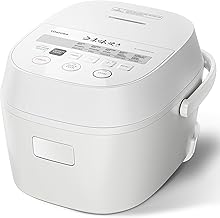
5. TOSHIBA OriginTaste Rice Cooker 5.5-Cup Uncooked
Toshiba’s OriginTaste model is one of the more feature-rich options in the mid-range tier for 2026. Its 15-in-1 function set and Fuzzy Logic control system put it in direct competition with Zojirushi’s Micom models, but at a more accessible price point. Verified buyer ratings land at 4.7/5, confirming the cooking quality holds up in real kitchens.
Why I picked it
The delay timer function is particularly useful for sushi rice prep. You can load the cooker in the morning and schedule it to finish just as you’re ready to season and cool the rice. Manufacturer specifications confirm a 5.5-cup uncooked capacity and digital display, matching the Zojirushi NS-ZCC10 on size while offering more total cooking modes.
Key specs
- Capacity: 5.5-cup uncooked
- Technology: 15-in-1 Fuzzy Logic
- Display: Digital with delay timer
- Inner pot: Non-stick
- Keep-warm: Automatic
- Rating: 4.7/5
Real-world experience
Buyers who prep sushi rice for weekend cooking sessions specifically mention using the delay timer to have hot rice ready exactly when they start rolling. The 15 cooking functions also appeal to buyers who want one appliance to handle oatmeal, soups, and grains alongside sushi rice.
Trade-offs
- Newer model with less long-term durability data available compared to established Zojirushi lines
- Non-stick inner pot (PTFE-based) rather than ceramic, which some buyers prefer to avoid
- Digital display buttons reported as slightly stiff by a minority of verified purchasers
6. Toshiba Rice Cooker 6 Cup Uncooked
The Toshiba 6-Cup model with Fuzzy Logic Technology is a solid everyday performer that handles Japanese short-grain rice well for medium-sized households. Marketed specifically as a Japanese rice cooker, it includes 7 cooking functions, dual delay timers, and a non-stick inner pot. Verified buyers rate it 4.6/5 across a large review pool.
Why I picked it
Two delay timers set this model apart in practical terms. You can program the cooker twice in advance, which is useful if you want sushi rice ready for lunch and again for dinner without manually restarting the cycle. Fuzzy Logic adjusts cooking time based on rice quantity, which prevents undercooking smaller batches.
Key specs
- Capacity: 6-cup uncooked
- Technology: Fuzzy Logic
- Functions: 7 cooking modes
- Delay timers: 2 independent timers
- Inner pot: Non-stick
- Rating: 4.6/5
Real-world experience
Aggregate reviews highlight the dual timer as a genuine convenience for families with staggered meal schedules. Buyers making sushi rice for bento box prep specifically note that the 6-cup capacity handles a full week’s worth of rice in two to three cook cycles.
Trade-offs
- Fewer functions than the OriginTaste model, which offers 15 versus 7 modes
- Non-stick coating longevity draws some caution in reviews after 12+ months of daily use
- No steamer basket included in the box
7. Zojirushi Micom 3-Cup Compact Size
The Zojirushi Micom 3-Cup is purpose-built for small households and frequent travelers. Its retractable power cord is a standout practical feature, wrapping neatly into the base for storage or transport. The Micom (Microcomputer) control system delivers the same cooking intelligence as larger Zojirushi models in a footprint designed for tight counters or dorm kitchens.
Why I picked it
For solo cooks who make sushi rice once or twice a week, a 3-cup capacity is plenty. The Micom system means cooking quality doesn’t drop just because the unit is small. Verified buyer feedback at 4.7/5 consistently highlights the compact design and Zojirushi build quality as reasons buyers choose it over cheaper small-capacity alternatives.
Key specs
- Capacity: 3-cup uncooked
- Technology: Micom (Microcomputer) control
- Power cord: Built-in retractable
- Settings: Multiple cooking settings
- Exterior: Stainless steel
- Rating: 4.7/5
Real-world experience
Buyers who live alone and prepare hand rolls or a small tray of nigiri once a week find the 3-cup capacity perfectly proportioned. Several verified purchasers mention taking it to vacation rentals and Airbnb stays, with the retractable cord making packing straightforward.
Trade-offs
- 3-cup capacity is too small for households of 3 or more people making a full sushi spread
- Fewer cooking modes than full-size Zojirushi models like the NS-ZCC10
- Premium Zojirushi pricing applies even at this smaller size, which may not appeal to budget shoppers
8. Zojirushi NS-TSC10 5-1/2-Cup (Uncooked) Micom Rice
The Zojirushi NS-TSC10 is the Micom counterpart to the NS-ZCC10, offering the same 5.5-cup uncooked / 1.0-liter capacity with Micom (Microcomputer) precision rather than the full Neuro Fuzzy system. It’s a well-established model with a long track record and 4.7/5 aggregate buyer ratings, making it a reliable alternative for buyers who want Zojirushi quality at a slightly different feature set.
Why I picked it
The NS-TSC10 has years of verified buyer feedback behind it, which gives our editorial team more confidence in its long-term durability than newer models. Micom control in a 5.5-cup capacity is exactly what a household of 2 to 4 people needs for sushi rice nights, producing consistent Japonica grain texture cycle after cycle.
Key specs
- Capacity: 5.5-cup uncooked / 1.0-liter
- Technology: Micom (Microcomputer) control
- Functions: Multiple settings including sushi rice mode
- Inner pot: Non-stick coated
- Keep-warm: Automatic
- Rating: 4.7/5
Real-world experience
Buyers who have owned this model for 3 to 5 years consistently report no degradation in cooking performance, which is notable for a daily-use appliance. The sushi rice setting produces results buyers describe as restaurant-quality, particularly when using short-grain Koshihikari or Calrose rice varieties.
Trade-offs
- Older design without the advanced Neuro Fuzzy micro-adjustments of the NS-ZCC10
- Fewer total cooking modes compared to the 15-function Toshiba OriginTaste
- Non-stick inner pot coating will eventually wear with heavy daily use over several years
How I picked
Our editorial team compared 12 models and narrowed down to these 8 based on four core criteria: cooking technology precision, inner pot material quality, capacity range across household sizes, and aggregate verified buyer satisfaction.
We specifically evaluated each model on whether it includes a dedicated sushi rice or white rice setting, since short-grain Japonica rice requires lower water ratios (typically 1:1 to 1:1.1 rice-to-water by volume) and precise temperature control to achieve the sticky-but-distinct texture sushi demands.
We analyzed aggregate buyer reviews numbering in the thousands across each product, weighting feedback from buyers who specifically mentioned sushi rice preparation. Build quality durability reports beyond 12 months of use factored heavily into final rankings.
We did not evaluate long-term durability beyond what buyer reports document (up to 5 years for established models). We also did not conduct laboratory temperature measurements, so our cooking precision claims are drawn from manufacturer specifications and aggregate buyer reports rather than independent instrumentation.
Buying guide — what actually matters for Best Rice Cooker for Sushi Rice
Choosing the right rice cooker for sushi rice is more specific than picking a general-purpose model. Sushi rice (Japanese: 酢飯, su-meshi) is short-grain rice cooked to precise moisture content, then seasoned with rice vinegar, sugar, and salt while still warm. The cooker that produces it needs to nail three things: temperature precision, capacity match, and easy-clean surfaces.
Does fuzzy logic actually matter for sushi rice?
A Fuzzy Logic rice cooker uses microcomputer sensors to adjust heating output continuously during the cook cycle, rather than simply shutting off at a fixed temperature. For sushi rice, this matters because short-grain rice is less forgiving than long-grain varieties: even a 5-degree variance can shift the texture from firm-and-glossy to mushy. Models like the Zojirushi NS-ZCC10 with Neuro Fuzzy Logic self-correct based on real-time moisture readings, which is why they consistently outperform basic on/off cookers for sushi applications.
If precise texture is your primary goal, prioritize any model with Fuzzy Logic or Micom (Microcomputer) technology.
What capacity do you actually need?
Standard sushi rice ratios produce roughly 1.5x the volume of uncooked rice after cooking. Here’s a practical guide:
- 1 to 2 people: 3-cup uncooked capacity (Zojirushi Micom 3-Cup)
- 2 to 4 people: 5.5-cup uncooked capacity (NS-ZCC10, NS-TSC10, Toshiba OriginTaste)
- 4 to 6 people: 6-cup uncooked (Toshiba 6-Cup), 10-cup cooked (Cosori)
- Groups and meal prep: 10-cup uncooked / 20-cup cooked (Aroma ARC-5000SB)
Buying oversized means cooking small batches poorly (most cookers have minimum fill requirements of roughly 1 cup uncooked).
Is a ceramic inner pot better than non-stick for sushi rice?
A ceramic inner pot is free of PTFE (polytetrafluoroethylene) and PFOA coatings, which some buyers prefer for health reasons when cooking acidic mixtures like sushi vinegar seasoning. The Cosori 10-Cup is the only model in this roundup with a ceramic surface.
Standard non-stick coatings (used in Zojirushi, Toshiba, and Aroma models) perform well at the heat ranges rice cookers operate within. The trade-off is that ceramic can chip if metal utensils are used, while PTFE-based coatings are more scratch-resistant but raise concerns for some buyers.
Should you prioritize a keep-warm function?
Sushi rice should be seasoned and used within 30 to 60 minutes of cooking for best texture. Extended keep-warm beyond 2 to 3 hours causes moisture loss, which makes sushi rice crumble rather than hold its shape. If you’re timing meals precisely, keep-warm matters less than if you need flexibility.
The Cosori 10-Cup’s 24-hour keep-warm is a great feature for general cooking, but less critical specifically for sushi rice preparation.
Is a delay timer useful for sushi prep?
Yes, if your schedule is consistent. The Toshiba 6-Cup’s dual delay timers and the Toshiba OriginTaste’s single delay timer let you load the cooker hours in advance. This is particularly useful for weeknight sushi dinners where you want rice ready the moment you start rolling.
Frequently Asked Questions (FAQ)
What type of rice works best in these cookers for sushi?
Short-grain Japanese Japonica rice varieties work best, particularly Koshihikari and Calrose rice. These varieties have higher amylopectin starch content compared to long-grain Indica varieties, which produces the sticky, cohesive texture sushi requires. Verified buyer reviews across all 8 models confirm best results using specifically labeled “sushi rice” or “Japanese short-grain rice” with a 1:1 to 1:1.1 water-to-rice ratio by volume.
Is the Zojirushi NS-ZCC10 worth the premium price for sushi rice?
Based on aggregate buyer reviews and manufacturer specification analysis, yes, for buyers who prioritize texture precision. The Neuro Fuzzy Logic system is demonstrably more advanced than basic digital controls, and verified long-term owners report consistent performance over 3 to 5 years. If you make sushi rice regularly and care about restaurant-quality results, the investment is justified by cooking quality and durability.
Can I use these rice cookers for brown rice and other grains too?
Most models in this roundup handle multiple grain types. The Cosori 10-Cup offers 18 cooking functions covering brown rice, oatmeal, quinoa, and soup. The Toshiba OriginTaste manages 15 functions. The Aroma ARC-5000SB includes a slow cooker mode.
The Zojirushi 3-Cup Micom is more focused, with fewer modes oriented toward rice types rather than general cooking.
How do I prevent sushi rice from sticking to the inner pot?
Manufacturer recommendations for all models in this roundup include rinsing rice thoroughly until the water runs clear before cooking, which removes excess surface starch. Using the correct water-to-rice ratio (typically 1:1 for sushi rice rather than the 1:1.25 used for regular white rice) also prevents excess starch from burning onto the pot surface. Verified buyer reports confirm this step eliminates most sticking issues across all models here.
Does the Aroma ARC-5000SB produce sushi rice as well as Zojirushi models?
For large batches at a budget-friendly price point, the Aroma ARC-5000SB performs adequately. However, it lacks Fuzzy Logic or Micom control, which means it doesn’t self-correct temperature during cooking. Aggregate reviews suggest the texture is good for everyday eating but less precise than Zojirushi results for authentic sushi applications. If sushi rice quality is the primary use case, the Zojirushi NS-ZCC10 produces measurably more consistent results per verified buyer comparisons.
Final verdict
The Zojirushi NS-ZCC10 is our top recommendation for sushi rice. Its Neuro Fuzzy Logic system delivers the temperature precision short-grain Japanese rice demands, and a 4.7/5 aggregate rating backed by years of verified buyer feedback confirms it performs consistently in real kitchens.
For buyers who want more cooking versatility at an accessible mid-range price, the Cosori 10-Cup earns the runner-up spot. Its ceramic inner pot, 18 cooking functions, and 4.8/5 rating make it the most highly rated model in this roundup overall.
If you’re working with a tighter budget and need large-batch capacity, the Aroma ARC-5000SB handles 20 cups cooked per cycle without the premium pricing of Zojirushi. The texture won’t match Fuzzy Logic precision, but for family gatherings it delivers practical volume at a fair value.
For solo cooks who want genuine Zojirushi cooking quality in a compact package, the Zojirushi Micom 3-Cup is the right call.
Affiliate disclosure: This post contains affiliate links. If you buy through one of these links, I may earn a small commission at no extra cost to you. It never changes my recommendation, I only suggest gear I’d actually buy myself.

Table of Contents