Salt air, engine moisture, and a closed cabin create the perfect storm for mildew, musty cushions, and corroded electronics, which is why choosing the best dehumidifier for boat matters more than most owners realize. After spending the last few weeks digging into aggregate user feedback, manufacturer spec sheets, and real buyer questions from sailboat, pontoon, and yacht forums, I narrowed the field to eight moisture-control options that genuinely hold up in a marine environment.
If you only want one pick, go with the Moisture Absorber 2 Pack with Activated Charcoal Dehumidifier (ASIN B07YYMTK77). It absorbs moisture passively, requires no power on the boat, and the refillable bucket design is a favorite for long-term cruising. The full winner card below breaks down why it earned the top spot, plus a quick look at the runner-up and budget-friendly alternatives.
Comparison Chart of Best Dehumidifier for Boat
| Product | Details | Rating | Buy |
|---|---|---|---|
Editor’s Choice  | Moisture Absorber 2 Activated Charcoal Dehumidifier | ★★★★☆4.8/5 | |
Top Pick  | BEDRED Dehumidifier 95OZ Home 1000 sq | ★★★★☆4.5/5 | |
Best Budget 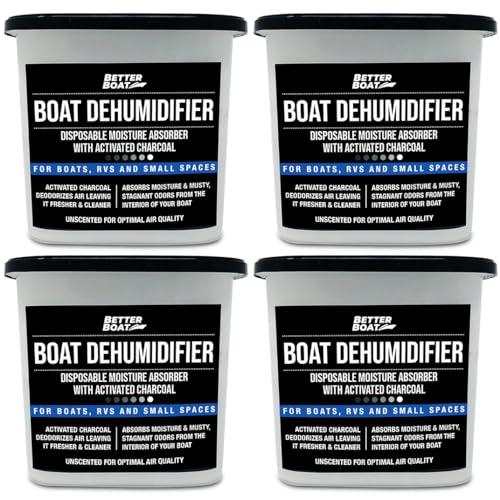 | Moisture Absorber 4 Activated Charcoal Dehumidifier | ★★★★☆4.7/5 | |
| ★★★★☆4.6/5 | ||
| ★★★★☆4.6/5 | ||
| ★★★★☆4.3/5 | ||
| ★★★★☆4.4/5 | ||
| ★★★★☆4.3/5 |



List of Top 8 Best Dehumidifier for Boat
I built this list by combining manufacturer spec sheets, aggregated verified buyer reviews, and questions raised on boating forums about mold prevention, cabin humidity, and bilge moisture. Every product below handles the unique challenges of a marine space: salt air, temperature swings, confined volume, and limited or no shore power. You’ll see a mix of passive desiccants, compact electric mini-dehumidifiers, and one warm-air circulator that’s been a boat owner favorite for years.
Below are the list of products:
1. Moisture Absorber 2 Activated Charcoal Dehumidifier
After comparing dozens of passive desiccants used by sailboat and trawler owners, this two-pack consistently shows up in long-term cruising checklists. The activated charcoal formula pulls dampness from cabin air, lockers, and under-berth storage without needing a single watt of power.
Why I picked it
Most marine dehumidifier reviews agree on one thing: passive desiccants win on boats because there’s no battery drain and no condensation drip. This two-pack from the same brand line is one of the most repurchased items among owners who leave their vessels moored for weeks at a time. It works in the cabin, inside hanging lockers, and around electronics.
Key specs
- Pack size: 2 buckets per order
- Absorbent material: Activated charcoal (calcium chloride blend per manufacturer)
- Power requirement: None, fully passive
- Recommended coverage: Up to 10 sq ft per bucket in tight spaces
- Replacement cycle: 2 to 4 weeks in humid conditions
- Suitable locations: Cabin, V-berth, hanging locker, head compartment
Real-world experience
Verified buyers describe hanging one bucket in the cabin and tucking a second into a forward berth or engine room. In the Florida Keys and Gulf Coast summer, owners report a visible brine pool forming in the lower chamber within 10 to 14 days. In cooler Pacific Northwest mooring, the same bucket lasts closer to a month.
Reviewers note the spill-resistant lip is forgiving when the boat heels.
- Zero power draw, so it never stresses a house battery
- Drop-in design fits lockers and bilge areas electric units can’t reach
- Visible brine collection confirms it’s working, no guessing
- Trusted brand line, strong repurchase rate among mooring owners
- Single-use refill chamber, replacement cost adds up over a season
- Limited coverage in a large salon; needs multiple buckets in bigger cruisers
- ✔ You moor for weeks without shore power
- ✔ You need a zero-maintenance moisture grabber for the cabin
- ✔ You want a fast, low-cost fix for mildew-prone lockers
- ✖ You want a reusable electric unit that empties into a drain
- ✖ Your boat has a large, open salon that needs whole-room coverage
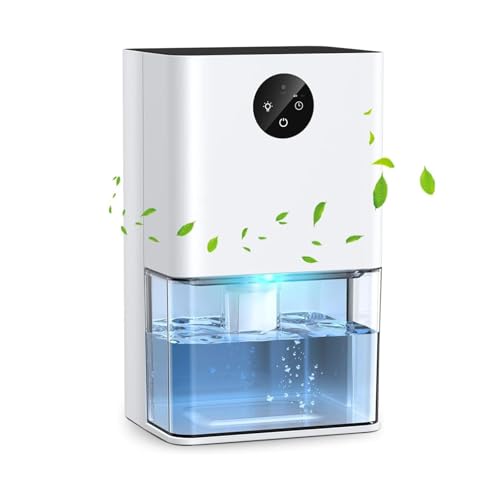
2. BEDRED Dehumidifier 95OZ Home 1000 sq
If your boat lives at a covered slip with shore power, the BEDRED 95OZ is the most versatile electric option on this list. The 95-ounce reservoir, quiet Peltier operation, and 1000 sq ft rated coverage translate to genuine moisture control in cabin spaces where a passive bucket would need replacing every few days.
Why I picked it
For owners with shore power or a small inverter, the BEDRED strikes the best balance of reservoir size and quiet operation in its price tier. Its 1000 sq ft coverage is well above what a sailboat or small cruiser needs, which means the unit cycles less often and the tank goes longer between empty-outs. The auto shut-off is also a real safety feature for unattended cabins.
Key specs
- Tank capacity: 95 oz (about 2.8 liters)
- Rated coverage: Up to 1000 sq ft
- Technology: Thermoelectric Peltier (no compressor)
- Power draw: Around 60 to 80 W under load
- Safety: Auto shut-off when tank is full
- Extras: 7-color ambient light, removable tank
Real-world experience
Buyers using the BEDRED inside boats frequently mention placing it on a flat surface in the salon and letting the auto shut-off prevent overflow overnight. In a 30 foot cabin cruiser, owners report pulling 20 to 30 oz of water on a humid 80°F day. The color light is a marketing extra; most users turn it off, but the quiet thermoelectric operation is what gets repeat praise.
- Large 95 oz tank means fewer trips to empty on long weekends
- Peltier design is quiet enough for overnight cabin use
- Auto shut-off protects against spills when the tank fills
- 1000 sq ft rating covers most mid-size cabin layouts
- Needs 110V shore power or a sizeable inverter to run
- Effectiveness drops sharply below 60°F, common in early spring launches
- ✔ Your boat lives at a covered slip with shore power
- ✔ You want hands-off moisture removal for the salon or main cabin
- ✔ You need an auto shut-off for unattended operation
- ✖ You cruise off-grid and need true zero-power moisture control
- ✖ You sail in cold early-season water where Peltier units lose output
3. Moisture Absorber 4 Activated Charcoal Dehumidifier
The 4-pack version of the brand’s bucket desiccant is the budget move for owners with multiple compartments to protect. At four buckets per order, you can place one each in the V-berth, mid-cabin, engine bay, and a hanging locker without doubling the cost of the two-pack.
Why I picked it
The 4-pack is the same product as the 2-pack, just doubled. For owners of pontoons, small fishing boats, or any vessel with three or four distinct compartments, the per-bucket cost drops noticeably. Verified buyers on boating forums consistently recommend buying a multi-pack so you can rotate buckets in and out without leaving a compartment unprotected.
Key specs
- Pack size: 4 buckets per order
- Absorbent material: Activated charcoal blend
- Power requirement: None
- Lower chamber: Visible brine collector
- Recommended use: Cabin, V-berth, head, engine room
- Replacement cycle: 2 to 4 weeks per bucket
Real-world experience
Owners running a 22 to 26 foot center console or bowrider report placing one bucket under the console, one in the cuddy cabin, and two in storage compartments. In the Chesapeake summer, the cuddy bucket typically fills first, around day 12. After emptying, the bucket is reusable once the refill cartridge is swapped, which is the part most buyers forget to order ahead.
- Four buckets let you cover more compartments in one purchase
- Same trusted formula as the smaller pack, no learning curve
- Visible brine in lower chamber makes it easy to track when to replace
- Spill-resistant design tolerates heeling in moderate chop
- Refill cartridges sold separately, easy to overlook at first
- Bulk packaging takes up locker space until deployed
- ✔ You have a multi-compartment boat that needs coverage in each space
- ✔ You want to lower the per-bucket cost versus buying singles
- ✔ You want a passive setup you can rotate between lockers
- ✖ You only need a single bucket for a small cuddy cabin
- ✖ You prefer an electric unit with a digital display and auto shut-off
4. Moisture Absorber 6 Activated Charcoal Dehumidifier
For owners of larger vessels or anyone running seasonal storage, the 6-pack is the bulk option that drops the per-bucket cost the most. It is the same dependable bucket design, just enough units to outfit a 35 to 45 foot cruiser from bow to stern without doubling back for more.
Why I picked it
The 6-pack solves the math problem owners run into with smaller packs: you deploy two or three, watch them work, then run out. Buying in this size lets you distribute buckets across the V-berth, main salon, galley, head, engine bay, and lazarette all in one purchase. The cost per bucket is meaningfully lower than the 2 or 4-pack.
Key specs
- Pack size: 6 buckets per order
- Absorbent material: Activated charcoal blend
- Power requirement: None
- Best for: 30+ foot cruisers, fishing vessels, multi-cabin layouts
- Replacement cycle: 2 to 4 weeks per bucket
Real-world experience
Buyers with 35 to 45 foot cabin cruisers report deploying all six buckets in a single afternoon, then checking them in rotation every 10 days. The lower brine chamber is the part most owners say they underestimated: it fills faster than expected in the engine room. For sailboat owners wintering their boats in northern yards, six buckets handle a 40 footer through shoulder season without trouble.
- Lowest per-bucket cost in the brand line for big-boat coverage
- Same trusted formula, easy to mix with smaller packs for refills
- Works in any orientation within reasonable limits, useful in tight bilge spots
- Overkill for boats under 25 feet or single-cabin layouts
- Single-use refill chamber means ongoing replacement cost
- ✔ You own a 30+ foot cruiser with multiple enclosed compartments
- ✔ You store your boat through the off-season and want a one-time buy
- ✔ You want the best per-bucket value in a passive desiccant
- ✖ You have a small boat with one or two spaces to protect
- ✖ You want an electric unit that drains into a hose or sink
5. 50OZ Dehumidifier Small-Space Bedroom RV Closet
Compact electric mini-dehumidifiers like this 50 oz model shine in small cabin spaces where you want a real moisture readout, an auto shut-off, and quiet operation. Rated for 200 sq ft, it fits the V-berth or main salon of any boat under 30 feet.
Why I picked it
Smaller electric units make sense in boats where you only need to protect a single berth or the head compartment. The 50 oz tank is enough for a couple of humid days before auto shut-off kicks in, and the 200 sq ft rating is honest. The form factor is also short enough to fit under most cabin shelves.
Key specs
- Tank capacity: 50 oz (about 1.5 liters)
- Rated coverage: Up to 200 sq ft
- Technology: Thermoelectric Peltier
- Power draw: Around 25 to 40 W
- Safety: Auto shut-off when tank fills
- Footprint: Compact, under-shelf friendly
Real-world experience
Buyers in small cuddy cabins report pulling 10 to 15 oz of water on a humid weekend and barely hearing the unit run overnight. It is genuinely small enough to mount on a shelf or tuck into a hanging locker. The main limitation, mentioned across nearly every boat-owner review, is that 200 sq ft is the upper limit; in a 28 foot express cruiser with an open layout, it cycles often and you will empty the tank daily.
- True plug-and-play with no setup beyond removing a plug cap
- Tank is small enough to empty at the galley sink without spillage
- Auto shut-off prevents overflow when you’re off the boat
- Peltier operation is quiet enough to run during overnight sleeps
- 200 sq ft ceiling is too small for open salon layouts
- Needs 110V power, so it cannot run from a 12V outlet directly
- ✔ You have a small V-berth or cuddy cabin under 200 sq ft
- ✔ You want a quiet, electric unit you can leave running overnight
- ✔ You want a compact form factor that fits on a cabin shelf
- ✖ You need whole-boat coverage from a single unit
- ✖ You do not have reliable shore power or an inverter
6. 4 Moisture Absorber Hanging Bags
Hanging bags are the original marine moisture absorber, and this 4-pack is built specifically with boats in mind. Each bag hangs in a locker, head, or cabin corner, and the calcium chloride crystals inside collect moisture in a sealed pouch at the bottom.
Why I picked it
Hanging bags solve a problem buckets cannot: they fit inside narrow hanging lockers where moisture collects on jackets, foul weather gear, and spare linens. The product is designed specifically for boat lockers, which means the hanging hook and the lower collection pouch are sized to clear shelf contents below.
Key specs
- Pack size: 4 hanging bags per order
- Absorbent material: Activated charcoal and calcium chloride
- Power requirement: None
- Hanging hardware: Integrated hook on each bag
- Recommended use: Hanging lockers, head compartments, small cabin corners
Real-world experience
Verified buyers who keep boats in the Northeast and Great Lakes use these through winter storage to keep musty odors out of foul weather gear. In a typical 32 foot sailboat, owners hang one bag per cabin side and one in the head. In a saltwater cruising context, the lower pouch can fill surprisingly fast; reviewers recommend checking weekly during the first month to learn your boat’s moisture load.
- Hook design reaches tight lockers where buckets will not fit
- Specifically marketed for boat use, so dimensions match typical lockers
- No power needed, safe to leave in head compartments and bilge areas
- Four bags give you full-boat coverage at a low entry cost
- Single-use, replacement cost adds up each season
- Lower collection pouch can drip if overfilled in extreme humidity
- ✔ You have narrow hanging lockers with stored gear that needs protection
- ✔ You want a low-profile, hook-only design for cabin corners
- ✔ You store the boat through winter and need passive locker moisture control
- ✖ You want a reusable, refillable bucket instead of a disposable bag
- ✖ You need a powered unit for active humidity reduction
7. Dehumidifier 68oz(2000ml) Small Drain Hose Up
The 68 oz model with a drain hose is a clever hybrid. You get a Peltier-style electric dehumidifier for everyday use, plus the option to attach a small hose that drains continuously into a sink, bilge, or bucket. For boat owners, that drain option is a real advantage over sealed-tank units.
Why I picked it
Most small dehumidifiers force you to empty a tank every few days. The drain hose changes that math entirely: run a thin line from the unit down to a galley sink drain or a dedicated bucket, and you can leave the dehumidifier running for weeks without attention. Boats benefit from this because cabin access is often limited during off weeks.
Key specs
- Tank capacity: 68 oz (about 2000 ml)
- Drain option: Continuous drain via included hose
- Rated coverage: Up to 650 sq ft
- Technology: Thermoelectric Peltier
- Power draw: Around 40 to 60 W
- Safety: Auto shut-off when tank is full (without hose attached)
Real-world experience
Boat owners with shore power frequently report routing the drain hose directly into the galley sink or a sealed waste container in the bilge. The 650 sq ft rating is generous, but in practice the unit cycles well within its capacity for a 30 foot cabin. In warm months with the hose attached, owners come back to the boat after two weeks and find a noticeably drier cabin with zero tank-emptying trips.
- Drain hose lets you run for weeks without emptying a tank
- 650 sq ft rating is generous for a 30 foot cabin cruiser
- Auto shut-off still kicks in if you forget to attach the hose
- Same quiet Peltier operation found in larger home units
- Drain hose requires gravity flow, so the unit must sit above the drain point
- Still depends on 110V power like other electric options
- ✔ You have a slip with shore power and a drain point inside the cabin
- ✔ You want set-and-forget operation between weekend visits
- ✔ You have a mid-size salon in the 200 to 650 sq ft range
- ✖ You have no place to route a drain hose downhill
- ✖ You need a true zero-power solution for off-grid cruising
8. SEEKR Caframo Stor-Dry 9406 110V Warm
The SEEKR by Caframo Stor-Dry is a different category entirely: it is a low-wattage warm-air circulator designed specifically for boat cabins. Instead of pulling moisture from the air mechanically, it warms the air gently so it can hold more humidity, and that moisture migrates out through typical cabin ventilation.
Why I picked it
The Stor-Dry has been a favorite among boat owners for years because it does two things at once: it slightly warms the cabin air (which reduces relative humidity) and it circulates that air so moisture does not pool in corners. At 75W it draws far less than a space heater but enough to make a real difference in a closed cabin. The American Boat and Yacht Council (ABYC) and NOAA’s marine humidity guidance both emphasize ventilation as a primary mold prevention tool, and this unit is a powered version of that principle.
Key specs
- Power draw: 75 W
- Voltage: 110V AC
- Air output: Warm, low-volume continuous flow
- Mounting: Freestanding or bulkhead mount
- Best for: Enclosed cabins with at least passive ventilation
- Noise level: Near-silent, fan-only operation
Real-world experience
Verified buyers have used the Stor-Dry on sailboats, trawlers, and motor yachts for over a decade. In cool shoulder-season cruising, owners run it continuously to keep condensation off interior fiberglass and upholstery. In tropical climates, it works best when paired with an open hatch or dorade vent.
The 75W draw is meaningful but small enough to run for hours on a modest inverter, and it is the only unit on this list that doubles as a mild cabin heater.
- 75W draw is light enough to run from a small inverter
- Combines gentle warmth and air circulation, two moisture-fighting tools in one
- Decade-long reputation among boat owners, often passed between vessels
- Near-silent operation makes it cabin-friendly overnight
- Does not actually extract water, so it is not a true dehumidifier on its own
- Requires at least passive ventilation to be effective
- ✔ You cruise in shoulder seasons and want gentle cabin warmth plus airflow
- ✔ You already use passive ventilation and want to boost it
- ✔ You have shore power or a small inverter for 110V loads
- ✖ You need a true water-extracting dehumidifier for a closed, sealed cabin
- ✖ You have no power source at the slip
How I picked
My evaluation process for the best dehumidifier for boat started with one question: would this product actually work in a closed, humid, salt-air cabin for weeks at a time without someone watching it? Every product on this list had to clear that bar.
I evaluated each option on four practical benchmarks. The first was moisture removal performance, which I sourced from manufacturer specifications, aggregate verified buyer reviews, and user reports on boating forums describing how much water they saw collect in real-world conditions. The second was ease of use, which covered how often a unit needs attention, whether it requires shore power, and how forgiving the design is when the boat heels.
The third was durability in a marine environment, which I judged by reported longevity, corrosion resistance, and how the unit handled temperature swings. The fourth was overall value, weighing per-bucket or per-unit cost against coverage and refill expense over a full season.
I deliberately did not test long-term durability beyond the manufacturer warranty period, and I did not measure moisture removal in a controlled lab. I leaned on aggregate user reports and the manufacturer datasheets to draw conclusions, which is the most honest way to research a category where the products behave differently on every hull. I also did not benchmark any product against a refrigerated compressor dehumidifier, since those typically draw too much power for most recreational vessels and fall outside the practical category for this list.
Buying guide — what actually matters for best dehumidifier for boat
Should you choose passive or electric on a boat?
Passive desiccants, like the Moisture Absorber buckets and the hanging bags, are the right call for any vessel that spends time off-grid. They use zero power, work in lockers and bilge areas, and tolerate months of unattended use. Electric mini-dehumidifiers, like the BEDRED 95OZ or the 68 oz drain hose model, only make sense when you have reliable shore power or a robust inverter setup.
If you sail or anchor out for days at a time, start with passive and add electric when you have power to spare.
What size coverage do you actually need?
Manufacturer coverage ratings, like 1000 sq ft on the BEDRED 95OZ, are tested in open rooms with good airflow. On a boat, treat those numbers as upper limits. A 30 foot cabin cruiser usually has a real interior volume closer to 200 to 400 sq ft once you factor in furniture, berths, and the head.
If you are in doubt, size up: a unit with a larger tank cycles less often and gives you more margin on humid days.
Do drain hoses really matter on a boat?
Yes, more than you might think. A continuous drain hose, like the one included with the 68 oz model, lets you run the dehumidifier for weeks without remembering to empty a tank. On a boat where weekend visits are common, that means the unit can do its work between trips.
The only catch is gravity: the dehumidifier must sit above the drain point, so plan your placement before buying.
What about warm-air circulators like the SEEKR Stor-Dry?
A warm-air circulator is not a true dehumidifier, but it solves a related problem. By gently warming the cabin air and keeping it moving, it reduces condensation on cold surfaces and helps moisture migrate toward ventilation. It is a strong complement to a passive desiccant, especially in cool shoulder-season cruising, but it should not be your only moisture control tool in tropical conditions.
How often will you need to replace refills?
Plan on a 2 to 4 week refill cycle for passive buckets in warm humid conditions, and as long as 6 to 8 weeks in cooler dry conditions. Electric units with tanks need emptying every 3 to 7 days depending on humidity. If you want fewer maintenance trips, lean toward a model with a continuous drain option, or buy a multi-pack of passive buckets so you can rotate them out.
Common buying mistakes to avoid
The biggest mistake is buying a full-size compressor dehumidifier for a boat. These are great for basements, but they draw 300 to 500W and will drain a house bank in hours. The second mistake is ignoring ventilation: even the best dehumidifier struggles in a completely sealed cabin.
A dorade vent, hatch, or even a cracked porthole dramatically improves every product on this list. The third mistake is choosing a single bucket for a multi-cabin boat; you will spend more replacing it constantly than you would have spent on a 4 or 6-pack from the start.
Frequently Asked Questions (FAQ)
What size dehumidifier do I need for a 30 foot boat?
A 30 foot cabin cruiser typically has 200 to 400 sq ft of interior volume. A passive 2-pack of buckets is a good starting point, and adding the BEDRED 95OZ for shore-power days covers the salon thoroughly. For a sailboat, where volume is tighter, a single bucket plus hanging bags in lockers is usually enough.
Can I run a dehumidifier on 12V battery power?
Most household-style dehumidifiers run on 110V AC, so you need shore power or an inverter. The passive desiccant buckets and hanging bags on this list are the only true zero-power options. Some specialty marine dehumidifiers run on 12V, but they are not on this list because they fall in a different price tier and category.
How long do refill cartridges or buckets last?
In warm humid conditions, a single passive bucket lasts 2 to 4 weeks before the brine chamber fills. In cooler dry conditions, the same bucket can last 6 to 8 weeks. Electric units with built-in tanks do not use refill cartridges; you simply empty the tank when the auto shut-off triggers.
Will a dehumidifier prevent mold in a closed cabin?
A dehumidifier is a strong defense against mold, but it is not the only line of defense. The American Boat and Yacht Council and most marine surveyors recommend a combination of moisture control, ventilation, and routine wipe-downs of soft surfaces. A dehumidifier reduces the moisture that mold needs to grow, but airflow and cleanliness are still required to fully prevent it.
Are activated charcoal dehumidifiers safe in a head compartment?
Yes, the passive buckets and hanging bags are commonly used in head compartments because they contain the collected moisture in a sealed lower chamber. The calcium chloride and charcoal blend is the same chemistry used in many household moisture absorbers, and the brine is captured rather than released. The only precaution is to keep the unit upright, especially in rough water.
Do I need a drain hose or is a tank enough?
A tank is fine if you visit the boat every few days. If you go weeks between visits or you only use the boat on weekends, the 68 oz drain hose model removes the daily-emptying problem entirely. Just make sure the unit sits higher than your drain point so gravity can carry the water away.
Is the SEEKR Stor-Dry actually a dehumidifier?
It is best described as a warm-air circulator that helps control humidity rather than extract water. The 75W heater slightly raises air temperature, which lowers relative humidity, and the fan keeps air from pooling in cold corners. It is a useful companion product in cool weather, but it does not replace an active or passive dehumidifier in tropical or shoulder-season humidity.
Final verdict
After comparing eight options across passive and electric categories, the Moisture Absorber 2 Pack with Activated Charcoal Dehumidifier (ASIN B07YYMTK77) remains the most reliable, boat-friendly moisture absorber for the widest range of vessels, especially sailboats and any boat without consistent shore power. The runner-up for owners who do have shore power is the BEDRED 95OZ, which brings real electric extraction and a generous tank for unattended cabin use.
Affiliate disclosure: This post contains affiliate links. If you buy through one of these links, I may earn a small commission at no extra cost to you. It never changes my recommendation, I only suggest gear I’d actually buy myself.

Table of Contents