You load the machine, press start, and walk away. But if you have ever wondered how does a dishwasher work, the answer hides behind the kickplate and inside the tub. It is not magic.
It is a timed sequence of water, heat, and detergent moving through spray arms.
Most full-size models as of 2026 use between three and five gallons of water per cycle, and many carry an Energy Star rating for efficiency. Manufacturer specifications indicate that a standard wash reaches about 120 to 150 degrees Fahrenheit during the rinse. That heat, combined with pump pressure, does the scrubbing for you.
Next, we look at what happens inside during a cycle.
How Does a Dishwasher Work
A dishwasher sprays hot, soapy water onto dishes. It drains the dirty water and rinses with clean water. Heat or air dries the load.
A pump moves water through rotating spray arms. Most cycles run between one and four hours.
What Happens Inside a Dishwasher During a Cycle
Water Intake and Heating
When the cycle starts, the water inlet valve opens and lets hot water from your home supply enter the tub. A float switch monitors the level so the machine does not overfill. The heating element raises the water to the temperature needed for the selected cycle.
In our research, most normal cycles use water heated to around 120 degrees Fahrenheit or higher.
Wash Phase: Spray Arms and Pressure
The wash pump pushes water through the lower spray arm, middle spray arm, and upper spray arm. These arms rotate as water jets force them to spin, covering dishes from multiple angles. Detergent releases from the dispenser at the right moment in the cycle.
The combination of pressure and soap loosens food and grease.
Drain and Rinse
After washing, the drain pump pushes dirty water out through the drain hose. The machine then brings in fresh water for the rinse phase. This may repeat depending on the cycle you chose.
Clean water removes remaining soap and food particles.
Dry Phase: Heat or Condensation
Some models use a heating element to warm the air inside the tub and evaporate water off dishes. Others rely on condensation drying, where cool stainless steel tub walls cause moisture to collect and drain away. Per NSF International testing, sanitize cycles must reach a final rinse temperature of at least 150 degrees Fahrenheit.
Heated dry uses more energy but often leaves less moisture.
The Main Parts You Should Be Able to Identify
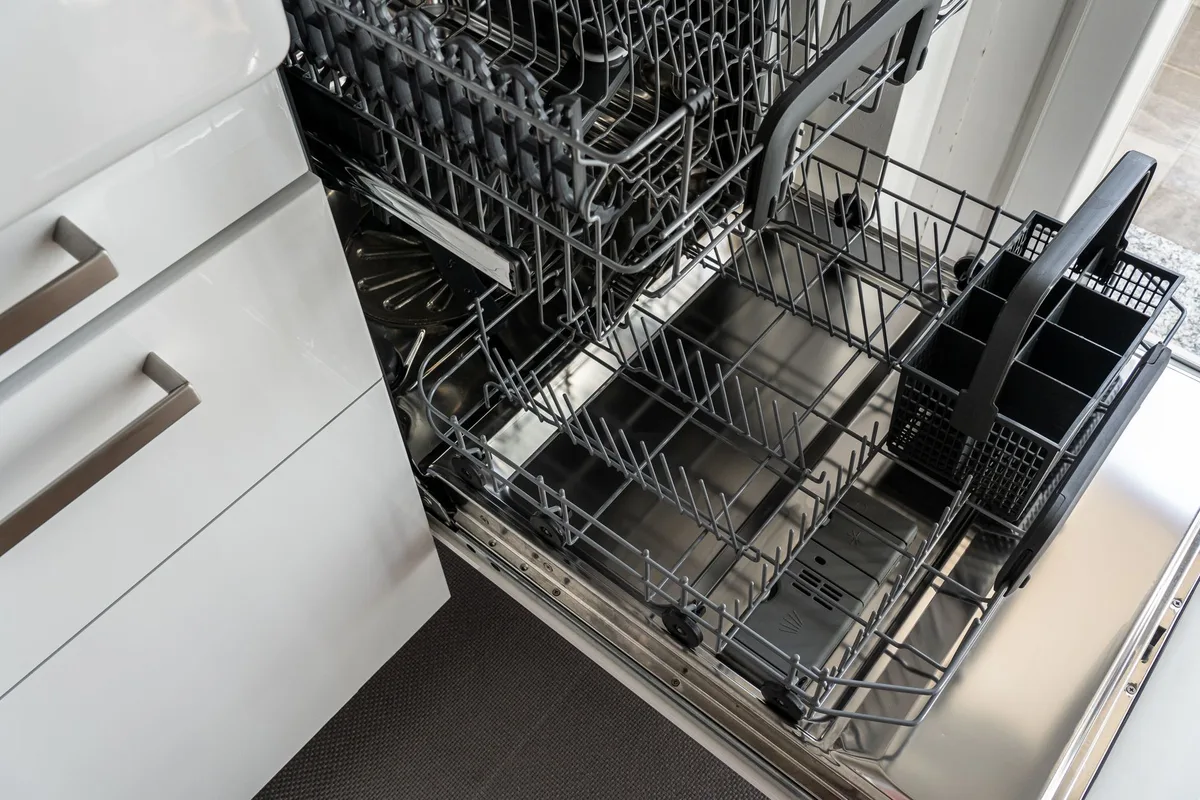
Every dishwasher contains a set of parts that work together to clean your dishes. Knowing what they look like helps you troubleshoot problems faster. You do not need to be a technician to spot the most common ones.
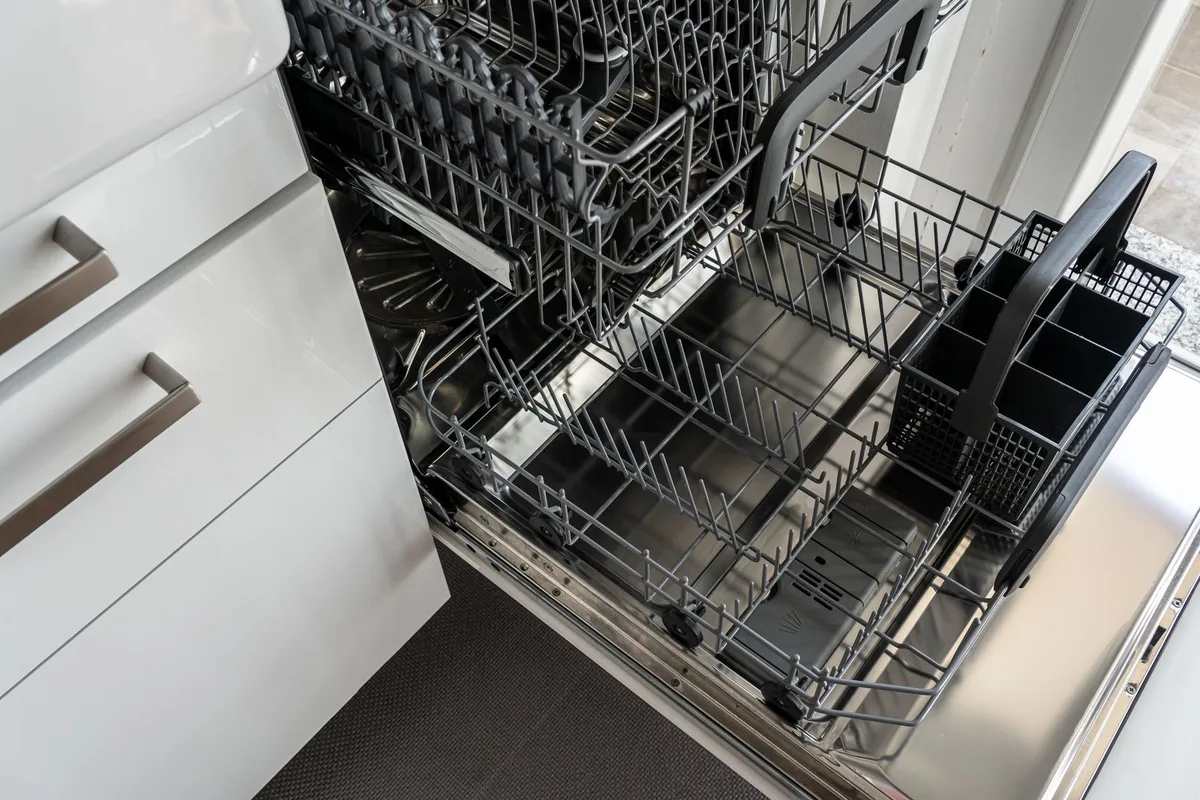
The images below show where these components usually sit inside the tub.
Spray Arms: Lower, Middle, and Upper
The lower spray arm sits beneath the bottom rack and spins to wash plates and pots. The middle spray arm, if your model has one, targets items on the upper rack. The upper spray arm is mounted at the top of the tub and showers down on glasses and mugs.
Holes in the arms can clog with food or mineral buildup, which reduces pressure.
Wash Pump and Drain Pump
The wash pump circulates water during the wash and rinse phases. The drain pump removes wastewater at the end of each phase. These pumps are usually located beneath the tub and connect to hoses.
A failed pump often shows up as standing water or poor cleaning.
Filter System and Hard Food Disposer
Many dishwashers use a cylindrical filter at the bottom of the tub to catch food particles. Some models have a self-cleaning filter or a hard food disposer that grinds waste. Manual filters need regular rinsing under the sink.
A clogged filter is a common cause of bad odors and dirty dishes.
Heating Element and Condensation Drying
The heating element sits at the bottom of the tub and heats water and air. Models with condensation drying may not have a visible element for drying, relying instead on the tub wall temperature. You can often feel heat radiating from the bottom during a cycle.
This element also helps reach sanitize temperatures if your machine offers that cycle.
Water Inlet Valve and Float Switch
The water inlet valve controls when water enters the machine and shuts it off when the tub is full. The float switch acts as a backup safety device to prevent overfilling. If the valve sticks, the dishwasher may not fill at all.
If the float sticks, water may overflow or trigger an error code.
Detergent and Rinse Aid Dispensers
The detergent dispenser opens automatically during the wash cycle to release soap. The rinse aid dispenser holds liquid that reduces water spots and helps drying. Both are usually on the inside of the door.
Using the wrong detergent type can cause excess suds and leaks.
How Water Moves Through the Machine
Water enters through the inlet valve and fills the tub to a set level. The pump pushes it up to the spray arms under pressure. Gravity and the drain pump then pull it out through the hose.
This loop repeats for wash and rinse stages before the dry phase begins.
| Stage | What Happens | Main Component |
|---|---|---|
| Fill | Water enters tub | Inlet valve |
| Wash | Pump sprays arms | Wash pump |
| Drain | Dirty water exits | Drain pump |
| Rinse | Fresh water cleans dishes | Inlet valve and pump |
| Dry | Moisture evaporates | Heating element or tub wall |
The path is simple but depends on each part working in order. A blockage anywhere in the chain stops the cycle. Checking the filter and drain hose is the first step when water sits in the bottom.
Wash, Rinse, and Dry: The Three Core Phases
Wash
Hot water and detergent spray onto dishes to loosen soil. The pump maintains pressure so arms rotate continuously. Soil sensors in some models adjust cycle length based on how dirty the water looks.
Rinse
Fresh water removes detergent and loosened food. Some cycles include multiple rinses for better results. Rinse aid helps water sheet off dishes instead of beading.
Dry
Heat or condensation removes remaining moisture. You can open the door slightly after the cycle to speed drying. Plastic items often stay wetter than glass or ceramic because they cool faster.
These three phases repeat in different lengths depending on the cycle. A heavy duty cycle extends the wash phase for baked on food. An eco cycle lowers the temperature and stretches the rinse to save energy.
Detergent, Rinse Aid, and What Actually Cleans the Dishes
Detergent contains enzymes and surfactants that break down food and grease. It works best in hot water with enough pressure to reach every surface. Rinse aid is not soap; it lowers surface tension so water slides off.
Using too much detergent can leave residue on glassware.
Common detergent types:
- Powder: measured manually and often effective in hard water
- Gel: dissolves quickly and is less abrasive
- Pods: pre-measured and convenient but costlier per load
- Liquid: less common for automatic dishwashers and can suds too much
Rinse aid goes in a separate compartment near the detergent cup. It releases during the final rinse to prevent spots and speed drying. You only need to refill it every few weeks in most households.
Manufacturer specifications indicate that using hand dish soap in a dishwasher creates enough foam to leak out the door. Always use detergent made for automatic dishwashers.
Loading the Racks So Water Can Reach Everything
Loading the racks correctly determines whether dishes come out clean. Water needs a clear path from the spray arms to every surface. Blocking that path leaves food behind even on a long cycle.
Lower Rack Placement
Place plates facing the center so the spray hits the dirty side. Angle bowls downward so water drains off instead of pooling. Set pots and pans on the sides or back where they won’t block the lower spray arm.
Large baking sheets belong on the outer edges, never in front of the detergent dispenser.
Upper Rack Placement
Load glasses and cups upside down with the openings facing down. Angle mugs and small bowls so water runs off easily. Avoid nesting items inside each other because the spray cannot reach the touching surfaces.
Leave space between tall glasses so they don’t clatter and chip during the cycle.
Utensil Basket and Third Rack
Put forks and spoons with handles down so the eating end gets sprayed. Mix utensil types so they don’t stick together and block water flow. Knives go with handles up for safety unless your basket has slots that hold blades downward.
The third rack, when present, holds flat items like spatulas and small tools that would otherwise fall through the lower racks.
Overloading the machine prevents water from reaching every dish. If you stack plates too tightly, the center plates stay dirty. You can run a second cycle or wash the blocked items by hand.
Cycle Types and What Each One Changes
Dishwashers offer several cycles that change water temperature, wash time, and rinse count. Choosing the right one affects cleaning performance and energy use.
Normal Cycle
The normal cycle handles everyday loads with mixed soil levels. It typically runs between 90 minutes and two hours and uses standard water temperature. Most households use this cycle for the majority of loads.
Heavy Duty Cycle
Heavy duty extends the wash phase and uses hotter water for baked on food and pots. It can run up to four hours and uses more water than normal. Choose this for casserole dishes, roasting pans, and stubborn grease.
Eco Cycle
Eco lowers the water temperature and lengthens the cycle to save energy. It may take longer than normal because it relies on time instead of heat. This cycle works well for lightly soiled loads and reduces utility costs over time.
Quick Wash and Rinse Only
Quick wash runs in roughly 30 to 60 minutes for lightly used dishes you need again soon. Rinse only sprays water without detergent to hold dishes until you run a full load. Neither cleans heavily soiled items effectively.
Sanitize Cycle
Sanitize uses a final rinse at 150 degrees Fahrenheit or higher to kill bacteria. Per NSF International testing, this meets the NSF/ANSI 3 standard for sanitization. Use it for baby bottles, cutting boards, or when someone in the home is sick.
| Cycle | Typical Duration | Water Temperature | Best For |
|---|---|---|---|
| Normal | 90 to 120 minutes | Standard hot | Everyday loads |
| Heavy Duty | Up to 240 minutes | High | Pots and baked on food |
| Eco | 120 to 180 minutes | Reduced heat | Light soil, energy savings |
| Quick Wash | 30 to 60 minutes | Standard hot | Lightly used dishes |
| Rinse Only | 10 to 15 minutes | Cool or warm | Holding dishes between loads |
| Sanitize | 120 to 150 minutes | 150°F or higher | Baby bottles, cutting boards |
Cycle times vary by brand and model. Manufacturer specifications list exact durations in the owner’s manual.
Common Problems You Can Spot by Looking
You do not need tools to identify several common dishwasher issues. A quick visual check often reveals the cause before you call a technician.
Standing Water in the Bottom
Standing water after a cycle usually means a clogged filter or a blocked drain hose. Food particles collect in the filter at the bottom of the tub. Pull the filter out and rinse it under the sink.
Check the drain hose for kinks or blockages where it connects under the sink.
Clogged Spray Arm Holes
Spray arm holes clog with mineral deposits, bits of food, or broken glass. Remove the lower spray arm and hold it under running water. Use a toothpick or small brush to clear blocked holes.
If the arm does not spin freely, water pressure drops and dishes stay dirty.
Dirty or Torn Door Gasket
The rubber door gasket seals the tub during operation. Food and grease build up along the gasket, which prevents a tight seal. Wipe it with a damp cloth regularly.
A torn gasket lets water leak onto the floor and requires replacement.
Soap Residue on Dishes
White film or grit on glassware often comes from using too much detergent or skipping rinse aid. Hard water minerals also leave spots. Fill the rinse aid dispenser and use the recommended amount of detergent.
A dishwasher cleaner cycle removes buildup inside the tub.
Error codes on the display panel point to specific faults. Common codes relate to drainage, heating, or water fill issues. Check your owner’s manual for the code list before assuming a major repair is needed.
Dishwasher vs Hand Washing: Water, Energy, and Time
Dishwashers generally use less water than hand washing a full load of dishes. A modern dishwasher uses about three to five gallons per cycle. Filling and refilling a sink can use ten to twenty gallons for the same amount of dishes.
| Factor | Dishwasher | Hand Washing |
|---|---|---|
| Water per load | 3 to 5 gallons | 10 to 20 gallons |
| Energy use | 1 to 2 kWh | Varies by water heater |
| Time at sink | Loading and unloading only | Scrubbing and rinsing |
| Sanitization | 150°F rinse available | Limited by hand tolerance |
| Best for | Full loads, pots, glasses | Single items, delicate cookware |
Hand washing makes sense for delicate items, non dishwasher safe cookware, or when you only have a few pieces. Cast iron, wood utensils, and some insulated mugs should not go in the machine. Dishwashers handle large loads more efficiently and reach higher temperatures for sanitization.
Running a half empty dishwasher wastes water and energy. Wait for a full load or use the half load option if your model offers it.
Built-In, Portable, and Countertop: How Design Changes Operation
Built-in dishwashers connect directly to hot water and drain lines under the counter. They offer the largest capacity and quietest operation. Most full-size models hold 12 to 16 place settings and measure 24 inches wide.
Portable Dishwasher
Portable models sit on wheels and connect to the kitchen faucet with an adapter. They work well for renters who cannot install a permanent unit. Capacity is lower than built-in models, and the fill hose adds clutter to the sink area.
Countertop Dishwasher
Countertop models rest on the counter and connect to the faucet. They hold about six place settings and suit small apartments or secondary kitchens. Cycle options are more limited, and loading space is tight for large items.
| Type | Installation | Capacity | Best For |
|---|---|---|---|
| Built-in | Under counter, permanent plumbing | 12 to 16 place settings | Homeowners, full kitchens |
| Portable | Faucet adapter, wheels | 8 to 10 place settings | Renters, temporary spaces |
| Countertop | Faucet adapter, sits on counter | About 6 place settings | Small apartments, second kitchens |
Built-in units usually cost more upfront but offer better long term value. Portable and countertop models cost less and require no renovation, but they use more water per place setting and take up floor or counter space.
Maintenance Routine That Keeps It Working
Regular maintenance prevents most common dishwasher failures and extends the life of the machine. A few simple tasks performed on a schedule keep the pump, filter, and spray arms working as designed. You do not need special tools for most of these steps.
Cleaning the Filter
Clean the filter once a month to keep water flowing freely. Remove the lower rack, twist the filter cylinder counterclockwise, and lift it out. Rinse it under warm water with a soft brush to remove food particles.
Reinstall it and lock it into place before running the next cycle. A clogged filter forces the pump to work harder and leaves food on dishes.
Checking Spray Arm Holes
Check spray arm holes every few months for blockages. Remove the arms according to your owner’s manual and hold them under running water. Use a toothpick or small brush to clear any holes blocked by mineral deposits or food debris.
Reattach the arms and spin them by hand to confirm they move freely. Blocked holes reduce pressure and create dirty spots on glasses and plates.
Descaling and Running a Cleaner Cycle
Run a dishwasher cleaner cycle every one to three months, or more often in hard water areas. Use a dishwasher cleaner tablet or place a cup of white vinegar on the top rack of an empty machine. Run a normal or heavy cycle to remove mineral buildup and soap scum.
Hard water regions may need monthly descaling to prevent cloudy glassware and reduced heating efficiency.
Inspecting Hoses and Seals
Inspect hoses and the door gasket twice a year for wear. Check the fill hose for cracks, bulges, or loose connections. Verify that the drain hose has a high loop or air gap to prevent backflow from the sink.
Wipe the gasket with a damp cloth and look for tears or mold. Replace damaged hoses immediately to prevent flooding under the cabinet.
Safety, Plumbing, and Electrical Basics
Most dishwashers plug into a standard 120 volt outlet on a dedicated 15 or 20 amp circuit. Do not use extension cords, and check whether your local electrical code requires GFCI protection. Turn off the breaker before attempting any service work inside the machine.
The appliance connects to your home’s hot water supply, not the cold line. The drain hose needs an air gap or a high loop under the sink to prevent dirty sink water from backing into the tub. Tighten plumbing connections firmly but do not overtighten plastic fittings, which can crack.
When loading, place sharp knives with handles up or in dedicated blade slots to avoid injury. Do not overload the racks, since blocked spray arms reduce cleaning and can stress the pump. Use the child lock if your model has one and small children are in the home.
Frequently Asked Questions
How long does a dishwasher cycle take?
Most cycles run between 90 minutes and four hours. Normal cycles average around two hours, while heavy duty cycles can extend longer for baked on food. Quick cycles finish in 30 to 60 minutes but clean less thoroughly.
How much water does a dishwasher use per cycle?
Modern dishwashers use about three to five gallons per cycle. Older models can use ten gallons or more for the same load. Energy Star certified models meet strict water and energy efficiency standards set by the U.S.
Environmental Protection Agency and Department of Energy.
Can I put cast iron in the dishwasher?
No. Cast iron loses its seasoning and can rust in the humid environment. Hand wash cast iron skillets and dry them immediately after washing.
Stainless steel, glass, and ceramic are generally dishwasher safe unless the manufacturer states otherwise.
Why is there standing water in my dishwasher?
Standing water usually means a clogged filter, blocked drain hose, or garbage disposal knockout plug still in place. Clean the filter and check the drain connection first. If the problem persists, the drain pump may need service.
How often should I clean the filter?
Clean the filter once a month under normal use. If you run the dishwasher daily or have hard water, check it every two weeks. A dirty filter is the most common cause of odors and poor cleaning performance.
Do I need rinse aid?
Rinse aid prevents spots and helps dishes dry by reducing water surface tension. It is especially useful in hard water areas. You can skip it if your water is soft and dishes come out clean and dry without it.
The Bottom Line: How to Think About Your Dishwasher
A dishwasher is a timed loop of fill, spray, drain, rinse, and dry. The pump and spray arms do the mechanical work while heat and detergent handle soil and grease. Loading the racks so water reaches every surface matters more than any cycle setting you choose.
Keep the filter clean, check the spray arms for blockages, and run a cleaner cycle occasionally to remove buildup. Match the cycle to the load: normal for daily meals, heavy duty for pots, eco for light soil, and sanitize for items that need high temperature rinsing. If water stands in the bottom or dishes come out dirty, start with the filter and drain hose before calling a technician.
Understanding how the machine works helps you use it better and fix small issues before they become expensive repairs.

Table of Contents