Image source: Pexels / Peter Vang (Pexels License)
Buying the wrong dehumidifier is one of the most common home comfort mistakes people make. You end up either running a unit that’s too small and barely making a dent, or one so oversized it cycles on and off constantly and wastes energy. Neither outcome feels great, and both cost money you’d rather keep.
The good news is that sizing a dehumidifier isn’t complicated. You just need to understand a few key numbers and factor in your space’s unique conditions. This guide walks you through everything from pints per day ratings to the hidden variables that change your calculation.
By the time you finish reading, you’ll know exactly what capacity you need and where to look next.
Why Proper Dehumidifier Sizing Matters
A correctly sized dehumidifier does three things simultaneously. It maintains healthy humidity levels between thirty and fifty percent, runs efficiently without short-cycling, and lasts longer because it isn’t being pushed beyond its design parameters. Get it wrong and you’re left with a basement that still smells musty, higher electric bills, or a machine that breaks down within a year.
Humidity above sixty percent creates the perfect breeding ground for mold and dust mites. These aren’t just comfort issues, they directly impact indoor air quality and can trigger asthma or allergy symptoms. EPA guidelines recommend keeping indoor relative humidity between thirty and fifty percent to prevent microbial growth https://www.epa.gov.
That means your dehumidifier needs to handle the moisture load your space actually produces, not just the square footage on paper.
An undersized unit runs constantly but never reaches the target humidity. It struggles, draws more power, and wears out faster. An oversized unit satisfies the humidity sensor quickly, shuts off, then starts again as moisture seeps back in.
That short-cycling wears on the compressor and drives up energy costs. Both scenarios leave you frustrated and wondering why the air still feels damp.
Sizing matters because every room has a different moisture profile. A ground-floor apartment in a humid climate behaves differently from a second-story bedroom in an arid region. Even two rooms the same square footage can have wildly different needs depending on occupancy, appliances, ventilation, and water sources nearby.
Understanding Dehumidifier Capacity (Pints Per Day)
Dehumidifier capacity is measured in pints of water removed per day under standard test conditions. Those conditions matter. Manufacturers test at seventy degrees Fahrenheit and eighty percent relative humidity, which represents a fairly damp environment.
If your actual conditions are milder, your unit will pull fewer pints. If your space is hotter and more humid, it may exceed its rated capacity slightly. Still, the pint rating gives you a reliable baseline for comparison.
Image source: Pexels / https://kaboompics.com/ (Pexels License)
Here’s how the standard capacity range breaks down across common home situations. Units under thirty pints are built for smaller, less problematic spaces like spare bedrooms or moderate closets. Thirty to fifty pint models handle average basements and medium-sized rooms with typical humidity concerns.
Fifty to seventy pint units step into heavy-duty territory, suited for large basements, laundry rooms, or spaces with ongoing moisture issues. Anything above seventy pints enters commercial-grade territory and is usually overkill for a standard residential room unless you’re dealing with severe flooding history or extreme humidity.
The Energy Star rating system also plays a role in efficiency. A highly efficient thirty-pint unit may actually outperform a less efficient forty-pint model in real-world conditions. Look for the Energy Star label when comparing similar capacities, it tells you the unit removes moisture effectively without burning excess electricity.
Pint capacity alone doesn’t tell the whole story, but it’s the starting point for every calculation. Everything else builds on this number.
Key Factors That Affect Dehumidifier Size
Square footage gets all the attention, but several other factors shift your actual requirement. Ignoring them is why some people buy the right-size unit on paper and still end up with a damp room.
Climate and geographic location set the baseline humidity level your dehumidifier fights against daily. Living in the Southeast means a consistently higher moisture load than living in the Southwest. If you’re in a high-humidity zone, add ten to twenty percent capacity to whatever your room calculation produces.
Room usage and occupancy matters more than most homeowners realize. A home gym generates significantly more moisture through breathing and sweat than a guest bedroom. A household with five people produces more indoor humidity than one with two, even in identical spaces.
Cooking, showering, and even drying clothes indoors all add measurable moisture to the air.
Ventilation and airflow determine how quickly moist air gets replaced with drier air. A well-ventilated bathroom loses humidity fast once the fan stops. A sealed basement with no cross-ventilation holds onto every bit of moisture.
Poor airflow means your dehumidifier works harder and may need a larger capacity to keep up.
Existing moisture sources can dramatically increase your needs. A leaking pipe, a foundation that wicks groundwater, a crack in the basement wall, or a nearby water feature all feed the air with extra humidity. If your space has a known moisture problem, size up or address the source first before relying solely on the dehumidifier.
Ceiling height and room volume also influence capacity. A nine-foot ceiling in a two hundred square foot room holds less air than a twelve-foot cathedral ceiling in the same footprint. Higher ceilings mean more air volume to condition, which pushes your pint requirement upward.
Each of these factors nudges your final number one way or another. Don’t treat them as optional, they’re the difference between a room that feels comfortable and one that never quite dries out.
Matching Dehumidifier Size to Your Room
This is where the math meets reality. The American Society of Heating, Refrigerating and Air-Conditioning Engineers, or ASHRAE, provides published guidance on dehumidifier sizing based on climate zone, room size, and expected moisture load . Their framework aligns closely with the practical rules below, which most HVAC professionals use as a starting point.
Start with your room’s square footage. Multiply length by width to get total area. Then apply the basic rule of thumb: for moderately humid conditions, aim for roughly one pint of capacity per fifty to seventy-five square feet.
For very humid conditions or spaces with added moisture sources, drop that to one pint per thirty to fifty square feet.
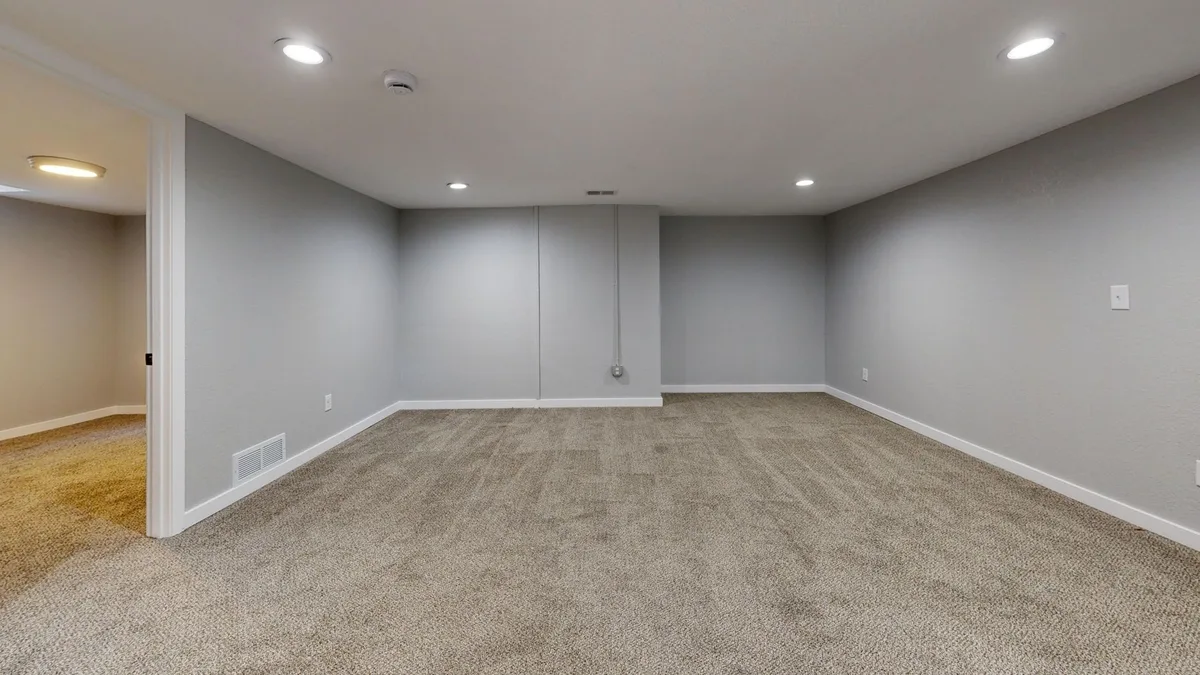
Let’s work through a concrete example. Say you have a basement that measures twenty feet by thirty feet. That’s six hundred square feet.
In a moderate climate with normal occupancy, you’d divide six hundred by seventy-five, which lands you at eight pints. But that’s a bare-bones minimum. Most homeowners would reasonably upgrade to a twenty-five to thirty pint unit to account for real-world variation, cooler temperatures, occasional spikes in humidity, and the fact that basements naturally hold more moisture than upper floors.
For a large open-plan living area of four hundred square feet in a humid climate, you’d likely want a fifty to seventy pint unit. A standard bedroom of one hundred fifty square feet in a dry climate might only need a twenty to thirty pint portable unit. A laundry room with a clothes dryer and poor ventilation deserves a dedicated thirty-five to fifty pint model regardless of its square footage.
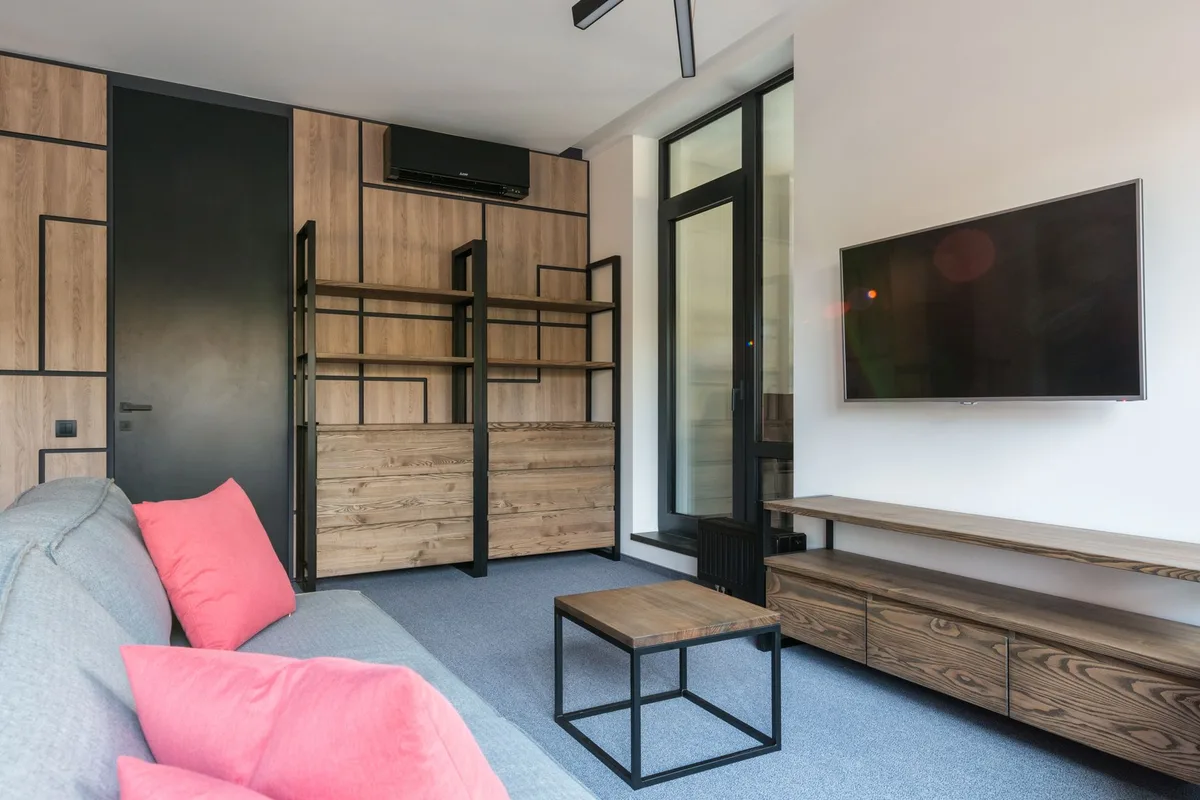
Image source: Pexels / Max Vakhtbovych (Pexels License)
Don’t overlook the space’s intended function. A walk-in closet housing seasonal clothing needs far less capacity than a finished rec room with daily foot traffic. Match the unit to how the space is actually used, not just how many feet of floor it covers.
If you’re still unsure after running the numbers, many major manufacturers offer online sizing calculators. Plug in your square footage, climate zone, and any special conditions, and the tool recommends a capacity range. Use those results alongside your own calculation for a solid double-check.
Dehumidifier Size Chart by Room Type
A quick reference chart saves you from re-deriving the math every time. The table below gives you a practical starting point for common room types and conditions. Treat these as guidelines, not absolute rules, and adjust based on the factors discussed earlier.
| Room Type | Square Footage | Low Humidity | Moderate Humidity | High Humidity |
|---|---|---|---|---|
| Bedroom | Up to 150 sq ft | 20–30 pints | 30–40 pints | 40–50 pints |
| Living Room | 200–400 sq ft | 30–50 pints | 50–70 pints | 70–90 pints |
| Basement | 500–800 sq ft | 50–70 pints | 70–90 pints | 90–120 pints |
| Laundry Room | 100–200 sq ft | 30–40 pints | 40–50 pints | 50–70 pints |
| Bathroom | Up to 100 sq ft | 20–30 pints | 30–40 pints | 40–50 pints |
| Garage | 300–500 sq ft | 40–50 pints | 50–70 pints | 70–90 pints |
High humidity covers regions where summer relative humidity regularly exceeds sixty-five percent, coastal areas, and spaces with visible moisture problems. Moderate humidity applies to most inland climates with seasonal dampness. Low humidity describes desert or high-altitude regions where indoor moisture is naturally minimal.
Notice how the basement row climbs significantly. Basements sit partially or fully below grade, meaning surrounding soil constantly releases moisture into the space. Even well-sealed basements deal with this challenge.
Don’t undersize for a basement, it’s almost always the room that needs the biggest unit in the house.
A garage warrants attention too. Uninsulated or poorly sealed garages experience wide temperature swings that cause condensation on cold surfaces. That condensation feeds directly into the air, increasing the dehumidifier’s workload.
These numbers give you a credible ballpark. Run your own calculation using your actual square footage and local climate, then compare it against the chart. Where the two agree, you’ve got confidence in your choice.
Where they diverge, lean toward the higher capacity, it’s easier to run a larger unit at lower output than to push a small unit past its limits.
Common Mistakes When Sizing a Dehumidifier
Even people who’ve done their homework sometimes make the same avoidable errors. Here are the most frequent ones and how to sidestep them.
Relying only on square footage. This is the biggest mistake. Two rooms with identical square footage can have completely different moisture loads. A one-hundred-fifty-square-foot sunroom with large windows and poor ventilation may need a bigger unit than a one-hundred-fifty-square-foot hallway with steady airflow.
Factor in climate, usage, and ventilation before locking in your choice.
Buying a unit that’s too small because of budget. A cheaper, undersized unit ends up costing more over time. It runs constantly, uses more electricity, and wears out sooner. Splurging on the correct capacity pays for itself in lower utility bills and longer equipment life.
Ignoring temperature effects. Standard pint ratings assume seventy degrees. If your space runs colder, say a basement that stays in the low fifties, the unit’s effective capacity drops. Cold air holds less moisture, and the evaporator coils can frost over, reducing performance.
In cool spaces, choose a unit rated for low-temperature operation or size up significantly.
Placing the unit in the wrong spot. A perfectly sized dehumidifier fails if it’s tucked behind furniture, buried in a corner with no airflow, or placed far from the main moisture source. Position it centrally where air can circulate freely, ideally on a hard flat surface away from walls and obstacles.
Assuming one unit covers multiple rooms. Open floor plans can sometimes share a single unit if the space is contiguous and airflow moves naturally between areas. Separate rooms with doors and walls require separate units or a properly designed ducted system. Don’t expect one machine to balance humidity across disconnected zones.
Skipping the condensate management plan. Larger units produce more water. Without a proper drain hose or adequately sized internal tank, you’ll be emptying the bucket constantly or dealing with overflow. Plan your drainage setup before the unit arrives, especially for high-capacity models.
Avoiding these pitfalls gets you closer to a installation that actually works. The goal isn’t just to buy a dehumidifier, it’s to buy the right one and set it up so it performs as expected.
FAQ
How do I know if my room needs a dehumidifier?
Check the humidity level with an inexpensive hygrometer. Readings above sixty percent consistently indicate you need supplemental dehumidification. Other signs include a musty odor, visible condensation on windows, peeling wallpaper, or a feeling of dampness on skin and fabrics.
Can I use a dehumidifier in a closed closet or small storage space?
Yes, but only with a small-capacity unit designed for confined spaces. A twenty to thirty pint model works well for closets and storage areas. Ensure the unit has adequate clearance for airflow and that the collected water can drain or be emptied safely.
Do I need a different dehumidifier for a bathroom versus a basement?
Not necessarily. The key difference is moisture intensity. Bathrooms generate brief but intense humidity bursts from showers, while basements maintain a steady, lower-level moisture load over time.
A bathroom may only need a smaller, targeted unit with a timer or humidistat, whereas a basement benefits from a larger continuous-run model.
How much does a good-quality dehumidifier cost?
Entry-level twenty to thirty pint units typically run between one hundred fifty and three hundred dollars. Mid-range thirty to fifty pint models fall in the three hundred to six hundred dollar range. High-capacity seventy pint and above units often cost seven hundred to thirteen hundred dollars, especially if they include features like pump drainage, Wi-Fi connectivity, or ENERGY STAR certification.
Should I run my dehumidifier 24/7?
Not always. Set the humidistat to a target between forty-five and fifty-five percent and let the unit cycle automatically. In extremely damp conditions or during peak humidity seasons, continuous operation may be necessary temporarily.
Once stable humidity is reached, the unit will naturally turn on and off as needed.
Bottom Line
Sizing a dehumidifier for a room comes down to three steps. Calculate your square footage and apply the appropriate pint-per-square-foot rule for your climate. Adjust for room type, occupancy, ventilation, and any existing moisture sources.
Double-check against a sizing chart or manufacturer calculator and choose the next capacity tier up if you’re near a boundary.
A correctly sized unit keeps your space comfortable, protects your belongings from moisture damage, and runs efficiently without inflating your energy bill. Skip the guesswork, factor in the details, and you’ll find the right dehumidifier for your room on the first try.

Table of Contents