You’ve got the pan ready. You’ve got a beautiful tuna steak. But there’s that nagging worry: will it come out dry and chalky or perfectly seared?
If you’ve ever pulled a tuna steak off the heat only to find it overcooked, you’re not alone. Most home cooks struggle with exactly this problem. Learning how to cook tuna steaks in a skillet well comes down to timing, temperature, and a few simple decisions.
A fresh ahi tuna steak is one of the quickest proteins to cook. It takes less than 10 minutes from start to finish. But that speed also makes it easy to blow past the perfect moment.
According to the USDA’s safe cooking guidelines, fish should reach 145°F for well‑done, but for sushi‑grade tuna, you can stop earlier for a rare or medium‑rare result. The key is understanding your doneness goal before you even turn on the burner.
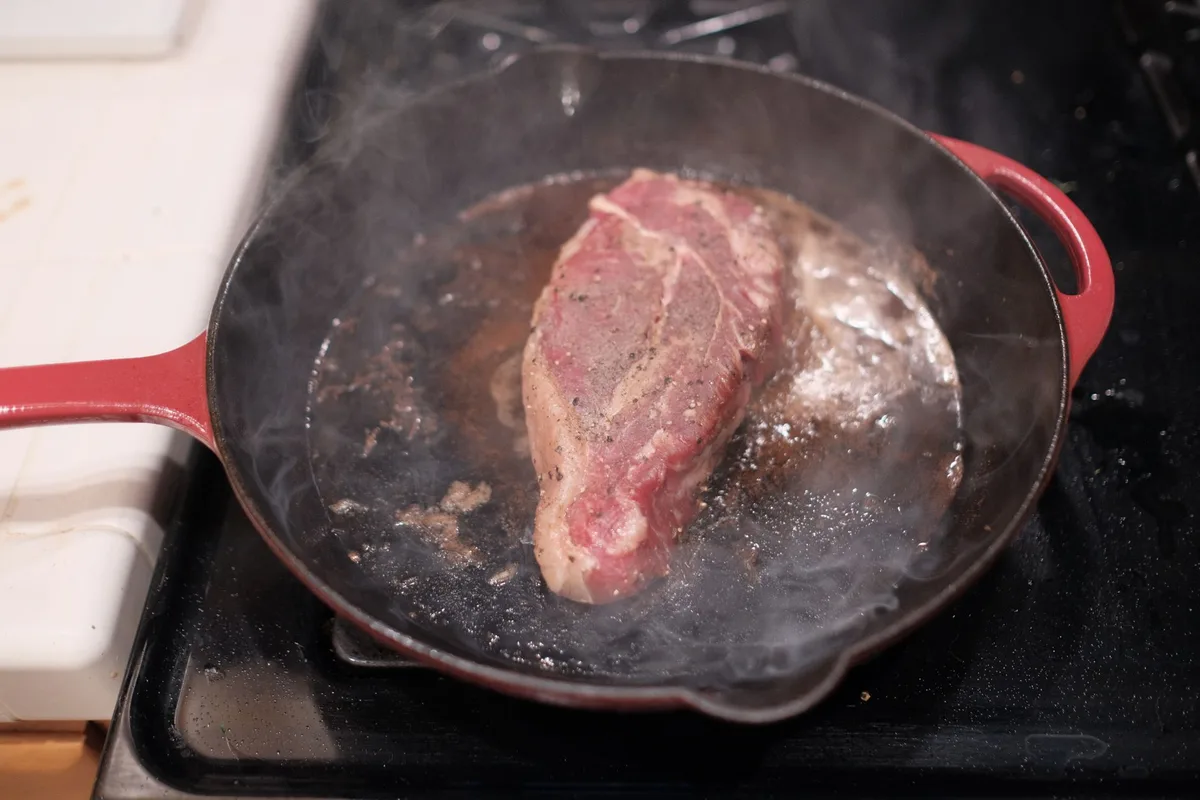
Quick Answer
Heat your skillet on medium‑high. Pat the tuna steak dry. Season with salt and pepper.
Add oil with a high smoke point. Sear 1, 2 minutes per side for rare. Use an instant‑read thermometer.
Rest 2 minutes before slicing.
Why Most People Overcook Tuna (And How to Fix It)
Overcooking is the number one complaint. Tuna is lean. It dries out fast.
The biggest mistake is cooking it like chicken or steak. You don’t need to cook tuna all the way through unless you want it well‑done.
Most people also use too low a heat. They want a gentle cook. That steams the fish instead of searing it.
A good sear locks in moisture. It gives you a crisp crust and a tender interior. The fix is simple: use high heat and watch the clock.
Another common error is skipping the rest. Cutting into a hot steak releases juices. Letting it sit for two minutes keeps those juices inside.
Our research shows that even a short rest improves texture significantly.
The Core Secret: Let Doneness Be Your Guide
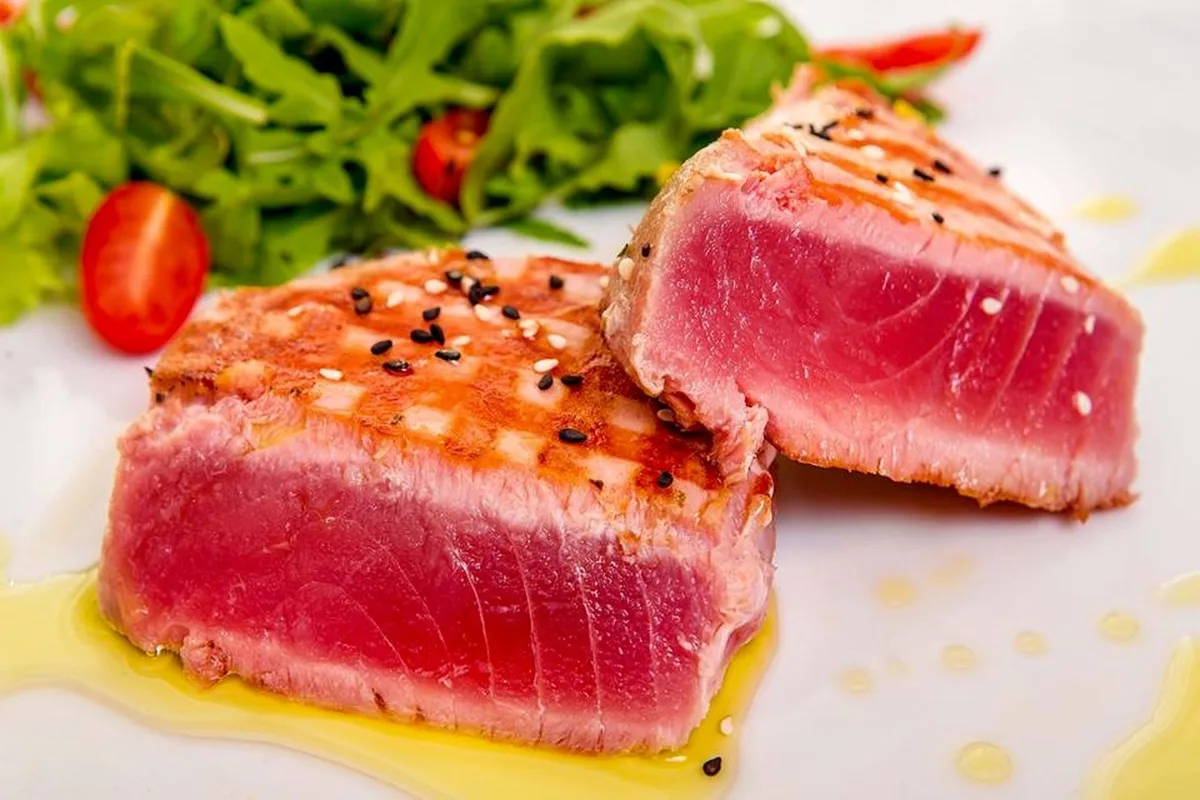
Doneness is the single variable that determines everything else. Rare tuna has a cool, translucent red center. Medium‑rare is warm and pink.
Medium is solid pale pink. Well‑done is fully opaque and beige.
Your cooking time changes based on which one you want. For a 1‑inch thick steak, rare needs only 60 seconds per side. Medium‑rare takes 90 seconds.
Medium takes 2 minutes per side. Well‑done can take 3, 4 minutes per side, but be careful not to dry it out.
Thickness also matters. A 1.5‑inch steak needs about 30 seconds more per side per half inch. A 2‑inch steak needs even more.
The best way to know for sure is with a thermometer. Insert it sideways into the center. Rare is 115°F.
Medium‑rare is 125°F. Medium is 135°F. Well‑done is 145°F.
Step 1 – Pick Your Skillet: Cast Iron, Stainless, or Non‑Stick
Your choice of pan affects heat retention and sticking. Here is how each one performs.
Cast Iron Pros and Cons for Tuna
Cast iron holds heat beautifully. It gives you an even, intense sear. It also keeps temperature steady when you add the cold fish.
The downside is weight and reactivity. If your pan is not well‑seasoned, the tuna may stick. Preheat it slowly on medium for 5 minutes, then raise to medium‑high.
Our research confirms that cast iron is the best for a restaurant‑quality crust.
Stainless Steel – When It Works Best
Stainless steel heats quickly and responds fast to temperature changes. It is great for a crisp sear if you use enough oil. The catch is sticking.
You need to preheat until a drop of water beads and dances on the surface. Then add oil and let it shimmer before adding the tuna. That prevents sticking.
Stainless is a good choice if you don’t have cast iron.
Non‑Stick – Easiest but Limited
Non‑stick pans are forgiving. You can use less oil. The tuna slides right off.
But non‑stick coatings can’t take the highest heat. Most are safe only up to 450°F. That limits how deep a crust you can develop.
If you use non‑stick, keep the heat at medium‑high, not screaming high. It still works fine for a quick sear.
Step 2 – Fresh vs. Frozen: How Each Changes Your Workflow
Fresh tuna is ideal. But frozen tuna is common and often more affordable. The workflow differs.
Fresh tuna needs only a pat dry. Frozen tuna must be thawed properly. Never thaw on the counter.
Bacteria can grow. Thaw in the refrigerator overnight. If you are short on time, place the sealed bag in cold water for 30 minutes.
Change the water every 10 minutes.
Thawing Frozen Tuna the Right Way
A key point: frozen tuna is often flash‑frozen at sea. That makes it safe to eat raw if thawed correctly. But if you cook it from frozen, the outside will overcook before the inside thaws.
Always thaw fully before cooking.
Once thawed, pat it extremely dry. Frozen fish releases more water as it cooks. Extra moisture kills the sear.
Use paper towels and press gently.
Step 3 – Season Like a Pro (It’s Only Two Ingredients)
You do not need a marinade. The best tuna steaks are seasoned simply. Use kosher salt and freshly ground black pepper.
That is it.
Why so simple? Tuna has a clean, meaty flavor. Salt enhances it.
Pepper adds a gentle heat. Anything more can mask the fish.
Sprinkle salt and pepper evenly on both sides. Use about ½ teaspoon of salt per steak. Let it sit for 10 minutes at room temperature.
That draws out a little moisture and helps the seasoning stick.
Do not add oil to the fish. Oil goes in the pan. Putting oil on the fish can cause splattering and uneven searing.
Step 4 – Heat Control: The Decision Branch for Doneness
Heat is the control knob for texture. If you want rare, you need high heat and a short cook. If you want well‑done, you need moderate heat and a longer cook.
Here is the rule of thumb. For rare and medium‑rare, preheat your skillet on medium‑high for 3 minutes. For medium or well‑done, use medium heat.
High heat with a long cook burns the outside before the inside finishes.
For Rare Tuna (Cool Red Center)
Goal: internal temperature 115°F. Sear 60 seconds per side on medium‑high. The center stays raw and cool.
This works best with sushi‑grade tuna.
For Medium‑Rare Tuna (Warm Pink Center)
Goal: 125°F. Sear 90 seconds per side on medium‑high. The center is warm but still translucent.
This is the most popular choice in restaurants.
For Medium Tuna (No Raw, Still Juicy)
Goal: 135°F. Sear 2 minutes per side on medium heat. The center turns opaque pink.
It is cooked through but not dry.
For Well‑Done Tuna (Fully Cooked Through)
Goal: 145°F. Sear 3 to 4 minutes per side on medium heat. Lower the heat slightly after the first flip.
Add a lid for the last minute to help the center cook without burning the crust.
Step 5 – The Sear: Timing, Temperature, and the No‑Move Rule
The sear creates the crust. Follow these three rules.
First, let the pan get hot. A drop of water should sizzle and evaporate instantly.
Second, add oil. Use avocado, grapeseed, or refined olive oil. These oils have smoke points above 400°F.
Regular olive oil smokes too fast.
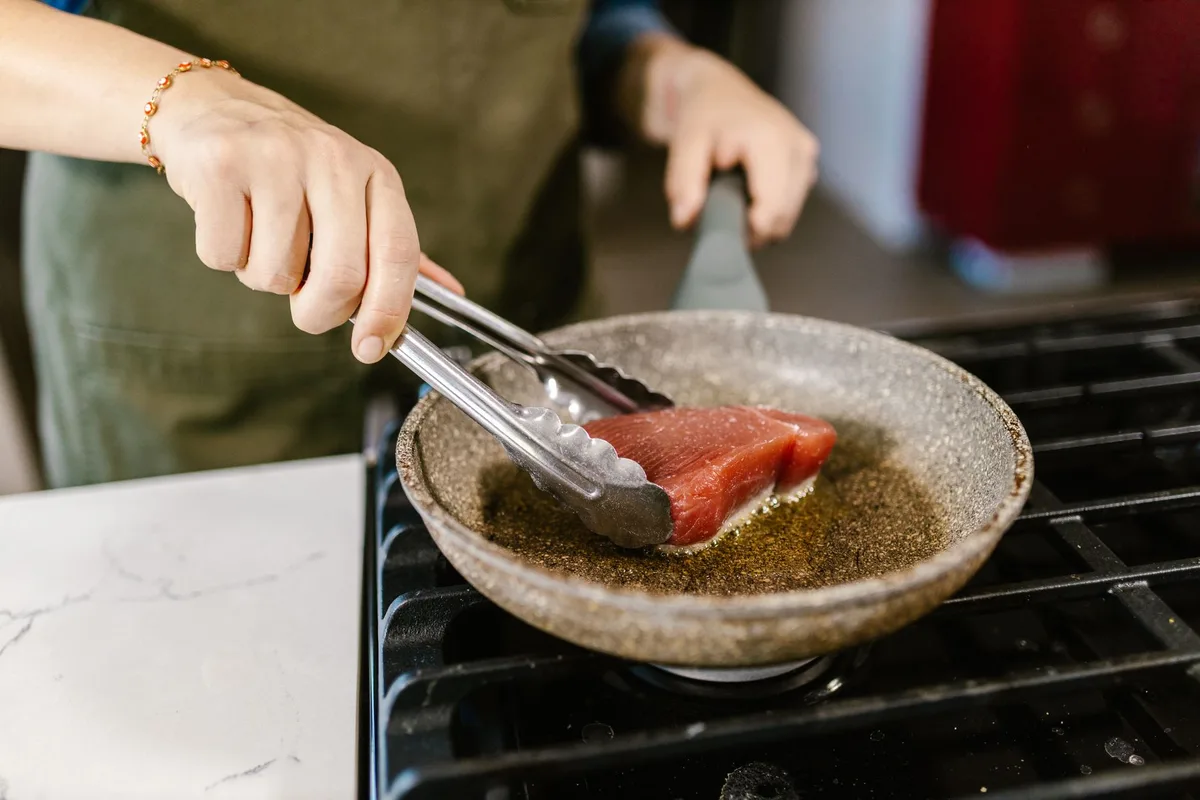
Third, lay the tuna in the pan away from you. This prevents hot oil splatter. Do not move the steak.
Let it sit. The crust forms only when the surface stops sticking. After 60 to 90 seconds, lift a corner with tongs.
If it releases easily, flip. If it sticks, give it 15 more seconds.
Flip once. Use tongs or a thin metal spatula. Avoid piercing the fish with a fork.
Step 6 – How to Know When It’s Done (Without Cutting Into It)
Cutting into the steak ruins the crust and lets juices escape. Use these two methods instead.
The Touch Test
Press the center of the steak with your finger. Compare it to the fleshy part of your palm just below the thumb. That texture is rare.
Press your thumb to your middle finger and feel the same spot. That is medium. Press thumb to pinky.
That is well‑done. This method takes practice but works well.
The Instant‑Read Thermometer Shortcut
A thermometer is the most reliable tool. Insert it sideways into the thickest part. Avoid hitting the pan.
Rare: 115°F. Medium‑rare: 125°F. Medium: 135°F.
Well‑done: 145°F.
Step 7 – Rest and Slice: The Final 2‑Minute Secret
Resting is not optional. Transfer the steak to a cutting board. Let it rest for 2 minutes.
This lets the juices redistribute. Cutting too early releases them onto the board.
After resting, slice against the grain. The grain runs along the length of the steak. Slicing across it shortens the muscle fibers.
That makes each bite more tender.
If serving cold in a salad, let the steak cool completely before slicing. Warm tuna in a cold salad creates condensation and a soggy texture.
Common Mistakes That Ruin a Tuna Steak
Avoid these four errors. Each one can turn a perfect steak into a disappointment.
Mistake 1: Using a Cold Pan
A cold pan sticks. The tuna steams instead of searing. Always preheat for 3 minutes on medium‑high.
Mistake 2: Moving the Steak Too Early
Shifting the steak before the crust forms tears the surface. Wait for the natural release. If it sticks, wait longer.
Mistake 3: Overcrowding the Skillet
Too many steaks lower the pan temperature. The fish releases water and steams. Cook no more than two steaks in a 12‑inch skillet.
Leave space between them.
Mistake 4: Using Low‑Smoke‑Point Oil
Butter, coconut oil, or extra‑virgin olive oil burn at high heat. They create acrid smoke and bitter flavors. Stick to avocado or grapeseed oil for searing.
Quick Decision Guide: Your Doneness Cheat Sheet
Use this table to match your desired outcome to the right action. Thickness assumes a 1‑inch steak. Adjust by 30 seconds per side for each additional half‑inch.
| Doneness | Internal Temp | Heat Level | Time per Side | Crust Color | Center Appearance |
|---|---|---|---|---|---|
| Rare | 115°F | Medium‑high | 60 seconds | Light golden | Translucent, cool red |
| Medium‑rare | 125°F | Medium‑high | 90 seconds | Golden brown | Warm pink, translucent |
| Medium | 135°F | Medium | 2 minutes | Deep golden | Opaque pale pink |
| Well‑done | 145°F | Medium | 3–4 minutes | Dark brown | Fully opaque, beige |
If you are unsure, aim for medium‑rare. It is the most forgiving. The center stays moist even if you go a few seconds over.
FAQs Real Home Cooks Ask
Can I cook frozen tuna without thawing?
Not recommended. The outside will overcook before the center thaws. Always thaw in the refrigerator overnight or in cold water for 30 minutes.
Pat dry thoroughly before searing.
What oil should I use for high‑heat searing?
Avocado oil is the best choice. It has a smoke point of 520°F. Grapeseed oil works well at 420°F.
Refined olive oil is acceptable at 410°F. Avoid extra‑virgin olive oil and butter for searing.
How do I fix a dry, overcooked tuna steak?
You cannot reverse dryness, but you can mask it. Flake the tuna and mix it into a salad with a vinaigrette. Or serve it as a topping for a rice bowl with soy sauce and sesame oil.
The moisture from the sauce helps.
Is it safe to eat tuna rare?
Yes, if the tuna is sushi‑grade or sashimi‑grade. These labels mean the fish was frozen to a temperature that kills parasites per FDA guidelines. For regular supermarket tuna, cooking to 145°F is safer.
Verify with your fishmonger.
How long should I rest a tuna steak?
Rest for exactly 2 minutes. That is enough for juices to redistribute without the steak cooling too much. Cover loosely with foil if you want to keep it warm.
Can I reuse the oil from searing tuna?
You can strain and reuse it once, but the flavor will carry a fishy note. It works well for cooking vegetables or seafood again. Avoid using it for neutral dishes like eggs or pancakes.
What About Marinades and Toppings?
A simple marinade can add flavor without hiding the tuna. Soy sauce, ginger, and sesame oil work well. But do not marinate for more than 15 minutes.
Acidic ingredients like citrus or vinegar start to cook the fish, making it mushy.
For toppings, try a quick wasabi cream. Mix 2 tablespoons sour cream with 1 teaspoon wasabi paste. Or make a mango salsa with diced mango, red onion, cilantro, and lime juice.
The sweetness balances the savory sear.
How to Reheat Leftover Tuna Steak
Reheating can dry out tuna fast. The best method is low and gentle. Place the steak in a skillet on low heat.
Add a teaspoon of water or broth. Cover with a lid for 2 minutes. The steam warms the fish without overcooking.
Do not use a microwave. It heats unevenly and turns the texture rubbery. If you have leftover rare tuna, consider serving it cold over a salad instead of reheating.
Choosing the Right Tuna for Skillet Cooking
Not all tuna steaks are equal. Yellowfin (ahi) is the most common for searing. It has a firm texture and mild flavor.
Albacore is softer and drier, so it works better for canning or poaching. Avoid skipjack for skillet cooking; it is too lean and flakes apart.
Look for deep red or burgundy color. Avoid brown or grey spots. The steak should smell like the ocean, not fishy.
Fresh tuna is best, but high‑quality frozen tuna (flash‑frozen at sea) is a reliable substitute. Check the package for a “sushi‑grade” or “sashimi‑grade” label if you plan to serve it rare.

Table of Contents