You’ve probably seen them in kitchens everywhere, those compact, often stylish, blade grinders. They’re quick, they’re convenient for tackling spice mixes or chopping nuts, but when it comes to coffee, achieving consistently even grounds can feel like a real challenge. If you’re a coffee enthusiast who’s opted for a blade grinder, or you’re curious about making the most of yours, you’re in the right place.
This guide is all about how to use a blade grinder for even coffee grounds and unlock a better cup. We’ll dive into the nitty-gritty, transforming those unpredictable grinds into something your favorite brew method will thank you for.
For many, a blade grinder is the first step into home grinding, and for good reason. They’re budget-friendly and take up minimal counter space. But let’s be honest, folks who chase the perfect espresso shot or the nuanced pour-over often gravitate towards burr grinders.
That’s because burr grinders work by crushing beans between two abrasive surfaces, producing a much more uniform particle size. Blade grinders, on the other hand, use a spinning blade, much like a mini food processor, which can lead to a mix of fine dust and larger chunks. This inconsistency can negatively impact your coffee’s extraction, leading to bitter or weak flavors.
But don’t toss that blade grinder just yet! With a few smart techniques, you can significantly improve the consistency of your coffee grounds and get a considerably better brew.
Understanding Blade Grinder Limitations for Coffee
Before we get into the “how-to,” it’s crucial to understand why blade grinders aren’t inherently designed for producing uniform coffee grounds. Think about how a blade grinder works. It’s essentially a high-speed chopper.
The spinning blade creates a vortex, tossing the coffee beans around. Some beans will hit the blade multiple times, becoming very finely ground, almost like powder. Others might bounce away and get hit only once or twice, remaining much larger.
This leads to what coffee professionals call a “bimodal” or “multimodal” grind distribution, a mix of coarse, medium, and fine particles all in one batch.
This inconsistency is a major hurdle for optimal coffee extraction. If you’re brewing with methods that require a specific grind size, like espresso (fine) or French press (coarse), a blade grinder will struggle to deliver. Fines can over-extract quickly, leading to bitterness, while larger chunks go under-extracted, contributing to a weak, sour taste.
It creates an uneven extraction profile, making it difficult to dial in your coffee.
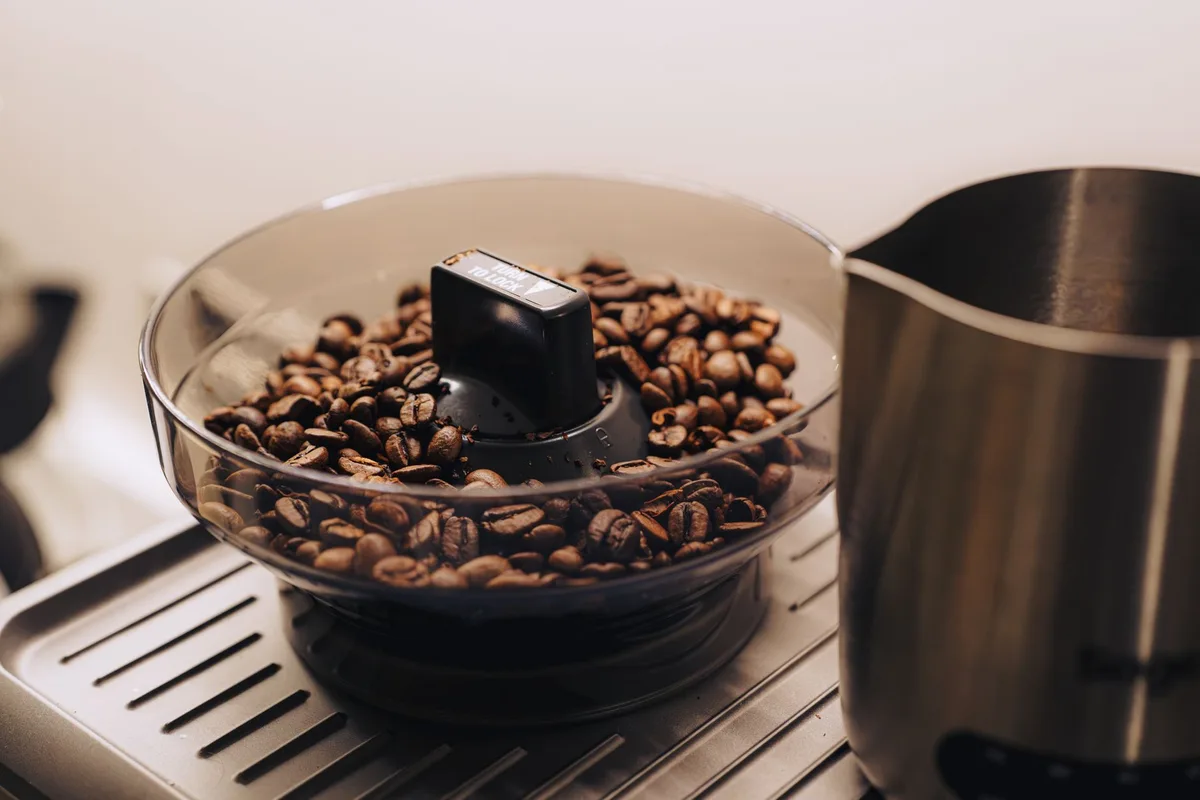
Image source: Pexels / Selim Karadayı (Pexels License)
Essential Steps for Maximizing Evenness with a Blade Grinder
So, how do we fight against this inherent unevenness? It’s all about controlling the process and employing a few strategic moves. We’re not aiming for the pristine uniformity of a high-end burr grinder, but we can absolutely achieve a much better result than just hitting the button and walking away.
1. Start with Quality, Freshly Roasted Beans
This might seem obvious, but it’s foundational, especially when you’re working with equipment that’s not designed for precision grinding. Starting with quality, freshly roasted beans is paramount. Older beans can be brittle and more prone to shattering into inconsistent particles. Aim for beans roasted within the last 2-3 weeks for the best flavor and grinding performance.
The origin and roast level also play a role; lighter roasts tend to be harder and might require slightly different handling than darker, more brittle roasts. If you’re looking for recommendations on where to find top-notch beans, you might want to check out guides on where to buy fresh coffee beans.
2. Measure Your Beans Accurately
Consistency begins with a precise starting point. Always measure your coffee beans by weight, not by volume. A kitchen scale is your best friend here.
Scoops can vary wildly depending on the density and size of the beans. For instance, 20 grams of dark roast beans will occupy a different volume (and weigh differently if you were to measure by volume) than 20 grams of a denser, lighter roast. Most brewing methods have recommended coffee-to-water ratios, and starting with accurate bean weight ensures you’re on the right track, regardless of the grinder’s output quirks.
3. Preheat Your Grinder (Optional but Recommended)
This is a trick I’ve found works wonders for many types of grinders, and it can help a bit with blade grinders too. Preheating your grinder means running it for a few seconds without beans. This warms up the motor and blades. When you add the beans, the heat from the motor might slightly reduce the moisture content of the beans, making them more uniform in their consistency when ground.
It’s a subtle step, but in the pursuit of evenness, every little bit helps. It’s similar to how some professional kitchens preheat their equipment for consistent results.
4. Grind in Short Bursts
This is perhaps the single most important technique for how to use a blade grinder for even coffee grounds. Don’t just hold the button down until it sounds right. Instead, practice what’s called pulse grinding.
Hit the button for just a second or two, then release. Shake or gently tap the grinder. Repeat.
This action helps to redistribute the beans and allows the blade to catch beans that might have been missed in the initial pass. You’re essentially giving the beans a chance to settle and then re-engage with the blade. This controlled approach significantly reduces the number of overly pulverized particles and provides a more even cut.
You’re not just chopping; you’re managing the chop.
5. Shake, Tap, and Agitate
As mentioned in pulse grinding, shaking, tapping, and agitating the grinder between pulses is absolutely key. Think of it as manually encouraging the beans to move into different positions relative to the blade. Gently tap the sides of the grinder body, or give the whole unit a slight swirl.
This ensures that beans that were at the top, or on the edges, get a chance to fall towards the spinning blade. Without this, you’ll just keep pulverizing the same beans that are already in the path of the blade.
6. Separate Your Grinds (The “Shake and Sift” Method)
This is where we get serious about improving consistency. Once you’ve done your pulse grinding, you’ll likely still have a mix of sizes. The most effective way to tackle this with a blade grinder is to separate your grinds.
After grinding, carefully pour the grounds onto a flat surface, like a piece of parchment paper or a wide, shallow tray. You can then use a fine-mesh sieve (a “sifter”), the kind you might use for baking or sifting flour, to separate the particles.
Gently shake the sieve. The finer particles will fall through, leaving the larger, coarser pieces behind. You can then reintroduce these larger pieces to the blade grinder for another short pulse, combined with the remaining larger chunks from the original grind.
Repeat this process of grinding, sifting, and re-grinding the larger particles a couple of times. You’ll be amazed at how much more uniform your grounds become. This process is similar to how some artisanal bakers achieve perfectly uniform flour particle sizes for delicate pastries.
It may sound like a lot of work, but the difference in your cup will be profound.
7. Control Grind Time and Batch Size
Blade grinders can generate heat quickly, and heat can negatively affect the delicate aromas and flavors of coffee. Therefore, controlling grind time and batch size is crucial. Don’t overload the grinder.
Grind only enough beans for one or two brews at a time. Grinding larger batches increases the motor’s workload, leading to overheating and potentially scorching the grounds. Shorter, more frequent pulses are always better than one long grind.
This also helps prevent your motor from burning out prematurely.
8. Clean Your Grinder Religiously
Coffee oils build up fast, and old oils can make fresh grounds taste stale or rancid. This is particularly important for blade grinders, as the blade and interior can harbor more residue than some burr grinder designs. After every use, give your grinder a good clean.
A brush is excellent for getting into tight spots. You can also try adding a handful of uncooked rice or specialized grinder cleaning tablets for a deeper clean. The rice acts as an abrasive, helping to scrub away coffee oils.
Just make sure to clean out all the rice dust afterward! A clean grinder ensures that the flavors of your fresh coffee aren’t tainted by old debris. If you’re curious about cleaning other kitchen appliances, guides like how to clean air fryer basket with bicarbonate of soda offer general principles applicable elsewhere.
Matching Grind Size to Brew Method with a Blade Grinder
Even with improved consistency, you’ll still need to be mindful of what grind size your brewing method requires. Since a blade grinder inherently produces a range, you’ll likely be aiming for a grind that’s a compromise, or you’ll be doing a lot of sifting.
- French Press: This method uses a coarse grind. With a blade grinder, you’ll want to grind for the shortest possible time and then heavily sift out the finer particles. The larger chunks are what you’re primarily looking for here.
- Drip Coffee (Automatic or Pour-Over): Typically requires a medium grind. This is where blade grinders become most challenging. You’ll need to do the pulse and sift method diligently, trying to achieve a mix that’s not too fine (which clogs filters and causes over-extraction) and not too coarse (which leads to weak coffee).
- Moka Pot: Needs a fine, but not espresso-fine, grind. Again, pulse grinding and sifting are your best bet to avoid excessive fines that can lead to a bitter, muddy brew.
- Espresso: Frankly, achieving a grind fine and consistent enough for home espresso with a blade grinder is nearly impossible. The precision required for espresso means you’ll almost certainly need a dedicated burr grinder. If you only have a blade grinder, you might find yourself using it for coarser methods and perhaps buying pre-ground espresso if that’s your primary brew. It’s worth noting that even high-end machines like those from Breville, which feature integrated burr grinders, highlight the importance of grind consistency for espresso.
Troubleshooting Common Blade Grinder Issues for Coffee
Even with the best techniques, you might run into a few snags. Here’s what to do:
- Grinds are too fine, even after short pulses: You might be grinding for too long, or your beans might be very dry and brittle. Reduce your pulse duration even more, shake more aggressively between pulses, and consider slightly more humid beans if possible (though this is difficult to control intentionally).
- Grinds are too coarse, and fine dust is everywhere: This is the classic blade grinder problem. You’re likely not sifting effectively, or you’re not spending enough time re-grinding the larger particles. Dedicate more time to the “shake and sift” method.
- Motor seems to be overheating: You’re grinding too much at once or for too long. Reduce your batch size and stick to very short pulses. Let the motor cool down between batches if necessary.
- Inconsistent results cup after cup: This points to inconsistency in your technique. Make sure you’re weighing beans, using the same pulsing pattern, and sifting in the same way every single time. Even slight variations can lead to different outcomes.
When to Consider an Upgrade to a Burr Grinder
While this guide is all about maximizing your blade grinder, there comes a point where you might simply hit a ceiling. If you’re serious about exploring the nuance of specialty coffee, different brewing methods, or especially if you’re interested in espresso, you’ll likely want to consider upgrading to a burr grinder.
Burr grinders crush beans between two burrs, creating a much more uniform particle size. They offer adjustable grind settings, allowing you to dial in the perfect consistency for any brew method. High-quality burr grinders, like the Breville Smart Grinder Pro, offer significant improvements in grind quality and consistency, which translates directly to a better-tasting cup of coffee.
Even on a budget, there are excellent entry-level burr grinders available that will outperform a blade grinder for coffee.
However, if your budget is tight or you have limited space, mastering the techniques outlined here will bring your blade-ground coffee much closer to its potential. It’s about working smarter, not just harder. You can still achieve a delicious cup with a blade grinder with patience and the right approach.
Frequently Asked Questions About Blade Grinders and Coffee
Q: Can I really get good coffee from a blade grinder?
A: Yes, you absolutely can. It requires more effort and technique, focusing on short pulses, shaking, and sifting, but you can achieve a significantly more even grind than simply holding the button down. It won’t rival a high-end burr grinder for espresso, but for drip or French press, you can get great results.
Q: How often should I clean my blade grinder?
A: You should clean it after every use. Coffee oils build up quickly and can impart stale flavors to your fresh grounds. A quick brush or wipe-down is usually sufficient for daily cleaning, with periodic deeper cleans using rice or cleaning tablets if needed.
Q: Why are my coffee grounds so inconsistent with a blade grinder?
A: This is inherent to the design of a blade grinder. The spinning blade chops beans rather than crushing them, leading to a wide range of particle sizes. The techniques outlined in this guide, short pulses, agitation, and sifting, are designed to mitigate this issue.
Q: Is it okay to use a blade grinder for espresso?
A: It’s generally not recommended. Espresso requires a very fine and extremely consistent grind. Blade grinders tend to produce too many fines and too many boulders, making proper espresso extraction nearly impossible and highly frustrating.
For espresso, a dedicated burr grinder is almost always necessary.
Q: What’s the difference between a blade grinder and a burr grinder?
A: A blade grinder uses a spinning blade to chop beans, similar to a blender. A burr grinder crushes beans between two abrasive surfaces (burrs), which allows for more precise control over grind size and results in a much more uniform particle distribution.
Conclusion: Mastering the Blade for a Better Brew
Using a blade grinder for how to use a blade grinder for even coffee grounds isn’t about magic; it’s about technique. By understanding its limitations and employing strategies like precise measurement, controlled pulsing, diligent agitation, and meticulous sifting, you can dramatically improve the consistency of your coffee grounds. While it may take a little more time and effort than simply pressing a button, the reward is a noticeably better-tasting cup of coffee.
So don’t be discouraged by the inherent design of your grinder; embrace these methods and enjoy the journey to a more flavorful brew. Remember, consistency is key, and with a little practice, you’ll be well on your way to extracting the best out of your beans, no matter what grinder you’re using.

Table of Contents