Clean, sand, prime, then apply two thin paint coats; let cure before reassembly.
If you want to learn how to paint a wooden bed frame the right way, you’re in the perfect place. I have painted dozens for clients and my own home. In this guide, I’ll show you a simple, proven process that delivers a smooth, durable finish. Follow along, and you will understand how to paint a wooden bed frame from prep to polish with confidence.

Tools and materials you’ll need
A good setup makes the job easier and faster. Gather what you need before you open any can.
- Screwdriver, zip bags, and labels for hardware Remove fasteners and keep them organized.
- Drop cloths and plastic sheeting Protect floors and nearby items.
- Degreaser or mild TSP substitute Clean off oils and grime.
- Wood filler and putty knife Repair dents, holes, and chips.
- Sandpaper 120, 150, 180, 220, 320 grits Cover each stage of prep.
- Tack cloths or microfiber towels Wipe off dust.
- Primer Shellac-based for stains; bonding primer for slick or factory finishes.
- Paint Water-based acrylic enamel or waterborne alkyd for durability and low odor.
- Brushes Quality angled sash brush and a fine finish brush for trim work.
- Mini foam roller 4–6 inch for smooth panels and rails.
- Optional HVLP sprayer For ultra-smooth results on large headboards.
- Painter’s tape, masking paper, and risers Keep lines clean and parts off the floor.
- Respirator with organic vapor cartridges, gloves, and eye protection Stay safe.
- Water-based polyurethane topcoat If you want extra protection.
Pro tip from the shop: spend on primer and brushes. Cheap tools leave marks and lint. The right primer solves 80% of headaches before they start.
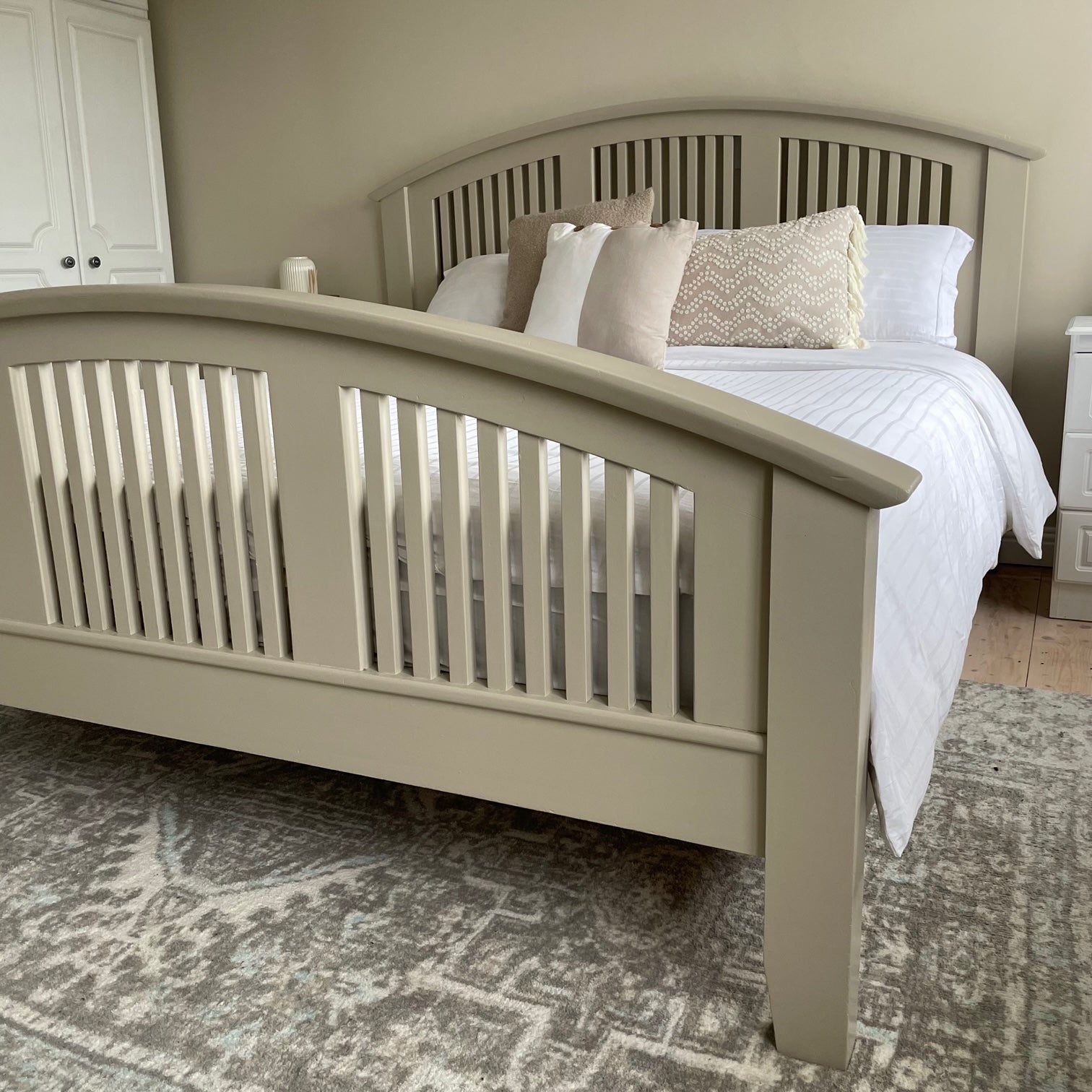
Choose the right paint, primer, and finish
Picking the right products is half the battle. This is where how to paint a wooden bed frame becomes easy.
- Primer choice matters Shellac-based primer blocks wood tannins and old stain bleed. Bonding primer grips slick varnish, laminate, or factory finishes.
- Paint choice Water-based acrylic enamel levels well and cures hard. Waterborne alkyds combine oil-like toughness with soap-and-water cleanup.
- Sheen choice Satin hides light flaws and cleans well. Semi-gloss is tougher but shows more texture.
- Color testing Brush two sample swatches on a primed scrap. View in daylight and lamplight before you commit.
If your frame is pine, cedar, or oak, expect tannin bleed. Use a stain-blocking primer. If it is old and glossy, use a bonding primer. These choices define how to paint a wooden bed frame that stays chip-free.

Plan and prepare your workspace
A clean, safe area produces a clean, safe finish.
- Ventilation Open windows and use a fan to move air across, not at, the piece.
- Dust control Vacuum first. Mist the floor with water to keep dust down.
- Layout Elevate parts on risers so you can paint edges in one go.
- Disassembly Label each part. Take photos as you go. This saves time later.
If your home was built before 1978, test old paint chips for lead before sanding. If there is any doubt, use lead-safe methods or hire a pro. Safety is part of how to paint a wooden bed frame the smart way.

Step-by-step prep Clean, repair, and sand
Prep is where the finish is won. Go slow and steady.
- Clean Wash the frame with a degreaser. Rinse with clean water and dry.
- Remove hardware Take off slats, rails, brackets, and feet. Bag the screws.
- Repair Fill dents, screw holes, and chips. Let the filler dry and sand flush.
- Sand Scuff glossy finishes with 150–180 grit. Raw wood can start at 120 and move to 180.
- Feather edges Smooth any paint edges so they do not telegraph through the new coat.
- Dust off Vacuum and wipe with a damp microfiber. Follow with a tack cloth.
If the wood raises grain after cleaning, do a quick pass with 180 grit. This small step gives you that soft, pro feel. It is a key part of how to paint a wooden bed frame with a fine, even look.
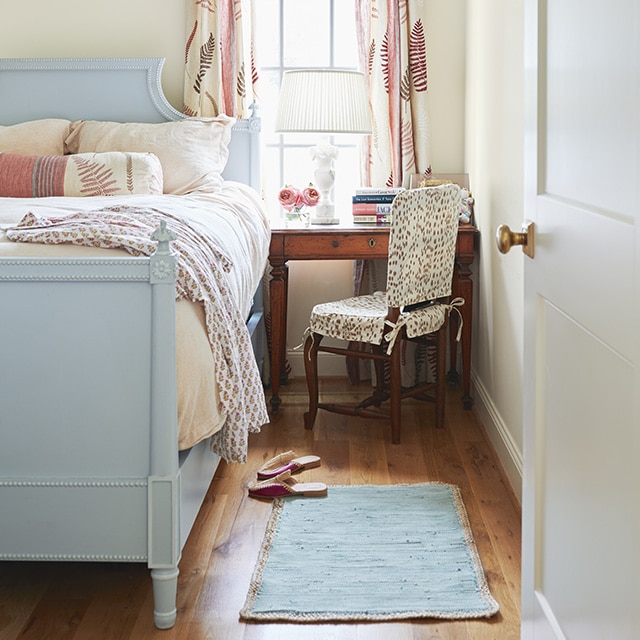
Prime like a pro
Primer gives paint grip and blocks stains. Do not skip it.
- Spot seal knots Dab shellac primer on knots and dark streaks first.
- Full prime Roll thin, even coats on large flats. Brush rails, spindles, and corners.
- Dry and sand Let the primer dry per label. Scuff with 220 grit to knock down nibs.
- Check for flaws Circle dents and scratches with a pencil. Fill, sand, and spot prime again.
On woods like oak, I use a shellac primer for the first coat, then a bonding primer. That two-step is my best trick for how to paint a wooden bed frame that resists bleed and chips.

Paint application Brushes, rollers, or sprayer
Any of these can work well. Pick based on your space and tools.
- Brush and mini roller Use the roller for large flats and the brush for edges and details. Keep a wet edge and follow the wood grain.
- Sprayer Use light passes and overlap by 50%. Strain your paint to avoid clogs.
- Thin coats are king Two to three thin coats beat one heavy coat. Heavy coats sag and take longer to cure.
Lay parts flat when you can. Gravity is your friend. This small choice reduces runs and helps you master how to paint a wooden bed frame with a glass-smooth finish.

Drying, sanding between coats, and curing
Time is a tool. Use it well.
- Recoat windows Water-based paints often recoat in 2–4 hours. Oil-based can need 12–24 hours.
- Light scuff between coats Use 320 grit. Wipe dust with a tack cloth.
- Final cure Water-based paints feel dry in hours but cure in 7–14 days. Oils can take up to 30 days.
- During cure Be gentle. Avoid heavy loads and cleaning sprays.
I wait at least 48 hours before reassembling. I add felt pads and avoid covers that trap moisture. These habits define how to paint a wooden bed frame that cures hard and stays clean.

Reassemble and protect the finish
Give your work a safe landing.
- Add felt pads at contact points Stop squeaks and scuffs.
- Torque hardware snug, not brutal Tighten until firm, then stop. Over-tightening can crack fresh paint.
- Optional topcoat For extra toughness, use a water-based polyurethane in satin. Apply two thin coats.
If you used chalk-style paint, a water-based polyurethane lasts longer than wax in a bedroom. It is the low-fuss way to protect all the work you put into how to paint a wooden bed frame.

Style ideas and color tips
Make the look match your room.
- Two-tone headboard Keep the rails neutral and the headboard bold.
- Soft matte black It hides dust and looks tailored with white bedding.
- Warm mid-tone green Calm and cozy for cottage or modern farmhouse.
- Natural wood + paint Leave the top rail stained and paint the rest for contrast.
Always test color on a primed offcut or a hidden area. Bedroom light shifts warm at night. This simple check shapes how to paint a wooden bed frame you will love day and night.
Common mistakes and easy fixes
Learn from common pitfalls I see on jobs.
- Bleed-through after paint Spot prime stains with shellac, then repaint that area.
- Brush marks Use a finer brush, thin the paint per label, and work smaller sections.
- Peeling paint after a week Surface was dirty or too glossy. Sand to a dull scratch, use bonding primer, repaint.
- Fisheyes or craters Caused by oil or silicone. Clean with a degreaser, sand, and reprime.
- Orange peel from rolling Use a high-density foam roller and lighter pressure.
When in doubt, sand smooth, reprime, and go thin. This reset is the secret to how to paint a wooden bed frame without visible flaws.
Maintenance and care
A few habits keep the finish fresh.
- Clean with a damp cloth and mild soap Avoid harsh cleaners or ammonia.
- Touch-ups Keep a small jar of the final paint. Label the color and date.
- Protect from scrapes Use felt pads under bases and side tables that touch the frame.
- Manage humidity Use a dehumidifier in damp seasons to reduce swelling and chips.
These small steps extend the life of your work and support how to paint a wooden bed frame that looks new for years.
Safety and sustainability
Your health and home matter.
- Ventilation and PPE Wear a respirator with organic vapor cartridges when spraying or priming.
- Low-VOC choices Modern waterborne enamels are tough and low odor. Pick them when you can.
- Safe sanding Use a vacuum sander and a HEPA shop vac to capture dust.
- Disposal Let rags dry flat to prevent combustion. Follow local rules for paint and solvent disposal.
Lead paint is a real risk on very old pieces. If you suspect it, use lead-safe methods or hire a certified pro. Safety knowledge is part of how to paint a wooden bed frame the right way.
Frequently Asked Questions of How to paint a wooden bed frame
How many coats of paint do I need on a wooden bed frame?
Two thin coats usually cover, after one full primer coat. A third coat helps with light colors over dark wood or when you want extra depth.
Do I need to sand a bed frame before painting?
Yes, at least scuff sand to dull the surface and remove gloss. It creates a key for primer and stops peeling.
Can I paint a varnished or stained bed without stripping?
Yes, if you clean well, scuff sand, and use a bonding or shellac-based primer. Stripping is only needed for loose or failing finishes.
How long should paint cure before sleeping on the bed?
You can reassemble after 48 hours if careful, but full cure takes 7–14 days for water-based paints. Avoid heavy blankets or friction during that time.
What type of paint is best for a wooden bed frame?
Water-based acrylic enamel or waterborne alkyd gives a hard, low-odor finish. Both clean up with water and resist chips in daily use.
Can I use chalk paint without primer on a bed frame?
You can, but durability improves with a good primer. For the longest wear, topcoat chalk paint with a water-based polyurethane.
Conclusion
You now know how to paint a wooden bed frame from prep to polish. Clean, repair, sand, prime, then build thin coats and give them time to cure. Add smart touches like felt pads and a satin topcoat, and your bed will look custom and last longer.
Pick a weekend, set up your workspace, and start with one piece at a time. Share your color choice or any snag you hit, and I’ll help you troubleshoot. Want more step-by-step projects like this? Subscribe and join the next build.

Table of Contents