Measure every space, plan seams, match roll widths, then add waste.
If you want carpet that fits right the first time, you need a plan. In this guide, I’ll show you how to measure for carpet installation like a pro. I’ve measured hundreds of rooms, from tiny hallways to patterned great rooms. You’ll learn simple steps, smart shortcuts, and mistakes to avoid so your numbers are accurate, your seams are clean, and your order is spot on.
Tools You Need
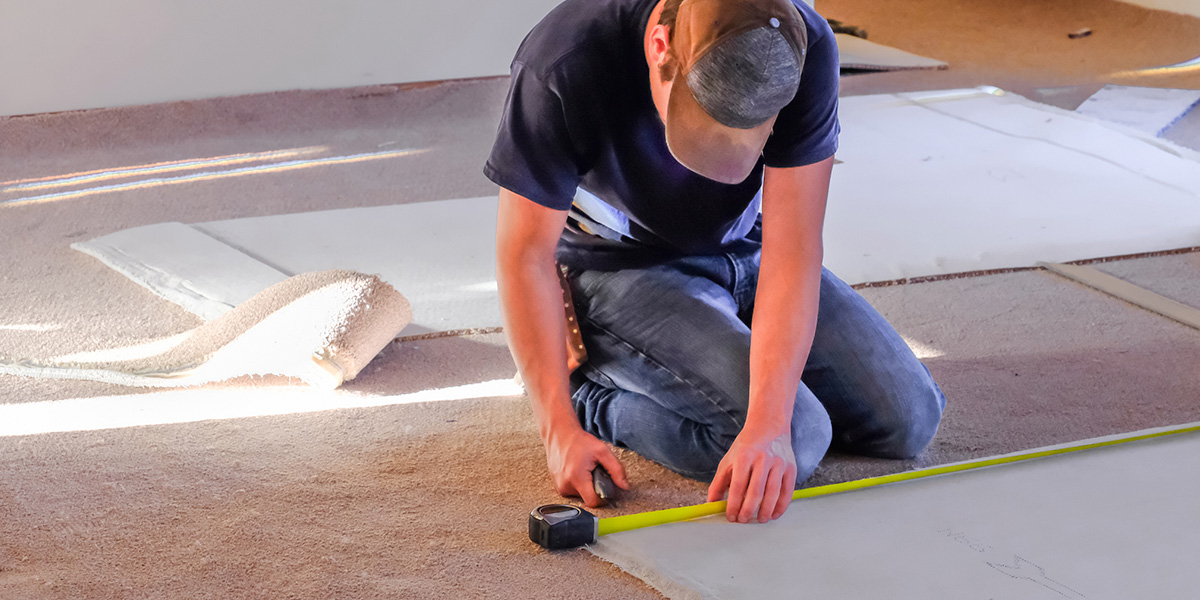
- Tape measure A 25–30 ft tape with clear markings is ideal.
- Graph paper or a floor plan Sketch each room and label sizes.
- Pencil and marker Pencil for notes, marker for final numbers.
- Calculator A phone calculator works fine.
- Blue painter’s tape Mark seam lines and direction on the floor.
- Straightedge or laser Mark long runs and check alignment.
Tip from the field: I keep a spare tape measure in the car. Tapes bend and warp. A bad tape can add an extra inch to every pull, which ruins totals when you add them up.
Key Carpet Basics That Affect Measurements
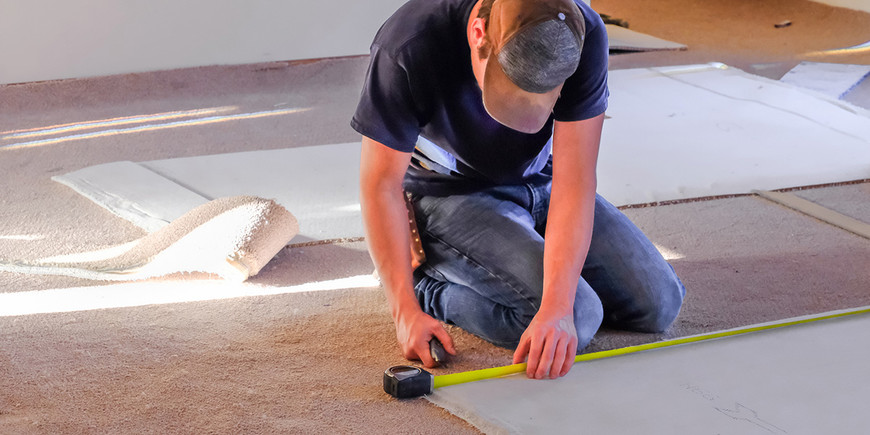
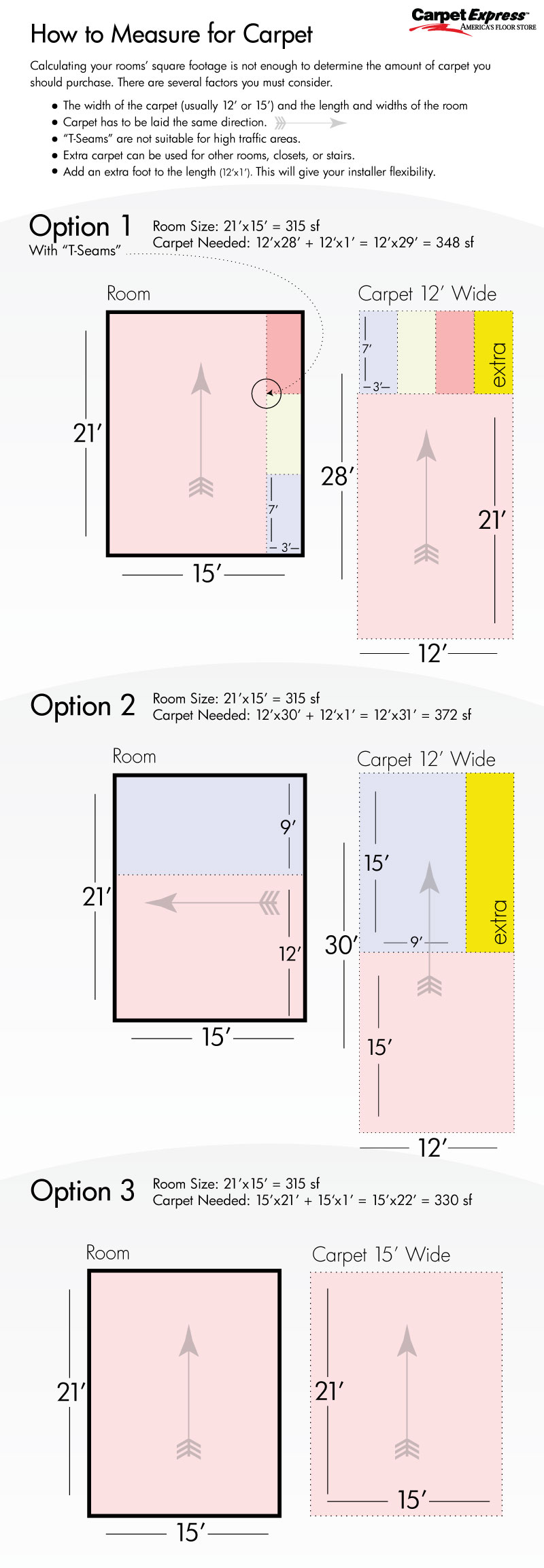
- Roll widths Most residential carpet comes in 12-foot and 15-foot widths in the US. Your layout should try to use full widths to reduce seams and waste.
- Nap direction Carpet fibers lean. Keep the same direction across connected spaces to avoid color shading.
- Pattern repeat Patterned carpet needs extra material to align the design. Plan at least one full repeat per seam.
- Seams Plan seams away from main sight lines and doorways when possible. Never run a seam through a high-traffic pivot if you can avoid it.
- Subfloor transitions Allow material for thresholds, closet openings, and stairs.
These points matter for how to measure for carpet installation because they change the layout, seam placement, and waste factor.
Step-by-Step: How to Measure for Carpet Installation
Follow these steps to get an accurate takeoff. This method works for most homes and small offices.
Measure Simple Rectangular Rooms
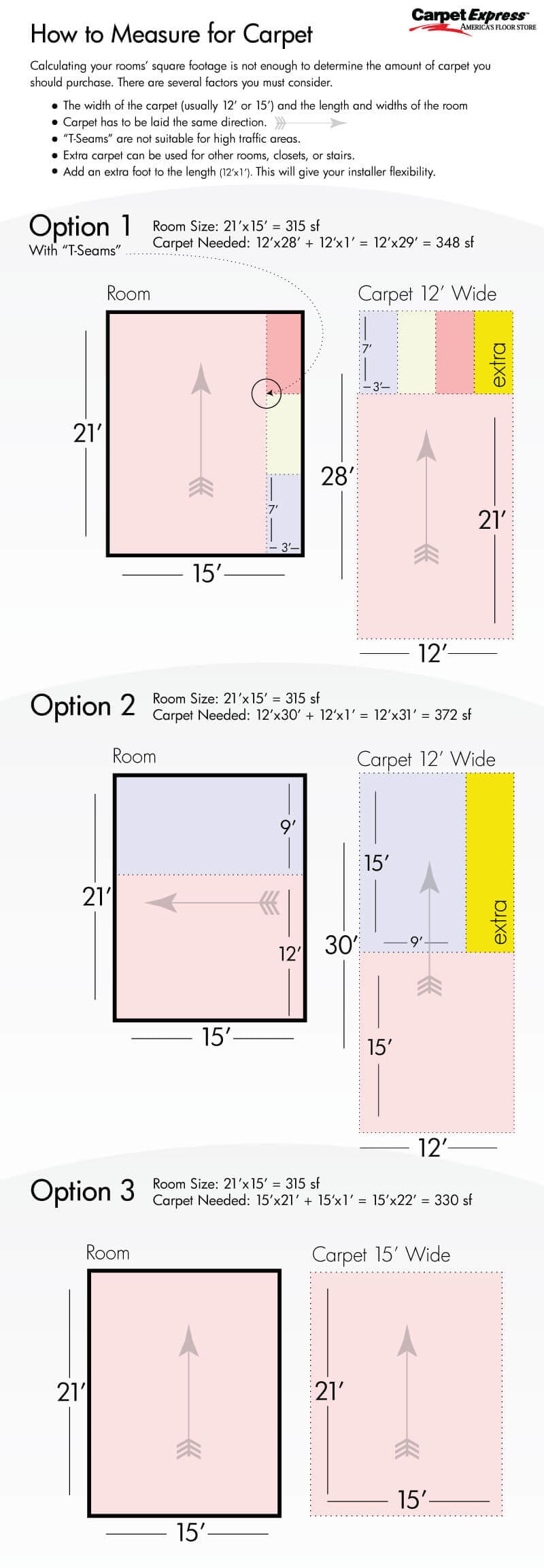
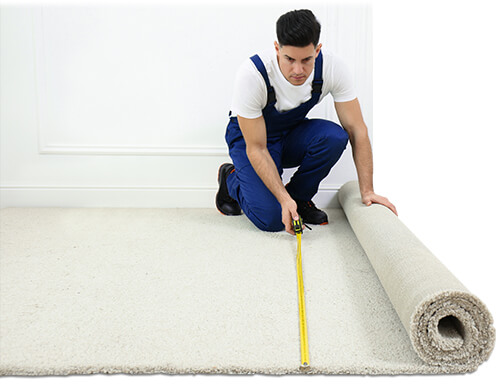
- Measure length and width in feet. Measure wall-to-wall at the widest points.
- Round each dimension up to the next 3 inches. Small bumps hide out-of-square walls.
- Multiply length by width to get square feet. Also note which roll width (12 or 15 ft) fits best.
Example: A 10 ft 4 in by 12 ft 2 in room rounds to 10.5 ft by 12.25 ft. Area is 128.6 sq ft.
Measure Irregular Rooms, Alcoves, and Nooks
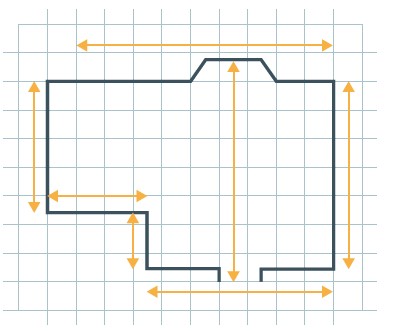
- Break the room into rectangles. Measure each block, then add them together.
- Include bay windows, hearth returns, or angled walls by boxing them as rectangles.
- Add 3–6 inches to cover odd angles and out-of-square corners.
Measure Hallways and Landings
- Measure length and width. Add 3 inches to the width for tuck at walls.
- Watch direction. Keep nap running the same way into connected rooms.
- For landings, treat each as its own rectangle and plan seam placement carefully.
Measure Stairs
- For straight stairs with no patterns:
- Measure tread depth plus riser height, then add 2–3 inches for tuck.
- Multiply by number of steps. Add extra for the top landing and bottom step return.
- For wrapped or bullnose steps, add 2–4 extra inches per step.
- For pie (winder) steps, measure the widest part and use that for all the steps in the turn.
Pro rule I use: For many standard 13-inch treads and 7.5-inch risers, plan about 18–19 inches per step before tuck and pattern. Always confirm on-site.
Measure Closets and Doorways
- Walk-in closets: measure like small rooms. Keep nap direction matching the bedroom.
- Reach-in closets: add the width by the depth, but plan for the door opening and transition.
- Door thresholds: allow extra material for metal or wood transitions.
Plan Seams and Carpet Direction
- Sketch seam lines on your plan. Keep seams short, straight, and out of traffic paths.
- Align nap direction across open areas and connecting spaces.
- With 12-foot or 15-foot rolls, decide which width gives fewer seams and less waste.
This is a key step in how to measure for carpet installation. A great layout can save you a full room of extra carpet.
Add Waste and Round Up
- Basic rooms with 12-foot rolls: add 5–10% waste.
- Irregular rooms or multiple seams: add 10–15%.
- Pattern repeat: add 10–20% depending on the repeat size and number of seams.
- Round up to the next whole foot in length or the next full roll width.
Write your final number in both square feet and square yards. Square yards = square feet ÷ 9. This helps when comparing quotes.
Worked Examples
Example 1: Simple bedroom
- Room size: 10 ft by 12 ft.
- Best roll: 12 ft width, one piece, no seam.
- Area: 120 sq ft. Add 5% waste = 126 sq ft.
- Order: 126 sq ft (14 sq yd).
Example 2: Living room with seam
- Room size: 14 ft by 18 ft.
- 12-ft roll requires a seam. Layout: one 12-by-18 piece plus a 2-by-18 fill.
- Total raw area: 216 + 36 = 252 sq ft. Add 10% waste = 278 sq ft.
- Order: 278 sq ft (about 31 sq yd).
Example 3: Stairs (straight, 13 treads)
- Tread depth 11 in, riser 7.5 in. Total wrap ~18.5 in. Add 1.5 in tuck = 20 in.
- 13 steps x 20 in = 260 in (21.7 ft) by stair width (say 36 in). Add 10% waste.
- Final: about 22 ft by 3 ft = 66 sq ft. With waste ≈ 73 sq ft.
Examples like these show how to measure for carpet installation with real numbers you can trust.

Common Mistakes and How to Avoid Them
- Forgetting nap direction Rooms look off if nap flips at a doorway.
- Underestimating pattern repeat Add extra for each seam when patterns must align.
- Measuring only at one point Rooms are rarely square; measure both ends.
- Ignoring transitions and door bars You need material to wrap and trim clean edges.
- Not rounding up Running short by an inch forces an extra seam or a reorder.
These are the most common issues I see when homeowners try how to measure for carpet installation without a clear plan.
Pro Tips from the Field
- Walk the path First, look where your eyes go when you enter. Hide seams away from that line.
- Use painter’s tape Mark seam paths and nap direction on the floor. It prevents mistakes on install day.
- Choose the right roll width A 15-foot roll can remove a seam in a 14-foot room and cut waste overall.
- Plan extra for stairs The bullnose eats material. Add 2–4 inches per step to be safe.
- Label every room Create room codes on your plan and keep totals per room. It simplifies ordering and tracking.
These habits make how to measure for carpet installation faster, cleaner, and more accurate.
Estimating Cost From Your Measurements
- Convert to square yards Many quotes use sq yd. Divide sq ft by 9.
- Add pad and labor Most installers price carpet, pad, and labor separately. Get line items.
- Include trim and extras Include tack strips, transitions, stair rods, and disposal.
- Compare apples to apples Match roll width, style, and pad in each quote.
When you know how to measure for carpet installation, you can spot padded waste or missing items in a bid. Accurate numbers give you leverage and confidence.

Checklist You Can Print
- Sketch every room and label doors, closets, and stairs.
- Note roll width options and nap direction arrows.
- Measure length and width at the widest points.
- Break odd rooms into rectangles and add them up.
- Plan seam lines away from main sight lines.
- Add waste: 5–10% simple, 10–15% complex, 10–20% for patterns.
- Convert totals to square feet and square yards.
- Double-check stairs, landings, and transitions.
- Round up final numbers before ordering.
- Save your plan for installers and future repairs.
Use this checklist as your quick guide on how to measure for carpet installation from start to finish.
Frequently Asked Questions of how to measure for carpet installation
How do I choose between 12-foot and 15-foot carpet rolls?
Pick the width that reduces seams and waste. For rooms over 12 feet wide, a 15-foot roll can often remove a seam and look cleaner.
How much extra carpet should I order for patterns?
Plan 10–20% extra for patterned carpet, more if there are many seams. You need enough to align the pattern repeat across each seam.
How do I measure stairs with a bullnose step?
Measure the tread and riser, then add 2–4 inches for the wrap over the bullnose. Multiply by the number of steps and add 10% waste.
Do I include closets in my total?
Yes, measure every closet and match the nap direction to the room. Add those areas to your room total before you add waste.
What if my room has angles and curves?
Box them into rectangles and measure each box. Add 3–6 inches for tuck and out-of-square corners so you do not run short.
How do I plan seam placement?
Keep seams straight, short, and out of traffic paths. Avoid placing seams in doorways or areas where people pivot and turn.
Is it better to measure in feet or inches?
Measure in feet and inches, but convert to decimal feet for easier math. Round up each dimension to the next 3 inches for safety.
Conclusion
You now have a clean method for how to measure for carpet installation, from tools and layout to seams, waste, and costs. Take your time, double-check runs and nap direction, and round up smartly.
Walk your home with a tape and this guide today. Build your room-by-room plan, then get quotes with confidence. If you found this helpful, subscribe for more DIY flooring guides or drop your questions in the comments.

Table of Contents