Put clean pillows in textile recycling or reuse; bag dirty, infested ones for trash.
If you have wondered how to dispose of pillows without feeling wasteful or breaking local rules, you are in the right spot. I’ve handled this many times for clients and in my own home. In this guide, I’ll show how to dispose of pillows in simple steps, backed by real-world tips and solid research, so you can do it right the first time.

Know Your Pillow Type and What That Means for Disposal
Knowing your pillow type makes how to dispose of pillows much easier. Different fills call for different paths. This saves time and keeps more materials out of landfills.
Down and Feather Pillows
Down and feather are natural. The fill can be reused or composted if clean. The cover is often cotton or a blend.
- Reuse the fill for pet beds, jackets, or draft stoppers.
- Compost small amounts of clean feathers in a backyard bin.
- If the cover is cotton and clean, send to textile recycling.
- If the pillow is stained or musty, bag and trash it.
Polyester Fiberfill Pillows
Poly fill is common and low-cost. It does not compost, but it can be downcycled.
- Some textile drop-offs accept polyester fiber.
- Reuse the fill for shipping cushions or bean bag refills.
- If wet, moldy, or oily, seal and trash it.
Memory Foam and Polyurethane Foam Pillows
Foam can be tricky. Many curbside programs do not accept foam. But foam can be rebonded into carpet padding or gym mats.
- Look for foam-specific recycling or mattress recycling sites.
- Cut the foam into pads for kneeling or seating.
- If the foam crumbles or smells, bag well and trash it.
Latex Pillows
Latex is heavier and can be natural or synthetic. Clean natural latex can sometimes be shredded and reused.
- Ask local foam recyclers if they take latex.
- Reuse as garden kneeling pads or seat cushions.
- If degraded or sticky, bag and trash it.
Buckwheat Hull Pillows
Buckwheat hulls are natural. They can be composted if not contaminated.
- Pour clean hulls into a paper bag and compost or use as mulch.
- Wash the cotton cover and recycle it with textiles if allowed.
- If hulls are damp or moldy, bag and trash.
Understanding materials is the first step in how to dispose of pillows in a safe and smart way.
Smart Ways to Reuse Before You Toss
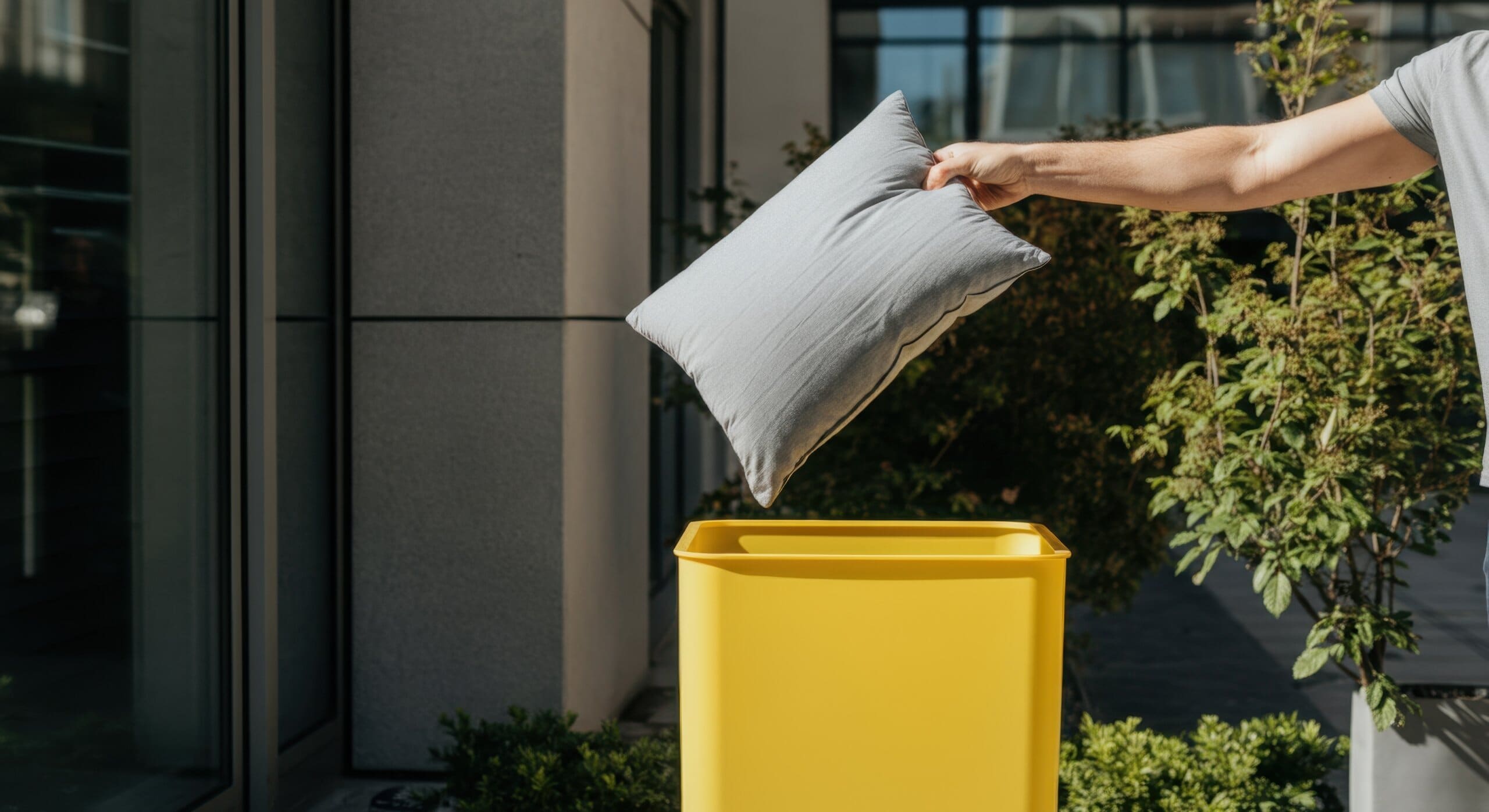
The greenest path in how to dispose of pillows is to reuse them first. A little creativity can keep useful materials in play.
- Pet beds: Stuff clean fill into an old pillowcase and stitch it shut.
- Knee pads: Cut memory foam into squares for garden work.
- Draft stoppers: Roll the fill into a tube and slide it along doors.
- Packing cushions: Use fiberfill to protect fragile items when moving.
- Outdoor seats: Seal foam in a water-resistant cover for patio chairs.
- Play mats: Layer foam pieces under a rug for a soft play area.
Donation is hit or miss. Many shelters do not accept used bed pillows for health reasons. Some animal rescues do accept them. Always call first. When in doubt, reuse at home, then move to recycling or trash.

Can You Recycle Pillows? Yes—Here’s How
If you want to know how to dispose of pillows with a low footprint, recycling is next after reuse. The trick is finding the right channel.
- Textile drop-offs: Many cities host textile bins. They accept worn items for downcycling. Clean covers and fiberfill may qualify.
- Foam recyclers: Some centers take clean foam from pillows and toppers. They shred and rebond it.
- Mattress recycling sites: A few accept loose foam and fabrics. Call to confirm.
- Mail-in programs: Paid mail-in kits can take mixed textiles and foam. Check rules before you ship.
- Retail take-back: Some bedding brands run pilot take-back programs. Ask customer support.
Prep helps. Wash and dry the pillow if possible. Separate parts to boost acceptance.
- Remove the cover and wash it.
- Bag the fill and label the material type.
- Keep zippers and buttons aside if required by your recycler.
- Note any issues like stains or odors.
Recycling rules vary. Always check local guidance. This improves success and makes how to dispose of pillows clear and smooth.

How to Dispose of Pillows Safely in the Trash
Sometimes trash is the only safe route. This is common if the pillow is wet, moldy, infested, or soiled.
- Use sturdy, clear bags so workers can see the contents.
- If you suspect bed bugs, double-bag and label “bed bugs.”
- Seal the bag with strong tape to prevent leaks.
- Follow bulky item rules if the pillow is oversized.
- Set out on the correct pickup day per city rules.
I’ve handled infested pillows for clients. Clear labels and sealed bags cut risk for everyone. If you need proof of safe disposal, check if your city offers a special pickup and receipt.
Knowing how to dispose of pillows in the trash is part of responsible home care. It protects workers and your neighbors.

Step-by-Step Checklist: How to Dispose of Pillows the Right Way
Use this short checklist whenever you face how to dispose of pillows at home. It works for most cities.
- Identify your pillow type. Down, fiberfill, foam, latex, or buckwheat.
- Check condition. Clean, dirty, wet, moldy, or infested.
- Try reuse first. Pet bed, packing, draft stopper, or kneeling pad.
- Look for recycling. Textile bins, foam centers, or mail-in kits.
- Prep items. Wash covers, bag fill, label materials, and separate parts.
- If trash is needed, seal well. Double-bag if infested. Label as needed.
- Confirm local rules. Check city waste pages or call customer service.
- Log what worked. Keep notes for next time.
This simple flow keeps how to dispose of pillows stress-free and fast.
Special Cases: Bed Bugs, Mold, and Contamination
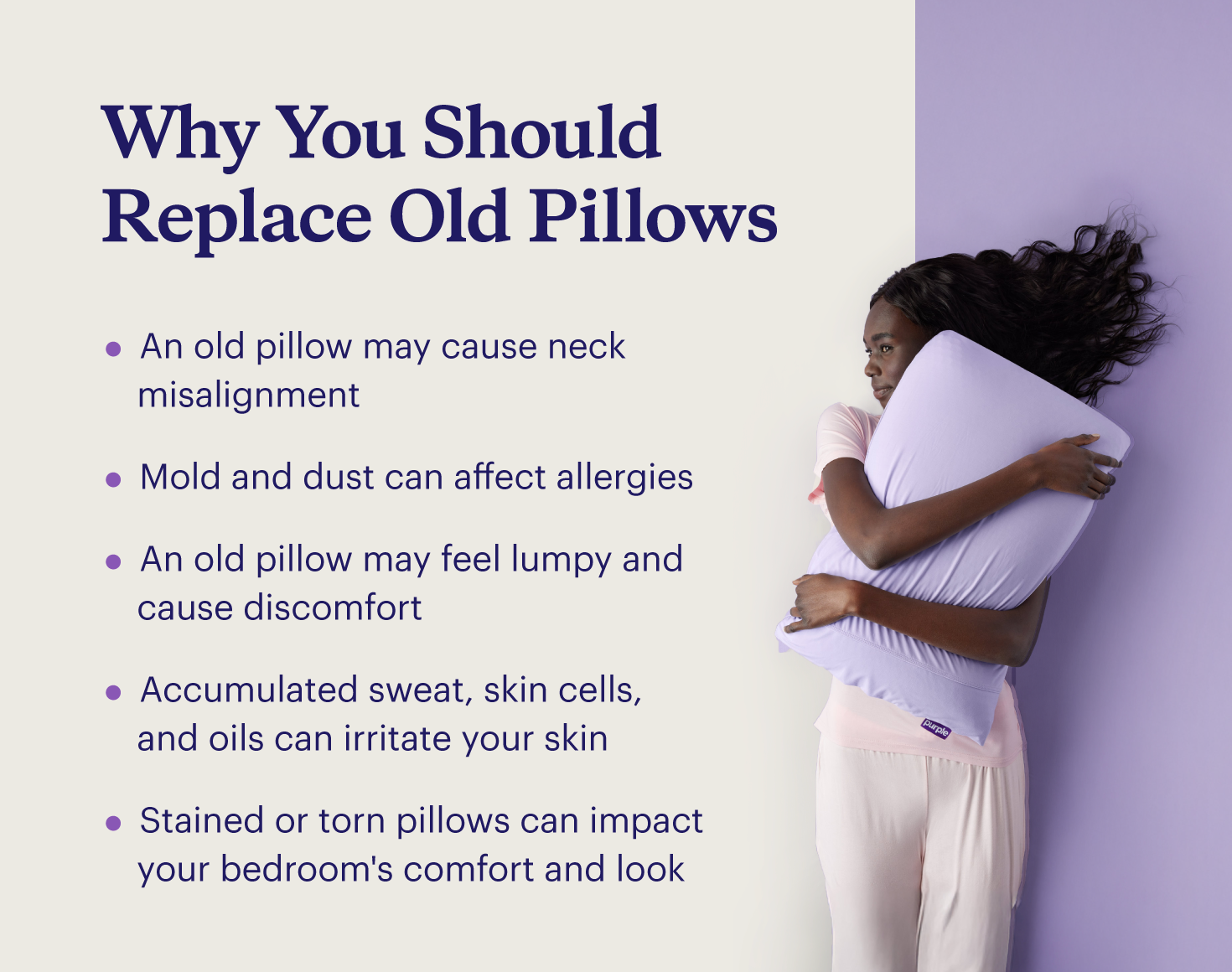
Special cases need extra care. Safety first, then disposal.
Bed Bugs
- Do not try to save a bed bug pillow.
- Double-bag and label. Follow city rules for infested items.
- If in doubt, call a pest pro for advice.
Mold or Mildew
- If the pillow smells musty or shows spots, do not donate or recycle.
- Dry it before bagging to reduce odor spread.
- Seal and trash it.
Body Fluids or Allergens
- Treat as contaminated. Do not recycle.
- Double-bag for the safety of handlers.
- Follow local rules for bio-exposed waste if applicable.
Handling these cases well is key in how to dispose of pillows without risk.
Reduce Future Waste: Buy Better, Care Better
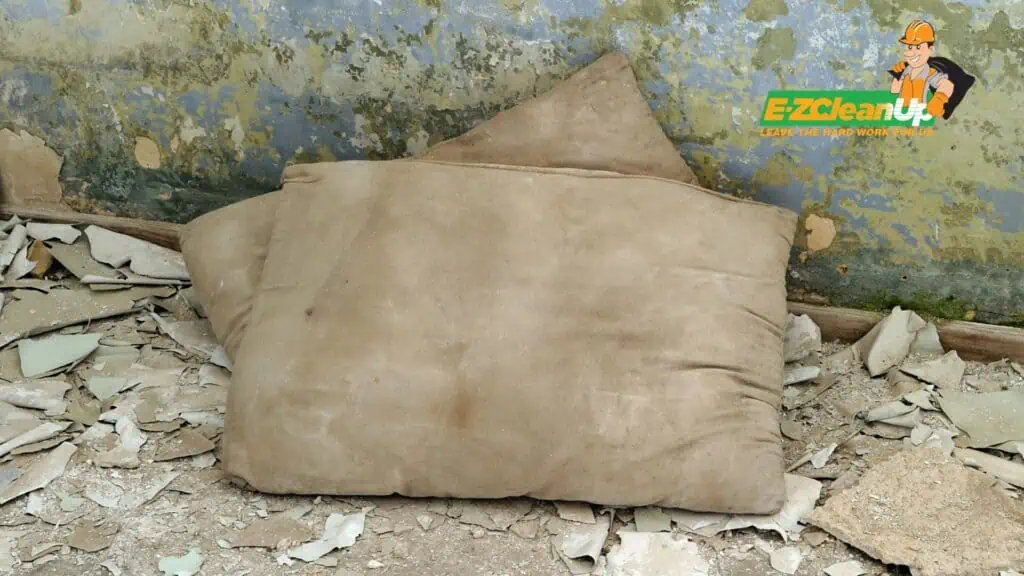
The smartest tip in how to dispose of pillows is to avoid the problem later. Buy well and care well.
- Choose washable covers and protectors. Wash every 1 to 2 months.
- Fluff fiberfill and down pillows in the dryer with clean tennis balls.
- Air pillows in the sun to reduce odor and moisture.
- Follow maker care tags.
- Pick durable fills like latex or high-density foam if you want long life.
- Consider modular pillows with replaceable inserts.
How often should you replace pillows? Every 1 to 3 years is common for fiberfill. Foam and latex can last longer. Use the fold test: Fold the pillow in half. If it stays folded, it may be time to replace it. Plan the next step so how to dispose of pillows is simple when the time comes.
Frequently Asked Questions of how to dispose of pillows
Can I donate used bed pillows?
Many charities do not accept used bed pillows due to health rules. Call local shelters or animal rescues to confirm before you drop off.
Are pillows recyclable in curbside bins?
Most curbside programs do not accept pillows. Use textile drop-offs, foam recyclers, or mail-in programs instead.
What should I do with a pillow that has bed bugs?
Do not donate or recycle it. Double-bag, label it, and follow your city’s rules for infested items.
Can I compost down or feather pillows?
You can compost clean down or feathers in small amounts. The fabric cover may not compost, so recycle it as textile if accepted.
How often should I replace pillows to reduce waste?
Replace every 1 to 3 years based on support and hygiene. Use protectors and good care to extend life and reduce waste.
Conclusion
You now know how to dispose of pillows in a clean, safe, and earth-friendly way. Start by checking the type and condition, try reuse, then move to recycling, and trash only when needed. Small steps keep waste low and protect your community.
Take one action today. Sort one old pillow, choose its best path, and note what worked. Want more tips like this? Subscribe, share this guide, or leave a comment with your own pillow disposal wins.

Table of Contents