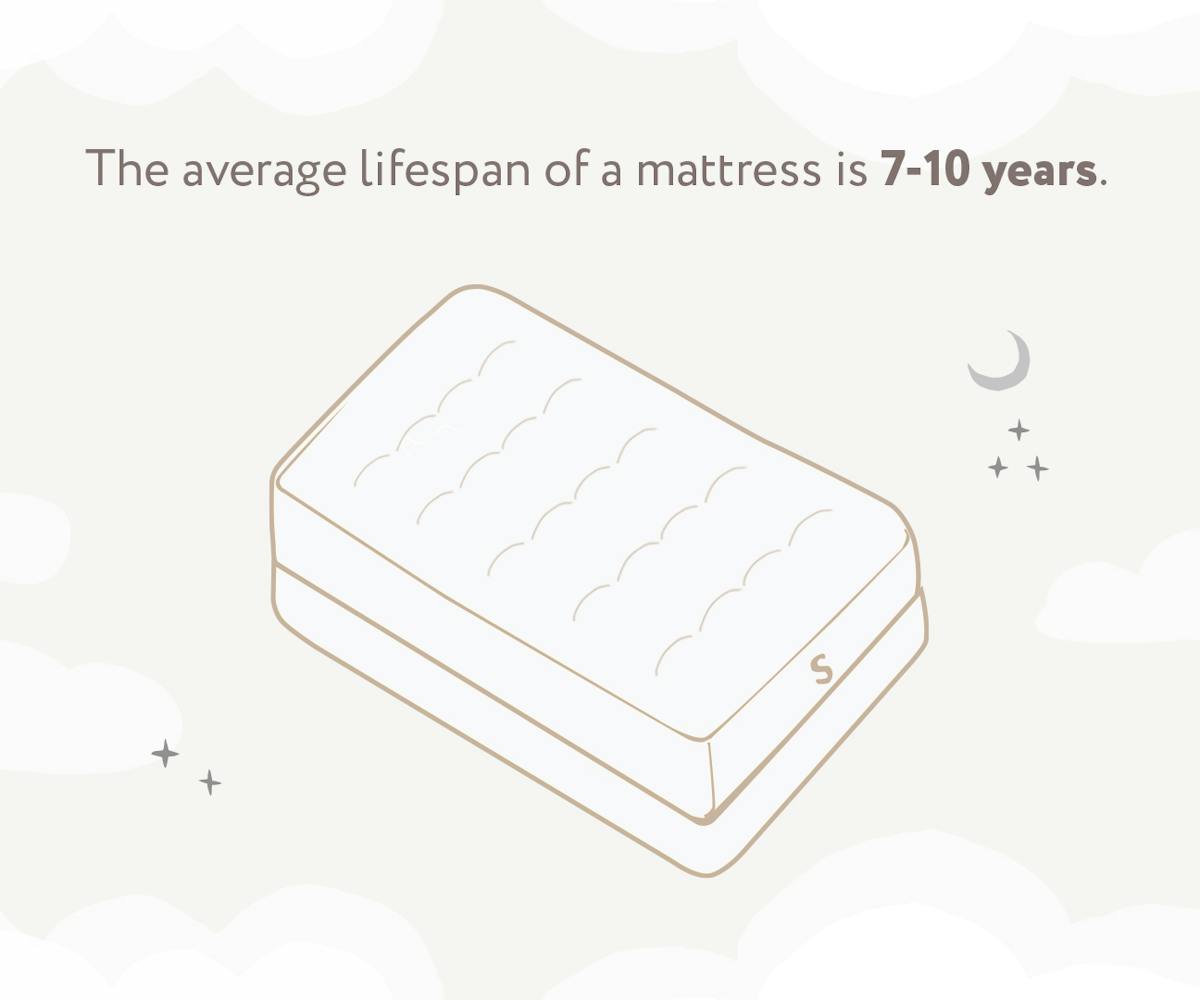
Most mattresses last 7–10 years, depending on materials, care, and use.
If you have ever asked how long does a mattress last and wondered why your bed feels different each year, you are not alone. I have tested and reviewed hundreds of beds for clients and my own home. In this guide, I will explain how long does a mattress last based on type, build quality, and daily use. You will learn how to extend its life, spot early wear, and decide when it is time to replace your mattress.

What affects how long a mattress lasts
Many factors shape how long does a mattress last. Some you can control. Some you cannot. Keep these in mind as you shop and care for your bed.
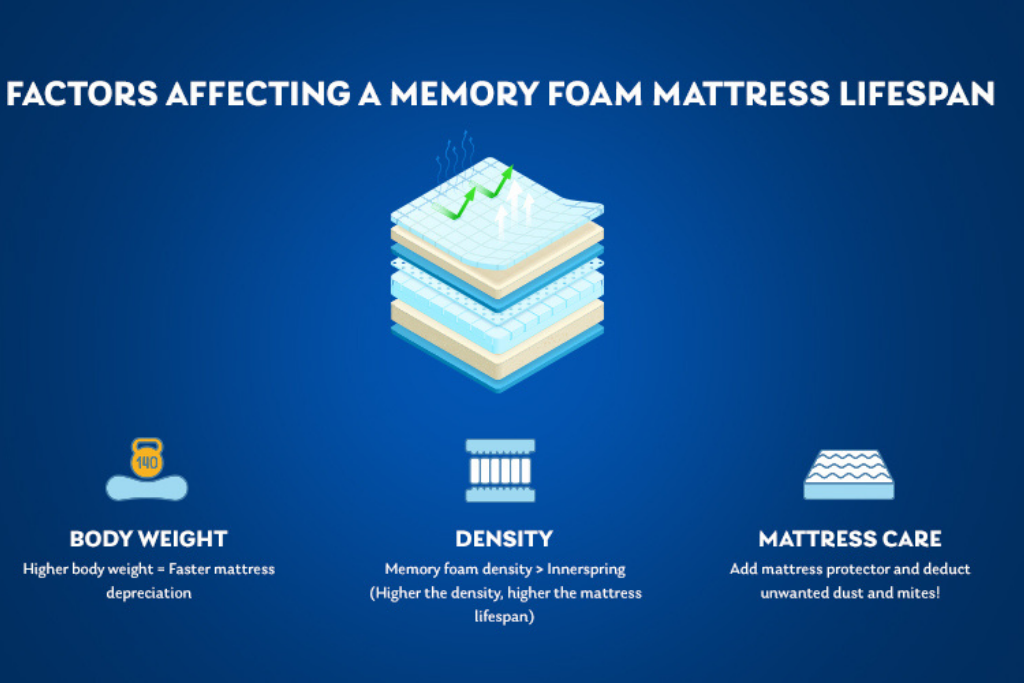
- Materials and density matter: Higher-density foams and thick coil systems resist sagging longer.
- Sleeper profile: Body weight, sleep position, and if you share the bed all affect wear.
- Climate and humidity: Heat and moisture speed foam fatigue and can invite mold.
- Foundation and frame: A solid base prevents flexing and dips that break down layers.
- Care habits: Using a protector, rotating, and keeping it clean add years.
From my work with families, I see the same pattern. A good base and simple care do as much as premium materials. That is why how long does a mattress last is not only about the brand.

Average lifespan by mattress type
Not all beds age at the same rate. Here is what you can expect when asking how long does a mattress last by category.
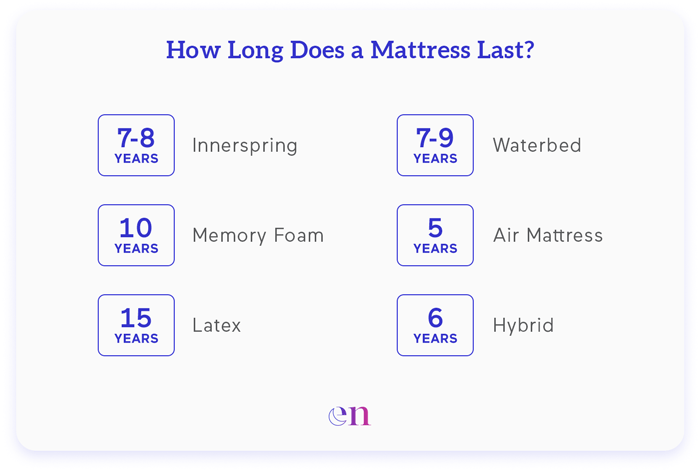
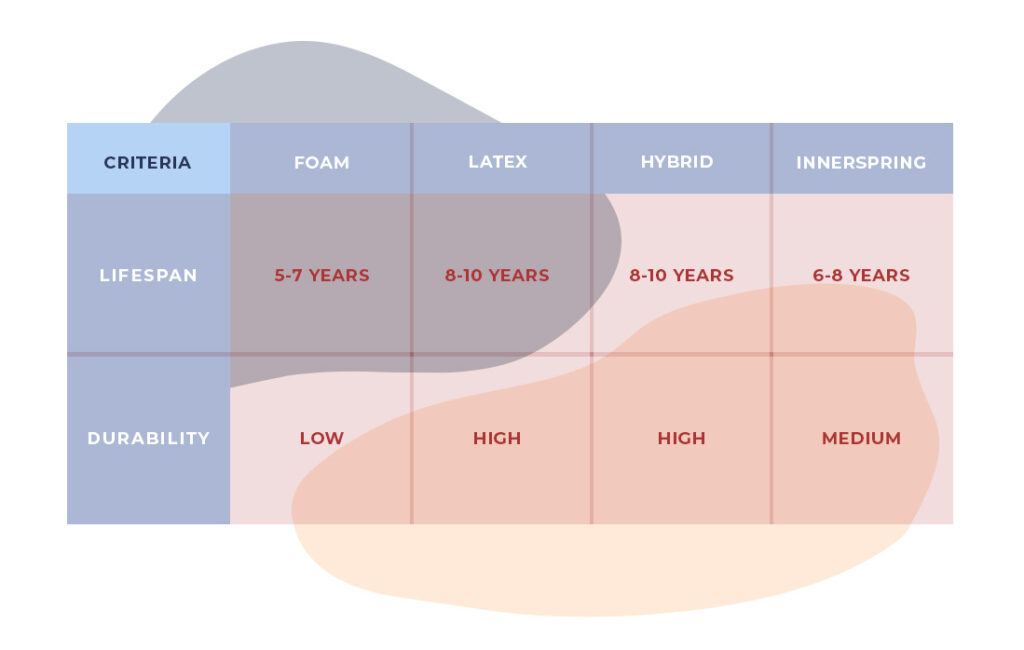
- Innerspring with open coils: 5–7 years. Coils lose bounce sooner under heavy use.
- Pocketed coil innerspring: 6–8 years. Better motion control and longer life than open coils.
- Memory foam: 6–10 years. Density is key. Higher-density foam lasts longer.
- Latex (natural or blended): 10–15+ years. Very durable and stable over time.
- Hybrid (foam plus coils): 7–10 years. The balance of comfort and support ages well.
- Airbeds with adjustable chambers: 8–12 years. Parts may be replaced to extend life.
- Futons and thin foam mattresses: 3–5 years. Limited support and faster compression.
Real-world note: I have seen natural latex beds hold up past 12 years with steady feel. I have also seen budget foam beds soften in under 4 years. Price is not everything, but build quality shows up over time. If you ask how long does a mattress last for your specific model, check foam densities, coil gauge, and total height.
Signs your mattress is wearing out
You do not need a lab to tell when a bed is done. Your body will tell you first. Use this checklist to judge how long does a mattress last for you.
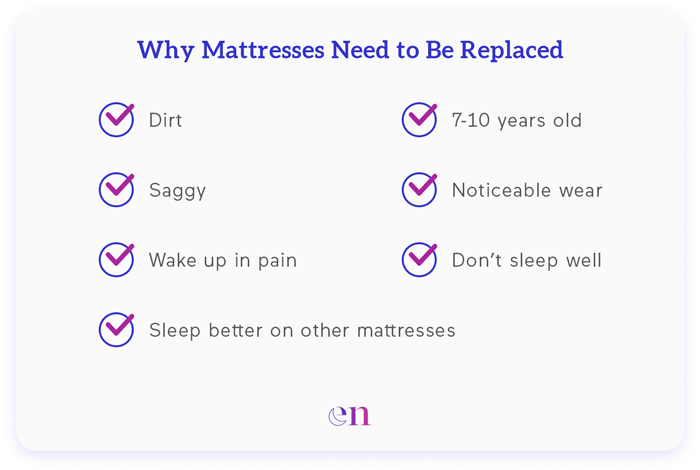
- You wake with new aches: Shoulder, hip, or lower back pain that fades by midday is a red flag.
- Visible sag or dips: Impressions deeper than 1 inch mean support is failing.
- You roll to the middle: A hammock feel shows worn coils or crushed foam.
- More tossing and turning: Poor pressure relief causes you to move more to get comfy.
- Noise or weak edges: Squeaks, creaks, or collapsing edges signal aging parts.
- Allergy flare-ups: Old beds collect allergens. If cleaning no longer helps, it is time.
In client homes, the most common sign is morning back stiffness. If that started in the last year, ask yourself how long does a mattress last in your case, given your sleep position and weight.
How to make your mattress last longer
You can add years with simple habits. These steps work for foam, hybrid, and spring beds.
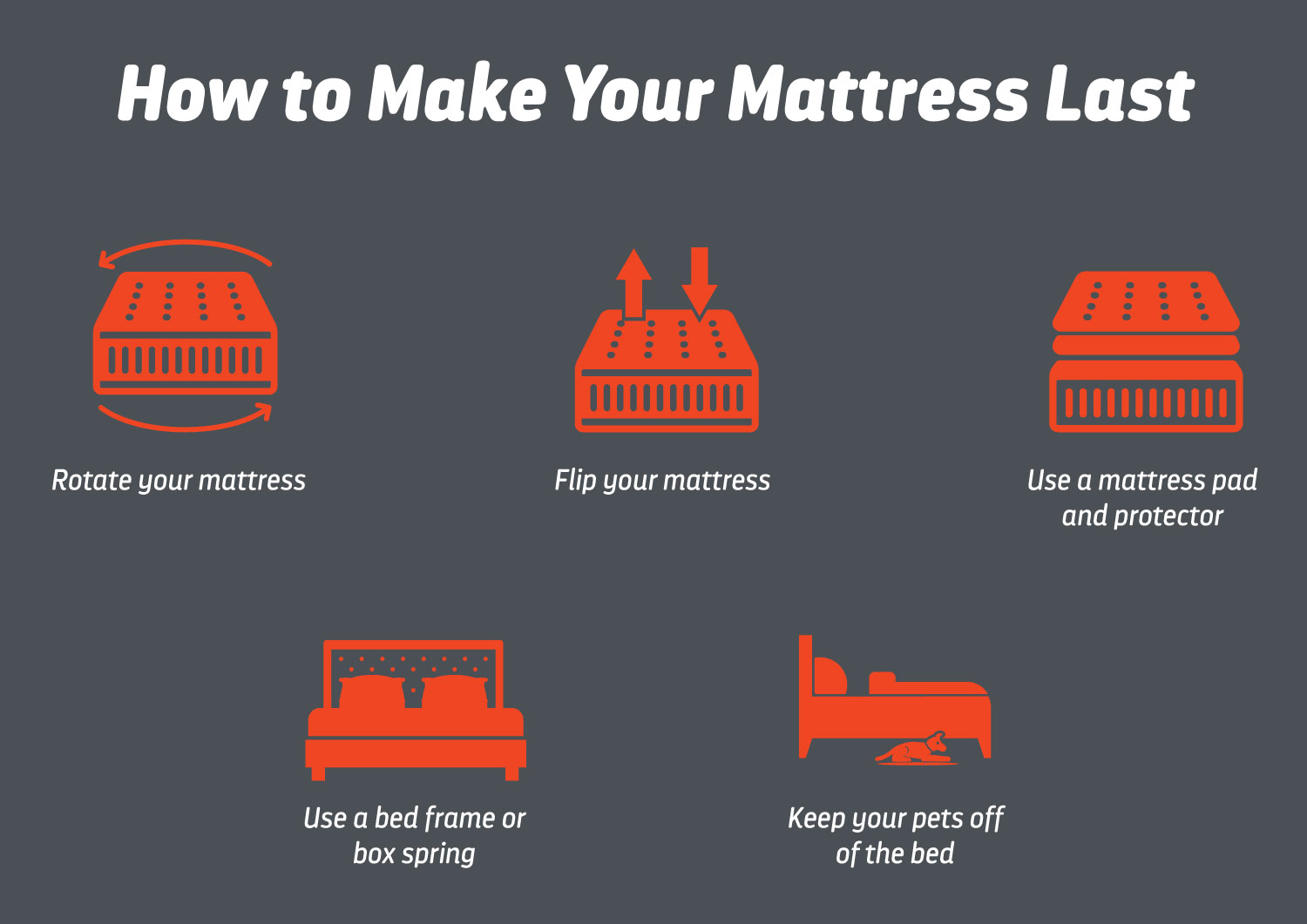
- Use a breathable protector: It blocks spills, sweat, and dust without trapping heat.
- Rotate every 2–3 months: Head-to-foot rotation evens out wear. Do not flip unless it is two-sided.
- Support it well: Use a solid platform or slats with small gaps. Follow maker rules.
- Keep it dry: Vent the room, wash bedding weekly, and air the mattress when you change sheets.
- Clean gently: Vacuum the surface, then spot-clean stains. Avoid harsh chemicals that break down foam.
- No jumping or heavy edge sitting: Local stress speeds up foam collapse and coil fatigue.
- Mind the sun and heat: Direct sunlight and space heaters can age foams faster.
These habits can shift how long does a mattress last from seven years to ten or more. I saw one hybrid gain an extra three years with strict rotation and a good protector.
Warranties, sleep trials, and what they really mean
A long warranty is not a life guarantee. It covers defects, not normal wear. Still, it helps to know the rules.
- Impression depth limits: Many brands cover body impressions only if deeper than 1 to 1.5 inches.
- Proper base required: The wrong frame can void coverage.
- Stains void claims: Always use a protector to keep warranty valid.
- Trial periods: These let you test feel, but do not predict how long does a mattress last.
Industry data shows that most claims relate to impressions and broken coils. Keep photos and measure dips if you think your bed has failed early.
Health, hygiene, and when to replace
Comfort is only part of the story. Your sleep health matters too.
- Dust and allergens build up with time. Deep cleaning helps, but older materials hold on to more.
- A worn bed can worsen pain and reduce deep sleep. That hurts recovery and mood.
- If you sleep better away from home, your mattress may be the cause.
When clients ask how long does a mattress last for their health, I suggest a check at year seven. If pain, dips, or allergy issues show up, plan a change soon.
Cost versus lifespan: value over time
Think in cost per year, not sticker price. This helps you pick smarter.
- A $1,200 hybrid that lasts nine years costs about $133 per year.
- A $500 budget foam that lasts four years costs about $125 per year.
- A $1,800 latex that lasts twelve years costs about $150 per year.
The cheapest bed is not always best. The one that supports you well and lasts is the better deal. Ask the seller about densities, coil count, and third-party durability tests, not just comfort words. This frames how long does a mattress last in real value, not hype.
Eco-friendly disposal and recycling options
When it is time to replace, do it the right way.
- Check local recycling programs: Many areas accept foam, steel, and wood for reuse.
- Ask your retailer: Some offer haul-away and certified recycling.
- Donate if safe: If the bed is clean and has no major sag, some groups accept it.
Responsible disposal closes the loop. It also makes room for a fresh start when how long does a mattress last has reached its end.
Frequently Asked Questions of how long does a mattress last
How long does a mattress last on average?
Most last 7–10 years with normal use and care. Latex can exceed 12 years, while thin foam may last less than 5.
How often should I replace my mattress?
Check at year seven. Replace when you see deep impressions, wake with new pain, or sleep better on other beds.
Does a mattress topper extend lifespan?
A topper can improve comfort and delay replacement a bit. It cannot fix lost support or deep sagging.
Do heavier sleepers wear out mattresses faster?
Yes, higher body weight adds stress to foams and coils. Choose higher-density foams and stronger coils for better life.
How long does a mattress last if I rotate it?
Regular rotation every 2–3 months evens wear. It can add 1–3 years to the useful life.
Does a box spring matter for lifespan?
Support matters a lot. Use the base the maker recommends, or impressions and damage may show up sooner.
Can I clean a mattress to make it last longer?
Yes, use a protector, vacuum often, and spot clean. Keeping it dry and clean helps materials hold their shape.
Conclusion
How long does a mattress last comes down to what it is made of, how you sleep, and how you care for it. Most people will get 7–10 years, while high-quality latex and well-built hybrids can go longer. Watch for dips, waking pain, and poor sleep. These are your cues to act.
Take one step today. Rotate your bed, add a protector, or check your base. If your mattress is past its prime, set a replacement plan and budget. Want more help choosing your next bed or tips to boost sleep quality? Subscribe for updates or leave a question, and I will guide you one-on-one.

Table of Contents