Learning how to install curtain rods correctly makes the difference between a polished, professional finish and wobbly hardware that pulls out of the wall. It sounds straightforward — drill a couple of holes, screw in some brackets, and hang the rod. But most people run into the same avoidable problems: brackets that aren’t level, rods mounted too low, or screws that won’t hold in drywall.
The good news is that with the right tools and a clear plan, the whole job takes less than an hour — even if you’ve never touched a drill before. This guide walks you through everything: the tools you need, which type of curtain rod suits your window, precise measurements for height and width, and the step-by-step curtain rod installation process from start to finish.
Whether you’re dressing up a living room, bedroom, or bathroom window, follow these curtain rod installation tips and you’ll get it right the first time.
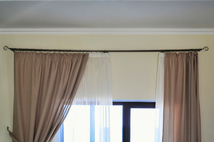
Tools and Materials You’ll Need
Before you pick up a drill, gather everything on the list below. Having your materials ready prevents frustrating mid-project trips to the hardware store.
Tools
- Power drill or cordless screwdriver
- Stud finder
- Tape measure
- Pencil or chalk marker
- Spirit level (bubble or laser)
- Hammer
- Painter’s tape (optional but helpful for marking)
Materials
- Curtain rod of your choice
- Curtain rod brackets (usually included with the rod)
- Screws (included with the bracket hardware)
- Wall anchors for curtain rods (essential if no stud is available)
- Curtain panels or drapes
- Centre support bracket (required for rods wider than 48 inches)
💡 Pro tip: Always buy wall anchors for curtain rods rated to hold at least double the weight of your curtains. Toggle bolts or snap-toggle anchors are the most reliable choice for drywall.
Types of Curtain Rods
Choosing the right rod before you install is just as important as the installation itself. Each type suits a different window, curtain weight, and décor style. [Link: related article on curtain types]
Tension Rods
Tension rods use internal spring pressure to wedge themselves between two walls — no drilling, no tools, no damage to your walls. They’re ideal for rental apartments, inside-mount window treatments, shower stalls, and closets. The downside: they’re only suitable for lightweight sheers and narrow windows up to about 48 inches.
Standard Single Rods
The most widely used option. A single metal or wood rod supported by two or three curtain rod brackets mounted directly into the wall. Compatible with almost any curtain style, weight, and finish. Perfect for most bedroom and living room windows where a clean, simple look is the goal.
Double Rods
Double rods consist of two parallel rods on the same set of brackets, letting you layer sheer panels behind heavier drapes on a single window. They require slightly more careful bracket placement during installation, but they deliver a layered, interior-designer look that single rods can’t match.
Ceiling-Mounted Rods
Ceiling-mounted systems attach to the ceiling rather than the wall — ideal for spaces where wall mounting isn’t practical, or when you want dramatic floor-to-ceiling curtain panels. They require ceiling-rated anchors and a bit of extra planning, but the visual impact is well worth it.
How to Install Curtain Rods Step by Step
Follow these eight steps in order and you’ll end up with a perfectly level, secure installation on the first attempt. This process applies to standard single and double rods — the most common setup in any home.
Measure your window
Use your tape measure to find the exact width of the window frame from one outer edge to the other. Decide how far beyond the frame you want the rod to extend — typically 3 to 6 inches on each side. This extra width lets curtain panels stack off the glass when open, keeping the window clear and letting in maximum light.
Mark your bracket height
Decide how high above the window you want to mount the rod. The standard rule is 4 to 6 inches above the window trim; for a taller, more dramatic look, go 8 to 12 inches above the trim or just below the ceiling. Lightly mark both bracket positions with a pencil. Use painter’s tape to flag these spots without marking your wall.
Find your studs
Run a stud finder slowly across the wall near each marked position. When it beeps, mark the stud location. If a stud aligns with your bracket position, you’ll get the strongest possible hold with a simple wood screw. If no stud is available at your desired spot, you’ll need wall anchors for curtain rods — more on this in the next step.
Mark the screw holes
Hold one bracket against the wall at your marked height and use a pencil to dot through each mounting hole. Before marking the second bracket, place your spirit level against the first bracket’s marks and measure across to ensure both sides are perfectly even. Uneven screw-hole marks are the number-one cause of a tilted rod — take your time here.
Drill pilot holes and insert anchors
Select a drill bit slightly smaller than your screw diameter and drill a short pilot hole at each marked point. If you’re drilling into a stud, stop here — your screws will bite straight into solid wood. If you’re drilling into drywall without a stud, gently tap your wall anchors into the pilot holes with a hammer until they sit completely flush with the wall surface.
Mount the curtain rod brackets
Align each curtain rod bracket with the pilot holes and drive the screws in firmly — but don’t overtighten. Over-driving screws can strip the drywall, crack the bracket, or pull the anchor out of position. The bracket should feel completely solid with absolutely no wobble or give when you push on it.
Thread curtains and hang the rod
Slide your curtain panels onto the rod, or attach clip rings if you’re using that style. For doublerods, hang your sheer panels on the back rod and your heavier drapes on the front. Rest the rod into the mounted brackets and secure any locking clips or set screws if your hardware includes them.
Final adjustments
Step back and check the overall look. Adjust curtain folds, ring spacing, and panel hang until everything looks even and balanced. Confirm that the rod sits level in the brackets and that curtains hang at the correct length — grazing the floor, or with a slight puddle effect if you prefer a more luxurious style. [Link: curtain length style guide]
How High and Wide Should You Hang Curtain Rods?
Curtain rod height is one of the most important decisions you’ll make — and one of the most commonly misunderstood. Many homeowners default to hanging rods directly above the window frame, which makes rooms feel smaller and ceilings feel lower. Here’s what the measurements should actually look like.
Curtain Rod Height Guidelines
- Minimum height: 4 inches above the window trim
- Recommended standard: 4 to 6 inches above the trim for most rooms
- High-impact look: 8 to 12 inches above the trim, or just below the crown moulding
- Maximum drama: ceiling-mounted, positioned right at the ceiling line
- Rule of thumb: the higher the rod, the taller the room will appear
Curtain Rod Width Guidelines
- Minimum extension: 3 inches beyond the window frame on each side
- Standard extension: 3 to 6 inches beyond the frame on each side
- Wide-look extension: up to 10 inches beyond the frame on each side
- Total rod width: at least 8 to 12 inches wider than the window opening
📐 These measurements directly affect which curtain panel size you need to buy. Always finalise your curtain rod height and width before purchasing panels. A rod hung 6 inches outside the frame on each side needs panels wide enough to cover the extra space. [Link: curtain sizing guide]
Common Mistakes to Avoid
Even confident DIYers make these errors. Being aware of them before you start will save you the frustration of redoing holes and rehanging hardware.
- Hanging the rod too low
Mounting the rod directly above the window trim is the most common mistake. It makes your ceiling feel low and your window look small. Always give yourself at least 4 inches — ideally 6 — above the frame. Going all the way to the ceiling is even better in rooms with high ceilings.
- Skipping the level
Eyeballing bracket placement almost always results in a tilted rod that’s obvious the moment you step back. Spend the extra 60 seconds to use a spirit level every single time. A laser level is even easier and eliminates all guesswork across wide windows.
- Not using wall anchors
Driving screws straight into drywall without anchors — because it feels firm at first — is the leading cause of curtain rods falling off the wall. If you can’t hit a wall stud, always use proper wall anchors for curtain rods rated for the weight you’re hanging. Cheap plastic anchors aren’t enough for heavy drapes.
- Choosing a rod that’s too weak for the curtain weight
Thin decorative rods look beautiful but aren’t designed for heavy blackout panels or velvet drapes. Always check the weight rating of both the rod and the curtain rod brackets before purchasing. When in doubt, size up — a stronger rod costs very little extra.
- Forgetting the centre support bracket
For any rod wider than 48 inches, a centre support bracket is essential. Without it, the rod sags in the middle within days — especially under the weight of heavier curtains. Most people skip this step and regret it quickly. Add the centre bracket every time for wide windows.
FAQs About Installing Curtain Rods
How do I hang curtain rods without studs?
If there’s no wall stud at your desired bracket location, wall anchors are your best friend. For lightweight sheers, standard plastic drywall anchors work fine. For heavier curtains or blackout panels, use toggle bolts or snap-toggle anchors — these expand behind the drywall and can hold significantly more weight. Always check the weight rating on the anchor packaging before you buy. This is the safest and most reliable method for how to hang curtain rods without studs in any standard drywall wall.
What is the correct curtain rod height from the floor?
The correct curtain rod height from the floor depends entirely on your curtain panel length. For standard 84-inch panels, mount the rod so the bottom of the curtain just grazes the floor — typically 82 to 84 inches from the floor. For 96-inch panels, mount the rod at approximately 94 to 96 inches from the floor. Always measure your curtain panel length and then work backwards to determine the exact rod height. Never guess — a 1-inch error is clearly visible once the curtains are hanging.
How far apart should curtain rod brackets be spaced?
Curtain rod brackets should be positioned at both ends of the rod, typically 3 to 6 inches inside the rod’s outer ends. For rods over 48 inches wide, add a centre support bracket exactly midway between the two end brackets. Proper spacing of your curtain rod brackets distributes the curtain weight evenly, prevents sagging, and keeps the rod perfectly straight over time.
Can I install curtain rods by myself without any help?
Yes — most standard curtain rod installations are a one-person job. Having a second pair of hands makes it easier to hold the rod level while you mark positions, but it’s completely doable solo. Tape your spirit level to the rod while marking, work methodically through each step, and follow the curtain rod installation tips in this guide. Most homeowners complete the full installation in 30 to 45 minutes on their first attempt.
Conclusion
Now you have everything you need to know about how to install curtain rods confidently and correctly. The process comes down to a few core principles: use the right tools, measure twice before drilling once, always check for level, and never skip wall anchors for curtain rods when there’s no stud available.
Pay close attention to curtain rod height — going higher than the window frame is one of the simplest and most impactful ways to make any room feel taller and more spacious. Extend the rod generously beyond the window frame on each side to let curtains stack off the glass and flood the room with light.
Whether you’re hanging a simple tension rod or a full double-rod system with sheer and blackout layers, these curtain rod installation tips apply every time. Get it right once, and your curtains will look like they were installed by a professional.

Table of Contents