A toilet uses gravity and a siphon to pull waste through a water-sealed bend.
Curious about how a toilet work in plain, clear steps? You are in the right place. I have repaired, installed, and explained toilets for years. I will walk you through how a toilet work, why it works so well, and how you can fix common issues fast. Let’s keep it simple, accurate, and useful.
The basics: what happens when you flush
At its core, a toilet is a smart tube with a seal of water. You push the handle, water rushes from the tank into the bowl, and gravity does the rest. The rapid flow triggers a siphon in the trapway. That siphon pulls waste out and leaves a clean water seal.
People ask how a toilet work because it seems like magic. It is not magic. It is fast fluid dynamics with a clever shape. The trapway keeps sewer gas out while letting waste pass. That is the secret behind every good flush.

The key parts you should know
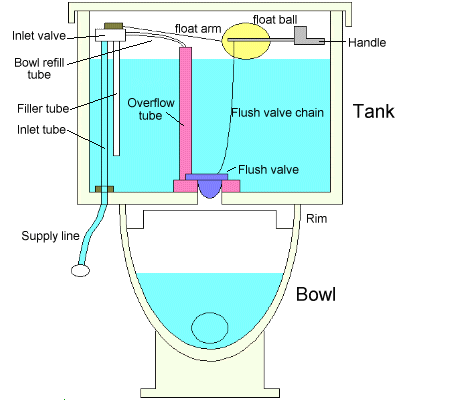
Knowing the parts makes how a toilet work easy to see. Most toilets have the same core pieces.
- Tank stores water for the next flush. It sits above the bowl.
- Handle and lift chain connect to the flapper.
- Flapper is a rubber valve that releases water from the tank.
- Fill valve refills the tank and bowl after a flush.
- Overflow tube prevents overfilling and directs refill water.
- Bowl holds water and sends waste to the trapway.
- Trapway is the S-shaped path that creates the siphon and water seal.
- Wax ring seals the base to the drain pipe.
- Shutoff valve controls water to the toilet.
If you can point to each part, you can explain how a toilet work to anyone.

The flush cycle, step by step
Once you see the cycle, the design makes perfect sense. Here is the simple flow.
- You press the handle. The lift chain raises the flapper.
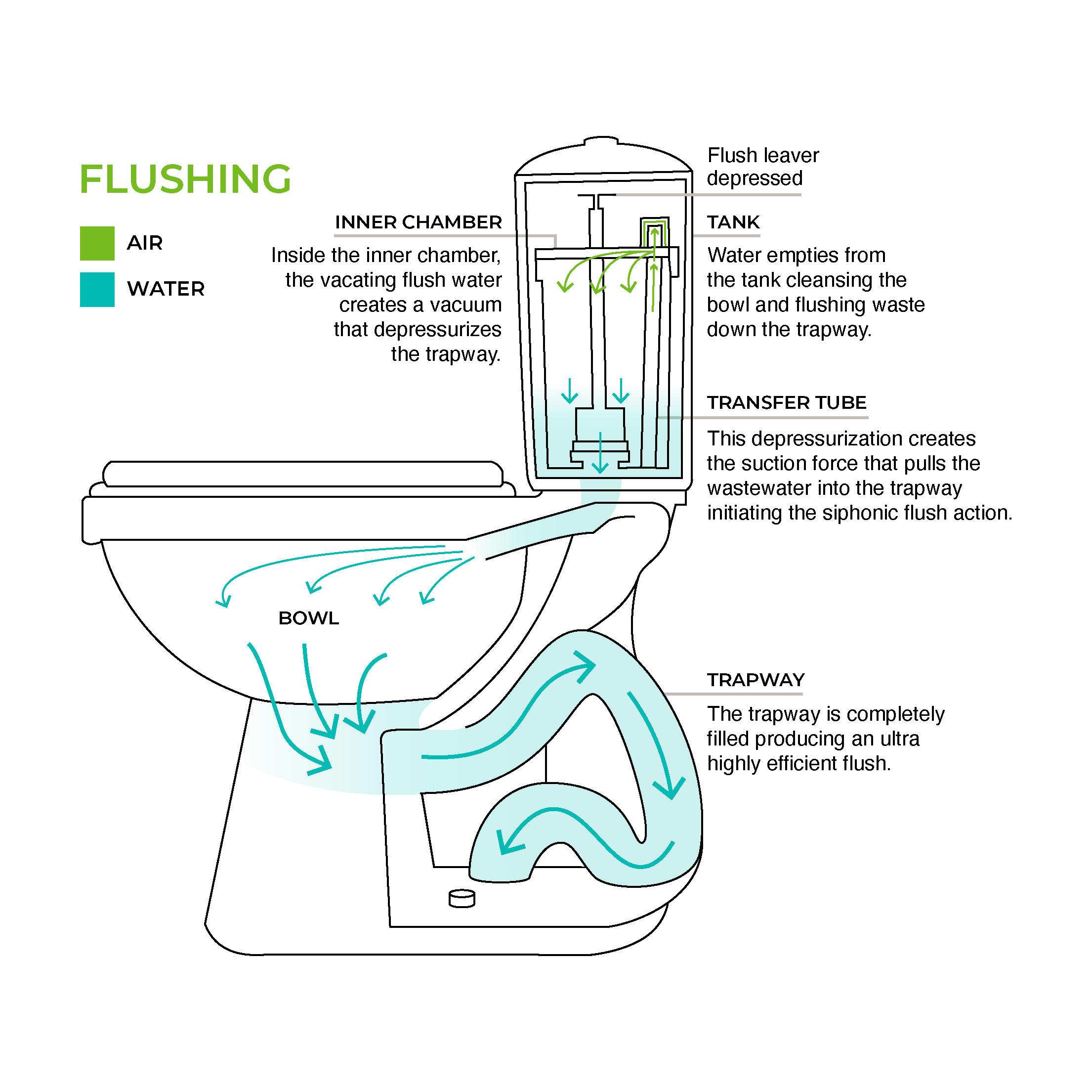
- Tank water dumps into the bowl through rim holes and a siphon jet.
- Flow rate climbs. The siphon in the trapway starts and pulls the bowl empty.
- Air enters the trapway, the siphon breaks, and the flush stops.
- The flapper falls and seals the tank.
- The fill valve runs. It refills the tank and also refills the bowl through the overflow tube.
- The float rises and shuts the valve when the water reaches the set line.
This is the clearest way to see how a toilet work from press to refill.

Types of flushing systems
Not all toilets are the same. The basics stay, but the power source can change.
- Gravity flush uses height and weight of water. It is quiet and common in homes.
- Pressure-assist traps air in a tank within a tank. It blasts water into the bowl and gives a strong flush.
- Dual-flush gives two options. One for liquid with less water, one for solids with more.
- Washdown bowls use a short trapway and a quick dump of water. These are common outside the US.
- Siphonic bowls have a longer trapway and a siphon jet. These are common in the US and flush clean with less splash.
No matter the type, each design shows how a toilet work with gravity or pressure to start the siphon.

Why water level and shape matter
Flush power comes from speed and volume. The tank height, flapper timing, and jet size set the speed. The trapway shape controls how the siphon starts and how long it pulls.
A full tank gives more head, so the flush is stronger. A smooth, wide trapway clogs less. If your toilet feels weak, checking water level and flapper seal is the fastest way to test how a toilet work in your home.

Common problems and simple fixes
Most issues come from wear on soft parts or mineral scale. Here are the fixes I use first on service calls.
- Constant running: Add food color to the tank. If color shows in the bowl, replace the flapper and clean the seat.
- Weak flush: Scrub rim holes and the siphon jet with vinegar. Check that the tank water line is at the mark.
- Phantom flushes: The flapper leaks a little. Replace the flapper and adjust the chain so it is not tight.
- Slow fill: Replace the fill valve. It is a 15-minute job with a wrench and a towel.
- Clog: Use a flange plunger with firm, steady thrusts. If that fails, use a closet auger.
You can learn a lot about how a toilet work by fixing one small part at a time.
Water use, efficiency, and standards
Older toilets used 3.5 to 7 gallons per flush. Modern models use 1.6 gallons or less. WaterSense models use 1.28 gallons or less and still clear the bowl well when installed right.
Efficient toilets rely on bowl design, jet size, and trapway shape. That is why a cheap model can feel weak. When you ask how a toilet work with less water, the answer is better hydraulics, not just smaller volume.

Maintenance tips from real jobs
A little care keeps a toilet strong for years. These are tips I share with clients.
- Clean with a mild bathroom cleaner. Skip harsh acids unless you have heavy scale.
- Soak rim holes and the jet with warm vinegar to clear mineral buildup.
- Replace the flapper every few years. It is cheap and prevents silent leaks.
- Check the shutoff valve twice a year. Make sure it turns and does not drip.
- Tighten tank bolts gently. A quarter turn too far can crack porcelain.
From years in the field, I learned that small habits prove how a toilet work best: clean flow paths, good seals, correct water level.

Safety, hygiene, and eco tips
Toilets are safe when used as designed. Trouble starts when wrong items go in. Only flush waste and toilet paper. Wipes, pads, floss, and grease cause clogs.
Keep a good plunger handy. Teach kids not to hold the handle down. That wastes water. If smell is an issue, the wax ring or the water seal may be low. That is a sign to check how a toilet work in your bathroom and restore the seal.
Frequently Asked Questions of how a toilet work
What starts the siphon in a toilet?
Fast water flow from the tank into the bowl starts the siphon. The flow pushes water over the trapway bend and pulls the rest behind it.
Why does my toilet keep running after a flush?
The flapper is not sealing or the fill valve is stuck. Replace the flapper, clean the valve seat, and set the float to the water line.
How do I get a stronger flush?
Raise the tank water to the marked line, clean rim holes and the jet, and check the flapper timing. If still weak, the bowl design may be the limit.
Can I use chemical drain cleaners in a toilet?
Avoid them. They can damage seals and the bowl. Use a flange plunger or a closet auger instead.
Why does the toilet smell sometimes?
The water seal may be low, or the wax ring may leak. Refill the bowl, check for loose bolts, and replace the wax ring if needed.
Conclusion
You now know the simple science behind a flush: gravity, speed, and a siphon that clears the bowl while keeping odors sealed away. With that, you can spot problems fast, fix small parts, and choose better models with confidence. Try one tip today, like checking the flapper or cleaning the jet, and see an instant change.
Want more guides like this? Subscribe for hands-on home tips, ask a question in the comments, or share your own story of how a toilet work in your home.

Table of Contents