Measure length, width, and bolt spacing to match seat shape and hinges.
If you want a seat that fits right, you need more than a quick guess. I’ve spent years helping homeowners learn how to measure for a toilet seat, and the process is simple, fast, and worth doing right. This guide explains how to measure for a toilet seat step by step, shows common sizes, and shares field-tested tips to avoid wobbles and returns. Stick with me to learn how to measure for a toilet seat like a pro.

Why measuring matters
A seat that fits well feels solid, looks clean, and lasts longer. A bad fit can pinch, rock, or chip the bowl. It can also leave gaps that collect grime. Learning how to measure for a toilet seat saves money and prevents returns.
Small differences matter. One inch in length or a few millimeters in hinge spread can make or break comfort. If you are unsure, measure twice and write everything down. That is the core of how to measure for a toilet seat.
:max_bytes(150000):strip_icc()/how-to-measure-for-a-toilet-seat-7570612-03-a27983a8edf74661a83457d93202161e.jpg)
Tools you need
You do not need fancy tools. You just need careful steps.
- Tape measure with clear inch and millimeter marks. This keeps numbers precise.
- Notepad or your phone’s notes app. Record each number in one place.
- Straightedge or book. Helps find the bowl’s widest point.
- Masking tape and pen. Mark centers of bolt holes to read the tape easier.
- Small ruler or caliper, optional. Good for hinge spacing or tight spots.
Clean the back of the bowl before you start. Dry surfaces make measuring easy. Keep the tape flat so you get true center-to-center readings when learning how to measure for a toilet seat.

Know your bowl shape
Seat shape follows the bowl shape. Most US toilets are round or elongated. Some modern bowls are D-shape or compact elongated. Here is what to look for:
- Round bowls: Shorter front-to-back. US round is often about 16.5 inches long.
- Elongated bowls: Longer oval. US elongated is often about 18.5 inches long.
- Compact elongated: Looks long, but fits in a round-footprint bathroom.
- D-shape: Common on many wall-hung and European-style toilets.
If you are unsure how to measure for a toilet seat on a D-shape, do the same steps. Length, width, and bolt spacing still decide fit.
Step-by-step: how to measure for a toilet seat
These steps work for almost any bowl. This is the exact method I use in clients’ homes when showing them how to measure for a toilet seat.
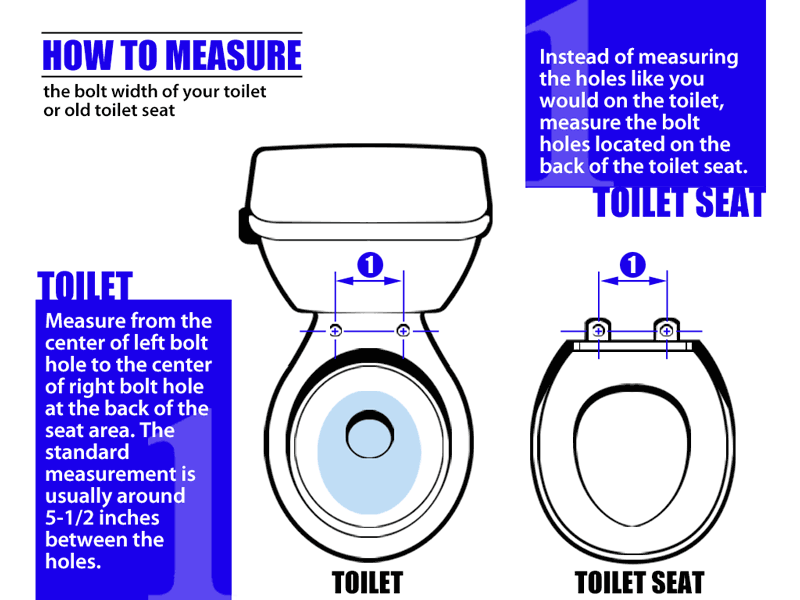
- Find the bolt holes
Pop the small caps behind your current seat. You will see two holes where the seat mounts. Mark each center with a dot of pen on masking tape. - Measure bolt spread
Measure center-to-center between those two holes. In the US, this is often 5.5 inches. Some European bowls vary, such as 135 to 155 millimeters. This number is critical when learning how to measure for a toilet seat. - Measure bowl length
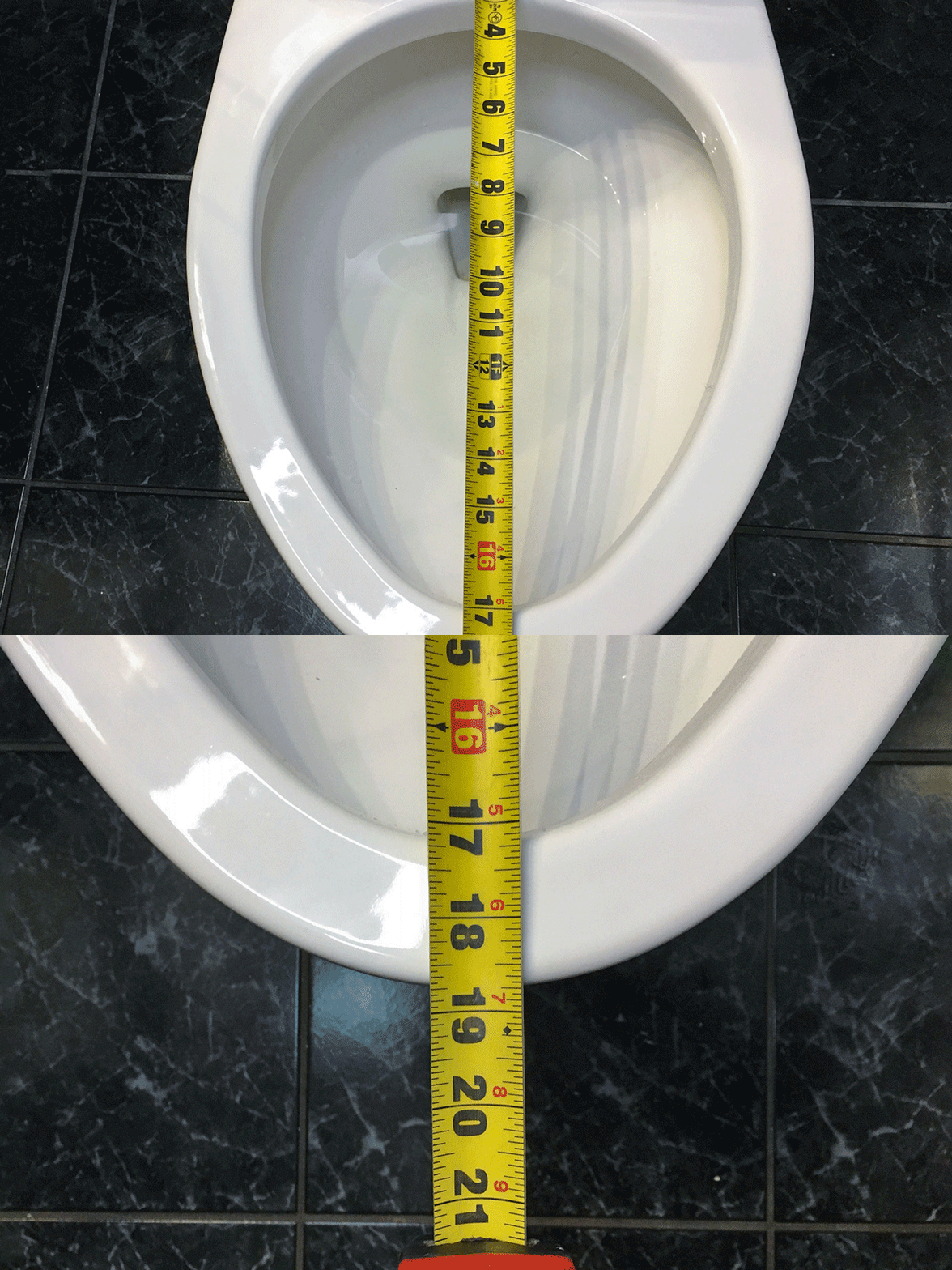
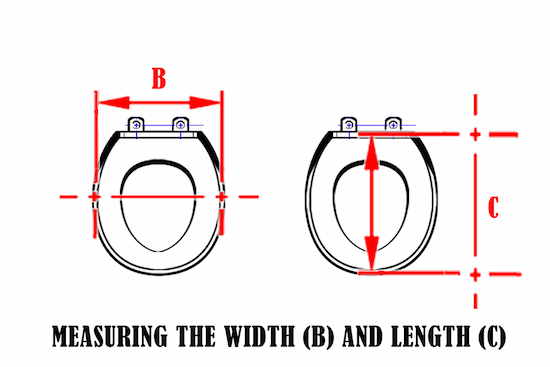
Place the tape at the centerline between the two bolt holes. Run the tape to the front lip of the bowl. Keep the tape level. Note the length in inches and millimeters. - Measure bowl width
Use a straightedge to find the widest point of the bowl rim. Measure across at that point. Write this number down. - Check inside opening size (if needed)
Some seats list opening length and width. Measure inside the rim front-to-back and side-to-side. This helps for comfort and for bidet attachments. - Confirm clearance to the tank
Measure from the bolt-hole line to the tank. Many seats and bidet seats need a minimum distance, often around 1.5 to 2 inches. Tight clearances can block hinges or seat covers. - Identify mounting style
Look under the bowl. If you see through-holes, it is bottom-mount. If you cannot access under the bowl, you likely need top-mount anchors. This matters for which seat fits and is core to how to measure for a toilet seat on skirted toilets. - Note special features
Check for contours, ledges, or raised areas on the rim. Look at where the current seat bumpers touch the bowl. This reduces wobble and prevents chips.
When you are done, you should have three key numbers: bolt spread, length, and width. These decide size and shape. They are the heart of how to measure for a toilet seat.

Typical sizes by region and brand
Numbers vary, but these ranges help you sanity-check your measurements.
- United States
- Bolt spread: 5.5 inches is most common.
- Round length: about 16 to 17 inches.
- Elongated length: about 18 to 19 inches.
- Europe and many wall-hung systems
- Bolt spread: often 135 to 155 millimeters.
- Length: about 430 to 470 millimeters.
- D-shape sizes vary by model.
Brands can differ even within the same shape. Always measure your bowl. If your numbers do not match a catalog size, recheck steps. This cross-check is a smart move when learning how to measure for a toilet seat.
Hinges, hardware, and mounting details
Hinges affect fit as much as size. Seats can have fixed, sliding, or adjustable hinges. Many modern seats use quick-release buttons for cleaning. Here is what to watch:
- Hinge adjustability: Sliding hinges can fine-tune bolt spread by a few millimeters. Good for odd bowls.
- Mount type: Top-mount kits are best for skirted toilets where you cannot reach under.
- Soft-close: Heavier lids can need firm hinges to avoid rattle.
- Quick-release: Great for cleaning, but confirm clearance so the button is easy to press.
If you plan upgrades later, note what you own now. Matching hardware saves time. This is part of how to measure for a toilet seat with future-proofing in mind.
Special cases: bidet seats, kids’ seats, RVs, and rentals
Bidet seats are longer and heavier. They also need tank clearance and a standard bolt spread. Many US bidet seats expect 5.5 inches center-to-center and a minimum distance from the bolt line to the tank. Always check the brand’s required clearance before buying.
For kids’ combo seats, check the inner opening size and where bumpers land. Some reduce the opening too much on elongated bowls. For RVs and marine heads, measure the base footprint as well. For rentals, choose universal seats with adjustable hinges. These tips build on how to measure for a toilet seat when space or hardware is tricky.

Mistakes to avoid and pro tips from the field
I see the same errors again and again. Use these tips to dodge them.
- Measuring to the back of the bowl, not bolt centers: Always measure center-to-center. It is the only consistent reference.
- Ignoring the tank: Tight tanks block hinges and bidet seats. Measure that gap.
- Skipping the width: Width sets comfort and bumper contact points. It also guides lid shape.
- Forgetting mounting style: A bottom-mount seat will not work on a skirted bowl without top-mount anchors.
- Not writing numbers down: Tiny errors add up. Note everything in inches and millimeters.
Pro tips I use on installs:
- Place a small level on the tape for long lengths. It keeps the measure true.
- Snap a photo with the tape in place. You can confirm numbers later.
- Bring your notes to the store. Match your numbers to the box specs.
- If you are between sizes, test with a cardboard template. It is a fast check.
Following these steps is the easiest way to master how to measure for a toilet seat. You will buy once and install with no surprises.

A simple measurement worksheet you can copy
Use this checklist when you measure. It keeps the process clear and fast.
- Bolt spread: ____ in (____ mm) center-to-center
- Length (bolt centerline to front rim): ____ in (____ mm)
- Width (widest point): ____ in (____ mm)
- Inside opening length: ____ in (____ mm)
- Inside opening width: ____ in (____ mm)
- Clearance from bolt line to tank: ____ in (____ mm)
- Mount type: Top-mount or bottom-mount
- Bowl shape: Round, elongated, D-shape, or compact
- Notes (bumper contact points, contours, special needs): __________
Keep this card in your phone. Bring it when shopping online or in store. This is the cleanest way I know for how to measure for a toilet seat without stress.
Frequently Asked Questions of how to measure for a toilet seat
What is the most important measurement?
Bolt spread is critical because hinges must align. Length is next, since it sets the shape match.
How do I know if my bowl is round or elongated?
Measure from the bolt centerline to the front rim. Around 16.5 inches is round, and around 18.5 inches is elongated.
Do all US toilets have a 5.5-inch bolt spread?
Most do, but not all. Always measure center-to-center to be sure before buying.
Will a bidet seat fit my toilet?
Check bolt spread, bowl length, and the clearance to the tank. Many bidet seats list a minimum gap behind the bolts.
Can I use a round seat on an elongated bowl?
It will attach, but it will look short and feel odd. Always match the seat shape to the bowl for comfort.
How tight should I install the seat bolts?
Snug, not overtight. Over-tightening can crack porcelain or strip anchors.
What if my toilet is skirted?
You likely need top-mount hardware. Confirm your seat includes it or buy a compatible kit.
Conclusion
You now know the exact steps to measure bolt spread, length, and width, plus the small checks that ensure a stable, clean fit. With your numbers in hand, you can choose a seat that looks right, feels solid, and installs fast.
Grab your tape, follow the worksheet, and take five minutes to measure today. Then pick a seat with confidence and enjoy the upgrade. Want more practical DIY guides? Subscribe, share your measurements, or ask a question in the comments.

Table of Contents