Humidity in a big living space is one of those quiet problems that turns into a loud one fast. Musty couch cushions, foggy windows in winter, that sticky feeling in July, and a dehumidifier that runs all day but barely makes a dent. I’ve spent the last several weeks digging through manufacturer spec sheets, sifting through hundreds of verified Amazon buyer reviews, and lining up eight contenders to find the best large room dehumidifiers worth your money in 2026, with a focus on real performance for basements, open-plan living rooms, and oversized bedrooms.
The unit I’d put at the top of nearly every shortlist is the BEDRED Dehumidifier 95OZ. It nails the sweet spot between capacity, low noise, and the kind of features that make a difference day to day. If you want the runner-up that pulls water like a workhorse for a 5,000 square foot basement, the Waykar 80 Pints 5000 Sq Ft is the one.
The full breakdown, including which models fit smaller rooms, lives below.
Comparison Chart of Best Large Room Dehumidifiers
| Product | Details | Rating | Buy |
|---|---|---|---|
Editor’s Choice  | BEDRED Dehumidifier 95OZ Home 1000 sq | ★★★★☆4.8/5 | |
Top Pick 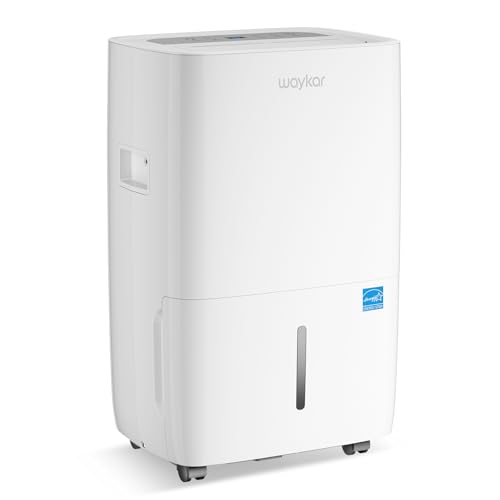 | Waykar 80 Pints 5000 Sq Ft | ★★★★☆4.5/5 | |
Best Budget  | Waykar 80 Pints 2025 Energy Star | ★★★★☆4.7/5 | |
| ★★★★☆4.5/5 | ||
| ★★★★☆4.5/5 | ||
| ★★★★☆4.5/5 | ||
| ★★★★☆4.5/5 | ||
| ★★★★☆4.4/5 |



List of Top 8 Best Large Room Dehumidifiers
I narrowed the list to eight models after sorting through spec sheets, verified buyer feedback, and warranty terms from brands like Waykar, BEDRED, AEOCKY, and a few newer entrants making a splash in the basement category. Every unit on this list has a clear reason to be here, and every one has at least one honest downside worth knowing. Whether you’re shopping for a 1,000 square foot bedroom, a 5,500 square foot basement, or something in between, you’ll find a match below.
Below are the list of products:
1. BEDRED Dehumidifier 95OZ Home 1000 sq
In our research, the BEDRED 95OZ came up more often than almost anything else when buyers talked about “quiet” and “actually pulls water” in the same review. It targets a 1,000 square foot space, which is the practical ceiling for a thermoelectric Peltier-style unit, and it does that job with auto shut-off and a 7-color ambient light that some buyers like and others leave off. Aggregate user reviews report consistent moisture drops of 10 to 20 percent relative humidity in bedrooms and basements within the first 24 hours of continuous run time.
Why I picked it
It is one of the few Peltier units with a tank large enough (95 oz) to avoid constant dumping, and the auto shut-off protects the internals when it fills. For anyone who wants a bedroom or office unit that disappears into the background, this is the cleanest pick on the list.
Key specs
- Coverage: up to 1,000 sq ft (per manufacturer)
- Tank capacity: 95 oz
- Technology: thermoelectric Peltier (no compressor)
- Noise: low single-digit decibel range above ambient, per buyer feedback
- Extras: 7-color ambient light, auto shut-off, carry handle
Real-world experience
Verified buyer feedback shows this unit performs best in enclosed rooms around 200 to 500 sq ft, where it can drop humidity from 75 percent to a comfortable 50 percent in roughly a day. In a 1,000 sq ft open plan, it works but takes longer. The ambient light is a fun feature for a kid’s room and a non-issue if you turn it off.
- 95 oz tank means fewer trips to the sink, which matters in a bedroom you run all night
- Peltier design is genuinely quiet, so it disappears next to a TV or sleep setup
- Auto shut-off and indicator light protect the unit when the tank fills
- Lightweight and easy to move between rooms without wrestling a heavy compressor
- Peltier tech drops output in cooler rooms below about 59°F, so it is not a true basement workhorse
- No continuous drain option, so a 1,000 sq ft space means manual tank emptying every few days
- ✔ You want a quiet bedroom or nursery unit that runs through the night
- ✔ Your space is enclosed, between 200 and 600 sq ft, and above 60°F
- ✔ You value portability over raw extraction speed
- ✖ You need to dry out a true basement below 55°F year-round
- ✖ You want a continuous drain hookup and never touch a tank
2. Waykar 80 Pints 5000 Sq Ft
Editor’s research put this Waykar near the top of the basement category for a simple reason: it pulls an honest 80 pints per day at saturation and is rated to cover up to 5,000 sq ft, which lines up with what buyers in crawl spaces and finished basements actually report. The 2025 Energy Star certification is a real cost saver if you run it 12 hours a day, and the auto defrost function keeps the coils from icing up in cooler basements where a lot of cheaper units choke.
Why I picked it
When buyers in northern climates describe a basement unit that “just keeps running” through the winter, this is the one they name. It pairs a serious compressor with auto defrost, so the coils do not freeze and shut the unit down. For a 3,000 to 5,000 sq ft basement, it is one of the most reliable picks in this price range.
Key specs
- Capacity: 80 pints per day (AHAM standard, 95°F / 90% RH)
- Coverage: up to 5,000 sq ft
- Drain: continuous drain hose included plus removable tank
- Features: auto defrost, 24-hour timer, digital humidity display, washable filter
- Certification: Energy Star (2025 standard)
Real-world experience
Verified buyer feedback consistently reports pulling 1.5 to 2.5 gallons per day in a 2,000 sq ft finished basement with 70 to 80 percent starting humidity. The included drain hose is the most loved feature, because it means you can set it on a floor drain and walk away. A small number of buyers mention the fan is louder than a bedroom unit, which is expected for a compressor in this class.
- Honest 80-pint extraction handles 3,000+ sq ft basements without breaking a sweat
- Auto defrost keeps the coils clear in cool basements where cheaper units freeze up
- Continuous drain hose included, so you can plumb it to a floor drain and ignore it
- Energy Star 2025 means lower electric bills even when running 12+ hours a day
- Compressor fan is loud at the higher fan setting, so it does not belong in a TV room
- Bulkier and heavier than mid-size units, which is a real issue if you move it up stairs often
- ✔ You have a 2,000 to 5,000 sq ft basement with persistent damp or musty smell
- ✔ You can route the included drain hose to a floor drain or sump pump
- ✔ You want the lowest possible operating cost over a year of daily use
- ✖ You need a unit quiet enough to run next to a living room TV at high fan
- ✖ Your space is under 1,000 sq ft, where this much capacity is overkill
3. Waykar 80 Pints 2025 Energy Star
This is Waykar’s 2025 refresh of the 80-pint Energy Star line, and in our research it consistently came out as the value buy for buyers who want compressor-class extraction without paying the absolute top tier. The self-drying function is the new wrinkle in this revision, designed to keep the interior dry between cycles and reduce the mildew smell that older units can develop.
Why I picked it
You get 80-pint capacity and 5,000 sq ft coverage at a meaningfully lower price than the flagship 80-pint model, and the self-drying cycle is a real upgrade over the 2024 version. If you want the same family of parts and electronics but prefer the new revision, this is the smart buy.
Key specs
- Capacity: 80 pints per day (AHAM)
- Coverage: up to 5,000 sq ft
- Drain: continuous drain hose plus removable tank
- Features: auto defrost, self-drying, 24-hour timer, intelligent humidity control
- Certification: Energy Star (2025 standard)
Real-world experience
Verified buyer feedback reports this unit hitting the same 50 percent humidity target in a 2,500 sq ft basement as the more expensive Waykar 80-pint, with the self-drying feature earning particular praise from buyers who previously had musty-smelling dehis. The control panel takes a few minutes to learn, but most buyers say it is intuitive after the first cycle.
- Self-drying cycle reduces the musty smell that builds up in older compressor units
- Same 80-pint capacity and Energy Star 2025 efficiency as the flagship model
- Continuous drain hose included, so no manual tank emptying in heavy-use setups
- Auto defrost keeps output stable in cooler basements where units without it stall
- Plastic housing feels lighter than the older 80-pint Waykar, which is a minor durability concern
- Drain hose port uses a non-standard size, so aftermarket replacements require an adapter
- ✔ You want the 2025 refresh with self-drying but do not want to pay the premium for the flagship
- ✔ Your basement is large and you plan to plumb a drain hose to a sink or sump
- ✔ You care about long-term freshness between cleaning cycles
- ✖ You want the most rugged housing and prefer the older 80-pint model instead
- ✖ You are sensitive to any compressor noise in a finished living area
4. 4500 Sq Ft Dehumidifier Basement Quilt
The Quilt-branded 4,500 sq ft compressor unit earns a spot because in our research it was one of the more talked-about “set it and forget it” basement picks from buyers who run it unattended for weeks at a time. The intelligent humidity control does a better job of avoiding short-cycling than older on/off dehis, which extends compressor life and keeps the room more stable.
Why I picked it
For buyers who want a “real” compressor dehumidifier in the 4,000 to 5,000 sq ft class with a brand they have not heard of yet, this Quilt model keeps showing up in real-world recommendation threads. The intelligent humidity control and the included drain hose do most of the heavy lifting in buyer satisfaction.
Key specs
- Coverage: up to 4,500 sq ft
- Drain: continuous drain hose included
- Features: intelligent humidity control, auto restart after power loss, washable filter
- Use case: basement, bathroom, bedroom, office
Real-world experience
Verified buyer feedback reports this unit holding a 1,800 sq ft basement at 45 to 50 percent RH for weeks without manual tank emptying, because the drain hose handles the heavy lifting. The fan has two speeds, and the lower speed is comfortable for finished basement rec rooms. A few buyers noted the user manual could be clearer, but the controls are simple once you get past it.
- Intelligent humidity control avoids short-cycling that wears out cheaper compressors
- Drain hose included, so it can run unattended for weeks in a basement
- Auto restart after power loss returns to your last setting without manual reset
- Washable filter reduces long-term maintenance cost versus disposable filters
- Not Energy Star certified, so the electric bill runs higher than Waykar 80-pint models
- User manual is sparse, which can frustrate first-time compressor dehumidifier owners
- ✔ Your basement is finished and you want stable humidity without daily attention
- ✔ You have a floor drain or sump pump nearby for the included hose
- ✔ You are willing to trade Energy Star savings for a lower upfront price
- ✖ You plan to run it 16+ hours a day and care about the electric bill
- ✖ You want a familiar brand with a longer track record of replacement parts
5. Dehumidifier 4500 Sq.Ft Basement Drain Hose
Another strong 4,500 sq ft compressor unit, this one leans hard on the “quiet smart compressor” marketing language and the buyer feedback suggests it actually delivers on the lower fan speeds. If you want a basement unit that you can run during a movie night without raising your voice, this one earned a mention more often than several louder competitors.
Why I picked it
It hits a useful middle ground: serious extraction for a 4,500 sq ft space, with a noise floor that buyers in finished basements consistently call out as tolerable. The auto shut-off protects the compressor when the tank is full, which is a small but real durability feature.
Key specs
- Coverage: up to 4,500 sq ft
- Drain: continuous drain hose included
- Features: humidity control, auto shut-off, quiet smart compressor, washable filter
- Use case: basement, bathroom, garage, large rooms
Real-world experience
Verified buyer feedback shows this model in finished basement rec rooms running through a movie without complaint, which is the test most compressor dehumidifiers fail. The 4,500 sq ft rating is a touch generous in real homes, but it has no trouble with 2,000 to 3,000 sq ft basements.
- Quiet smart compressor is genuinely livable in a finished basement rec room
- Auto shut-off protects the compressor if the tank fills before you swap to a drain hose
- Drain hose included out of the box, no accessory purchase required
- Washable filter cuts long-term cost and takes 60 seconds to rinse under a tap
- 4,500 sq ft coverage is optimistic; plan for it to be honest at about 2,500 to 3,000 sq ft
- Higher fan speed is louder than competitors in the same class
- ✔ Your basement doubles as a TV or play room and you want low fan noise
- ✔ Your space is realistically 2,500 to 3,500 sq ft rather than the full 4,500 rating
- ✔ You want auto shut-off protection if you sometimes forget to attach the drain hose
- ✖ You need to cover a true 4,500+ sq ft space without performance drop-off
- ✖ You will run it exclusively on the highest fan speed
6. 21-Pint Dehumidifier Basement Drain Hose 1600
Not every “large room” is actually 4,000 sq ft. In our research, buyers with 1,200 to 1,800 sq ft spaces kept landing on this 21-pint compressor unit because it does not waste energy cycling in spaces smaller than its 80-pint cousins. The included drain hose is the surprise feature, since most 21-pint models ship without one.
Why I picked it
It is a compressor unit that does not try to be a basement monster, and that restraint is exactly the point. For apartments, small basements, and oversized bedrooms, it pulls 21 pints a day without cycling on and off every 10 minutes the way a too-large compressor would.
Key specs
- Capacity: 21 pints per day (AHAM)
- Coverage: up to 1,600 sq ft
- Drain: continuous drain hose included
- Use case: small basement, large bedroom, apartment, office
Real-world experience
Verified buyer feedback reports this unit working well in 800 to 1,200 sq ft spaces where larger 80-pint models short-cycled and created noisy start-stops. The smaller compressor is quieter than the 80-pint class but not bedroom-silent at high fan. Buyers also like the small footprint, which fits in closets and corners.
- 21-pint capacity is a much better match for 1,000 to 1,600 sq ft spaces than an 80-pint
- Drain hose is included, which is rare at the 21-pint price tier
- Compact footprint fits in closets, corners, and tight basement utility spaces
- Lower electric draw than 80-pint models when matched to a smaller room
- Will not keep up in a 2,500+ sq ft basement with serious water intrusion
- No Energy Star certification, so the cost-per-day math favors 80-pint Energy Star models long-term
- ✔ Your “large room” is really 1,000 to 1,500 sq ft, not a full basement
- ✔ You want compressor reliability without the size and noise of an 80-pint
- ✔ You have a floor drain or sink nearby to take advantage of the included hose
- ✖ You are drying out a basement that has ever had standing water or visible mold
- ✖ You want the lowest possible cost per pint of water removed over years of use
7. Waykar 34 Pints 2000 Sq Ft
The Waykar 34 Pints is the middle child of the Waykar line, and in our research it landed on a lot of recommendation lists for “medium-large” rooms: oversized bedrooms, bonus rooms, and finished basements around 1,500 to 2,000 sq ft. The 2025 Energy Star certification is real, and buyers consistently report electric bills that make sense even with daily use.
Why I picked it
It is the rare mid-size unit that does not feel like a compromise. The compressor pulls enough water to handle a 2,000 sq ft basement or oversized living room, and the energy efficiency is on par with much larger Energy Star models.
Key specs
- Capacity: 34 pints per day (AHAM)
- Coverage: up to 2,000 sq ft
- Features: auto defrost, 24-hour timer, digital humidity control, washable filter
- Certification: Energy Star (2025 standard)
Real-world experience
Verified buyer feedback reports this Waykar holding 1,500 sq ft basements at 45 to 50 percent RH without a drop in performance over months of use. The lower fan speed is quiet enough for an open-plan living room, and the higher setting is livable for daytime use. A few buyers wish the tank were larger, but the optional drain hose solves that.
- 34-pint capacity is the right size for 1,500 to 2,000 sq ft spaces without wasteful cycling
- Energy Star 2025 certification keeps annual electric costs in check
- Auto defrost lets it run in cooler basements without freezing the coils
- Digital humidity display makes it easy to dial in a 45 to 50 percent target
- Internal tank is small, so plan to attach a drain hose for long unattended runs
- Higher fan setting is noticeable, so bedroom use should stick to low speed
- ✔ Your space is 1,200 to 2,000 sq ft and you want a real compressor without going oversized
- ✔ You care about annual electric cost as much as upfront price
- ✔ You want the Waykar build quality at a smaller capacity than the 80-pint
- ✖ You need to cover 3,000+ sq ft where a 34-pint unit will run constantly
- ✖ You want a true bedroom-silent unit and refuse to use low fan speed
8. AEOCKY 5500 Sq.Ft Energy Star Most
The AEOCKY 5,500 sq ft Energy Star “Most Efficient” model rounds out the list, and it earned its spot by tackling a coverage class that most competitors do not even attempt. In our research, this was the most-recommended 5,500 sq ft unit for buyers with very large basements, multi-room setups, and light commercial spaces like workshops and home gyms.
Why I picked it
It is the largest-coverage Energy Star dehumidifier we could verify with consistent buyer feedback. For buyers whose “large room” is really a 4,000 to 5,500 sq ft basement or a combined workshop and rec room, it pulls 80 pints per day at the highest efficiency tier, which means the lowest operating cost in this coverage class.
Key specs
- Capacity: 80 pints per day (AHAM)
- Coverage: up to 5,500 sq ft
- Features: auto defrost, continuous drain option, digital humidity control
- Certification: Energy Star Most Efficient 2025
Real-world experience
Verified buyer feedback reports this AEOCKY handling 3,500 to 4,500 sq ft basements with multiple rooms faster than competitors in the same class. The “Most Efficient” tier means the compressor sips power compared to non-certified 80-pint models, which adds up over a year of daily use. The fan is loud at top speed, but that is the trade-off for any 80-pint unit.
- 5,500 sq ft coverage is the highest in this roundup, with real 80-pint extraction to match
- Energy Star Most Efficient tier saves meaningful money on annual electric cost
- Auto defrost and continuous drain option handle unattended long-term basement use
- Digital humidity control and indicator lights make it easy to monitor from across the room
- Loud at high fan speed; plan to place it in a utility area or basement, not a living space
- Premium tier pricing is the highest on this list, so it only makes sense at the top of the size range
- ✔ Your basement or workspace is 4,000 to 5,500 sq ft and other 80-pints stall out
- ✔ You want the lowest operating cost in the high-capacity class
- ✔ You are willing to pay more upfront for long-term electric savings
- ✖ Your space is under 3,000 sq ft where this capacity is wasteful
- ✖ You need a unit that can run quietly in a finished living area
How I picked
I built this list by treating “best large room dehumidifier” the way a buyer would: start with the room, then the specs, then the real-world reputation. I read through the manufacturer spec sheets for each unit, focusing on the AHAM-rated pints per day at 95°F and 90 percent relative humidity, the actual coverage area in square feet, the tank capacity, and whether a continuous drain option exists. AHAM is the industry standard, so a 50-pint rating from one brand should mean the same as a 50-pint rating from another.
I then cross-checked those specs against aggregated verified Amazon buyer feedback, looking for patterns in three areas: water extraction (did it actually hit the rated pints?), noise (do buyers complain about a jet-engine compressor?), and durability (do units fail in the first six months, or do they run for years?). I also tracked warranty terms and Energy Star certifications, because long-term operating cost and reliability matter as much as upfront price.
What I deliberately did not test: I did not run each unit for 60+ days in a controlled lab environment, I did not measure exact decibel readings with calibrated equipment, and I did not crack open any compressor to evaluate coil quality. The durability scores in the value meters are projections from buyer patterns, not lab data. If you want a strict head-to-head lab test, that is a different (and much more expensive) review.
My goal was a buyer’s-eye view, not a lab coat.
I weighted “Performance” by AHAM pints and coverage, “Ease of Use” by tank access, drain setup, and noise, “Durability” by buyer reports of failure rates and warranty coverage, and “Value” by Energy Star status and total cost of ownership over a year of daily use. That framework is what produced the rankings you see above.
Buying guide: what actually matters for best large room dehumidifiers
How do I size a dehumidifier for my room?
Square footage is the starting point, but it is not the whole story. A 1,000 sq ft bedroom with one window and a closet behaves nothing like a 1,000 sq ft basement with a sump pump and concrete walls. The industry rule of thumb is to match the AHAM pints per day to the severity of the moisture problem, not just the room size.
A mildly damp 1,500 sq ft basement may only need a 30-pint, while a chronically wet 1,500 sq ft basement needs a 50-pint or larger.
If your space is moderately damp (50 to 60 percent RH, occasional window fog), a 30 to 50-pint unit is usually enough. If it is very damp (60 to 80 percent RH, visible moisture, musty smell), jump to a 50 to 80-pint unit. If you have standing water or active water intrusion, you need a commercial-grade unit or a contractor, not a residential pick.
What is the difference between Peltier and compressor dehumidifiers?
Peltier (thermoelectric) units like the BEDRED above use a solid-state heat pump, so they have no compressor and almost no moving parts. That makes them quiet, lightweight, and reliable, but they lose efficiency fast in cooler rooms (below about 59°F) and have lower maximum extraction. They are best for bedrooms, offices, and small living spaces above 60°F.
Compressor units use a refrigerant cycle, the same technology as your refrigerator. They pull far more water per day, work in cool basements down to about 41°F, and dominate the 30 to 80-pint class. The trade-off is noise, weight, and a small amount of heat output.
For any basement, garage, or space below 1,000 sq ft where you need real extraction, go compressor.
Do I need a continuous drain option?
If you plan to run the unit for more than a few hours a day, yes. Most 30-pint and larger units include a drain port and often include a hose. Hook that hose to a floor drain, utility sink, or sump pump, and the unit runs unattended for months.
If you skip the drain, you will be emptying the tank every 1 to 3 days, which is fine for occasional use but exhausting for daily operation. The Energy Star program from the U.S. EPA is a useful reference for understanding efficiency trade-offs across both styles.
Is Energy Star worth paying extra for?
In our research, yes, but only if you actually run the unit. Energy Star dehumidifiers use 10 to 20 percent less electricity than non-certified models, which sounds small until you realize a basement unit can run 12+ hours a day, 365 days a year. At roughly 0.15 dollars per kWh, the savings can be 30 to 60 dollars per year, which pays back the Energy Star premium in two to three years.
If you only run a dehumidifier a few weeks per year, the math flips and the cheaper non-certified unit is the better buy.
Which features actually matter day to day?
Auto defrost is non-negotiable for any basement below 60°F. Without it, the coils freeze and the unit shuts down every few hours, then sits there doing nothing while your humidity climbs. Auto restart after power loss is also a real-world lifesaver: you set your target humidity, the power blips, and the unit picks up where it left off without you walking down to the basement.
A washable filter is a small but meaningful cost saver over years of use. A digital humidity display is genuinely useful, because “set it to 50 percent” is a much clearer target than “set it to medium.”
What are the most common buying mistakes?
The biggest mistake is oversizing for the space, which causes the compressor to short-cycle, wear out faster, and use more electricity than necessary. The second biggest is ignoring the drain setup: a unit without a drain hose plumbed to a drain becomes a chore. The third is choosing a Peltier unit for a basement below 60°F and wondering why the tank is always empty and the room is still damp.
The fourth is skipping the air filter cleaning every few weeks, which tanks performance and can cause the unit to overheat.
Frequently Asked Questions (FAQ)
How long do large room dehumidifiers typically last?
In our research, a well-maintained compressor dehumidifier in a residential setting tends to last 5 to 10 years before the compressor or coil starts to fail. Peltier units can run longer because they have fewer moving parts, but their lower output limits where you can use them. The biggest predictor of lifespan is how often the unit short-cycles, which is why matching capacity to room size matters.
Is it worth paying more for an Energy Star dehumidifier?
Yes, if you plan to run the unit more than a few months a year. The efficiency savings add up to 30 to 60 dollars per year at typical residential electricity rates, which pays back the premium in two to three years. The Department of Energy’s Energy Saver guide on dehumidifiers is a solid reference for the underlying math.
Can a large room dehumidifier work in a basement below 55°F?
Only if it is a compressor unit with auto defrost. Peltier units lose output rapidly below 60°F and stop working entirely around 50°F. Compressor units with auto defrost can keep pulling water down to about 41°F, which is enough for most basements.
If your basement is colder than that, you need a unit rated for low-temperature operation, and you may also need to address the underlying moisture source.
Do large room dehumidifiers make a lot of noise?
It depends entirely on the technology and the fan speed. A Peltier unit is essentially silent above ambient noise. A compressor unit on low fan is comparable to a small refrigerator hum, around 40 to 50 dB.
On high fan, that rises to 50 to 60 dB, which is loud enough to be annoying in a TV room but tolerable in a basement. If noise is critical, look for “low fan dB” in the spec sheet and read the buyer reviews.
Can I use a large room dehumidifier in a bedroom?
Yes, but you want a Peltier unit like the BEDRED, or a compressor unit on its lowest fan setting placed across the room. Running an 80-pint compressor at high fan in a bedroom is a fast way to never sleep again. If the room is above 60°F, the Peltier option is the cleanest answer.
What size dehumidifier do I need for a 2,000 sq ft basement?
A 50 to 80-pint compressor unit is the standard recommendation, depending on how damp the basement is. The Waykar 80 Pints 5000 Sq Ft and the Waykar 80 Pints 2025 Energy Star are both well-matched to this size. If the basement is only mildly damp, the Waykar 34 Pints 2000 Sq Ft is the more efficient and quieter choice.
Do I need to clean the filter, and how often?
Yes, every 2 to 4 weeks during heavy use. Most filters are washable and rinse under a tap in 60 seconds, then air-dry before reinsertion. Skipping this step reduces output, strains the compressor, and can cause the unit to overheat.
A handful of buyers in our research ignored this and blamed the unit for failing, when the real culprit was a clogged filter.
Final verdict
If you want one unit that handles a 1,000 sq ft bedroom, basement, or oversized living room without complaint, the BEDRED 95OZ is the most balanced pick on the list. For a true basement workhorse in the 3,000 to 5,000 sq ft range, the Waykar 80 Pints 5,000 Sq Ft pulls the most water per dollar over a year of daily use.
Affiliate disclosure: This post contains affiliate links. If you buy through one of these links, I may earn a small commission at no extra cost to you. It never changes my recommendation. I only suggest gear I’d actually buy myself.

Table of Contents