I’ve cooked more pot roasts, beans, and braises in a Dutch oven than I care to count, and I still reach for it before I reach for my slow cooker. Here’s the thing most people don’t realise: a Dutch oven is a slow cooker. It just needs you to supply the low, steady heat that an electric crock supplies on its own.
Once you understand that swap, your slow cooker recipes open up. Every stew, every pulled pork, every pot of chilli, all of it works in a Dutch oven, usually with better flavour, because you can brown everything in the same pot first.
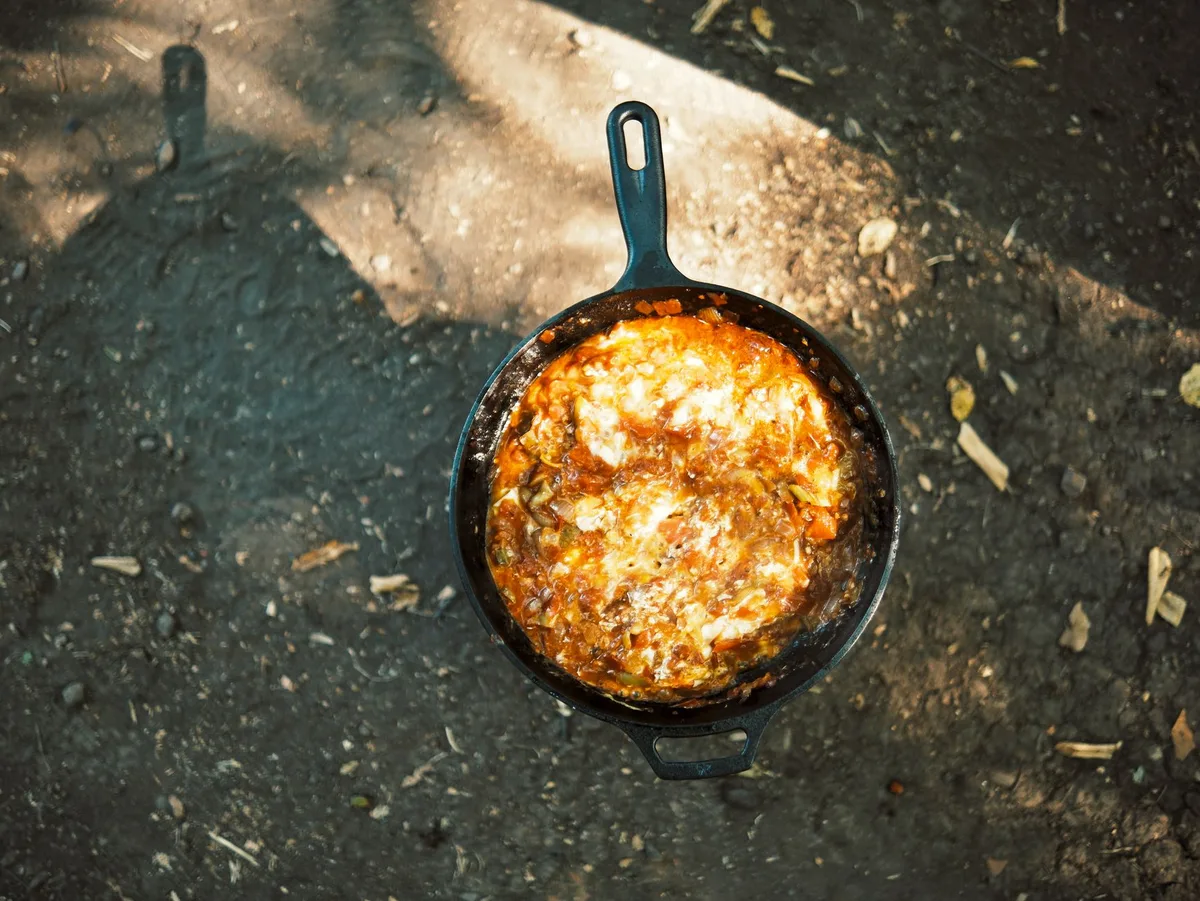
Image source: Pexels / Abdullah Öğük (Pexels License)
Let me walk you through exactly how I do it, temperatures, timing, liquid ratios, and the mistakes that cost me a few dry roasts along the way.
The Short Answer: Yes, and Here’s the Formula
Set your oven to 250°F, 275°F (120°C, 135°C), put your food in the Dutch oven with the lid on, and cook for roughly the same time your slow cooker recipe calls for on LOW. That’s the core conversion.
If you want the fast version, here’s my working rule:
- Slow cooker LOW (8 hours) → Dutch oven at 250°F for 6, 8 hours
- Slow cooker HIGH (4 hours) → Dutch oven at 300°F for 3, 4 hours
- Liquid: reduce it by about a quarter, since an oven evaporates more than a sealed crock
- Lid: on, tight, the whole time, that’s non-negotiable
Everything below is the detail behind those four lines.
Why a Dutch Oven Works So Well for Slow Cooking
Cast iron holds heat like nothing else in your kitchen. Enamelled or bare, that thick wall absorbs oven heat and releases it slowly and evenly, which is precisely what a slow cooker’s ceramic insert does. No hot spots.
No scorched bottom.
The heavy lid matters just as much. As the food heats, steam rises, hits the cool underside of the lid, condenses, and drips back down. That’s a self-basting loop.
Tough cuts sit in their own humid environment for hours, collagen breaks down into gelatin, and you end up with meat that pulls apart under a fork.
Three practical advantages over an electric slow cooker:
You can sear in the same pot. Brown your beef, sweat your onions, deglaze with wine, then slide the whole thing into the oven. That fond on the bottom of the pot is flavour you simply cannot get by dumping raw meat into a crock.
You control the top. Want a thicker sauce at the end? Pull the lid off for the last 30, 40 minutes. Want a crust on your short ribs?
Crank the heat briefly. A slow cooker traps moisture with no escape.
It goes straight to the table. Cast iron stays hot for ages. Second helpings are still steaming.
Dutch Oven vs Slow Cooker: What’s the Difference?
They achieve the same result through different means. A slow cooker uses a low-wattage heating element wrapped around a ceramic pot, holding roughly 190°F, 200°F on LOW and 250°F, 300°F on HIGH at the food itself. A Dutch oven relies on your oven’s ambient heat penetrating the iron.
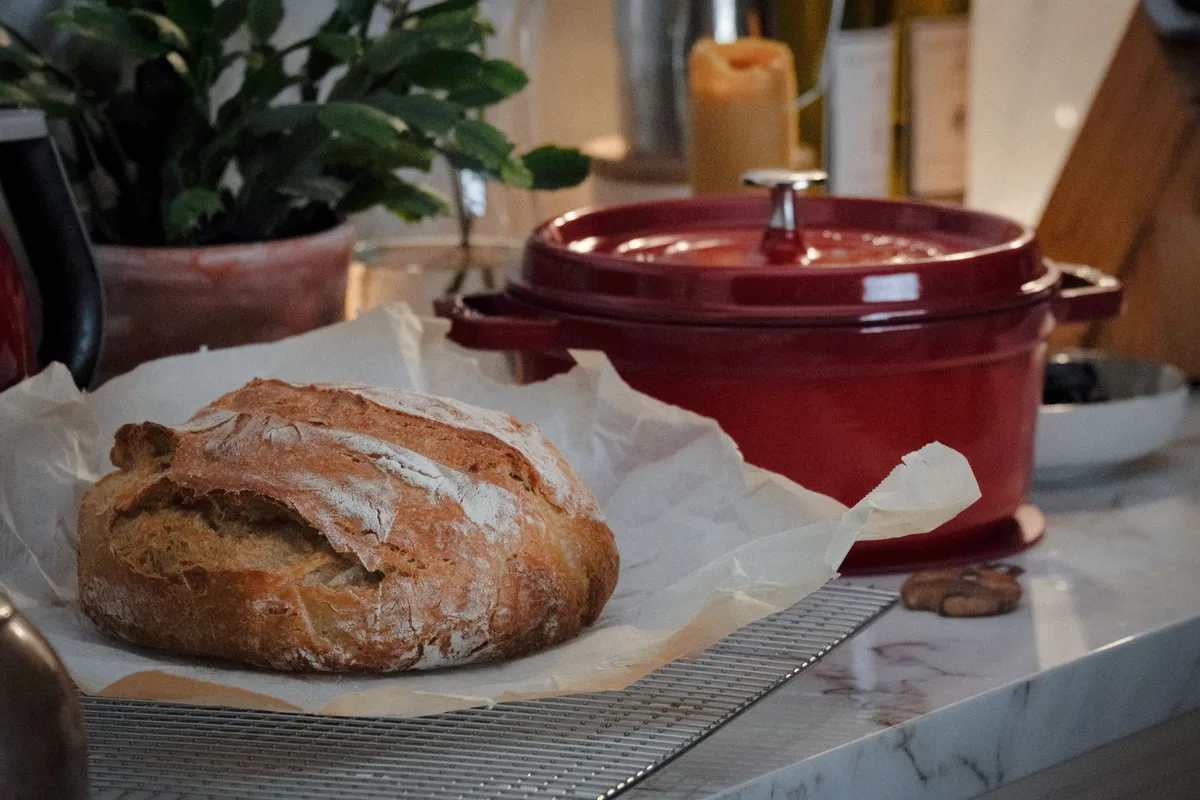
Image source: Pexels / Merve (Pexels License)
| Factor | Dutch Oven | Slow Cooker |
|---|---|---|
| Heat source | Oven (or stovetop/coals) | Built-in electric element |
| Searing | Yes, same pot | No (unless it has a sauté function) |
| Unattended safety | Needs a home with an eye on it | Designed for all-day, walk-away use |
| Evaporation | Moderate — sauces reduce | Minimal — sealed lid |
| Energy use | Higher (heats the whole oven) | Lower |
| Sauce control | Excellent | Limited |
| Max temperature | 400°F+ for finishing | Capped around 300°F |
The honest trade-off: a slow cooker is safer to leave running while you’re at work, and it sips electricity. A Dutch oven gives you better flavour and far more control, but it ties up your oven and you should be home. I use the Dutch oven on weekends and the crock on weekdays.
One thing to check before you commit, your lid knob. Many enamelled Dutch ovens ship with a phenolic (plastic-resin) knob rated to around 375°F, while stainless knobs handle 500°F. At 250°F you’re fine either way, but it’s worth knowing if you plan to finish hot.
Manufacturers publish these limits; Le Creuset lists oven-safe ratings by lid and knob type on its care pages.
Temperature and Timing: Converting Slow Cooker Settings
This is where most people go wrong. They assume “low and slow” means 350°F for a shorter time. It doesn’t.
You want the food itself hovering just below a simmer, around 200°F, for hours.
Image source: Wikimedia Commons / NeoBatfreak (CC BY-SA)
The Conversion Chart I Use
| Slow Cooker Setting | Oven Temp | Cooking Time |
|---|---|---|
| LOW, 6 hours | 250°F / 120°C | 4½–5½ hours |
| LOW, 8 hours | 250°F / 120°C | 6–7 hours |
| LOW, 10 hours | 225°F / 110°C | 8–9 hours |
| HIGH, 3 hours | 300°F / 150°C | 2½–3 hours |
| HIGH, 4 hours | 300°F / 150°C | 3–3½ hours |
Notice the Dutch oven usually finishes a touch sooner than the slow cooker’s stated time. Cast iron transfers heat more aggressively than ceramic, and your food starts hot if you seared first. Start checking at the earlier end.
Which Temperature for Which Dish
225°F, 250°F, pulled pork, beef chuck, lamb shoulder, brisket, dried beans, bone broth. Anything collagen-heavy that rewards a long stay.
275°F, 300°F, chicken thighs, stews with root vegetables, chilli, lentils, curries. Done in 2, 4 hours.
325°F and up, you’ve left slow cooking behind. This is standard braising. Fine for a Sunday roast, but tough cuts get stringy if you rush them.
Judge by Feel, Not the Clock
Time is a guideline. Texture is the truth. Braised meat is ready when a fork slides in and twists with no resistance, that’s usually an internal temperature around 200°F, 205°F for chuck or pork shoulder, well past “safe” and into “tender.”
Food safety still matters on the way there. The USDA puts 40°F, 140°F as the temperature danger zone, so get your pot up to heat promptly. Don’t start with a cold pot from the fridge in a cold oven set to 225°F.
Bring the contents to a simmer on the stovetop first, then transfer. That single step removes the risk entirely and shaves time off the cook.
Step-by-Step: Slow Cooking in a Dutch Oven
Here’s my actual process, start to finish.
1. Preheat the oven properly. Set it to your target temp and let it come up fully. Low temperatures take longer to stabilise than you’d think, give it 20 minutes.
2. Sear on the stovetop. Medium-high heat, a thin film of oil, meat patted bone dry. Work in batches so you’re browning, not steaming.
Deep colour on two sides is plenty; you’re not cooking it through.
3. Build the base. Pull the meat out. Drop in onions, carrots, celery, garlic, whatever the recipe wants.
Scrape up the browned bits as they release moisture.
4. Deglaze. Wine, stock, beer, even water. Scrape the bottom clean.
Every bit of that fond dissolves into your sauce.
5. Return everything and add liquid. Meat back in, liquid to roughly two-thirds up the sides. Not submerged.
Braising isn’t boiling.
6. Bring to a bare simmer. Small bubbles, not a rolling boil. This gets you out of the danger zone and means the oven only has to maintain, not climb.
7. Lid on, into the oven. Middle rack. Set a timer for the earlier end of your window.
8. Leave it alone. Every time you lift the lid you lose steam and heat, and the pot needs 15 minutes to recover. Check once at the halfway mark if you must.
9. Finish the sauce. When the meat is tender, lift it out and rest it. If the sauce is thin, simmer it uncovered on the stovetop for 10 minutes.
Skim the fat. Taste and season, long cooks mute salt.
Liquid Ratios: The Adjustment That Trips Everyone Up
Slow cookers barely lose moisture. That gasket-tight lid and low heat mean liquid goes in and stays in, a lot of crock recipes actually end up watery. A Dutch oven in the oven behaves differently.
Some steam escapes around the lid rim, so you lose maybe 10, 20% over a long cook.
My rule: cut the liquid in the original recipe by about a quarter.
If a slow cooker chilli calls for four cups of stock, I use three. Vegetables and meat release their own juices, and by hour four the pot is usually wetter than it started.
Signs you’ve got it wrong, and the fix:
- Too much liquid, food is boiling, sauce is thin. Finish uncovered for 30 minutes, or reduce the sauce separately at the end.
- Too little liquid, edges catching, sauce sticky and dark. Add hot stock (never cold, it drops the pot temperature and can shock enamel), stir, lid back on.
- Lid doesn’t seal well, lay a sheet of parchment over the pot before the lid goes on, or crimp foil over the rim. Cheap fix, works beautifully.
For dried beans, go the other way. Beans drink liquid greedily, so keep them covered by an inch and check every couple of hours.
Dishes That Shine in a Dutch Oven
Some slow cooker classics genuinely improve with this method.
Pot roast. Chuck roast, 250°F, six hours. The sear alone puts it ahead of any crock version.
Pulled pork. Bone-in shoulder, dry rub, 250°F, seven to eight hours, minimal liquid. Then lid off at 350°F for 20 minutes to crisp the outside. A slow cooker can’t do that last part.
Short ribs. Sear hard, braise in red wine and stock at 275°F for three hours. Restaurant-quality with almost no effort.
Chicken thighs. Skin-on, browned, 275°F for 90 minutes. Skip breast meat, it dries out at these timescales.
Beans and lentils. Soaked beans at 250°F for four hours beat any stovetop batch. No stirring, no scorching.
Bone broth. 225°F overnight, twelve hours. Come down to a kitchen that smells extraordinary.
Braised cabbage, leeks, fennel. An hour at 300°F with butter and stock turns them silky.
What to avoid: delicate fish, quick-cooking greens, anything with dairy added early (it splits), and pasta unless you add it in the final 15 minutes.
Mistakes I’ve Made So You Don’t Have To
Cranking the heat to save time. Tough cuts need hours at low temperature for collagen to convert. At 400°F the muscle fibres tighten and squeeze out moisture before that happens. You get dry, stringy meat swimming in liquid.
There’s no shortcut.
Thermal shock on enamel. Never put a hot empty Dutch oven under cold water, and don’t add ice-cold stock to a screaming-hot pot. Enamel crazes and chips. Let it cool naturally.
Trusting the oven dial. Home ovens are frequently off by 25°F or more, and at 250°F that’s a big proportional error. A £10 oven thermometer settles it. If yours runs cool, everything takes longer than the chart says.
Overfilling. Two-thirds full, maximum. A packed pot heats unevenly and can bubble over.
Skipping the rest. Give braised meat 15, 20 minutes in its liquid off the heat. Juices redistribute. Slicing straight away wastes them on the board.
Wrong-sized pot. A 5-quart batch in an 8-quart pot spreads thin and dries out. A 6-quart pot suits most family recipes; 5-quart is fine for two to four people.
Can You Slow Cook on the Stovetop Instead?
You can, but it’s harder. The lowest setting on most burners still runs hotter than 250°F at the pot base, and heat comes from one direction only, so the bottom scorches while the top lags. You’d need a heat diffuser and regular stirring.
Oven heat surrounds the pot on all sides. That’s the whole reason this method works. If your oven is occupied, use the actual slow cooker, don’t fight the stovetop for eight hours.
Outdoors is a different story. A bare cast iron Dutch oven with coals underneath and on the lid is the original slow cooker, and camp cooks have been running it that way for two centuries. Roughly eight briquettes below and sixteen on top holds a low, steady heat.
Frequently Asked Questions
Can I leave a Dutch oven in the oven all day unattended?
I don’t recommend it. Ovens are safe appliances, but leaving one running for eight hours with nobody home isn’t a risk worth taking. Slow cookers are built and tested for exactly that.
Use the Dutch oven when you’re around.
What’s the lowest safe oven temperature for slow cooking?
225°F is my floor. Below that, food can linger too long in the danger zone before it heats through, especially a big cut of meat. Always simmer on the stovetop first if you’re going that low.
Does the type of Dutch oven matter?
Enamelled cast iron is the easiest, no seasoning worries, non-reactive with tomatoes and wine. Bare cast iron works equally well but acidic braises can strip your seasoning. Ceramic and stoneware pots are fine at these gentle temperatures.
Check the lid knob rating either way.
How much sooner will a Dutch oven finish than a slow cooker?
Usually 20, 30% faster than the LOW setting time. Start checking at the earliest point in your window.
Can I convert a Dutch oven recipe to a slow cooker?
Yes, in reverse. Add 30, 50% more time, increase the liquid slightly, and sear the meat in a separate pan first. Reduce the sauce on the stovetop at the end if it’s thin.
Do I need to stir?
No. Stirring lets out steam and heat for almost no benefit. The condensation cycle handles the basting for you.
Keep the lid on.
The Bottom Line
A Dutch oven doesn’t imitate a slow cooker, it does the same job with better tools. Set the oven between 250°F and 275°F, sear before you braise, trim the liquid by a quarter, and keep the lid shut. That’s genuinely the whole method.
Start with a chuck roast this weekend. Six hours at 250°F, minimal fuss. Once you taste the difference the searing step makes, you’ll understand why my slow cooker mostly sits in the cupboard these days.

Table of Contents