Image source: Pexels / Pavel Danilyuk (Pexels License)
I’ve burned through more stand mixers than I care to admit. Not because the machines were bad. Because I was chasing that perfect sourdough crumb and didn’t understand the single most important variable: kneading time.
If you’ve ever wondered how long to knead sourdough in a stand mixer, you’re not alone. Every week I get DMs from bakers who either over-knead their dough into a tough, lifeless brick or under-knead it and wonder why their loaf spreads like a pancake.
Here’s the short answer: Knead sourdough in a stand mixer for 8 to 12 minutes on medium-low speed. But that range is useless unless you understand why and how to adjust it.
Let’s get into the real details.
Why Sourdough Kneading Is Different
Sourdough isn’t standard bread dough. That’s the first thing most people get wrong.
Commercial yeast doughs are forgiving. You dump in yeast, flour, water, and salt. You knead until smooth.
Proof. Bake. Done.
Sourdough throws a curveball. Your starter is alive. It’s a complex ecosystem of wild yeast and lactic acid bacteria.
That living culture changes the game for kneading.
The acidity in sourdough tenderizes the gluten structure. This means your dough is actually weaker than a commercial yeast dough with the same hydration. Knead it too long, and you start breaking down those delicate gluten networks.
Knead it too short, and your dough can’t trap the gas needed for that open crumb.
I learned this the hard way. For six months I kneaded my sourdough for 15 minutes because that’s what I did with commercial yeast bread. My loaves came out dense and tight.
My wife called them “sourdough hockey pucks.”
Once I dropped to 10 minutes, everything changed.
The Exact Kneading Times You Need
Let’s get specific. Here’s what actually works based on hundreds of loaves and conversations with professional bakers.
| Dough Type | Hydration | Stand Mixer Time | Speed Setting |
|---|---|---|---|
| Stiff sourdough | 60-65% | 8-10 minutes | Speed 2-3 |
| Standard sourdough | 65-72% | 8-12 minutes | Speed 2-4 |
| High hydration | 72-80% | 6-10 minutes | Speed 4 |
| Extra high hydration | 80%+ | Mix just until combined, then stretch and fold | Speed 2-3 (briefly) |
Notice the pattern. The wetter the dough, the less time you need in the mixer. There’s a reason for that.
High hydration doughs develop gluten faster through the sheer movement of water molecules. They’re also more fragile. Over-kneading a 78% hydration dough is almost impossible to salvage.
The dough turns into batter. Not bread.
How to Know When Sourdough Is Kneaded Enough
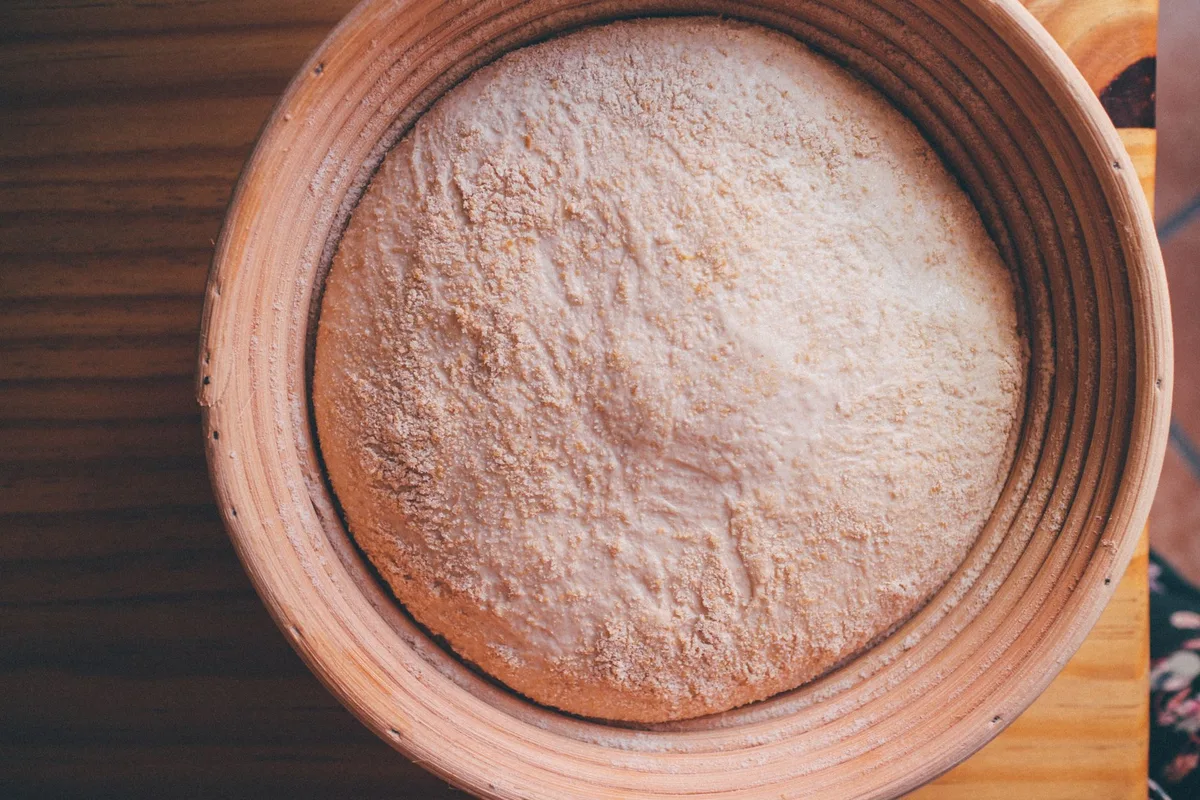
Image source: Pexels / Monserrat Soldú (Pexels License)
Stop watching the clock. The clock is a guide, not a rule.
Your real tool is the windowpane test. I check this at the 8-minute mark every single time.
Here’s how to do it right:
- Stop the mixer
- Pinch off a small piece of dough (about the size of a walnut)
- Gently stretch it between your fingers
- Pull it thin enough that light passes through
If the dough stretches into a thin, translucent membrane without tearing, you’re done. If it breaks apart before stretching thin, keep kneading for another 2 minutes and test again.
But here’s the trick most tutorials don’t tell you: sourdough rarely passes the windowpane test as cleanly as commercial yeast dough. Sourdough’s acidity naturally weakens gluten. Don’t chase that perfect, glass-clear membrane.
You’ll over-knead every single time.
Instead, look for the dough to:
- Pull away from the bowl cleanly
- Feel smooth and supple, not sticky
- Spring back slightly when poked
- Hold a round shape when you gather it into a ball
That’s enough. Seriously.
Using a Stand Mixer for Sourdough: Settings and Tips
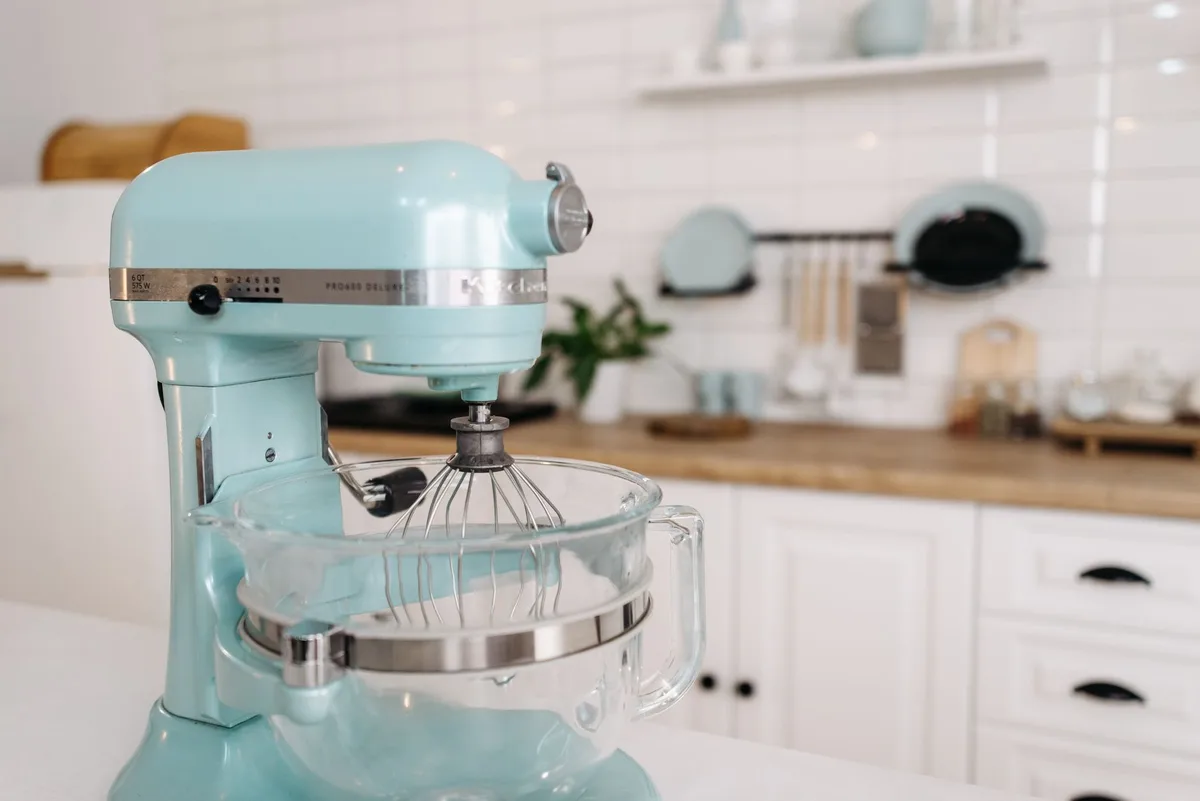
Image source: Pexels / Pavel Danilyuk (Pexels License)
Your stand mixer isn’t a set-it-and-forget-it tool. You need to watch it. Listen to it.
Feel it.
The Right Speed
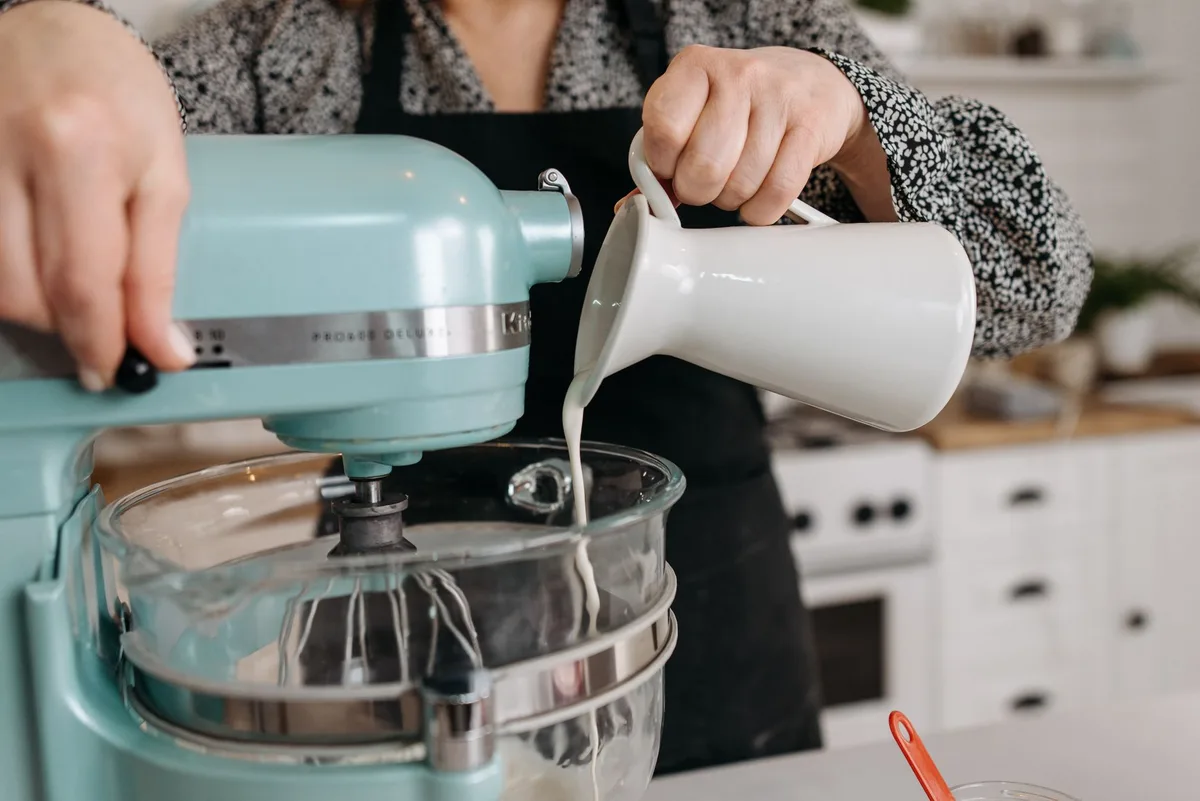
I keep my KitchenAid between speed 2 and 4. Never higher.
Speed 2 is for wet doughs and starters. Speed 3 is my standard setting for most sourdough recipes. Speed 4 works for stiffer doughs, but only for the first few minutes.
Here’s what happens if you crank it to speed 6 or 8: the dough climbs the hook. It wraps around the attachment and stops mixing. You stop the machine, scrape it down, start again, and it climbs again.
You’ve wasted 10 minutes and gained nothing.
Worse, high speeds generate heat. Sourdough should never exceed 78°F during kneading. Go above that and your starter’s bacteria go into overdrive.
The dough over-ferments. Your final loaf tastes sour in all the wrong ways.
The Mixing Process
I follow this exact sequence:
Minute 0-2: Mix on speed 2 until all flour is hydrated. The dough looks shaggy and rough. That’s fine.
Minute 2-6: Bump to speed 3. The dough starts coming together. You’ll see it pulling away from the bowl sides.
Minute 6-8: The dough should be in a smooth ball. Stop and do the windowpane test.
Minute 8-12: Only continue if needed. Most sourdough is done by minute 10.
The Sourdough Starter Complication
Your starter’s strength affects kneading time. A young, weak starter means your dough needs more structural development. A mature, vigorous starter means the dough is more fragile from the start.
I always feed my starter 8-12 hours before mixing. It should double in volume and smell fruity, not vinegary. A sluggish starter produces a sluggish dough that needs extra kneading.
A strong starter shortens your kneading window by 2-3 minutes.
Adjust accordingly.
Common Mistakes When Kneading Sourdough in a Stand Mixer
I’ve made every mistake on this list. Probably more than once.
Mistake 1: Following Commercial Bread Times
I already covered this, but it bears repeating. Sourdough isn’t commercial bread. If you’re used to kneading sandwich loaves for 12-15 minutes, cut that by 20-30% for sourdough.
Mistake 2: Ignoring Hydration
The higher your hydration, the less you knead. A 60% hydration dough might need the full 12 minutes. A 78% hydration dough might only need 6 minutes in the mixer before switching to stretch and folds.
I keep a notebook with hydration percentages and kneading times for every batch. When I nail a loaf, I write down exactly what I did. When I fail, I note that too.
Patterns emerge fast.
Mistake 3: Adding Flour Mid-Knead
Your dough looks sticky at minute 4. You panic and add flour. Now your hydration is off.
Your crumb tightens. Your loaf is dry.
Stop doing this.
Sticky dough at minute 4 is normal. Gluten hasn’t fully developed yet. Give it 2-3 more minutes.
The stickiness will resolve as the dough comes together.
If it’s still sticky at minute 10, then and only then do you add flour. One tablespoon at a time. Sprinkle it in, run the mixer for 30 seconds, check again.
Mistake 4: Over-Kneading Wet Doughs
Here’s a hard truth: some sourdough recipes shouldn’t be kneaded in a stand mixer at all. If your hydration is above 80%, the stand mixer is fighting a losing battle. The dough never forms a proper ball.
It just sloshes around.
For these recipes, use the stand mixer for 3-4 minutes just to incorporate ingredients. Then switch to stretch and folds in the bowl. That’s a better approach.
Mistake 5: Forgetting Salt Timing
Salt tightens gluten. If you add salt too early, your dough resists kneading. It stays tough and tight for longer.
I add salt after 4 minutes of kneading. I dissolve it in a tablespoon of water first, then pour it in while the mixer runs on low. This gives the dough a few minutes to develop without salt interference, then tightens everything up for the final stretch.
The Science Behind the Numbers
I’m not a food scientist. But I’ve read enough research to understand what’s happening inside that mixing bowl.
Gluten development happens through two mechanisms: mechanical energy and chemical bonding. The stand mixer provides the mechanical energy. The water and flour provide the chemical bonding.
In sourdough, the fermentation process starts immediately. The lactobacillus bacteria produce organic acids. These acids attack the disulfide bonds in gluten.
Think of it like a tug-of-war. Your mixer is building gluten bonds. The acids are breaking them down.
The ideal kneading time is the sweet spot where gluten formation outpaces gluten breakdown. Go past that, and you start losing more bonds than you create.
That 8-12 minute window exists because that’s where the construction rate significantly exceeds the demolition rate for most standard sourdough recipes.
Higher hydration accelerates both processes. More water means faster gluten development but also faster acid migration. That’s why wet doughs need less mixer time.
Higher starter percentages work the same way. More starter means more acid. More acid means faster gluten breakdown.
Less kneading time required.
How to Adjust Kneading Time for Your Specific Situation
No two kitchens are identical. Your flour, water, starter, mixer, and ambient temperature all affect the ideal kneading time.
Here’s how to dial it in.
For strong bread flour: Add 1-2 minutes. Strong flour has more protein. It needs more mechanical work to fully develop.
For all-purpose flour: Stay at the lower end, 8-10 minutes. The lower protein content develops faster and also breaks down faster.
For whole wheat or rye: Cut time by 1-2 minutes. Whole grains have bran particles that physically cut gluten strands. More kneading actually damages the structure.
For cold dough: If you use cold water, add 1-2 minutes. Cold slows everything down, including gluten development.
For warm kitchen: Subtract 1-2 minutes. Warmth accelerates both gluten development and acid production. You’ll overshoot faster.
For high altitude: This one’s tricky. Lower atmospheric pressure means dough ferments faster. But the dry air also means flour absorbs less water.
Start at 10 minutes and adjust from there.
The Stretch and Fold Alternative
I’m not a stand mixer purist. Some of my best sourdough loaves came from recipes that never touched a mixer.
Stretch and folds are a legitimate kneading method. They’re especially good for high-hydration doughs that resist machine kneading.
Here’s the workflow I use when I’m not using the mixer:
- Mix ingredients by hand into a shaggy dough
- Rest 30 minutes (autolyse)
- Stretch and fold four times at 30-minute intervals
- Bulk ferment until doubled
But that’s slower. It takes 2+ hours of intermittent attention versus 10 minutes of active mixer work.
I use the mixer for weeknight bakes when I’m short on time. I use stretch and folds for weekend projects when I want to feel the dough change in my hands.
Both work. Neither is wrong.
When to Start Counting Time
This trips up beginners constantly.
Do you start the timer when you start mixing? After the flour is incorporated? When the dough starts pulling away?
Here’s my rule: Start counting from the moment all flour is hydrated and no dry spots remain.
The first minute or two of mixing is just hydrating. The dough isn’t actually developing gluten yet. If you count that time, you’ll under-knead.
I add a minute buffer to my recipe timings to account for this.
So when I say “knead for 10 minutes,” I mean 10 minutes of active gluten development. The hydration phase is extra.
My Exact Process
Let me walk you through a real batch from yesterday.
- 500g strong bread flour
- 350g water (70% hydration)
- 100g mature starter (20%)
- 10g salt
I add water and starter to the bowl first. Mix on speed 2 for 30 seconds to combine. Add flour.
Mix on speed 2 until no dry flour remains. That takes about 1 minute.
Cover the bowl. Rest 30 minutes. This autolyse step is non-negotiable.
Add salt dissolved in 15g of water. Mix on speed 2 for 1 minute.
Bump to speed 3. Set a timer for 10 minutes.
At 8 minutes, I stop and check the windowpane test. It stretches to about 60% before tearing. I run the mixer for 2 more minutes.
At 10 minutes, the dough clears the bowl clean. It’s smooth. It springs back when poked.
The windowpane test gives me a thin membrane with small tears. That’s good enough.
I transfer to a oiled bowl. Bulk ferment for 4 hours at room temperature with three stretch and folds in the first 90 minutes.
The result? Open crumb. Good oven spring.
Ear development that makes me proud.
Final Thoughts (But Really, Just Stop Here)
The best advice I ever got about sourdough kneading came from an elderly baker in San Francisco. He said, “The dough will tell you when it’s done. The recipe is just the suggestion.”
He was right.
Your stand mixer is a fantastic tool. But it’s a tool, not a timer. Use the clock as your guide.
Use the windowpane test as your decider. Use feel as your ultimate authority.
Start at 10 minutes on speed 3. Test at 8. Adjust from there.
Write down what works. Ignore what doesn’t.
Your sourdough will thank you. And so will your stand mixer.

Table of Contents